
When these carrots come out of the oven, the edges are browned and the honey has turned the harissa coating glossy. I like how the heat builds gently instead of taking over; the carrots stay sweet and tender, with a little chile warmth in each bite. It’s a simple way to make a tray of roasted carrots feel like more than a side dish.
The balance comes from coating the carrots before they roast, then waiting until they’re out of the oven to add the lemon juice. That last splash gives the honeyed coating a bright finish without dulling the roasted flavor. Cut the carrots into similar 2-inch pieces, and you’ll get tender centers and browned edges without some pieces finishing long before the others.

Kitchen Note
Add the lemon juice after roasting, not before the carrots go into the oven. That fresh, tart finish cuts through the honey and chile right when the carrots are ready to serve.
Save these honey harissa roasted carrots for a side with sweet, glossy edges and just enough chile warmth.
Why a Crowded Carrot Pan Turns Steamy Instead of Brown
Carrots give off moisture as they roast. When they’re packed together, that moisture has nowhere to go, so the pieces soften in a steamy layer instead of browning at the edges. A single layer on an 18×13-inch rimmed baking sheet leaves room for hot air to move around the carrots and for that surface moisture to evaporate.
Piece size matters for the same reason: thin pieces can turn soft before thicker ones are tender. Cut the carrots into roughly even 2-inch lengths, and split especially thick sections so they’re closer in size to the rest. The honey and harissa will coat the pieces evenly, but they can’t make uneven cuts roast at the same speed. Give the carrots space, and you’ll have tender centers with browned edges rather than a pan of soft, pale pieces.
What Carrots, Harissa, and Honey Each Bring to the Pan
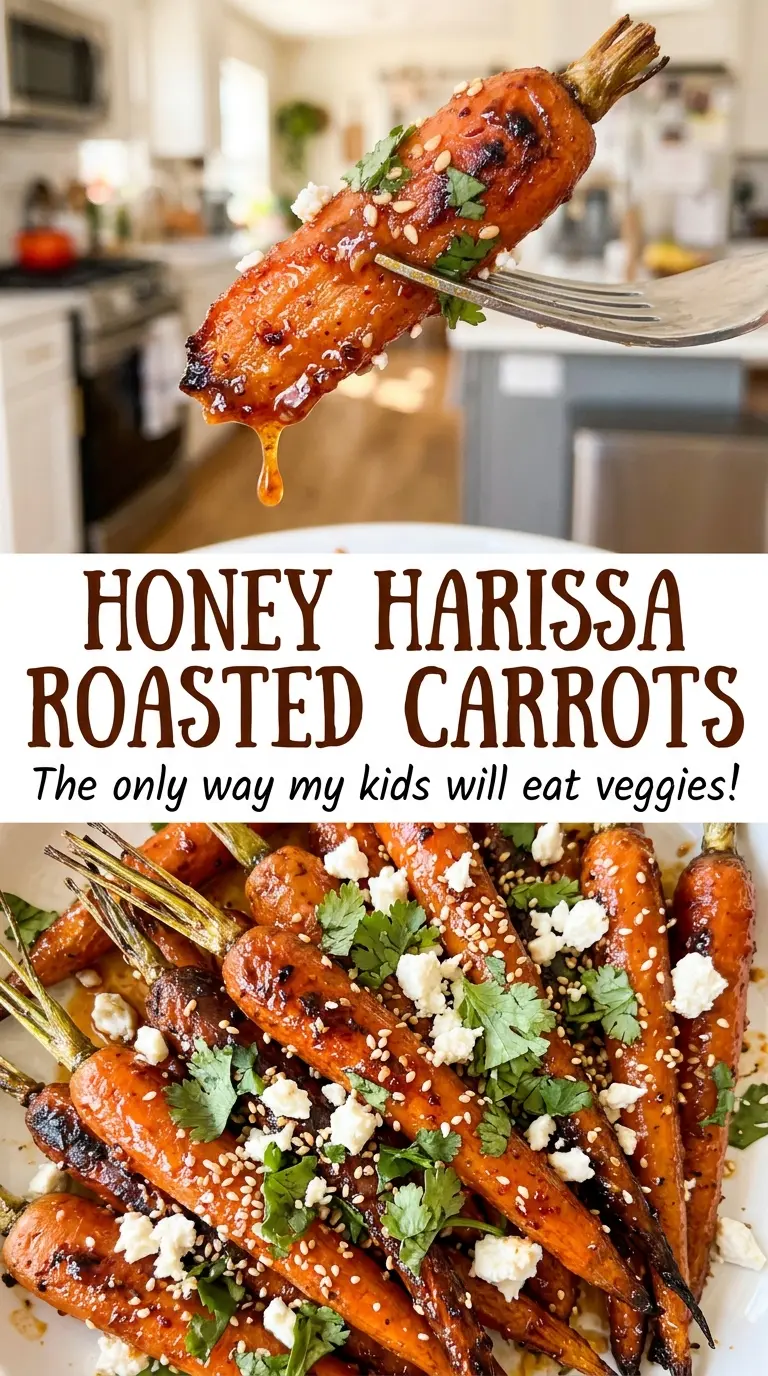
- Carrots — Firm carrots hold their shape through roasting, while limp or cracked ones are more likely to cook unevenly. Peeling gives the coating a clean surface to cling to, and cutting them into similar pieces helps the centers finish together.
- Harissa — This chile-and-spice component brings the savory warmth that keeps the honey from making the carrots taste one-note sweet. Harissa varies in heat and salt from brand to brand, so taste a small dab before you coat the carrots if you’re unfamiliar with yours. A spoonable paste or sauce coats more evenly than a dry seasoning blend.
- Honey — Honey adds sweetness and helps the coating cling as the carrots roast. A mild, everyday honey works well; a strongly flavored honey can compete with the chile and spices. For a vegan version, maple syrup is the most useful swap, with a slightly woodier sweetness.
- Olive oil and lemon juice — The oil helps carry the harissa across the carrots and keeps the coating from being dry. A standard olive oil is fine here; save a delicate, expensive finishing oil for another use. Fresh lemon juice tastes brighter than bottled, though bottled juice can stand in at the same amount if that’s what you have.
From Harissa Coating to Tender, Browned Edges
Heat the Oven and Prepare the Pan
Heat the oven to 425°F and line an 18×13-inch rimmed baking sheet with parchment paper. The rim keeps the carrots contained when you turn them, and the parchment makes the honeyed coating easier to lift away after roasting. Set the pan aside while you prepare the carrots so it’s ready as soon as they’re coated.
Coat Each Piece Evenly
Put the peeled, 2-inch carrot pieces in a large bowl with the olive oil, harissa, honey, and kosher salt. Toss until the coating reaches all sides; you shouldn’t see dry, unseasoned patches. If the honey settles at the bottom of the bowl, keep tossing until it’s distributed instead of leaving a sticky pool under the carrots.
Roast Until Tender at the Center
Spread the carrots in a single layer on the prepared sheet and roast for 25 to 35 minutes, turning them halfway through. The edges should be browned, and a fork should slide into the thicker pieces without much resistance. Start checking near the shorter end of the time range; larger or thicker pieces need longer, but take the carrots out once they’re tender and browned.
Finish with Lemon
Transfer the hot carrots to a serving dish, drizzle with the fresh lemon juice, and toss to coat. The juice will mingle with the warm coating rather than cook away in the oven. Toss gently so the tender pieces stay intact, then serve while the edges are still warm and glossy.
Two Simple Ways to Shift the Heat or Sweetness
Choose a Milder Harissa
Use the same amount of mild harissa if you want the spiced, savory coating without as much chile heat. The carrots still get their characteristic harissa flavor, but the warmth is gentler and less lingering.
Make Them Vegan with Maple Syrup
Replace the honey with the same amount of pure maple syrup. The carrots will still roast with a sweet coating, though maple brings a woodier note and a little less of honey’s sticky richness.
Storage and Reheating
- Refrigerator: Store in an airtight container for 3 to 4 days. The carrots will soften as they sit, and the browned edges won’t stay crisp.
- Freezer: They can be frozen for up to 2 months, though thawed carrots will be softer. Freeze in an airtight container and thaw in the refrigerator before reheating.
- Reheating: Warm on a baking sheet in a 400°F oven until the center reaches 165°F. The microwave works, but it softens the edges further.
Questions That Come Up With Honey Harissa Carrots
Honey Harissa Roasted Carrots
Ingredients
Equipment
Method
- Heat the oven to 425°F.
- Line an 18x13-inch rimmed baking sheet with parchment paper.
- In a large bowl, toss the carrots with the olive oil, harissa, honey, and salt until evenly coated.
- Spread the carrots in a single layer on the prepared baking sheet.
- Roast for 25 to 35 minutes, turning them halfway through, until tender and browned at the edges.
- Transfer the carrots to a serving dish.
- Drizzle with the lemon juice and toss to coat.