
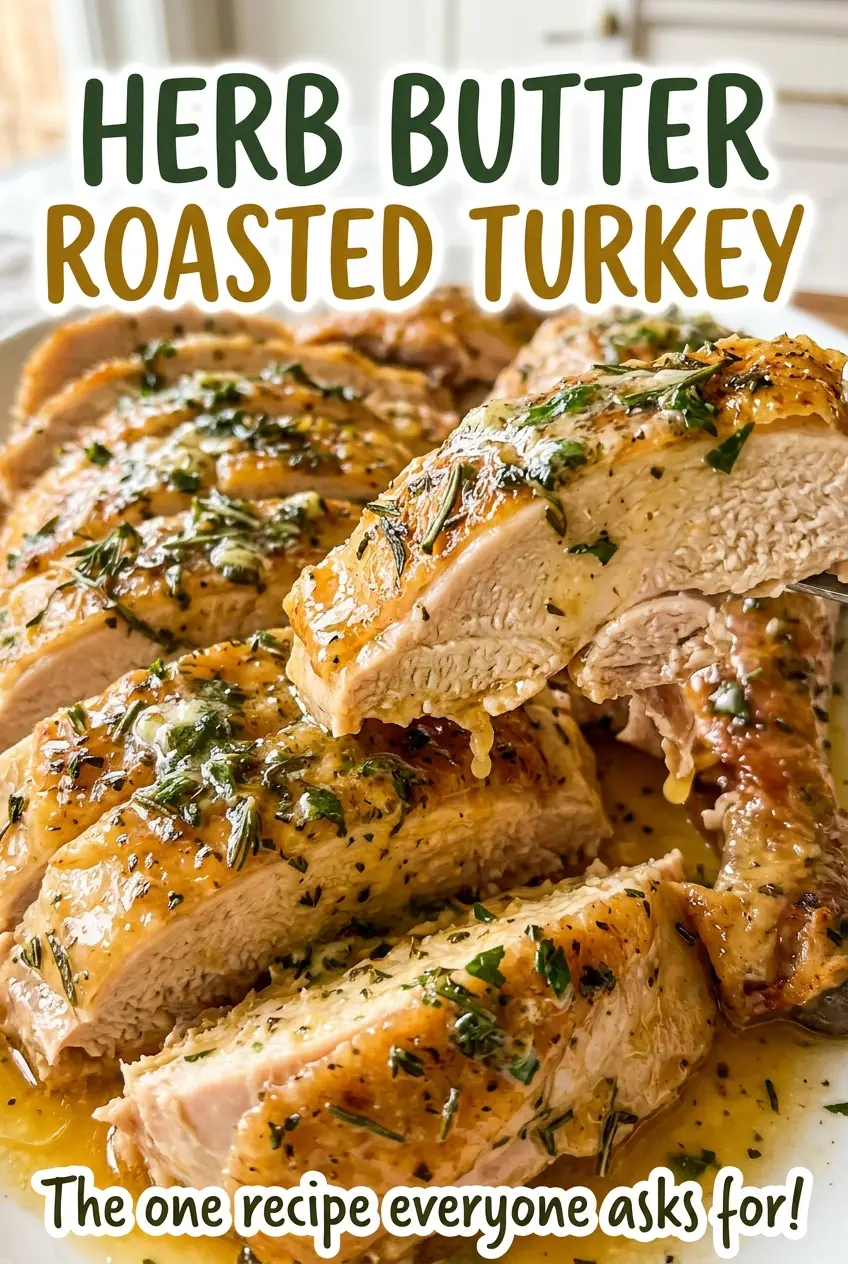
When the butter is worked under the turkey skin, it softens there as the bird roasts instead of sliding straight down the outside. That’s the difference I pay attention to with this herb butter roasted turkey: the breast gets seasoned close to the meat, while the outside still picks up a layer of buttery herbs. A completely thawed bird and a little patience with the skin make the job easier.
I mix the butter until the chopped herbs and garlic are spread evenly through it, then use my fingers to loosen the skin gently over both the breast and thighs. The cavity gets quartered onion and lemon, not a packed filling, so the turkey stays straightforward to roast and carve. At 325°F, the bird has time to cook through while the skin browns; if it gets dark before the meat reaches temperature, a loose foil tent buys it time. The result is a deeply herbed roast with juicy slices ready for the table.
Kitchen Note
Use butter that’s softened but not melted. It should mix smoothly with the herbs and hold together on a spoon; melted butter runs off the bird before you can spread it evenly.
Save this herb butter roasted turkey for its fresh sage-and-rosemary butter and golden roast skin.
Why Herb Butter Belongs Under the Turkey Skin
Butter spread only over the outside has to travel through the skin before it can season the meat. Putting most of it underneath changes where the herbs and fat sit during roasting: they’re close to the breast and thigh instead of relying on the surface alone. That gives the meat a more even herb flavor, while the remaining butter on top helps the outside brown.
The skin is delicate, so I work slowly rather than trying to open a large pocket all at once. Slide your fingers in a little at a time and stop if you feel resistance; a small opening is enough to reach the breast and thighs. Once the butter is in place, smooth it gently over the meat from the outside. This keeps the skin largely intact and gives the butter a more even layer to melt through as the turkey roasts.
Fresh Herbs and Unsalted Butter Carry the Flavor Here
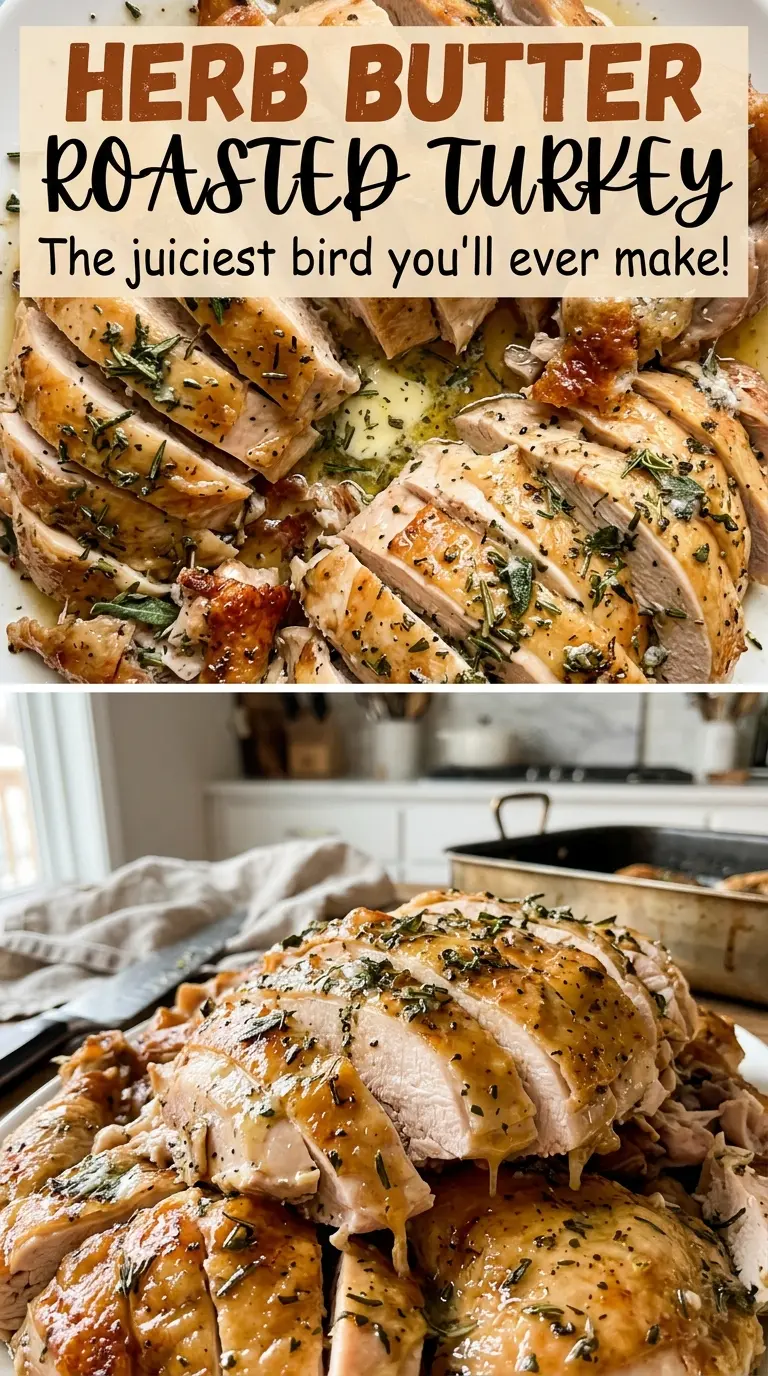
- Unsalted butter — It gives the fresh herbs a rich base and lets the kosher salt be measured separately. Choose a fresh-tasting butter, but there’s no need to seek out a specialty brand; softened everyday butter works well. For a dairy-free version, use unsalted plant-based butter sticks in the same amount, as described below.
- Parsley, thyme, rosemary, and sage — Fresh herbs give the butter a lively, fragrant character and distribute through it easily when chopped. Choose herbs with perky leaves rather than wilted or blackened bunches. Their flavors are distinct: rosemary is piney, sage is earthy, and thyme adds a softer herbal note, so keeping all four gives the finished butter its balance.
- Garlic — Freshly minced garlic brings a savory edge that powdered garlic won’t quite match in this butter. Mince it finely so no large pieces interrupt the smooth spread.
- Whole turkey — A fully thawed bird in the stated size range fits the timing and roasting setup here. Pat the skin dry before seasoning; excess surface moisture makes it harder for the outside to brown.
- Yellow onion and lemon — Their job is to add aroma in the cavity as the turkey roasts, not to serve as a stuffing. Use a firm onion and a lemon with an intact rind, then quarter both so they fit inside the bird.
The Four Moves From Thawed Bird to Carving Board
Mix a cohesive herb butter
Stir the softened butter with the chopped parsley, thyme, rosemary, sage, minced garlic, kosher salt, and black pepper in a medium bowl. Keep mixing until the herbs and seasoning are spread evenly through the butter instead of sitting in separate pockets. If you see a streak of plain butter, scrape the bowl and fold it back in. The finished mixture should be soft enough to spread, not liquid.
Set up the turkey and roasting pan
Heat the oven to 325°F and set a rack in a large roasting pan, about 16 by 13 inches. Pat the completely thawed turkey dry with paper towels, then gently loosen the skin over the breast and thighs with your fingers. Go slowly so the skin stays intact; forcing your hand through can tear it. Keep the neck and giblets removed, as listed for the turkey.
Season beneath and over the skin
Spread about two-thirds of the herb butter under the skin, working it over the breast and thighs, then rub the rest over the outside. Put the quartered onion and lemon in the cavity. Set the bird breast-side up on the rack, tie the legs loosely with kitchen twine, and tuck the wing tips under the body. The skin should lie back in place over the butter rather than being stretched tight.
Roast, check the thickest areas, and rest
Roast uncovered for 3 to 3¾ hours, tenting loosely with foil if the skin browns too quickly. Check the thickest part of the breast and the innermost part of the thigh with a thermometer, keeping it from touching bone; both should read 165°F. Move the turkey to a cutting board, tent it loosely with foil, and let it rest for 30 minutes before carving. That rest gives the juices time to settle rather than running across the board as soon as you slice.
Two Ways to Shift the Herb Butter Without Changing the Turkey
Make the herb butter dairy-free
Replace the unsalted butter with the same amount of unsalted plant-based butter sticks, softened before mixing. Stick-style products hold and spread more like dairy butter than soft tub spreads, though the result may taste a little less rich. Keep the listed herbs and seasonings the same.
Give the butter a lemon lift
Before quartering the lemon, finely grate its zest into the herb butter, then put the lemon quarters in the cavity as usual. The zest adds a brighter citrus aroma to the butter without replacing the parsley, thyme, rosemary, or sage. Grate only the yellow outer peel; the white pith underneath tastes bitter.
Storage and Reheating
- Refrigerator: Store carved turkey in an airtight container for 3 to 4 days. The breast meat may firm up as it chills.
- Freezer: Freeze carved portions in airtight freezer-safe packaging for 2 to 6 months for best quality. Thaw in the refrigerator before reheating.
- Reheating: Warm portions covered in the microwave in short bursts until steaming hot throughout. Long, high-power heating can dry the breast, so stop as soon as it’s hot.
Questions That Come Up Before the Turkey Goes in the Oven
Herb Butter Roasted Turkey
Ingredients
Equipment
Method
- In a medium bowl, mix the butter, parsley, thyme, rosemary, sage, garlic, salt, and pepper until evenly combined.
- Heat the oven to 325°F.
- Set a rack in a large roasting pan, about 16x13 inches.
- Pat the turkey dry with paper towels.
- Gently loosen the skin over the breast and thighs with your fingers.
- Spread about two-thirds of the herb butter under the skin and the rest over the outside of the turkey.
- Put the onion and lemon in the cavity.
- Set the turkey breast-side up on the rack.
- Tie the legs loosely with kitchen twine.
- Tuck the wing tips under the body.
- Roast uncovered for 3 to 3 3/4 hours, loosely tenting with foil if the skin browns too quickly, until a thermometer reads 165°F in the thickest part of the breast and the innermost part of the thigh without touching bone.
- Transfer the turkey to a cutting board.
- Loosely tent with foil.
- Rest for 30 minutes before carving.