
Herb butter roasted turkey comes out with crisp, deeply browned skin and meat that stays juicy all the way through the breast. The butter does two jobs at once: it seasons the meat from the inside and helps the skin turn golden instead of pale and leathery. When you pull it from the oven and the kitchen smells like sage, garlic, and rosemary, it feels like the centerpiece actually earned its place on the table.
The trick is getting the butter under the skin, not just on top of it. That step sounds fussy, but it’s what keeps the breast from drying out while the legs finish roasting. A little chicken broth in the pan also keeps the drippings from scorching, which means better pan juices and less risk of that bitter burned-bottom smell that can happen with a long roast.
Below, I’ve included the timing, the herb mix that gives the skin its color and flavor, and the resting step that matters just as much as the roasting. Skip the rest and the slices will flood the board. Give it the full half hour and the meat stays neat and tender.
The skin turned a beautiful mahogany color and the breast stayed juicy all the way through. I followed the butter-under-the-skin step exactly, and the gravy from the pan drippings was rich without being greasy.
Save this herb butter roasted Thanksgiving turkey for a golden skin, juicy breast, and simple holiday centerpiece that carves cleanly every time.
The Secret to Juicy Turkey Is What You Put Under the Skin
Most dry turkey happens because the seasoning never gets past the surface. Butter rubbed only on the outside helps the skin brown, but it doesn’t do much for the meat underneath. When you loosen the skin and work half the herb butter directly onto the breast, it bastes the meat as it roasts and protects it from drying out before the legs are done.
The other thing that trips people up is heat. A turkey this size doesn’t need a hotter oven to cook through; it needs steady heat and time. If the skin starts getting too dark before the center reaches temperature, tent the breast loosely with foil. That keeps the herbs from burning while the bird finishes evenly.
- Loosened skin — This is what gives you a juicy breast instead of seasoned skin sitting on top of dry meat. Work slowly and keep your hands flat so you don’t tear the skin.
- Softened butter — Cold butter clumps and won’t spread well under the skin. Soft butter carries the herbs evenly and melts into the meat as it roasts.
- Chicken broth — The broth in the pan keeps the drippings from scorching and gives you a better base for gravy. Stock works too, but use something with decent flavor.
- Fresh herbs — Sage, thyme, and rosemary are worth using fresh here. Dried herbs can work in a pinch, but they taste flatter and can read dusty on a long roast.
What Each Ingredient Is Actually Doing in This Turkey
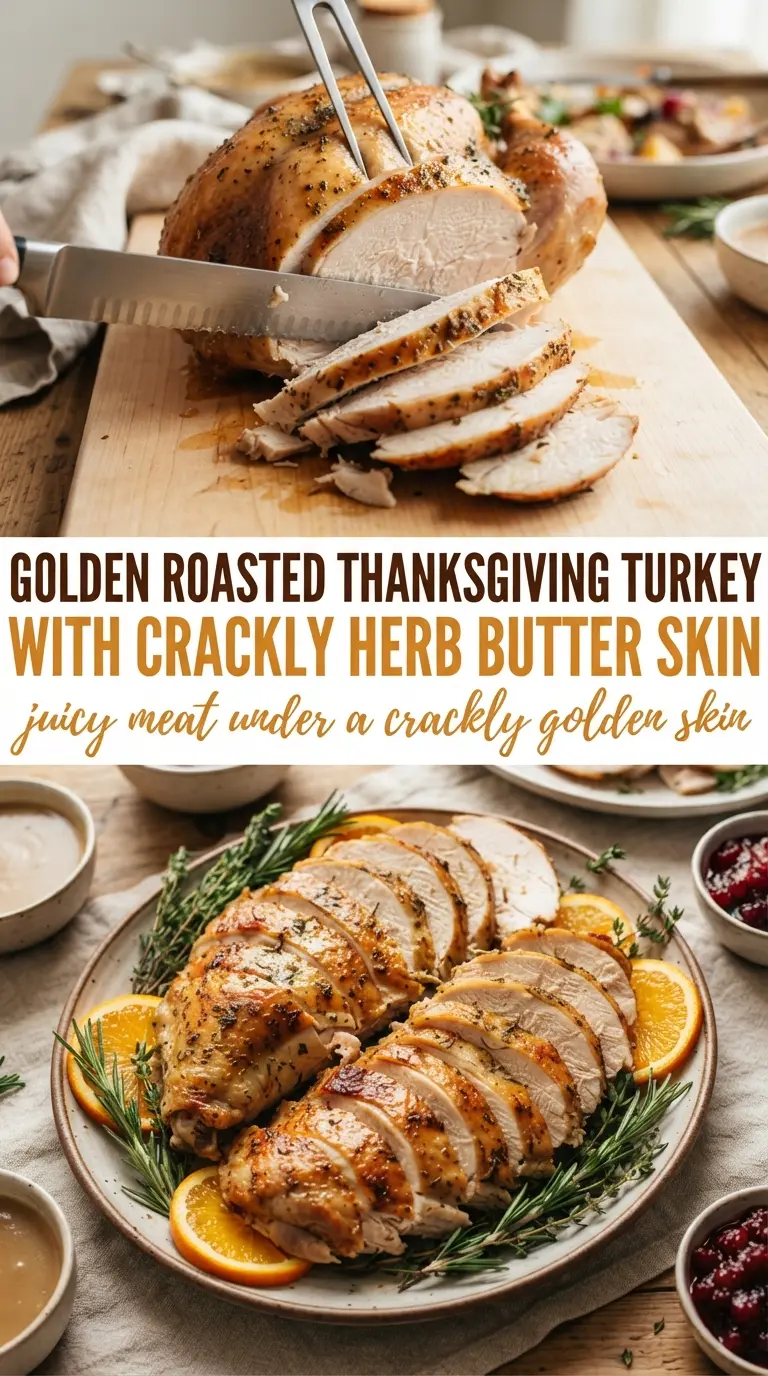
- Whole turkey — A 12- to 14-pound bird roasts evenly in this time range. If yours is larger, the breast can dry out before the legs are done, so use a thermometer and go by temperature, not the clock.
- Unsalted butter — Unsalted butter lets you control the salt level. If you only have salted butter, cut the added salt back a little so the herb mixture doesn’t turn harsh.
- Garlic, sage, thyme, and rosemary — This is the backbone of the flavor. Chop the herbs finely so they spread through the butter instead of clumping in one spot.
- Lemon and onion — These perfume the cavity and keep the inside of the bird from tasting flat. Don’t pack the cavity tight; the aromatics should sit loosely so hot air can move around them.
- Chicken broth — This keeps the pan from drying out during the long roast and gives you better drippings at the end. If you need to swap it, use turkey stock or low-sodium chicken stock.
The 20 Minutes That Set Up the Whole Roast
Mixing the Herb Butter
Stir the softened butter with the minced garlic, chopped herbs, salt, and pepper until the mix looks evenly speckled and no streaks of plain butter remain. If the butter is too firm, it’ll tear the skin when you try to spread it. If it’s melted, it runs off the bird instead of staying where you need it.
Working the Butter Under the Skin
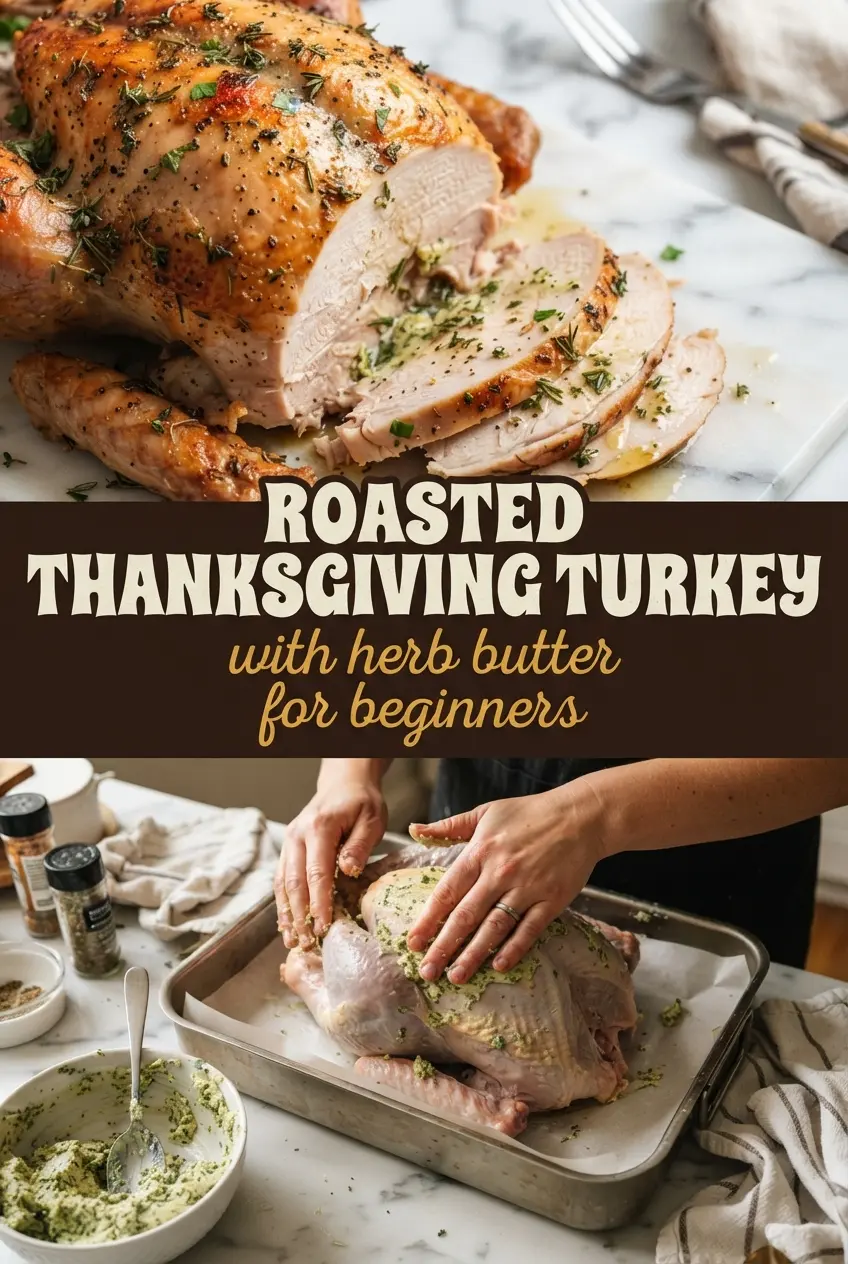
Slide your fingers between the skin and breast meat, starting at the cavity opening and moving gently toward the top of the breast. Spread half the butter underneath, pressing it into an even layer. That’s the step that keeps the breast moist, so don’t rush it or you’ll end up with patches of plain meat and patches of over-seasoned skin.
Roasting Until the Thermometer Says Done
Set the bird in a roasting pan with the broth and roast at 325°F until the thickest part of the thigh reaches 165°F. The skin should be deep golden and crisp, and the juices should run clear when you check the leg. If the breast is browning too fast, cover it loosely with foil while the rest finishes.
Resting Before You Carve
Let the turkey rest for 30 minutes before carving. That pause keeps the juices in the meat instead of spilling onto the board the moment the knife goes in. If you cut too soon, even a perfectly roasted bird will look dry.
How to Adapt This for Different Tables and Different Cookbooks
Dairy-Free Herb-Roasted Turkey
Swap the butter for a plant-based baking stick that’s meant for cooking, not tub margarine. You’ll lose a little of the classic butter aroma, but the skin will still brown well and the herbs will carry the flavor.
Gluten-Free Holiday Bird
This recipe is naturally gluten-free as written, as long as your broth is certified gluten-free. That matters most if you’re using store-bought stock, since some brands add thickeners or flavoring blends that contain gluten.
Using Dried Herbs Instead of Fresh
Use one-third the amount if you’re replacing fresh herbs with dried: 2 teaspoons sage, 1 teaspoon thyme, and 1 teaspoon rosemary. Crush the dried herbs between your fingers before mixing so they release more flavor into the butter.
Storage and Reheating
- Refrigerator: Store carved turkey in an airtight container for 3 to 4 days. The meat stays usable, but the skin softens once it’s chilled.
- Freezer: It freezes well if you slice it, wrap it tightly, and freeze it with a little pan juice or broth to keep it from drying out. Use within 2 to 3 months for the best texture.
- Reheating: Reheat covered in a low oven with a splash of broth until just warmed through. High heat dries turkey fast, so skip the microwave unless you’re reheating a small portion and don’t mind softer meat.
Answers to the Questions Worth Asking
Herb Butter Roasted Thanksgiving Turkey
Ingredients
Equipment
Method
- Preheat the oven to 325°F and set a roasting pan in the oven to warm slightly.
- Mix the softened butter, minced garlic, chopped sage, chopped thyme, chopped rosemary, salt, and black pepper until evenly combined.
- Loosen the turkey skin over the breast and rub half of the herb butter underneath the skin in an even layer.
- Rub the remaining herb butter over the outside of the turkey, covering the breast and as much of the surface as possible.
- Stuff the cavity with the lemon and onion, then place the turkey in a roasting pan with the chicken broth.
- Roast at 325°F for 3 to 3½ hours, until the thickest part reaches 165°F (use a thermometer).
- During roasting, keep the oven door closed and continue until the internal temperature hits 165°F so the juices stay in the meat.
- Rest the turkey for 30 minutes at room temperature before carving so the juices redistribute.
- Carve and serve after resting.