
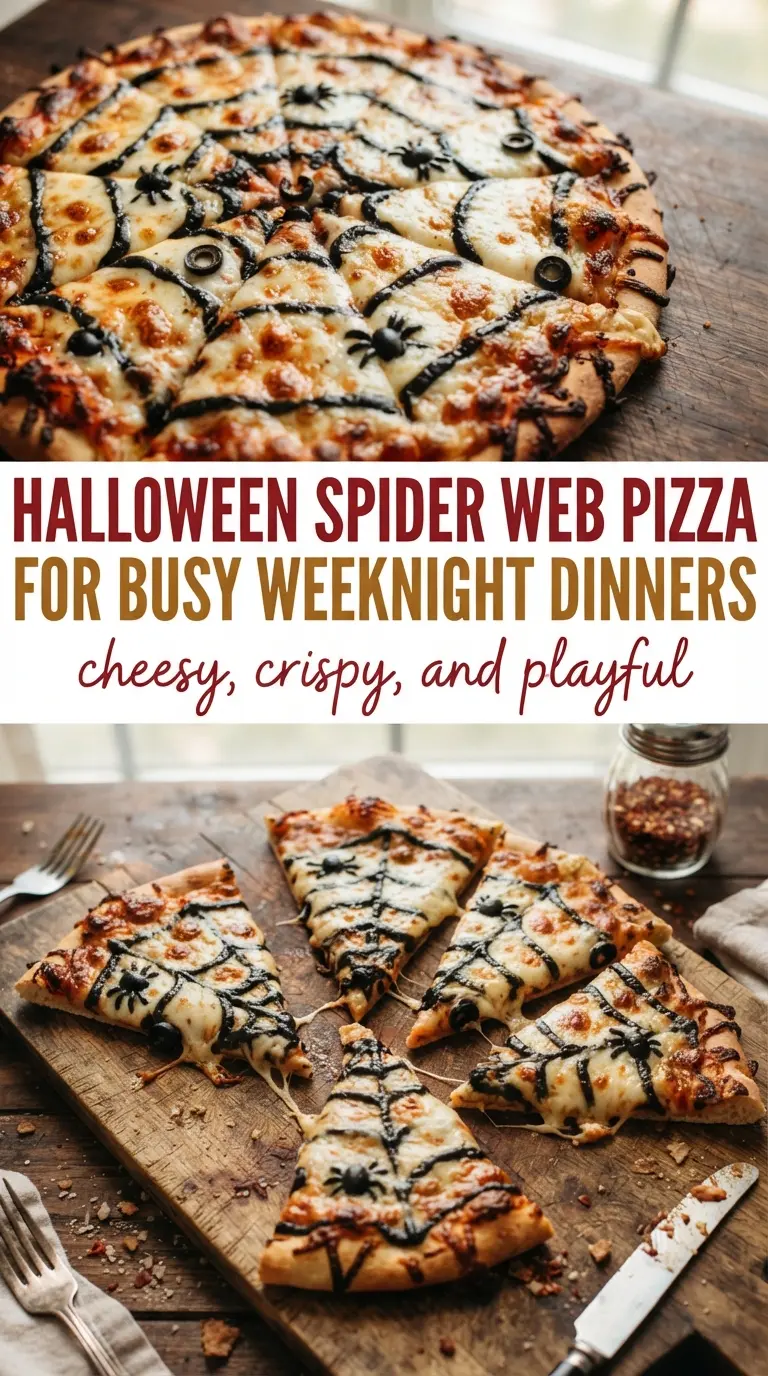
A golden, crisp pizza crust topped with bubbling mozzarella and a sharp red spider web is the kind of Halloween dinner that gets a reaction before the first slice is even cut. It looks playful, but it still eats like good pizza: chewy at the center, crackly at the edge, and balanced enough that the sauce doesn’t drown the cheese. The web design gives it just enough drama to feel special without turning dinner into a project.
What makes this version work is the order of operations. The sauce goes on in a thin layer first, then the cheese, then the second round of marinara is piped on top so it stays visible instead of disappearing into the melt. That last bit matters. If you try to swirl the web into raw sauce under the cheese, it sinks, smears, and loses the sharp lines that make the whole pizza read as Halloween at a glance.
The trickiest part is the web, and it’s easier than it looks once you know what to expect. A squeeze bottle gives the cleanest lines, but a spoon works in a pinch if you keep the sauce thin enough to drizzle. Below, I’ll walk through how to keep the design crisp, which swaps still give you a good result, and how to serve it so the spider garnish stays on the plate instead of on someone’s slice.
The web design held up perfectly after baking, and the toothpick trick kept the lines sharp instead of turning into a blob. My kids thought it was the coolest pizza we’d ever made.
Save this Halloween Spider Web Pizza for a spooky pizza night with crisp web lines and a fun baked-on design.
The Reason the Web Stays Sharp Instead of Melting Away
The biggest mistake with this pizza is drawing the web too early or with sauce that’s too thick. Once the mozzarella starts to soften, any heavy line of marinara will sink into it and blur. Thin sauce is the answer. It should ribbon off the spoon or squeeze bottle, not plop. That’s what gives you those clean concentric rings that still look like a web after the pizza comes out of the oven.
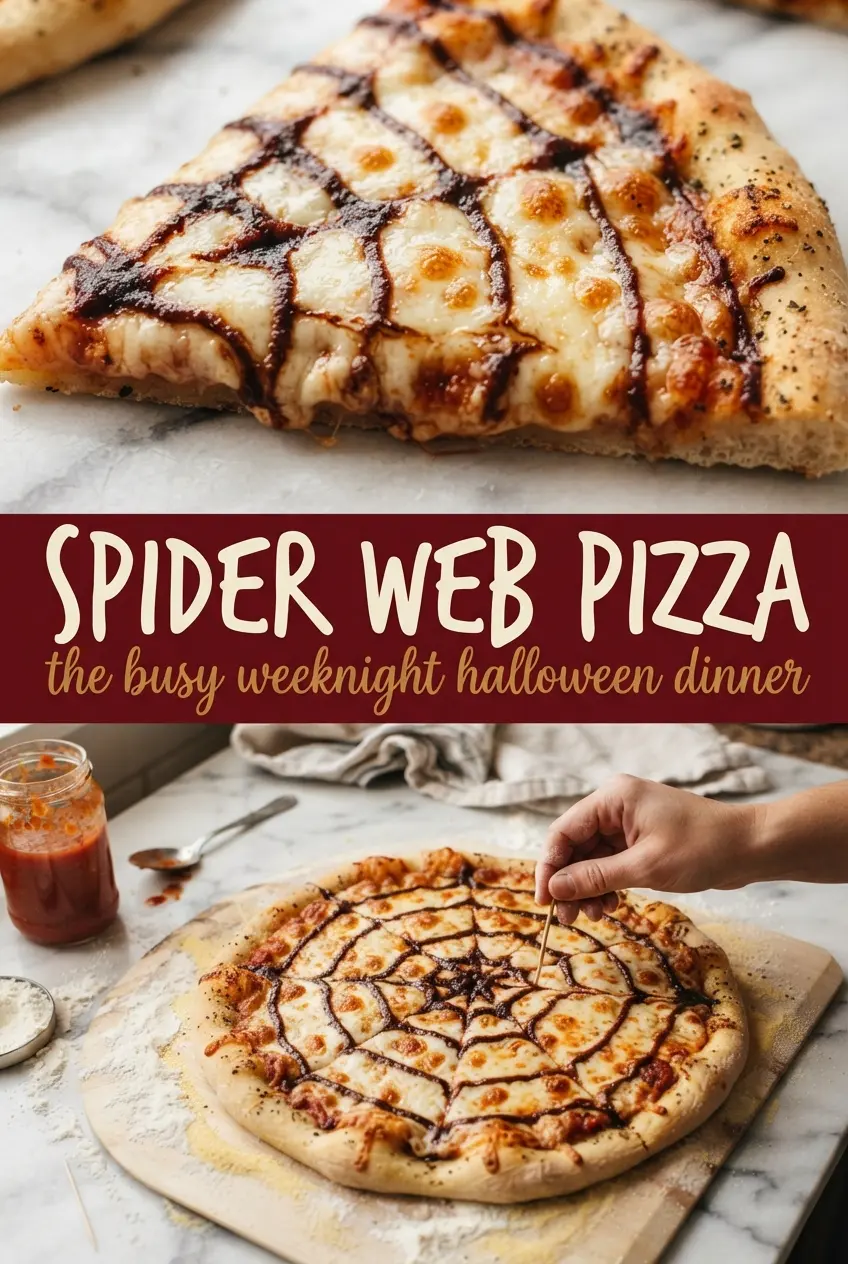
The other key is the toothpick pull. Dragging from the center outward turns circles into a web without needing artistic skill. Work quickly and don’t overthink the spacing. If the sauce starts to settle before you finish, that just means the cheese is warming up; move on and bake it. A slightly imperfect web still reads instantly as spooky, but a smeared one just looks messy.
What Each Ingredient Is Actually Doing in This Dish
- Pizza dough — This is the backbone of the recipe. A store-bought dough works fine and saves time, but let it come to room temperature first so it stretches without snapping back. Cold dough fights you and tears at the edges.
- Marinara sauce — Use a sauce that isn’t watery. You need enough body for the web lines to hold shape, especially on top of the cheese. If your jarred sauce seems loose, simmer it for a few minutes until it tightens up.
- Mozzarella — Shredded mozzarella melts into the stretchy, bubbly surface that makes the design pop. Pre-shredded is acceptable here, though freshly grated melts a little smoother. Either way, don’t bury the pizza under too much cheese or the web gets lost.
- Extra marinara for the web — This needs to be thicker than the base sauce if possible. A squeeze bottle gives the cleanest lines, but a zip-top bag with the corner snipped off also works. The goal is a thin, controlled stream, not a heavy drizzle.
- Plastic spider rings — These are for presentation only and must come off before serving. They add the Halloween effect for photos and the table, but they should never touch the oven or end up on the plate.
Building the Spider Web Without Smearing the Top
Stretching the Dough Evenly
Spread the dough onto a baking sheet or pizza stone and keep the thickness even so it bakes at the same rate from center to edge. If one side is much thicker, the web lines can look fine while the crust under them stays doughy. A little flour helps with sticking, but too much turns the bottom dusty and dull.
Layering the Sauce and Cheese
Spread the base marinara in a thin, even layer and stop before the border so the crust can brown. Add the mozzarella in a generous layer, but don’t press it down. You want the cheese to melt into a bumpy surface that can still hold the sauce lines on top.
Drawing the Web
Pipe the extra marinara into concentric circles across the cheese. Then drag a toothpick from the center outward at regular intervals to create the web. Wipe the toothpick between pulls if it starts dragging cheese back through the lines; that’s the fastest way to turn a neat pattern into a muddy one.
Baking Until the Crust Is Deep Gold
Bake at 450°F until the cheese is bubbling and the crust is deep golden at the edges, about 12 to 15 minutes. If the top looks finished but the crust still looks pale, give it another minute or two. A properly baked base keeps the slice sturdy enough to lift without the web sliding off.
How to Adapt This for Different Pizzas and Different Tables
Gluten-Free Crust That Still Slices Cleanly
Use your favorite gluten-free pizza dough or crust, but pre-bake it a few minutes if the package recommends it. Gluten-free dough often needs a little extra help to firm up before the toppings go on, or the center can stay soft under the sauce and cheese.
Dairy-Free Version With Good Melt
Swap in your preferred dairy-free mozzarella-style shreds and use a brand that melts well rather than one that just softens. The web design still works, but the cheese layer may brown less, so watch for the crust color as your doneness cue.
Make It More Kid-Friendly Without Losing the Theme
Keep the web design, but skip the garnish if your crowd gets nervous about the spider rings. You can also use mini pepperoni under the web for extra color and a little more heft, which makes the pizza feel more like a full meal.
Storage and Reheating
- Refrigerator: Store leftovers in an airtight container for up to 3 days. The web pattern will soften a bit, but the flavor holds up well.
- Freezer: Freeze baked slices wrapped tightly for up to 2 months. The texture is best if you freeze without the spider rings and reheat from thawed, not straight from frozen.
- Reheating: Reheat on a baking sheet in a 375°F oven until the cheese is hot and the crust crisps back up. The mistake is microwaving it, which makes the web watery and the crust soft.
The Questions That Come Up With a Pizza Like This
Halloween Spider Web Pizza
Ingredients
Equipment
Method
- Preheat the oven to 450°F. Stretch the pizza dough onto a baking sheet or pizza stone so it covers the surface evenly.
- Spread the marinara sauce evenly over the dough, leaving a small border. Keep the edges bare so the crust browns.
- Top generously with shredded mozzarella. Distribute it in an even layer so the web lines stand out on top.
- Pipe thin concentric circles of extra marinara over the cheese. Then drag a toothpick from the center outward at intervals to create a spider web pattern.
- Bake for 12-15 minutes at 450°F. Look for a golden crust and bubbly melted cheese before removing the pizza.
- Garnish with plastic spider rings for photos, removing before serving. Serve immediately while the cheese is hot and set.