
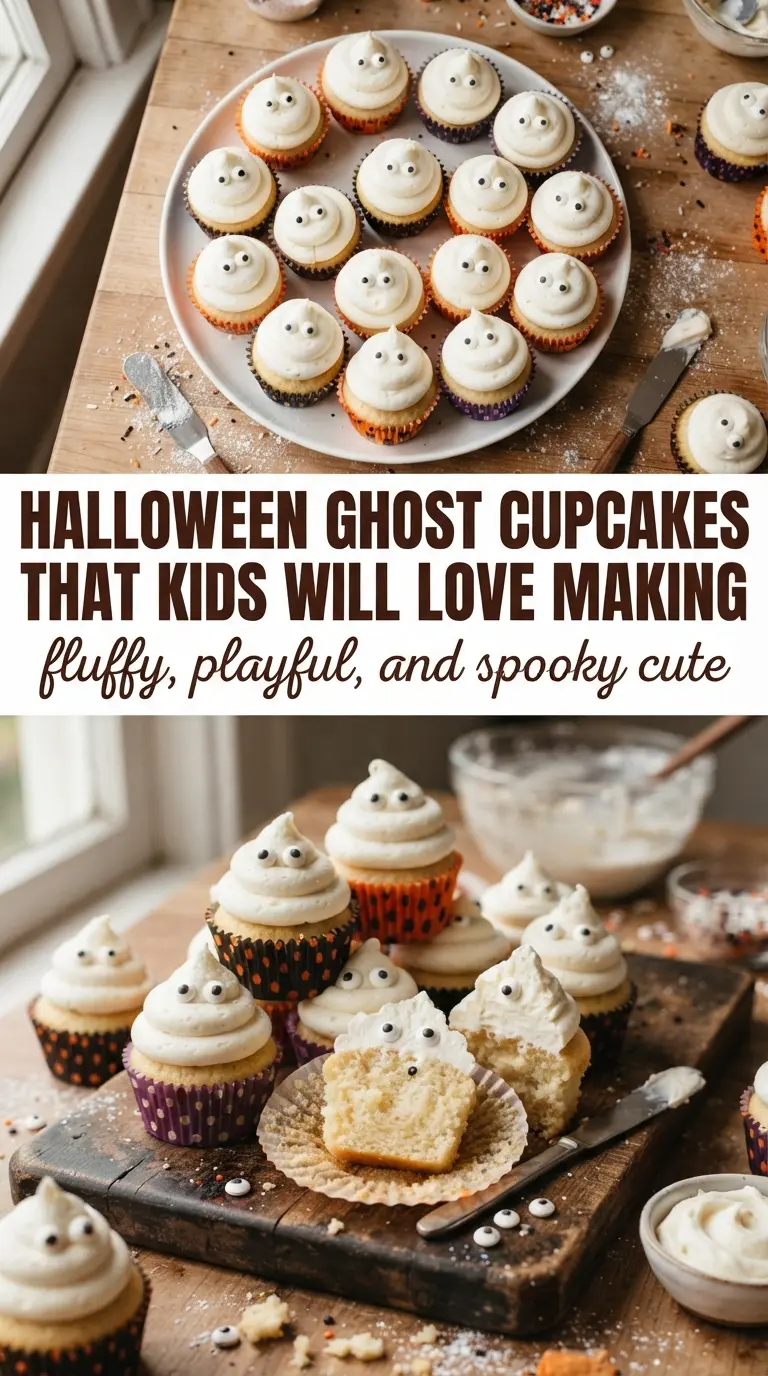
Soft vanilla cupcakes topped with billowy ghost frosting disappear fast once they hit the table. The cake stays tender and light, and the tall swirl of buttercream gives each cupcake that playful, spooky shape without needing any complicated decorating skills. The candy eyes do the rest. They turn a simple vanilla cupcake into something that gets a grin before anyone takes a bite.
What makes these work is balance: a straightforward butter cake base that bakes up even and fluffy, plus a frosting that holds its shape instead of slumping into a puddle. Creaming the butter and sugar until it looks pale and airy gives the cupcakes lift, and folding the flour in just until combined keeps the crumb soft. For the ghosts, a thick buttercream is non-negotiable. If it is too loose, the shape collapses. If it is too stiff, it pipes in jagged ridges instead of that smooth, rounded swirl.
Below, I’ll walk you through the piping trick that makes the ghosts look neat instead of lopsided, plus the small chill time that helps the eyes stay put. It’s the kind of dessert that looks like it took more work than it did.
The frosting held its shape exactly like the photos, and the candy eyes stayed on after a quick chill. My kids helped decorate them and they came out cute, not messy.
Save these Halloween Ghost Cupcakes for a spooky dessert that pipes into tall, fluffy little ghosts every time.
The Mistake That Ruins Ghost Cupcakes Before the Frosting Even Starts
Ghost cupcakes only look simple when the base cake bakes up evenly. If the batter is overmixed, the crumb turns tight and the domed tops make piping harder because the frosting slides instead of standing up. The goal here is a cupcake that bakes flat enough to support that tall ghost shape, with a soft crumb that still holds together when you bite through the frosting.
The other place people run into trouble is the buttercream. A ghost shape depends on structure, not just sweetness. Beat it until it looks smooth and fluffy, then stop once it is spreadable and holds soft peaks. Too much liquid or warm butter and the whole top will sag. Too much powdered sugar and you’ll end up with a frosting that pipes in cracks instead of a clean spiral.
What Each Ingredient Is Actually Doing in These Cupcakes
- All-purpose flour — This gives the cupcakes their structure without making them heavy. Cake flour will make them a touch softer, but all-purpose is the dependable choice here and bakes into a cupcake that can hold a tall frosting swirl.
- Baking powder — This is what lifts the crumb so the cupcakes stay light. Old baking powder is a common reason cupcakes bake up flat, so if yours has been sitting in the cabinet a long time, replace it.
- Butter — Softened butter is doing double duty here: first in the batter for tenderness, then again in the frosting for body. If the butter is too cold, it won’t cream properly; if it’s greasy and melted, the cupcakes and frosting both lose structure.
- Milk — This loosens the batter just enough to keep the cupcakes moist. Whole milk gives the richest result, but any dairy milk works. I wouldn’t use a thin nondairy milk unless that’s all you have, because the texture can come out a little less plush.
- Powdered sugar — This is what makes the frosting pipeable. Add it gradually so the buttercream stays smooth instead of turning into a cloud of sugar dust. The exact amount matters here because ghost cupcakes need a frosting that can stand tall.
- Candy eyes — These are the detail that makes the whole design read as a ghost. Press them on after the frosting is piped, then chill the cupcakes briefly so they stay put instead of sliding down the swirl.
Building the Cupcake and Piping the Ghost Shape
Creaming for a Light Crumb
Beat the butter and sugar until the mixture looks pale, fluffy, and a little increased in volume. That step traps air, which gives the cupcakes lift before the baking powder even starts working. Add the eggs one at a time so the batter stays emulsified instead of looking curdled. If it does look separated, keep mixing briefly before moving on; it usually comes back together.
Mixing Only Until the Flour Disappears
Whisk the flour and baking powder first, then fold them into the wet mixture just until no dry streaks remain. Overmixing here tightens the crumb and gives you cupcakes that bake up rubbery instead of soft. Divide the batter evenly so all the cupcakes finish at the same time. If one tin is overfilled, it will mushroom and make frosting harder later.
Baking to a Clean, Springy Center
Bake until a toothpick comes out clean and the tops spring back when touched lightly. Don’t chase deep color here; these are vanilla cupcakes, and you want a pale, tender surface under the frosting. Let them cool all the way before you even think about decorating. Warm cupcakes melt the buttercream, and melted buttercream cannot hold a ghost shape.
Piping the Ghosts
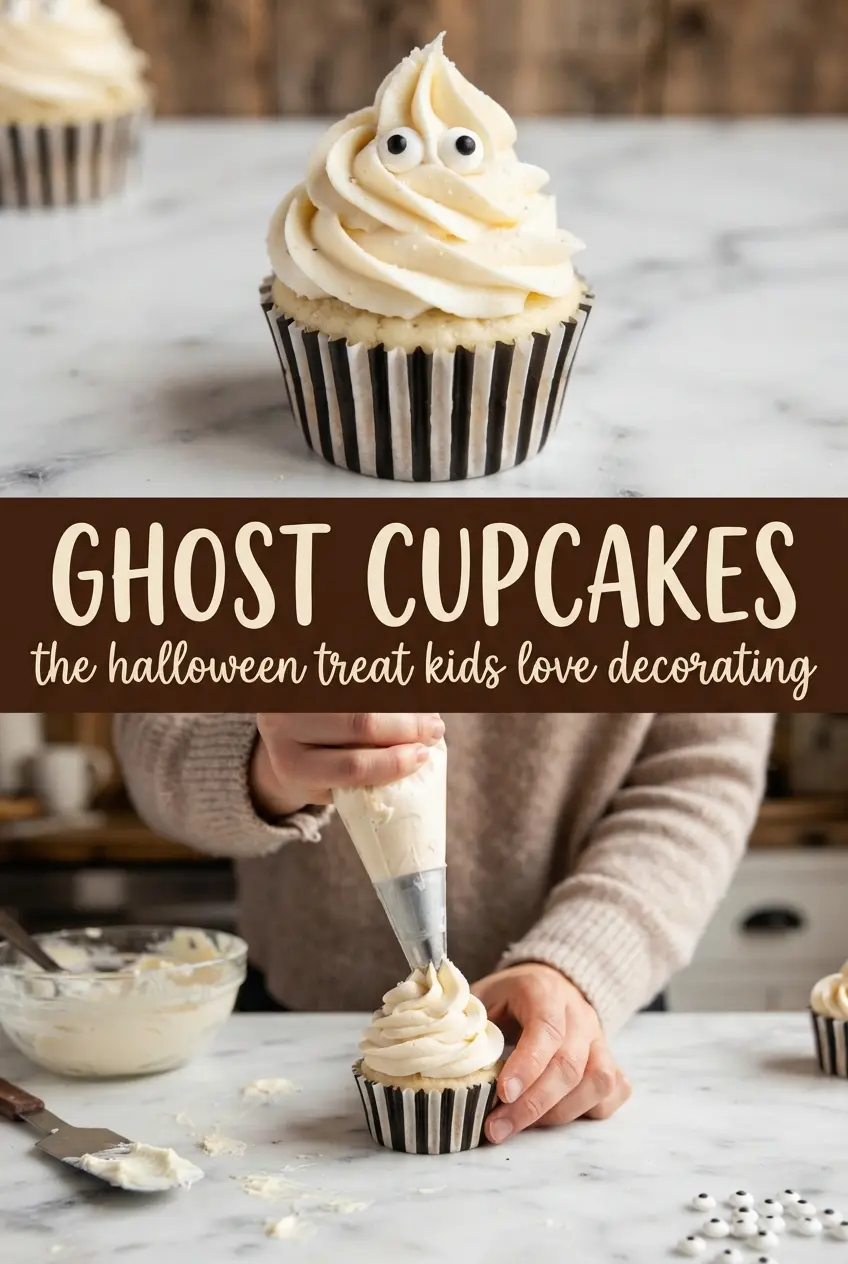
Use a large round piping tip and start at the outside edge of each cupcake, working in a continuous spiral toward the center. Build the frosting upward as you pipe so the shape narrows at the top like a little peak. If the swirl looks lopsided, stop and scrape it off before it sets; a clean redo is faster than trying to rescue a sagging ghost. Press the candy eyes on right away, then chill the finished cupcakes for a few minutes so they set.
Three Ways to Make These Ghost Cupcakes Work for Your Kitchen
Dairy-Free Ghost Cupcakes
Swap in a plant-based butter that behaves like sticks butter, and use an unsweetened non-dairy milk with some body, like oat milk. The cupcakes will still bake up tender, but the frosting may soften a little faster, so keep the decorated cupcakes chilled until serving.
Vanilla-Forward but Less Sweet
Add a little extra vanilla to the frosting and stop short of adding the full mountain of powdered sugar if you want the topping less sweet. You’ll get a softer buttercream that tastes more like vanilla frosting than straight sugar, but it still needs to be thick enough to hold the ghost shape.
Make the Ghosts Ahead for a Party
Bake the cupcakes a day in advance and frost them the day you plan to serve. If you need to decorate farther ahead, chill the finished cupcakes in a single layer, then cover them loosely once the frosting has firmed up. That keeps the eyes in place and prevents the swirl from getting smudged.
Storage and Reheating
- Refrigerator: Store frosted cupcakes in an airtight container for up to 3 days. The frosting will firm up in the fridge, and the cake stays moist.
- Freezer: Unfrosted cupcakes freeze well for up to 2 months. Wrap them individually and thaw at room temperature before decorating. I don’t recommend freezing the finished ghosts because the candy eyes and buttercream can soften unevenly when thawed.
- Reheating: These are best served at room temperature, not warmed. If the cupcakes have been chilled, let them sit out for 20 to 30 minutes so the frosting softens just enough for the texture to taste right.
Answers to the Questions Worth Asking
Halloween Ghost Cupcakes
Ingredients
Equipment
Method
- Preheat the oven to 350°F and line a muffin tin with cupcake liners.
- Whisk together the all-purpose flour and baking powder.
- Cream the butter, softened, and sugar until fluffy, then beat in the eggs, milk, and vanilla extract.
- Fold in the dry ingredients until just combined.
- Divide the batter among the liners and bake for 18-20 minutes until a toothpick comes out clean, then cool completely.
- Beat the butter, softened, for frosting and powdered sugar, for frosting until smooth and fluffy for the frosting.
- Pipe the frosting into a tall ghost shape on each cupcake, tapering to a point at the top.
- Press two small candy eyes onto each frosted ghost before serving.