
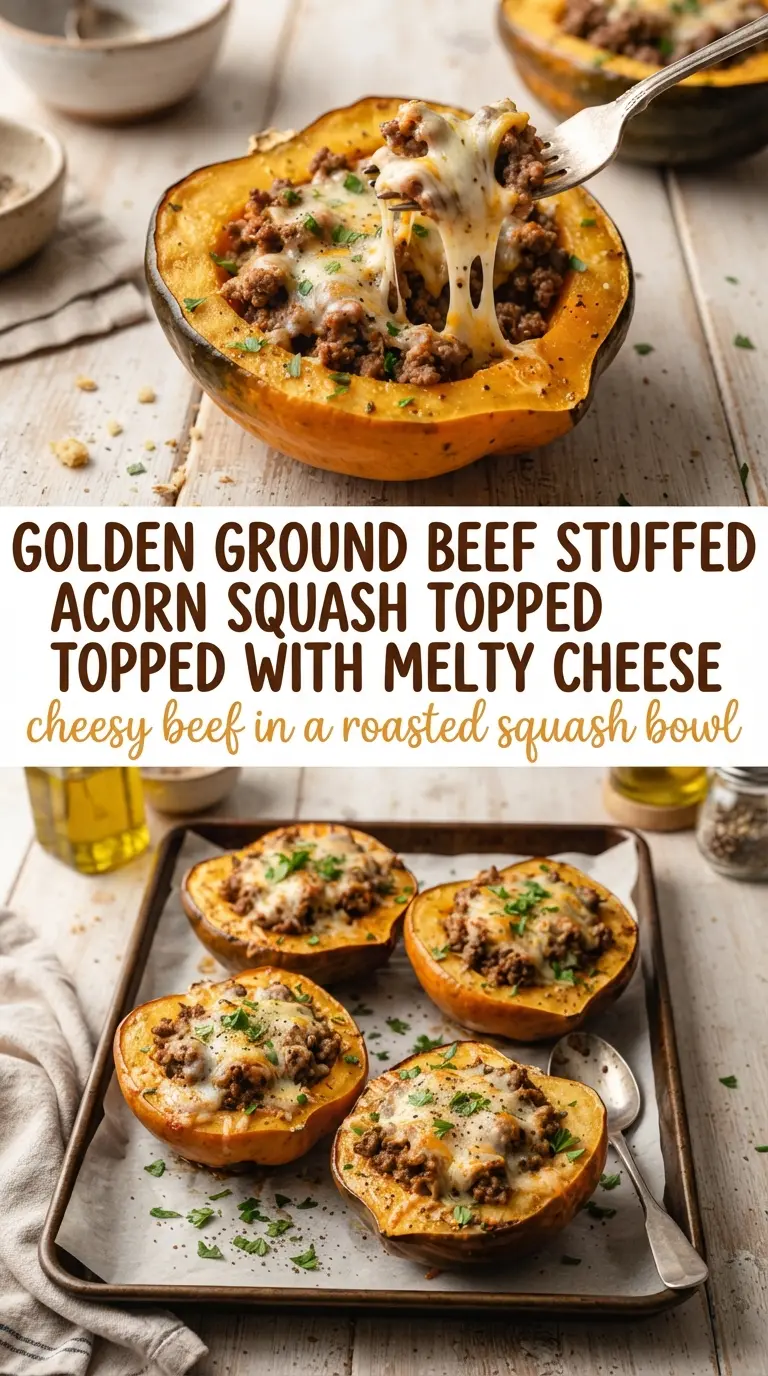
Sweet, tender acorn squash and a savory beef filling are a combination that works every time. The squash turns silky at the edges while the browned beef, tomato sauce, and melted cheese bring enough richness to make this feel like a full dinner, not just a side dish with something added to it. It’s the kind of meal that looks a little special when it comes out of the oven, but the steps are straightforward enough for a weeknight.
Roasting the squash cut-side down first does the heavy lifting. That gives you browned edges and a soft center without watering it down. The filling starts with beef and onion cooked until the pan has real color, then garlic, Italian seasoning, smoked paprika, and tomato sauce build a deep, savory base that stands up to the sweetness of the squash. If the squash is under-roasted, it stays fibrous and hard to eat. If the filling is too wet, the squash bowls get soggy. This version avoids both problems.
Below you’ll find the timing that keeps the squash tender without collapsing, plus a few smart swaps if you want to change up the cheese or make the dish a little lighter.
The squash came out tender but not mushy, and the beef filling held together perfectly instead of turning watery. I used cheddar and it bubbled up golden in exactly the time listed.
Save this stuffed acorn squash for a low-carb dinner with bubbling cheese and a savory beef filling.
The Trick to Tender Squash and a Filling That Doesn’t Weep
Acorn squash can go wrong in two directions: undercooked and stringy, or overcooked and collapsing before you get the filling in. Roasting it cut-side down first solves both problems because the cut surface steams against the pan while the flesh softens evenly. Flipping it for the final bake gives you a little more color and a sturdy bowl for the filling.
The beef matters too. If you rush it, you lose the browned bits that give the dish depth. Let the onion cook with the beef until the moisture cooks off and the pan starts to show color at the bottom. That’s the point where the tomato sauce can actually taste rich instead of flat. The cheese goes on at the end so it melts over the top without disappearing into the filling.
What Each Ingredient Is Actually Doing in This Dish
- Acorn squash — This is the edible bowl and the built-in sweet contrast for the savory filling. Look for squash that feel heavy for their size and have firm skins. If yours are very small, shorten the roast by a few minutes; if they’re large, they may need a little longer before they’re tender enough to scoop with a fork.
- Lean ground beef — Lean beef keeps the filling rich without leaving a slick of grease in the squash halves. If you only have regular ground beef, drain off the excess fat after browning so the tomato sauce doesn’t turn oily. Ground turkey works too, but it will taste lighter and benefit from an extra pinch of salt.
- Tomato sauce — This ties the filling together and keeps it moist without turning soupy. Use a plain sauce, not a heavily seasoned one, so the Italian seasoning and smoked paprika stay in control. If your sauce is very thin, simmer it a minute or two longer before stuffing the squash.
- Cheddar or mozzarella — Cheddar gives you sharper flavor and a more pronounced top layer; mozzarella melts softer and milder. Either works. If you want the best of both, use a little of each. Shred it yourself if you can, because pre-shredded cheese melts less smoothly.
- Smoked paprika and Italian seasoning — These are the quiet backbone of the filling. The paprika adds warmth and a little smoky depth, while the Italian seasoning gives the tomato base a familiar savory edge. Don’t skip the paprika unless you replace it with another smoky spice, or the filling can taste a little one-note.
How to Roast, Fill, and Finish Without Soggy Squash
Roasting the Squash Until It Yields
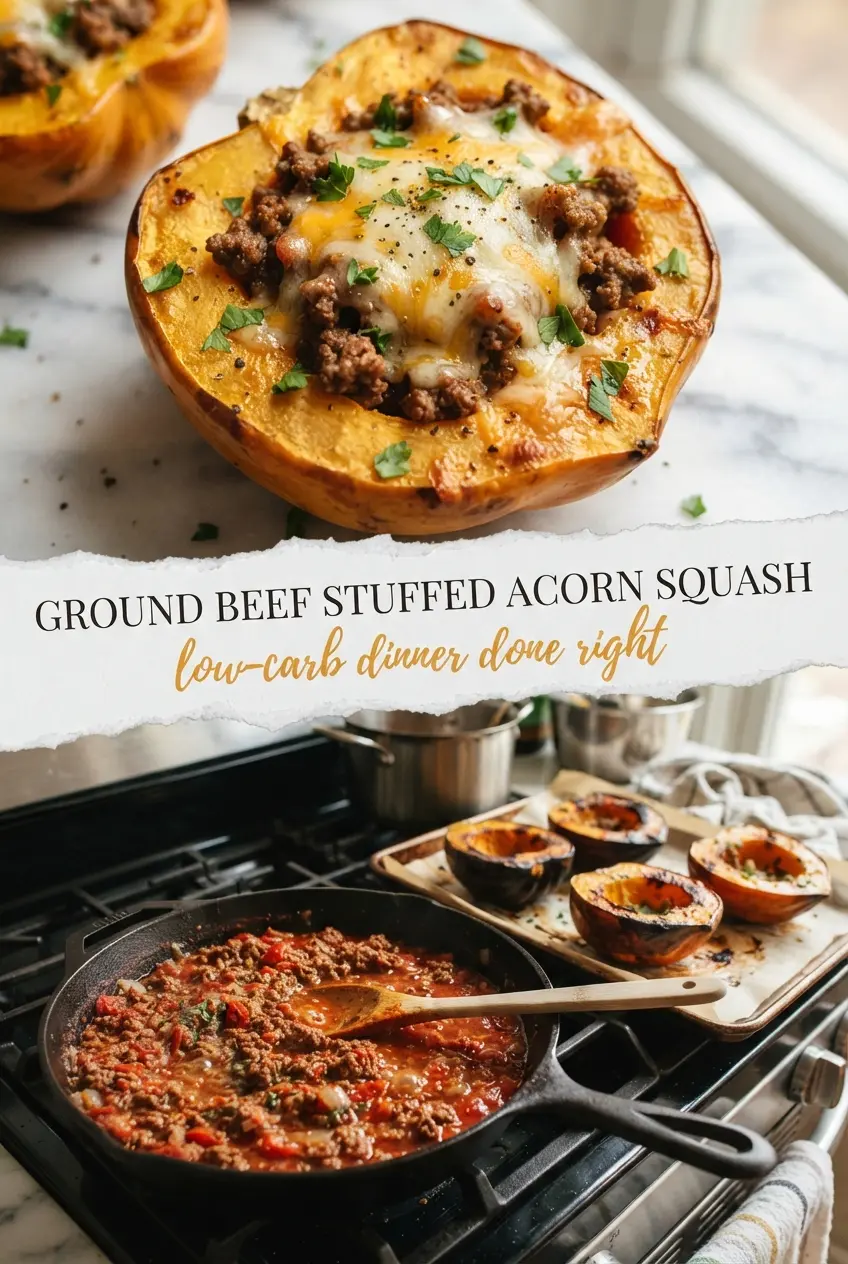
Brush the cut sides with olive oil, season them, and place them cut-side down on the pan. That position is what softens the flesh without drying out the edges. Roast until a fork slides in with only a little resistance; if the squash still feels firm, the final bake won’t rescue it. You want it tender enough to eat cleanly with a spoon, but not so soft that the shell collapses when you fill it.
Cooking the Beef Until the Pan Has Color
Brown the beef with the diced onion in a skillet and give it time to actually color before you add the garlic. If the pan is crowded or the heat is too low, the meat steams and stays pale, which leaves the filling bland. Once the onion is soft and the beef has browned, stir in the garlic, Italian seasoning, and smoked paprika for just a minute so they bloom without burning.
Reducing the Tomato Sauce
Add the tomato sauce and let it simmer until it thickens enough to mound on a spoon. That short simmer keeps the stuffing spoonable and stops extra liquid from soaking into the squash. If it looks loose, keep it on the heat another minute or two; if it’s already thick, pull it off sooner so it doesn’t dry out in the oven.
Melting the Cheese at the End
Fill the squash halves, top with cheese, and return them to the oven just long enough for the cheese to bubble and pick up a little color. The squash is already cooked, so this last bake is about finishing the dish, not cooking from scratch. If you leave it in too long, the cheese can go from melted to oily and the squash shell can start to slump.
How to Adapt This for Different Tables and Diets
Make it dairy-free
Skip the cheese or use a good meltable dairy-free shred. The dish still works because the squash and beef carry enough flavor on their own. Without the cheese, the top won’t brown the same way, so finish with a drizzle of olive oil and a few minutes under the broiler if you want a little color.
Use ground turkey instead of beef
Ground turkey works well, but it needs a little help because it’s milder and leaner than beef. Add a pinch more salt and don’t skimp on the smoked paprika. The result will be a little lighter, with a cleaner finish and less richness.
Make it gluten-free and low-carb
This recipe is naturally gluten-free and low-carb as written, as long as your tomato sauce doesn’t include added sugar or flour. That makes it an easy dinner to serve when you need something hearty without bread, pasta, or stuffing mix.
Add more bulk for bigger appetites
Stir a handful of cooked rice, cauliflower rice, or finely chopped sautéed mushrooms into the beef mixture. Rice makes it more filling and stretches the recipe further, while mushrooms add extra savoriness without changing the texture much. Keep the filling thick so it still sits neatly in the squash.
Storage and Reheating
- Refrigerator: Store leftovers in an airtight container for up to 4 days. The squash softens a bit more as it sits, but the flavor holds well.
- Freezer: It freezes better if you freeze the beef filling separately from the squash. Whole stuffed squash can become watery after thawing, so I don’t recommend freezing the assembled dish.
- Reheating: Reheat in a 350°F oven until hot through, about 15 to 20 minutes. The microwave works in a pinch, but the squash can turn mushy fast, so use short bursts if that’s your only option.
Answers to the Questions Worth Asking
Ground Beef Stuffed Acorn Squash
Ingredients
Equipment
Method
- Preheat the oven to 400°F. Brush the acorn squash halves with olive oil, season with salt and pepper, and place on a sheet pan cut-side down.
- Roast for 30 minutes at 400°F, until the squash starts to become tender when pierced.
- While the squash roasts, brown the lean ground beef with diced yellow onion in a skillet over medium-high heat for 8 minutes.
- Stir in the minced garlic, Italian seasoning, and smoked paprika, and cook for about 1 minute until fragrant.
- Add tomato sauce to the skillet and simmer for 5 minutes, stirring occasionally, until slightly thickened.
- Flip the roasted squash cut-side up and spoon the beef filling into each squash half.
- Top with shredded cheddar or mozzarella so the filling is covered.
- Bake at 400°F for 10 to 12 minutes until the cheese is bubbling and the tops look lightly golden; garnish with fresh parsley before serving.