
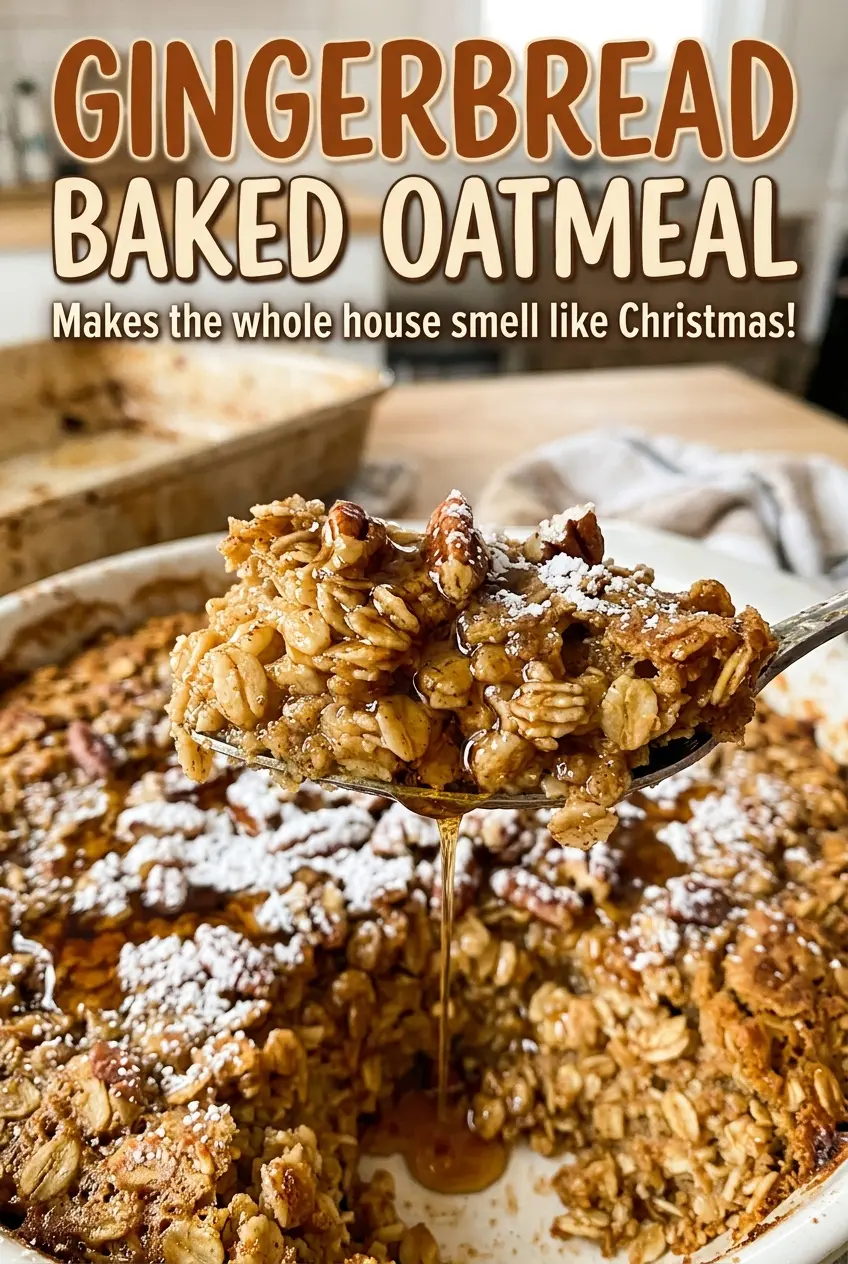
When the oatmeal comes out of the oven, the edges are lightly browned and the middle has puffed into a soft, sliceable bake. That’s the moment I want for gingerbread baked oatmeal: cozy and fragrant, but sturdy enough to scoop without turning into a bowl of porridge. The first time I made it, I expected the molasses to take over. Instead, the ginger and cinnamon keep the sweetness balanced, with just enough clove in the background.
I whisk the molasses, brown sugar, and melted butter into the milk and eggs before they meet the oats. That spreads the gingerbread flavor through every bite, rather than leaving pockets of spice or syrup. After a short rest, the oats settle and the center holds together while staying tender. It’s warm, gently spiced, and just right for breakfast.
Kitchen Note
The mixture looks looser than you might expect when it first goes into the baking dish. Don’t add extra oats to thicken it; they need that milk to bake up tender instead of dry.
Save this gingerbread baked oatmeal for a cozy breakfast with tender oats and a warmly spiced molasses center.
Why This Bakes into a Soft Slice, Not a Pot of Oatmeal
Oats and milk alone make porridge; here, eggs help the mixture set into a soft, spoonable bake that can be portioned after resting. Baking powder gives the center a little lift, so the texture isn’t a dense slab. The result lands between creamy oatmeal and a tender breakfast casserole, with each oat still easy to see.
That structure depends on giving the dry ingredients an even mix before adding the wet ones. Baking powder and the ground spices are easy to leave clumped together, especially when ginger and cinnamon have been sitting in the pantry. Stirring them through the oats first distributes the lift and warmth across the whole dish. The eggs, milk, and melted butter then coat the oats together, while molasses and brown sugar carry the gingerbread flavor into the bake.
It’s worth letting the oatmeal rest before serving, too. The short pause gives the center time to settle after baking, so a spoonful comes up tender instead of runny. This isn’t meant to cut into neat, firm squares like cake; it should hold together while remaining soft.
The Ingredients That Give This Oatmeal Its Gingerbread Character
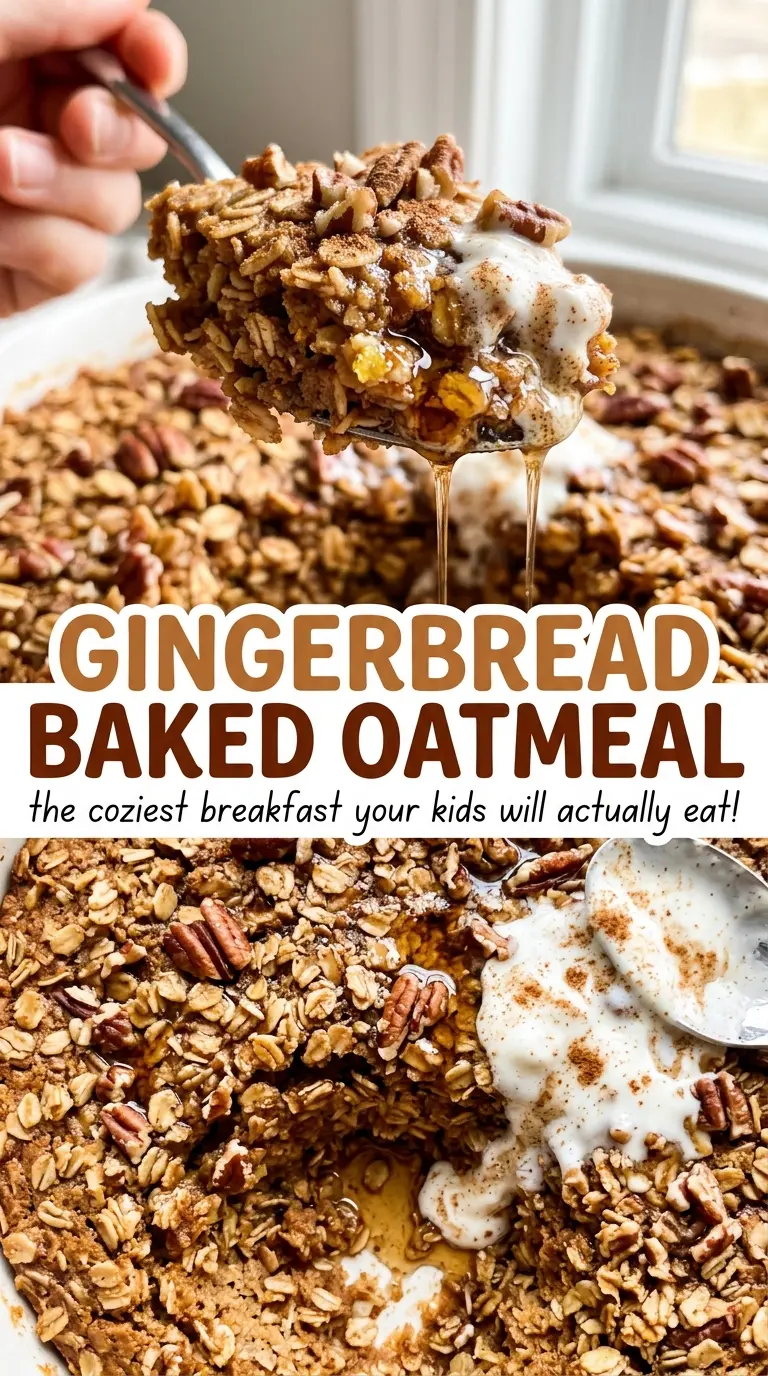
- Old-fashioned rolled oats — They keep a pleasant, chewy shape after baking, which gives each serving its oatmeal texture. Choose a fresh bag that smells mild and nutty; a bargain brand is fine as long as the flakes are whole and not stale. Quick oats soften more, so they won’t give quite the same bite.
- Unsulphured molasses — This brings the deep, slightly bittersweet note that makes the spices read as gingerbread. Regular unsulphured molasses is the right style; blackstrap is much more intense and can make the bake taste harsh. A darker unsulphured molasses can stand in measure for measure for a deeper flavor.
- Ground ginger, cinnamon, and cloves — Together, these make the oatmeal taste warmly spiced without needing a separate spice blend. Use spices that still smell fragrant when you open the jar; old, flat spices leave the molasses doing all the work. Measure the cloves carefully, since their assertive flavor can crowd out the ginger.
- Whole milk, eggs, and unsalted butter — Milk hydrates the oats, eggs help the bake set, and melted butter adds richness. Whole milk makes the center fuller and softer; unsweetened oat milk and melted plant-based butter can replace the milk and butter in equal amounts for a dairy-free version, with a slightly less rich result. Unsalted butter also lets the recipe’s measured salt stay in control.
- Packed light brown sugar — It sweetens the oats and adds a soft caramel note alongside the molasses. Dark brown sugar works in the same amount if that’s what you have; expect a deeper, more molasses-forward taste.
Build the Oat Mixture Evenly Before It Goes into the Oven
Prepare the Dish and Dry Ingredients
Heat the oven to 350°F and coat an 8-inch square baking dish with nonstick cooking spray. In a large bowl, stir together the old-fashioned oats, baking powder, ginger, cinnamon, cloves, and salt. Break up any visible spice clumps as you stir so the mix looks evenly speckled. Keeping the dry ingredients together first helps every part of the bake rise and taste consistent.
Whisk the Molasses Mixture
In a medium bowl, whisk the whole milk, eggs, molasses, packed light brown sugar, melted butter, and vanilla until combined. The mixture should look uniform, with no streaks of egg white or thick trails of molasses. If the butter is freshly melted, let it cool briefly before whisking it in; very hot butter can start cooking the eggs. Keep whisking until the brown sugar is dispersed through the liquid.
Combine and Fill the Baking Dish
Pour the milk mixture into the bowl of oats and stir until everything is evenly combined. Check the bottom of the bowl for dry oats before transferring the mixture; those pockets won’t soften as evenly in the oven. Scrape the mixture into the prepared dish and spread it into an even layer. The surface doesn’t need to be perfectly smooth, but avoid leaving a mound in the center.
Bake Until the Center Sets
Bake for 35 to 40 minutes. Look for a center that has set rather than a visibly liquid surface, with lightly browned edges. The edges may firm up before the center, so don’t judge doneness by color alone. If the middle still looks wet, give it a little more time within the baking range and check again.
Rest Before Serving
Let the dish rest for 10 minutes before serving. The center will settle as it stands, making the oatmeal easier to scoop without losing its tender texture. Serve it warm from the dish, spooning portions rather than trying to lift out firm bars. The edges will be a little more set than the soft middle.
Easy Ways to Adapt the Spice and Texture
Make It Dairy-Free
Use unsweetened oat milk in place of the whole milk and melted plant-based butter in place of the unsalted butter, keeping the same amounts. The eggs still help the oatmeal set, while the finished bake has a gentler, less buttery richness.
Turn Up the Ginger
Increase the ground ginger from 1 1/2 teaspoons to 2 teaspoons for a sharper, more warming bite. Keep the cinnamon and cloves unchanged, so the extra ginger gives the bake more zip without losing its familiar gingerbread balance.
Use Certified Gluten-Free Oats
For a gluten-free version, choose old-fashioned rolled oats labeled certified gluten-free and use the same amount. Oats themselves don’t contain wheat, but cross-contact during processing is a concern for some people. The texture and method stay the same.
Storage and Reheating
- Refrigerator: Cover and refrigerate leftovers for 3 to 4 days. The oats will firm up as they chill.
- Freezer: Freeze individual portions in airtight containers for up to 3 months. Thaw in the refrigerator before reheating for the most even texture.
- Reheating: Warm an individual portion in the microwave, loosely covered, until hot throughout. For food safety, reheat leftovers to 165°F; avoid overheating, which can make the oats rubbery at the edges.
Questions That Come Up When Baking Oatmeal
Gingerbread Baked Oatmeal
Ingredients
Equipment
Method
- Heat the oven to 350°F.
- Coat an 8-inch square baking dish with nonstick cooking spray.
- In a large bowl, stir together the oats, baking powder, ginger, cinnamon, cloves, and salt.
- In a medium bowl, whisk together the milk, eggs, molasses, brown sugar, melted butter, and vanilla until combined.
- Pour the milk mixture into the oat mixture and stir until evenly combined.
- Transfer the mixture to the prepared dish.
- Bake for 35 to 40 minutes, until the center is set and the edges are lightly browned.
- Let rest for 10 minutes before serving.