
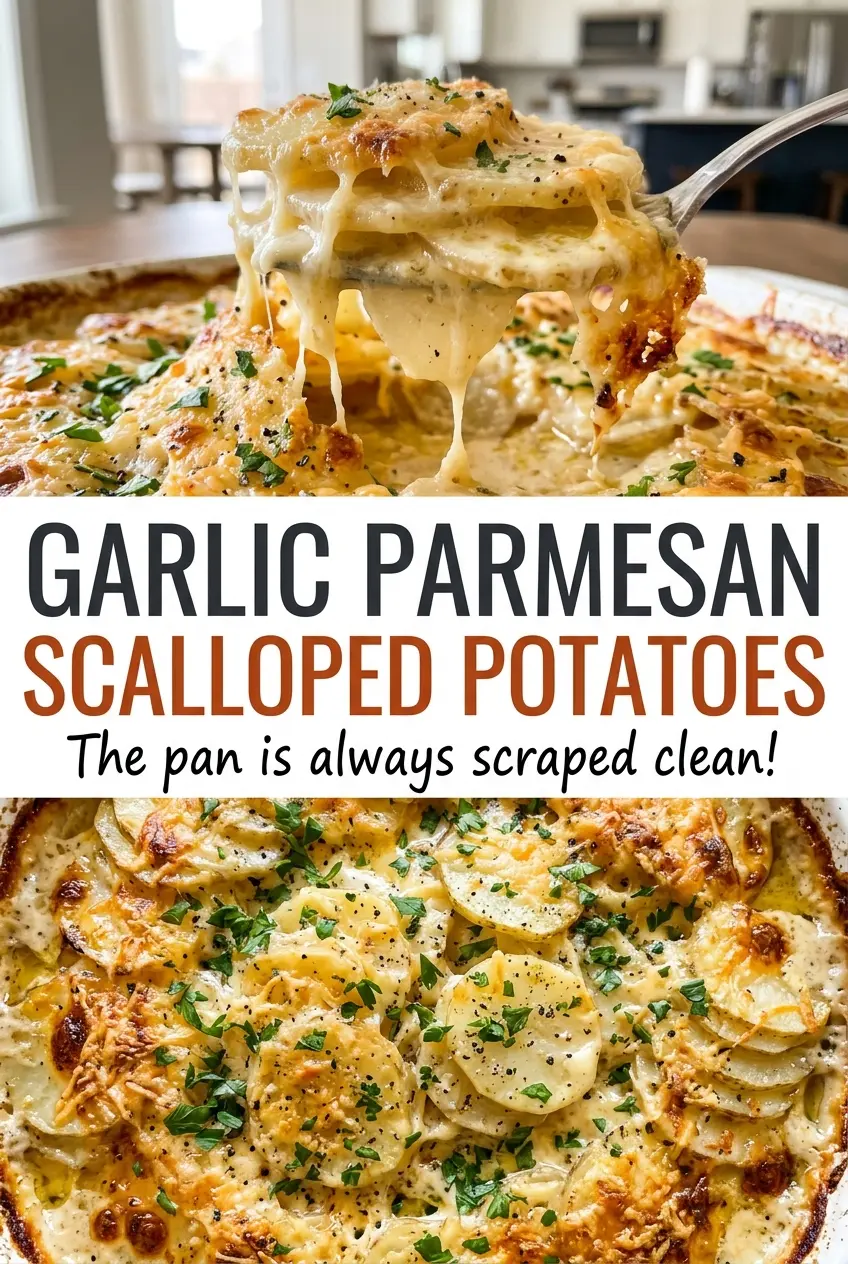
When the foil comes off, the potatoes are tender under a creamy sauce, but the top is still pale. That final stretch in the oven is what gives the Parmesan its golden finish. I make these garlic Parmesan scalloped potatoes when I want a layered potato side with a sauce that clings instead of pooling at the bottom of the dish.
The sauce starts with garlic cooked briefly in butter, then flour, milk, and cream turn it into a smooth base for finely grated Parmesan. Pouring it between two layers of thinly sliced russets coats the potatoes throughout, while the cheese on top browns as the casserole finishes baking uncovered. After a short rest, the layers are tender and easy to serve, with a savory, garlicky sauce in every scoop.
Kitchen Note
Give the casserole the full 15-minute rest before serving. The sauce settles around the potato layers during that time, so portions hold together better instead of sliding apart while they’re hot.
Save these garlic Parmesan scalloped potatoes for a cozy dinner or holiday table—the tender layers and golden cheesy top are worth keeping close.
Why Thick Potato Slices Stay Firm Under a Golden Top
A browned top doesn’t tell you whether the center of a scalloped potato casserole is tender. The potatoes are covered for the first part of baking so they can soften in the sauce; once the foil comes off, the surface has time to brown. If the slices are thick or uneven, the top may look finished while a few pieces in the middle still resist a knife.
Keep the russets close to 1/8 inch thick and consistent from slice to slice. That gives the sauce a chance to work between the layers and helps the potatoes cook at a similar pace. A sharp knife is fine; a mandoline can make uniform slices quickly, but use its hand guard. The slices should be thin, not translucent, and they don’t need to be perfectly identical to make a tender casserole. Trust the knife test through the center rather than the color of the top alone.
What the Russets, Cream, and Parmesan Each Bring
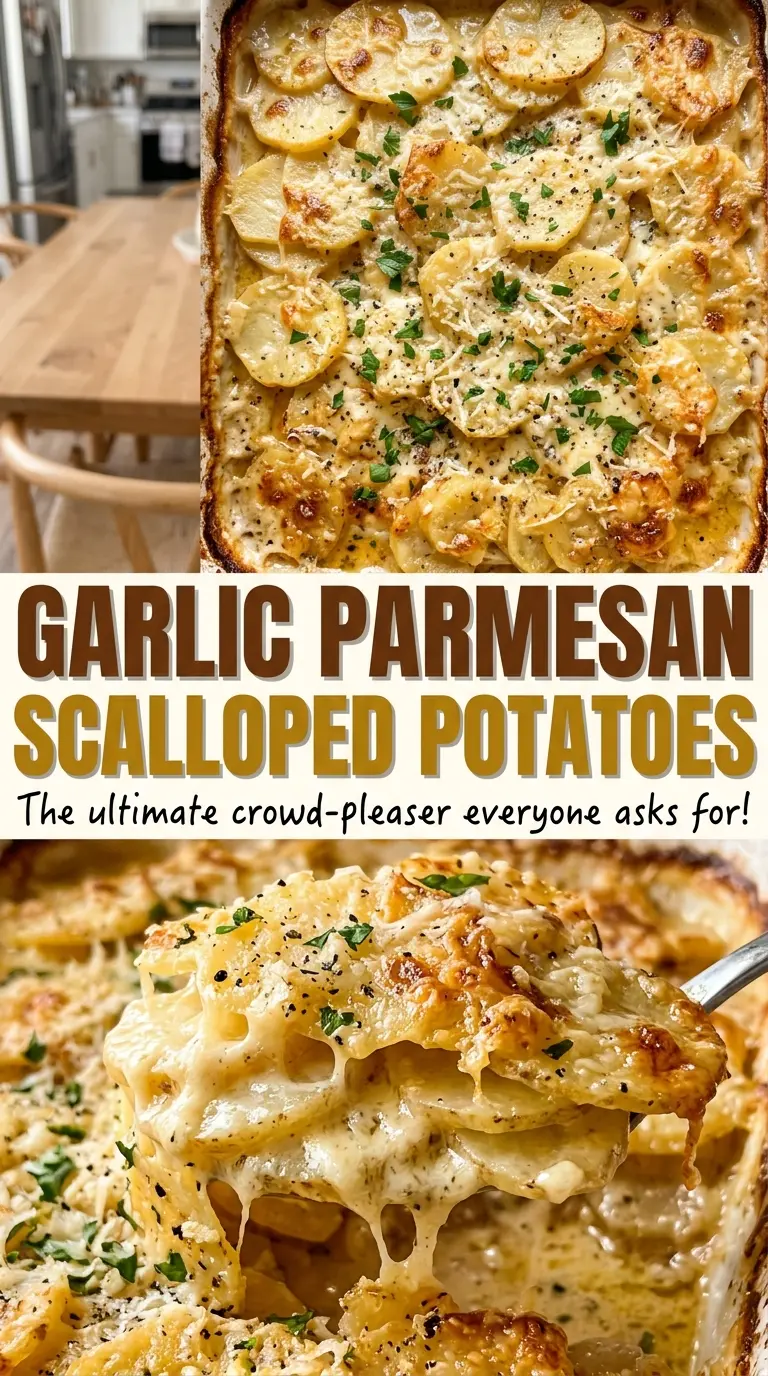
- Russet potatoes — Their starch gives the layers a soft, tender texture as they bake. Choose firm potatoes without green patches or sprouts; there’s no need to seek out specialty produce. Yukon Golds are a workable swap if you prefer slices that hold their shape more firmly, though the result won’t be quite as soft and fluffy.
- Whole milk and heavy cream — Milk keeps the sauce fluid enough to spread between the slices, while cream adds body. Standard grocery-store dairy works well here. For a lighter sauce, replace the heavy cream with half-and-half; the casserole will be less rich.
- Parmesan — Finely grated cheese melts into the sauce more evenly than coarse shreds. A block grated at home is a good choice, but finely grated packaged Parmesan is convenient and works. Pecorino Romano can replace some of the Parmesan for a sharper, saltier finish; keep in mind that it changes the balance of the sauce.
- Garlic and flour — Fresh minced garlic gives the butter a fragrant savory base, and all-purpose flour thickens the dairy into a sauce that coats a spoon. If you’re using a gluten-free flour blend, choose one labeled as a 1:1 replacement for all-purpose flour; it’s a more reliable swap for this roux than a single-ingredient starch.
Building the Garlic Parmesan Sauce Before It Goes in the Dish
Soften the Garlic in Butter
Heat the oven to 375°F and grease a 9×13-inch baking dish with butter, then arrange half of the sliced potatoes in it. In a medium saucepan, melt the remaining butter over medium heat and add the minced garlic. Cook for 30 seconds, stirring so it doesn’t catch on the bottom. Whisk in the flour and cook for 1 minute; this brief cooking time helps the sauce lose its raw flour taste.
Whisk the Dairy Until the Sauce Coats a Spoon
Pour in the milk and heavy cream gradually, whisking as you go so the flour mixture blends in smoothly. Add the kosher salt and black pepper, then simmer the sauce while whisking for 3 to 5 minutes. It’s ready when it thickens enough to coat the back of a spoon, not when it turns stiff or pasty. Take the saucepan off the heat before stirring in 1 cup of the Parmesan.
Layer the Potatoes and Sauce
Pour half of the Parmesan sauce over the first layer of potatoes, spreading it across the dish. Arrange the remaining slices on top, then pour over the rest of the sauce so the upper layer is coated, too. Sprinkle the remaining Parmesan over the surface. Cover the baking dish tightly with foil; a loose cover lets too much moisture escape during the first part of baking.
Bake Covered, Then Brown the Top
Bake for 50 to 60 minutes with the dish covered. Remove the foil and continue baking for 25 to 35 minutes, until the top is golden and a knife slides easily through the potatoes in the center. If the top has colored but the knife still meets resistance, keep baking until the potatoes are tender. Rest the casserole for 15 minutes before serving.
Two Smart Ways to Adapt the Cheese and Flour
Make the roux gluten-free
Use the same amount of a 1:1 gluten-free all-purpose flour blend in place of the all-purpose flour. Whisk it into the melted butter as you would regular flour, then add the dairy gradually. The sauce may thicken a little differently, so use the spoon-coating cue rather than judging it by the clock alone.
Trade some Parmesan for Gruyère
Replace half of the Parmesan stirred into the sauce with finely grated Gruyère, keeping the Parmesan for the topping. Gruyère melts smoothly and gives the creamy sauce a mellow, nutty note; the finished casserole tastes less sharply Parmesan-forward.
Storage and Reheating
- Refrigerator: Refrigerate leftovers within 2 hours and keep them covered for 3 to 4 days. The sauce firms up when cold, then softens as it warms.
- Freezer: Freezing isn’t ideal. The cream sauce may separate and the potatoes can turn soft or mealy after thawing.
- Reheating: Warm covered in a 325°F oven until the center reaches 165°F. Avoid reheating uncovered at high heat, which can dry the potatoes before the middle is hot.
Questions That Come Up Before Baking Scalloped Potatoes
Garlic Parmesan Scalloped Potatoes
Ingredients
Equipment
Method
- Heat the oven to 375°F.
- Grease a 9x13-inch baking dish with the butter.
- Arrange half of the potatoes in the dish.
- Melt the butter in a medium saucepan over medium heat.
- Add the garlic and cook for 30 seconds.
- Whisk in the flour and cook for 1 minute.
- Gradually whisk in the milk and heavy cream, then add the salt and pepper.
- Simmer, whisking, for 3 to 5 minutes until the sauce thickens enough to coat a spoon.
- Remove from the heat and stir in 1 cup of the Parmesan.
- Pour half of the sauce over the potatoes, arrange the remaining potatoes on top, and pour over the rest of the sauce.
- Sprinkle with the remaining 1/2 cup Parmesan and cover tightly with foil.
- Bake for 50 to 60 minutes.
- Remove the foil and bake for 25 to 35 minutes more until the top is golden and a knife slides easily through the potatoes.
- Rest for 15 minutes before serving.