
Golden sugar cookie rounds, cool tangy cream cheese frosting, and a glossy layer of fresh fruit turn these fruit pizza cookies into the kind of dessert people hover around until the tray is empty. The cookie stays crisp at the edges, the center stays tender, and every bite gives you that clean mix of buttery, creamy, and bright fruit that keeps pulling you back for one more.
What makes this version work is the balance. The sugar cookie base bakes first and cools completely, so it can hold the frosting without turning soft right away. The filling stays simple on purpose: cream cheese, powdered sugar, and vanilla beat into a spread that tastes like cheesecake but pipes or spreads cleanly. A thin brush of warm apricot jam gives the fruit a little shine and helps it look polished without making the tops sticky.
The trick with fruit pizza cookies is timing, and that matters more than fancy decoration. Below, I’ll show you how to keep the cookies crisp, which fruit holds up best, and what to change if you want to make them with a different fruit combination.
The cream cheese layer was smooth and thick, and the fruit stayed put even after I chilled them for a bit. The cookies stayed crisp underneath, which was the part I always struggle with on fruit pizzas.
These fruit pizza cookies stay crisp best when you assemble them close to serving time, and the apricot glaze gives the berries that bakery-style shine.
The Part That Keeps Fruit Pizza Cookies Crisp Instead of Soggy
The mistake that ruins most fruit pizza cookies is building them too far ahead. The cookie base is sturdy, but once frosting and juicy fruit sit on top, moisture starts moving fast. After about four hours, the texture shifts from crisp and clean to soft and cakey. That’s fine if you want a softer dessert, but if you want the contrast that makes these worth serving, timing matters.
Cooling the cookies completely is nonnegotiable. Warm cookies melt the frosting, and melted frosting turns into a slippery layer that won’t hold the fruit in place. The other small detail that pays off is spreading the cream cheese mixture in a thin, even layer. Too much filling makes the tops look heavy and can cause the fruit to slide when you brush on the glaze.
What Each Ingredient Is Actually Doing in This Dessert
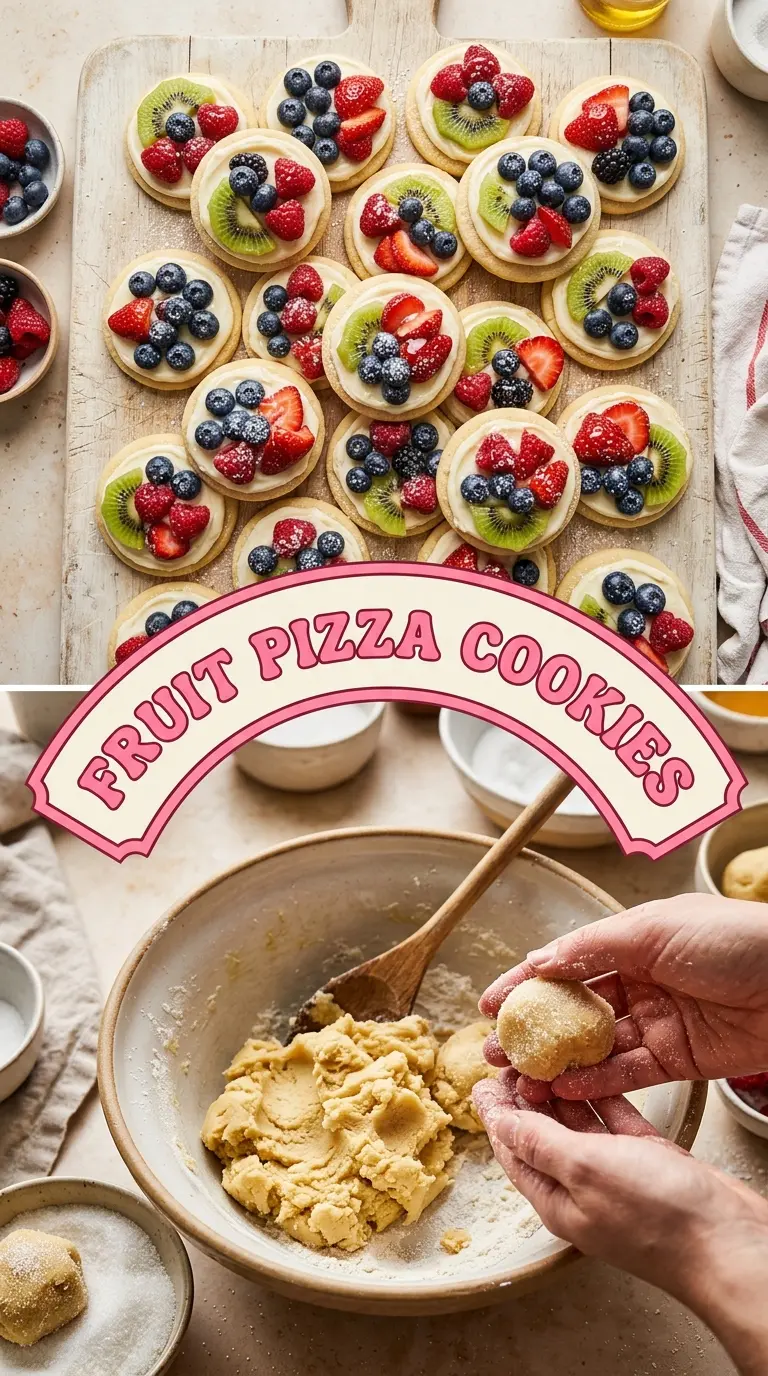
- Sugar cookie dough — This is the structure and the sweetness all in one. Store-bought dough works well here because you need a cookie that bakes evenly and holds its shape. If you want a homemade base, use a recipe that bakes up thick enough to support the topping, not a thin crisp cookie.
- Cream cheese — Full-fat cream cheese gives the filling the right tang and body. Reduced-fat versions can work, but they’re looser and a little less rich. Let it soften fully so it beats smooth without lumps; cold cream cheese leaves little white bits that won’t disappear.
- Powdered sugar — This sweetens the filling without graininess. Granulated sugar won’t dissolve the same way, and the frosting will feel gritty. Add it gradually so the filling stays thick enough to spread instead of turning runny.
- Vanilla — It rounds out the tang from the cream cheese and makes the topping taste more like dessert than dip. Pure vanilla is worth using because the flavor is front and center.
- Fresh fruit — Use fruit that’s dry, ripe, and cut into bite-size pieces. Strawberries, kiwi, blueberries, and raspberries all work because they bring color and keep some shape. Very juicy fruit can bleed into the frosting, so pat cut fruit dry before you assemble.
- Apricot jam — This is the glaze that gives the fruit shine and a light protective coat. Warm it just enough to brush easily; if it’s too hot, it can melt the frosting underneath. Strawberry jam can work in a pinch, but apricot stays clearer and lets the fruit colors pop.
Building the Layers So the Cookies Don’t Collapse
Baking the Cookie Base
Shape the sugar cookie dough into rounds and bake them until the edges are just turning golden and the centers are set. You want a cookie that looks done but still feels a little soft in the middle when it comes out of the oven, because it firms up as it cools. If you bake past that point, the base gets hard and the topping-to-cookie ratio feels off. Let the cookies cool all the way on the pan or a rack before you touch the frosting.
Mixing the Frosting Layer
Beat the softened cream cheese, powdered sugar, and vanilla until the mixture is smooth and spreadable. Stop as soon as it looks unified; overbeating makes it looser, which is the last thing you want on a cookie round. If the filling seems too soft, chill it for 10 to 15 minutes before spreading. That short rest helps it cling to the cookie instead of sliding toward the edges.
Arranging and Glazing the Fruit
Pat the fruit dry and arrange it over each cookie in a single layer or a loose pattern. Dry fruit stays put better and keeps the glaze from turning watery. Warm the apricot jam until it loosens, then brush a light coat over the fruit for shine. Heavy brushing can wash fruit around, so use just enough to give the surface a glossy finish.
How to Adapt These Fruit Pizza Cookies for Different Crowds
Make Them Dairy-Free
Use a dairy-free cream cheese that spreads smoothly and holds its shape after beating. The flavor will be a little less tangy than the original, but the fruit and vanilla keep the dessert bright. Chill the filling for a few minutes before spreading if your brand runs soft.
Turn Them Gluten-Free
Start with a gluten-free sugar cookie dough that bakes into thick, sturdy rounds. Gluten-free cookies can spread more, so give them space on the pan and let them cool fully before topping. The rest of the recipe stays the same.
Use One Fruit All the Way Through
Strawberries only, berries only, or kiwi and blueberries all work if you want a more uniform look. Just keep the fruit dry and avoid piling it too high. The prettier the top looks, the more tempting it is, but too much fruit adds weight and shortens the crisp window.
Storage and Reheating
- Refrigerator: Store assembled cookies in a single layer for up to 2 days, but expect the cookies to soften after a few hours.
- Freezer: These don’t freeze well once assembled. The fruit turns watery and the frosting texture changes after thawing.
- Reheating: No reheating needed. If you’ve chilled them, let them sit at room temperature for 10 to 15 minutes before serving so the frosting softens slightly and the cookie tastes less firm.
Answers to the Questions Worth Asking

Fruit Pizza Cookies
Ingredients
Equipment
Method
- Heat oven to 350F and bake sugar cookie dough rounds for 10-12 minutes until lightly golden at the edges. Transfer to a rack and cool completely so the frosting won’t melt.
- In a mixing bowl, beat cream cheese, powdered sugar, and vanilla until smooth and spreadable. Spreadable texture should hold gentle ridges when lifted.
- Spread the cream cheese mixture over each cooled cookie in an even layer. Cover the surface for a sturdy base for the fruit.
- Arrange strawberries, blueberries, kiwi, and raspberries on top in a mosaic pattern. Place the fruit close together so every bite has variety.
- Warm apricot jam and brush lightly over the fruit to create a glossy finish. Serve within 4 hours for the crispiest cookie texture.