
Charred tomatoes and peaches make a salsa with the kind of contrast that keeps people standing by the bowl long after the chips are gone. The tomatoes turn jammy at the edges, the peaches bring a soft sweetness that never reads as dessert, and the jalapeño and onion keep everything sharp enough to stay grounded. It tastes bold and smoky, but still fresh.
The trick is getting enough color on the fruit and vegetables before they go into the bowl. That blackening isn’t a garnish; it’s where the flavor comes from. Broiler, grill, or open flame all work, but the pieces need direct high heat so their edges blister instead of steaming. Once they cool slightly, the rest comes together fast with lime and cilantro to wake everything back up.
Below you’ll find the roasting cues that matter, how to keep the salsa from turning watery, and a few ways to adjust the heat depending on who’s reaching for the chips.
The peaches got those little charred spots and the salsa tasted smoky, sweet, and bright all at once. I served it slightly warm with tortilla chips and it was gone before dinner started.
Fire Roasted Tomato And Peach Salsa with smoky char and sweet heat is perfect for the chip bowl, tacos, or anything that needs a bright, bold finish.
The Char You Want Is the Flavor You Need
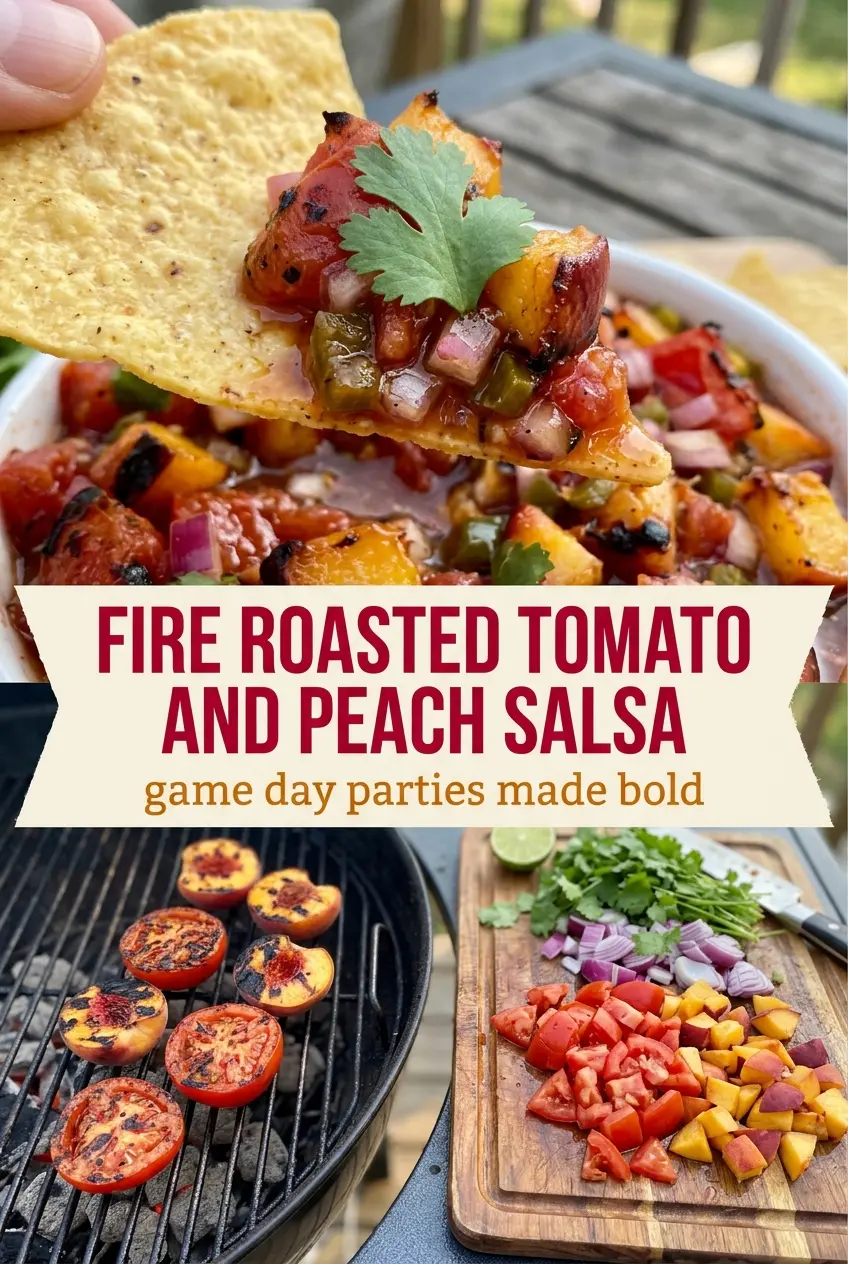
Soft fruit and juicy tomatoes can turn watery fast if they never pick up real heat. That’s the difference between a salsa that tastes mixed and one that tastes built. You want the tomatoes and peaches to blister, collapse slightly, and give off a little steam while the cut sides darken. That char concentrates the sugars and adds the smoky edge that makes the whole bowl taste louder.
The other common mistake is chopping everything before it cools or blending it too far. Both of those moves strip the salsa of texture. Rough chopping after a short rest keeps some structure in the peaches and tomatoes, and that mix of chunks and juices gives you a salsa that clings to chips instead of running off them.
What Each Ingredient Is Actually Doing in This Bowl
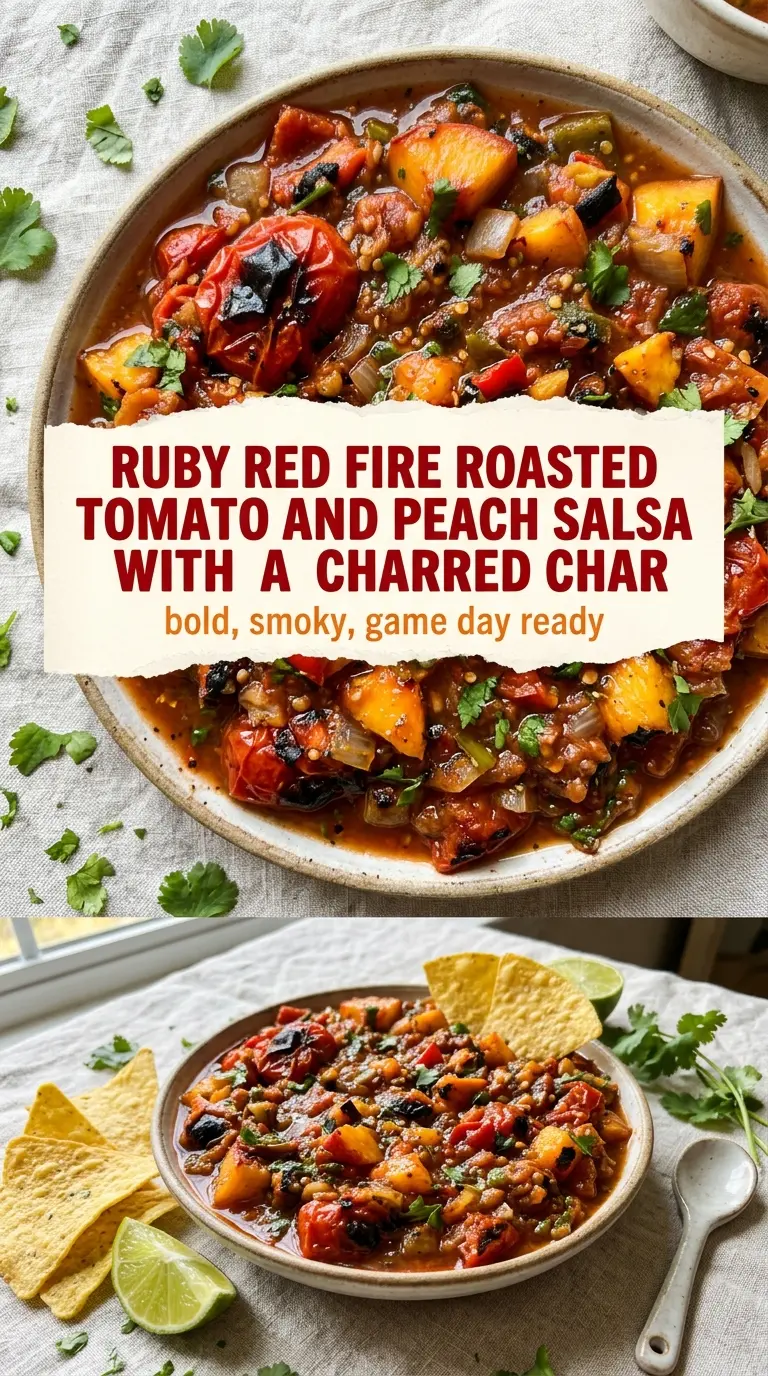
- Tomatoes — Use ripe, heavy tomatoes with some give. They collapse into a juicy base and bring the acidic backbone that keeps the sweetness from taking over. If you only have smaller tomatoes, halve them and roast them cut-side up first so they don’t dry out before they soften.
- Peaches — Slightly firm peaches hold up better than very soft ones. Once they char, they add sweetness and a floral note that makes the salsa taste layered instead of just smoky. Nectarines work too, but they land a little firmer and less perfumed.
- Jalapeño — Roasting the pepper rounds out its raw bite, and leaving in some seeds gives the salsa a little kick. If you want less heat, remove the seeds after charring. For more heat, use two peppers or swap in a serrano.
- Red onion — Quartered onion chars into something sweet and savory, not harsh. It gives the salsa body and a little bite. White onion works if that’s what you have, but red onion brings a better color and a cleaner sweetness here.
- Lime juice — This is the reset button after the broiler. It brightens the char and pulls the peaches and tomatoes back into balance. Fresh lime matters more than bottled here because the salsa depends on that sharp lift at the end.
- Cilantro — Add it after the vegetables cool a bit so it stays fresh and green. It doesn’t just garnish the salsa; it finishes the smoky-sweet base with a clean herbal note.
How to Build the Smoke Without Turning Everything Mushy
Getting the Color First
Set the broiler or grill to high and give the tomatoes, peaches, jalapeño, and onion direct exposure to the heat. The goal is blackened spots and softened edges, not a fully cooked-down pile. If the pieces are sitting in a lot of juice, they’ll steam instead of char, so keep them in a single layer and turn only when one side has real color.
Letting the Steam Escape
After charring, let everything cool just enough to handle. That short rest keeps you from burning your hands, but it also lets some of the aggressive heat die down so the lime juice and cilantro don’t wilt on contact. If you chop too soon, the fruit will leak more liquid and the salsa will go slack.
Finishing With Texture in Mind
Rough chop the charred ingredients instead of pulsing them into a purée. You want a spoonable salsa with visible pieces of peach and tomato, not a smooth sauce. Stir in the cilantro and lime at the end, then taste for salt. If the salsa tastes flat, it usually needs a little more salt and another squeeze of lime, not more heat.
Three Ways to Make This Salsa Fit the Table
Make It Milder for a Mixed Crowd
Remove the jalapeño seeds and inner ribs before charring, or use just half a pepper. You’ll keep the smoky pepper flavor without the burn, and the peaches will stand out more. If you skip the pepper entirely, add a tiny pinch of cayenne at the end only if the salsa tastes too soft.
Make It Vegan and Gluten-Free Without Changing Anything
This salsa already fits both of those needs as written. The only thing that changes the final result is what you serve it with, so pair it with chips, tacos, grilled vegetables, or rice bowls. The recipe doesn’t rely on any dairy, gluten, or hidden thickeners to get its texture.
Use Nectarines or Mango When Peaches Aren’t Around
Nectarines behave almost the same way as peaches and give you the same charred sweetness with a slightly firmer bite. Mango works too, but it turns softer and sweeter, so cut the pieces larger and keep a close eye on the broiler. With mango, a little extra lime helps keep the salsa from tasting one-note.
Storage and Reheating
- Refrigerator: Store in an airtight container for up to 3 days. The salsa will soften and release more juice as it sits, which is normal.
- Freezer: I don’t recommend freezing this one. The peaches and tomatoes turn mushy after thawing, and the texture loses the fresh, chunky bite that makes it work.
- Reheating: This salsa is best served slightly warm or chilled, so there’s no real reheating step. If you want it warmer, let it sit at room temperature for 20 minutes. Microwaving makes it watery fast.
Questions I Get Asked About This Recipe
Fire Roasted Tomato And Peach Salsa
Ingredients
Equipment
Method
- Preheat the broiler or grill to high heat until very hot.
- Char the tomatoes, peaches, jalapeño, and onion over the high heat until blackened in spots, about 8 to 10 minutes.
- Let the vegetables and fruit cool slightly, then remove the jalapeño stem.
- Roughly chop everything and combine in a bowl.
- Stir in the cilantro and lime juice.
- Season with salt to taste and serve slightly warm or chilled.