
Juicy mango, sharp red onion, and a squeeze of lime turn into a salsa that tastes bright, clean, and just a little addictive. The sweet fruit softens the bite of the onion and jalapeño, and the whole bowl comes together with enough freshness to wake up grilled chicken, fish, tacos, or a stack of tortilla chips.
What makes this version work is balance. Mango needs acid and salt to taste like more than just cut fruit, and lime juice does that heavy lifting here. A short rest after mixing gives the onion time to mellow and lets the mango release just enough juice to coat everything without turning the salsa watery.
Below, I’m showing you how to pick mangoes that dice cleanly, what to do if your jalapeño runs hot, and how to keep the salsa from turning mushy before serving.
The mango stayed in neat little cubes and the lime pulled everything together after about 10 minutes. I served it with grilled shrimp and my husband kept sneaking spoonfuls straight from the bowl.
Save this mango salsa for the next time you need a bright, no-cook topping that comes together in minutes.
The Trick to Keeping Mango Salsa Bright, Not Watery
Mango salsa goes limp when the fruit is overripe or the bowl sits too long without acid and salt. The goal is soft-edged cubes that still hold their shape after tossing, not a soupy fruit salad. If the mango is mushy before you even start, the salsa will collapse as soon as the lime hits it.
The other thing that throws people off is the onion. Raw red onion can take over fast, so a fine dice matters here. Small pieces distribute better, and the 10-minute rest gives the sharpness time to settle into the sweetness of the mango instead of fighting it.
What Each Ingredient Is Actually Doing in This Salsa
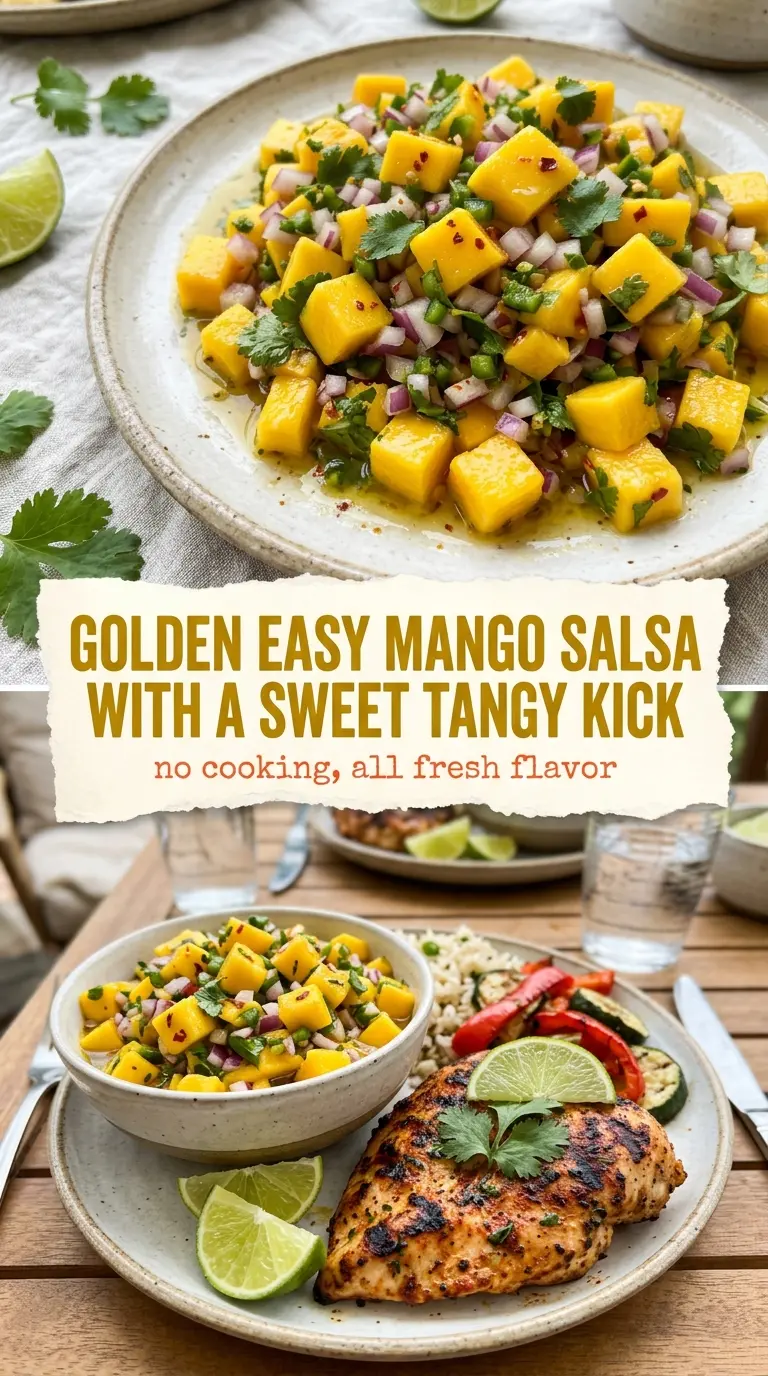
- Mango — This is the base, so ripe fruit matters. Look for mangoes that give slightly when pressed and smell fruity at the stem end. Hard mangoes stay starchy and bland, while overripe ones turn stringy and muddy in the bowl.
- Red onion — It brings the sharp, savory edge that keeps the salsa from tasting flat. Dice it finely so you get flavor in every bite without crunchy chunks that dominate the fruit. If yours is extra pungent, soak it in cold water for 5 minutes and drain well before mixing.
- Jalapeño — This adds warmth, not heat for heat’s sake. Seed it for a milder salsa, or leave a few seeds if you want a little kick. A fresher pepper tastes cleaner than one that’s been sitting around too long.
- Lime juice — Fresh lime juice wakes up the mango and keeps the salsa tasting crisp. Bottled juice can work in a pinch, but it tastes flatter and less lively. Add it right before serving so the fruit doesn’t soften too quickly.
- Cilantro — This gives the salsa its green, herbal finish. Chop it just before using so it stays fragrant. If you hate cilantro, use chopped mint for a different but still fresh result.
Building the Salsa So the Fruit Stays in Pieces
Start With Mango That Cuts Cleanly
Dice the mango into neat pieces that are about the same size as the onion. That keeps the texture even and helps the lime coat everything instead of pooling at the bottom. If the mango is too soft, it will smear as you stir, and the salsa will lose that fresh, chunky look.
Mix Gently, Not Aggressively
Combine the mango, onion, and jalapeño first, then add the cilantro and lime. Stir with a light hand so you don’t crush the fruit. If you press the spoon hard through the bowl, you’ll start breaking the mango down before the salt even goes in.
Let the Rest Do Its Job
The 10-minute rest matters. It gives the salt time to pull out a little juice and lets the onion soften just enough to blend in. Serve it after that window, while the mango still looks glossy and the lime is still bright on the tongue.
Three Ways to Adjust It Without Losing the Balance
Make It Milder for Kids or Heat-Sensitive Guests
Skip the jalapeño entirely, or use only a small piece with the seeds removed. You’ll lose the little pop of heat, but the mango and lime stay front and center instead of getting buried under spice.
Make It Vegan-Friendly With No Changes at All
This salsa is naturally vegan, so the only thing that matters is what you serve it with. It works just as well over grain bowls, black bean tacos, or grilled vegetables as it does next to chips.
Turn It Into a Heartier Salsa for Grilled Meat
Add diced avocado right before serving or fold in a spoonful of minced bell pepper for extra crunch. Avocado makes it richer and creamier, while bell pepper keeps the clean, fresh bite and stretches the batch a little further.
Storage and Reheating
- Refrigerator: Store in an airtight container for up to 2 days. The mango will soften and release more juice as it sits.
- Freezer: Don’t freeze it. Mango salsa turns watery and the fresh onion loses its clean bite after thawing.
- Reheating: Not needed. Serve it cold or at room temperature, and if it has sat in the fridge, stir it before serving to redistribute the juices.
Answers to the Questions Worth Asking
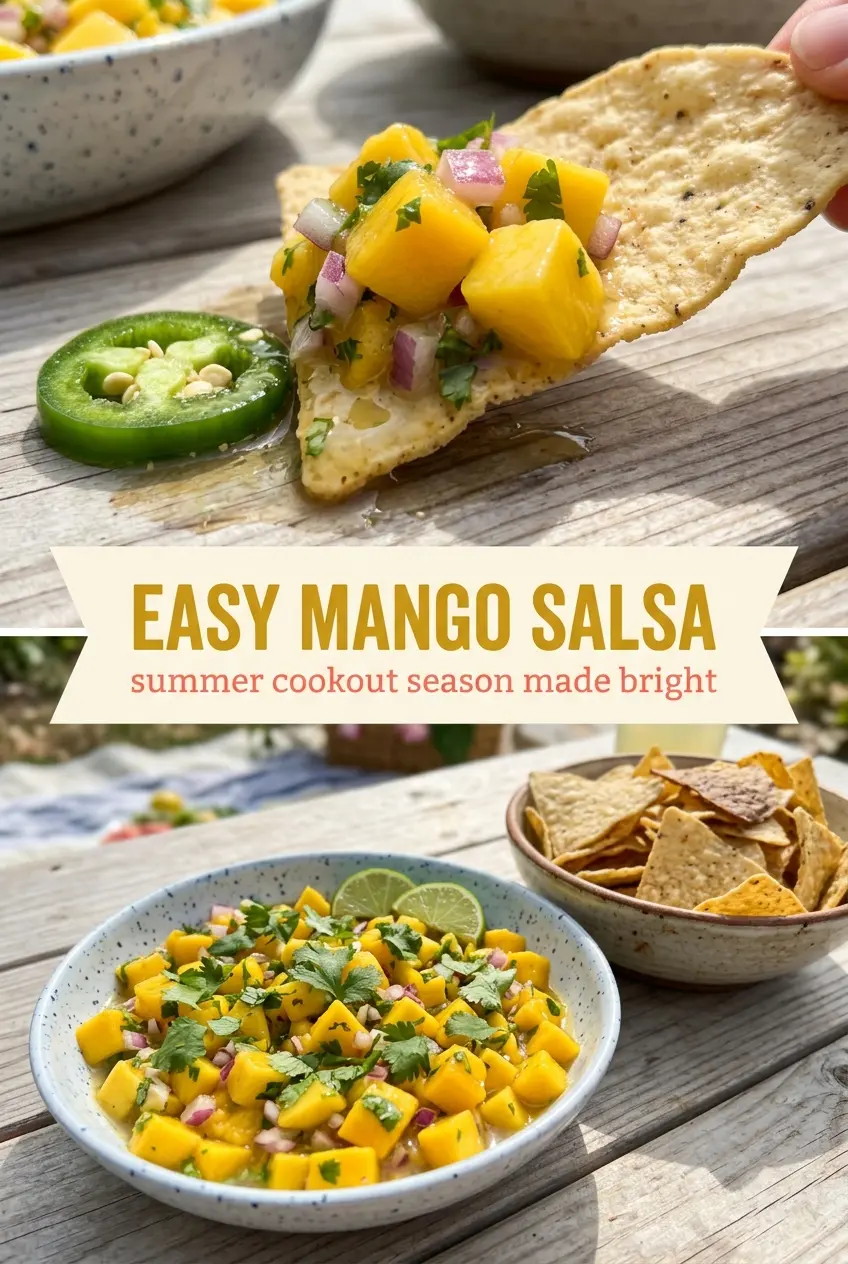
Easy Mango Salsa
Ingredients
Method
- Combine the diced mango, red onion, and minced jalapeño in a bowl; press the mixture lightly so the onion starts to mingle, and keep it visually spread out with an even color.
- Stir in the chopped cilantro, distributing it throughout so you see green flecks across the golden mango.
- Drizzle the lime juice over the mixture and toss to combine until the mango looks glossy and lightly coated.
- Season with salt to taste, stirring once more so the seasoning disappears evenly.
- Let the salsa rest for 10 minutes so the flavors meld, watching the juices pool slightly at the bottom for a juicier texture.
- Serve chilled or at room temperature alongside chips or grilled dishes, keeping the salsa bright and fresh-looking with visible mango cubes.