
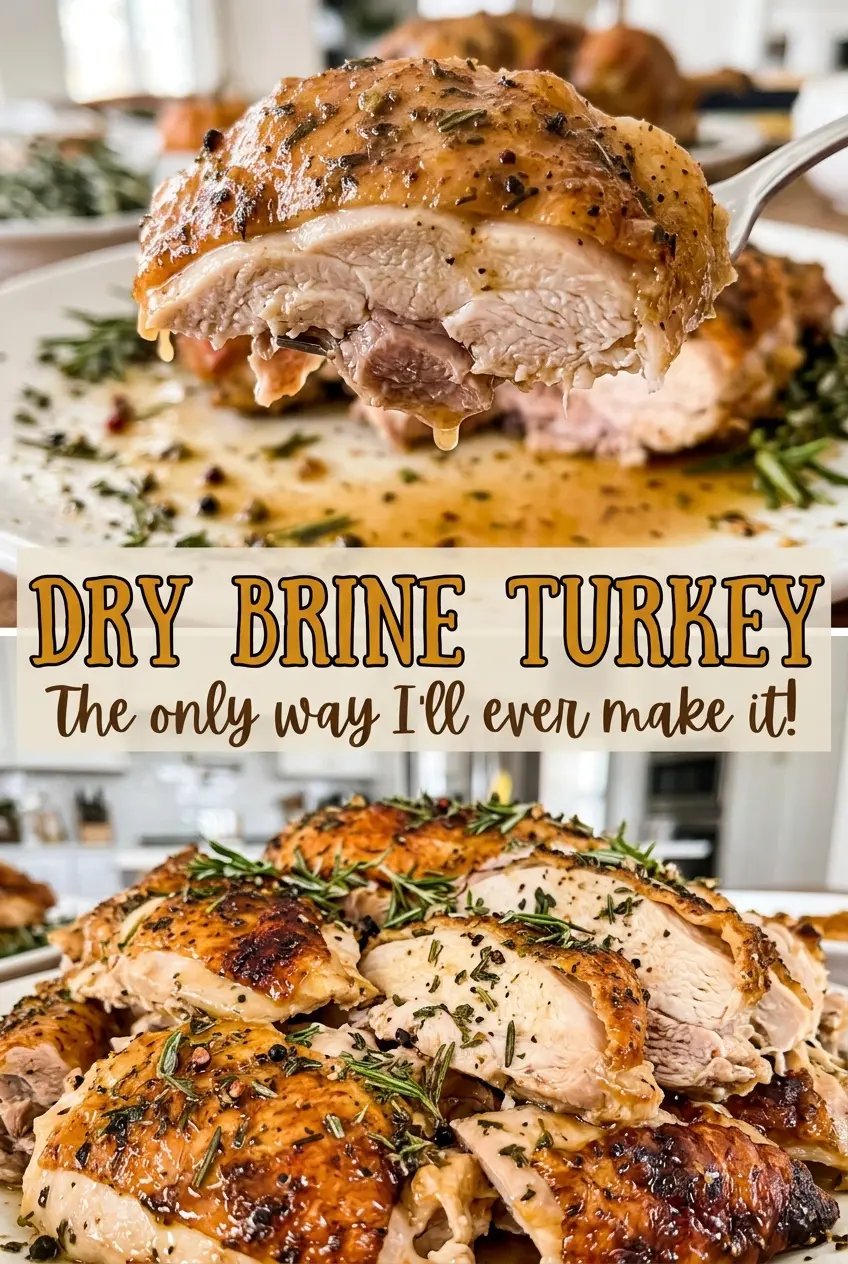
The skin is the first thing I watch when a turkey comes out of the oven: it should look dry and bronzed, not slick with moisture. A dry brine helps get there without taking up space in a stockpot or leaving you with a bucket of salty liquid to deal with. For this Dry Brine Turkey, the salt seasons the meat while the uncovered bird sits in the refrigerator, and the skin has time to dry before roasting.
I rub the salt over the whole turkey, including under the skin and inside the cavity, so the seasoning reaches more than the surface. The uncovered rest matters just as much as the salt. It gives the skin a chance to dry, which helps it brown in the oven, while the meat stays juicy when you roast the bird to temperature and let it rest before carving. The result is well-seasoned turkey with browned skin and slices that hold their juices.
Kitchen Note
Loosen the skin gently over the breast and thighs; don’t tug when you meet resistance. Keeping the skin intact makes it easier to spread the salt evenly underneath.
Save this Dry Brine Turkey for a roast with deeply seasoned meat and skin that has time to dry before it goes in the oven.
Why a Turkey That’s Already Salted Can’t Take This Dry Brine
The biggest decision happens at the store, before the salt ever touches the bird. This method is for a fully thawed turkey that hasn’t been koshered, pre-brined, or injected with a salt solution. Those birds already contain added salt, so layering this dry brine on top can make the meat unpleasantly salty. Check the package carefully; a turkey labeled with a solution or as self-basting isn’t the plain bird this method needs.
With a plain turkey, the salt has a clear job: it seasons the meat during its long rest instead of just coating the outside at the last minute. That works because the salt has time to draw a little moisture from the surface and dissolve into it, then move back into the meat. An already salted bird starts with that process partly handled, but you don’t know how much salt is already there. I don’t try to compensate by guessing at a smaller amount. Choose the right kind of turkey first, and the brining step stays predictable.
Why the Turkey, Salt, and Oil Each Matter Here

- Plain whole turkey — Start with a fully thawed bird that hasn’t been salted or injected with a salt solution. The exact size here is a 12-pound turkey; it gives the brine and roasting window a clear target. You don’t need a specialty or premium bird, but do read the package instead of assuming every whole turkey is untreated.
- Diamond Crystal kosher salt — The large, light crystals are easy to distribute over the bird. Salt brands vary in crystal size, so measuring a different salt by the same volume won’t necessarily deliver the same amount. For this version, use Diamond Crystal rather than making an uncalculated swap to table salt or another brand.
- Neutral oil — Oil coats the skin before roasting and helps the black pepper cling. Any neutral oil you already use for cooking works; a strongly flavored oil would add a taste that doesn’t belong in this simple roast.
- Black pepper — It adds a mild, savory bite to the skin. Freshly ground pepper has a sharper aroma, while preground black pepper is convenient and works well here. Keep it for the roasting stage rather than mixing it into the salt rub.
How to Brine and Roast the Turkey Without Guesswork
Prepare the Bird for an Even Salt Rub
Remove the neck and giblets, then pat the turkey dry with paper towels. Drying the surface first makes it easier to handle and helps the salt stay where you rub it. Gently loosen the skin over the breast and thighs, taking care not to tear it. Spread the salt across the outside, under the loosened skin, and inside the cavity so the seasoning reaches the whole bird.
Give the Salt Time in the Refrigerator
Set the turkey breast side up on a rack in an 18×13-inch rimmed baking sheet. Refrigerate it uncovered for 24 to 48 hours. The rack keeps the bird raised above the baking sheet, while the open refrigerator air helps the surface dry. Don’t cover the turkey during this stage; trapped moisture works against a dry skin surface.
Oil the Skin Before Roasting
Arrange an oven rack in the lower third of the oven and heat the oven to 325°F. Transfer the turkey to a rack in a 16×13-inch roasting pan, rub the skin with the neutral oil, and sprinkle on the black pepper. Keep the bird breast side up. The oil gives the skin an even coating, and the pepper stays on the surface instead of getting lost under the skin.
Roast to Temperature, Then Rest
Roast for 3 to 3 1/2 hours, checking the thickest part of the breast and the innermost part of the thigh with a thermometer. Both spots need to read 165°F; don’t rely on color or the clock alone. When the turkey reaches that temperature, transfer it to a carving board and leave it to rest for 30 minutes. Carving immediately lets more of the juices run out onto the board instead of staying in the meat.
Two Simple Ways to Change the Finish
Leave the Black Pepper Off
For a pepper-free bird, omit the black pepper and keep the rest of the method the same. The roast will have a cleaner, salt-forward taste, without the peppery edge on the skin.
Roast Without the Oil
You can omit the neutral oil if you want to avoid added oil. The turkey will still roast, but the skin may brown less evenly and the pepper won’t cling as readily.
Storage and Reheating
- Refrigerator: Refrigerate carved leftovers within 2 hours and use them within 3 to 4 days. The skin softens as it sits, but the meat keeps well.
- Freezer: Freeze carved portions in airtight packaging for up to 2 to 3 months for best quality. Thaw them in the refrigerator before reheating.
- Reheating: Warm slices gently, covered, until hot throughout. Avoid reheating uncovered for a long time, which dries out the breast meat.
Questions That Come Up Before the Turkey Goes in the Oven
Dry Brine Turkey
Ingredients
Equipment
Method
- Remove the neck and giblets from the turkey.
- Pat the turkey dry with paper towels.
- Gently loosen the skin over the breast and thighs.
- Rub the salt evenly over the turkey, including under the skin and inside the cavity.
- Set the turkey breast side up on a rack in an 18x13-inch rimmed baking sheet and refrigerate uncovered for 24 to 48 hours.
- Arrange an oven rack in the lower third of the oven.
- Heat the oven to 325°F.
- Transfer the turkey to a rack in a 16x13-inch roasting pan.
- Rub the skin with the oil.
- Sprinkle with the black pepper.
- Roast for 3 to 3 1/2 hours, until a thermometer inserted into the thickest part of the breast and the innermost part of the thigh reads 165°F.
- Transfer the turkey to a carving board and rest for 30 minutes before carving.