
When the chicken is tender, the slow cooker is full of fragrant liquid that looks more like broth than Pad Thai sauce. That’s expected with Crockpot Chicken Pad Thai: the chicken cooks gently in the tangy sauce, but the sauce needs a separate turn in a skillet before it can cling to noodles.
I keep the rice noodles out of the slow cooker until the very end. They cook quickly in boiling water, then get tossed with the reduced sauce, shredded chicken, and softly scrambled eggs. That keeps them from soaking up liquid for hours and turning soft.
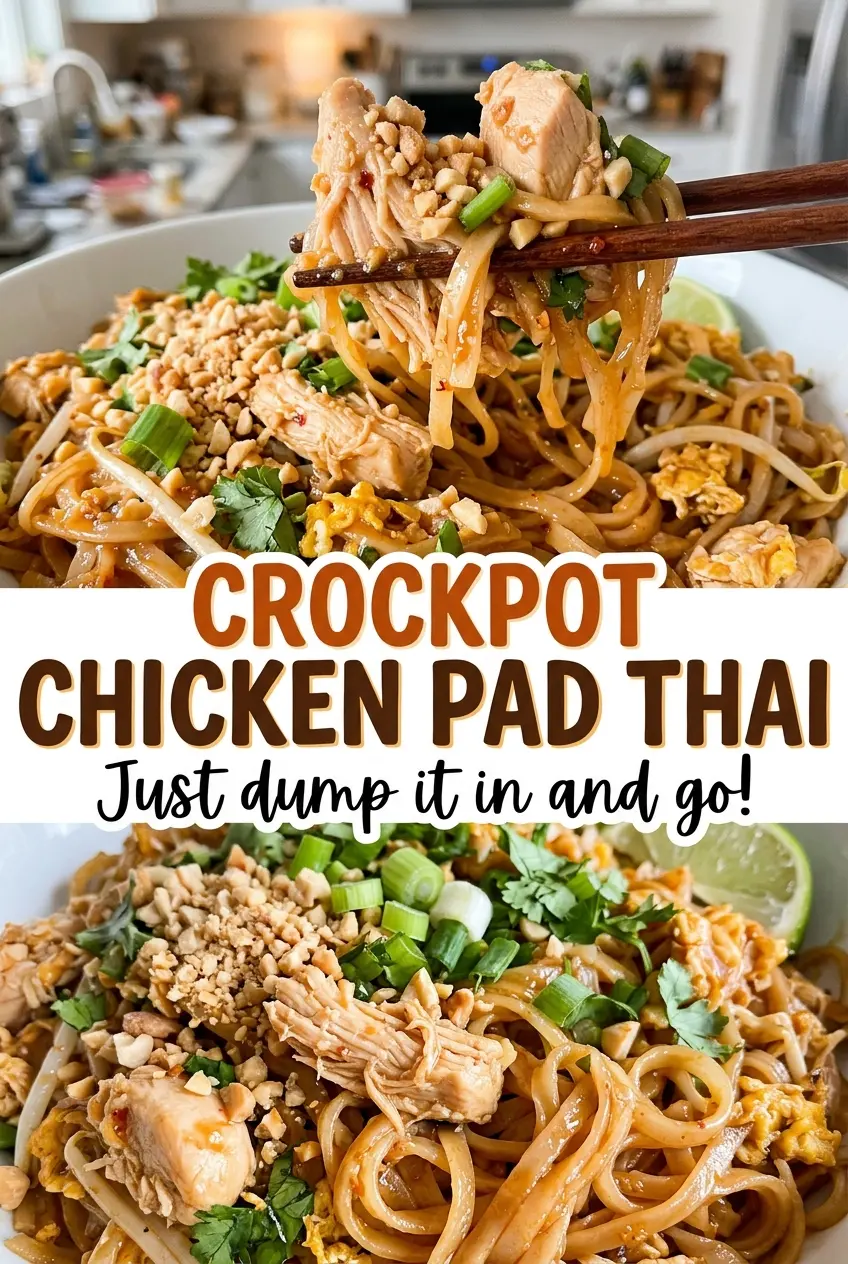
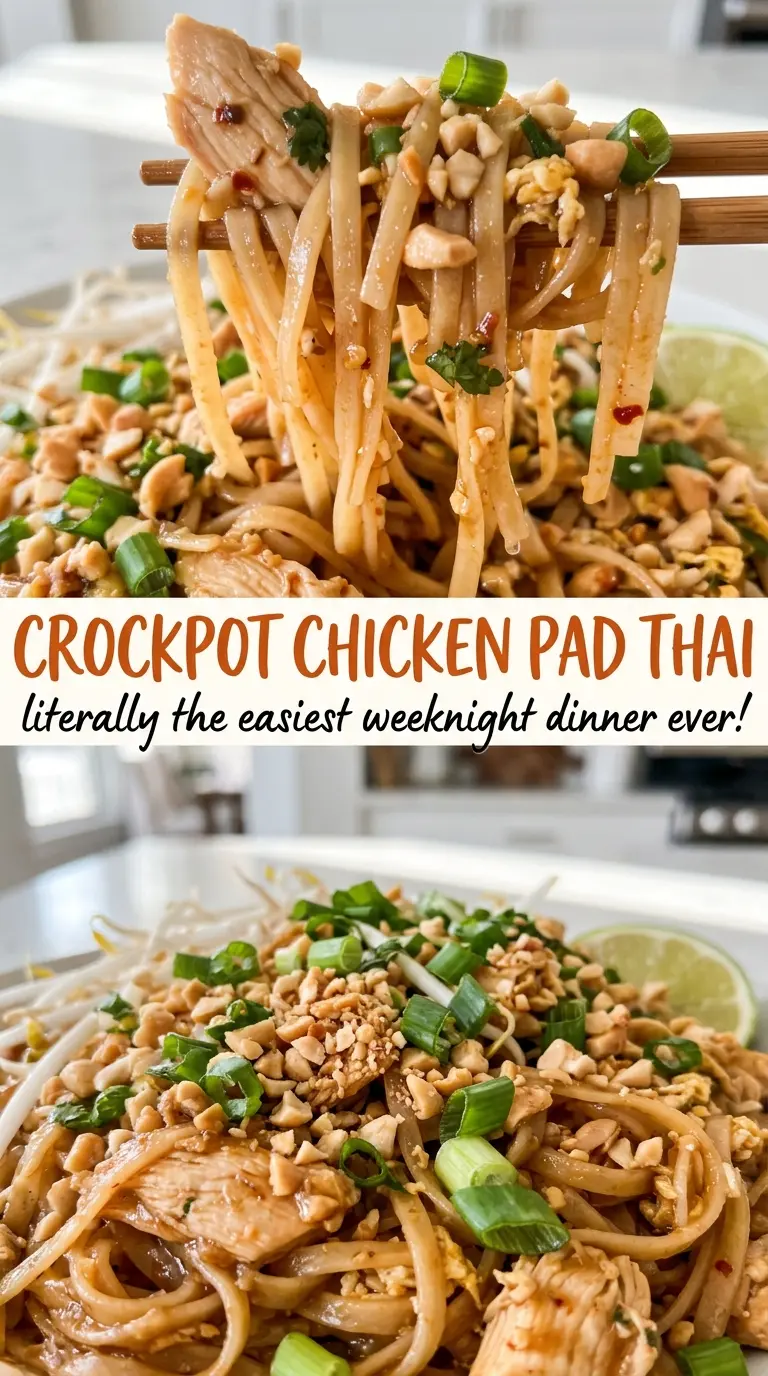
The finished noodles are coated rather than soupy, with tender chicken and a little crunch from the sprouts and peanuts. A squeeze of lime brightens the sweet-sour sauce right before you eat.
Kitchen Note
Drain the noodles while they still have a little firmness in the middle. They’ll soften as you toss them with the hot sauce, chicken, and eggs, and starting with fully tender noodles leaves no room for that final step.
Save Crockpot Chicken Pad Thai for tender chicken, tangy sauce, and rice noodles that stay pleasantly chewy.
Why the Slow Cooker Sauce Looks Thin Until the Final Skillet
A covered slow cooker is good at keeping chicken moist, but it doesn’t let much liquid evaporate. So the cooking liquid can taste right and still look too loose to coat noodles. That’s not a sign that the sauce has failed; it’s simply the difference between cooking the chicken and finishing the dish.
Reducing the liquid in a skillet gives it room to thicken before the noodles go in. The order matters: if noodles sit in a thin sauce, they absorb more liquid and can turn heavy before the sauce has a chance to cling to them. Separating those jobs lets the slow cooker make tender chicken while the skillet concentrates the tamarind, fish sauce, and brown sugar into a glossy coating. Think of the crockpot as the chicken stage, not the place where every component cooks together.
The Ingredients That Give This Pad Thai Its Tangy-Savory Balance
- Tamarind concentrate — This brings the distinctive tart, fruity base that gives the sauce its lift. A plain concentrate is a better fit than a prepared, sweetened Pad Thai sauce, which would change the balance and seasoning.
- Fish sauce and soy sauce — Fish sauce supplies a deep savory note, while soy sauce adds a more familiar salty edge. A fresh bottle of fish sauce is worth using, but there’s no need to buy an expensive one for this cooked sauce.
- Packed light brown sugar — Its sweetness rounds out the tamarind and savory sauces. Pack it into the measuring spoon so the amount stays consistent; loose sugar can leave the sauce sharper than intended.
- Boneless, skinless chicken thighs — Thighs stay tender through the slow-cooking window and shred easily. They’re a better fit here than lean chicken breast, which is more likely to dry out during a long cook.
- Medium-width rice noodles — Their width gives the sauce enough surface to cling to without overwhelming the chicken. Very thin noodles soften faster, so stick with medium-width rice noodles for the intended texture.
- Eggs and fresh toppings — The softly scrambled eggs make the noodle mixture more substantial, while bean sprouts, scallions, peanuts, cilantro, and lime bring contrast at the end. Fresh scallions and cilantro are especially noticeable uncooked, so use them while they still look perky.
Keep the Noodles Out of the Slow Cooker Until the Finish
Coat the Chicken in the Sauce
Whisk the tamarind concentrate, fish sauce, brown sugar, soy sauce, water, and minced garlic in a 6-quart slow cooker. Add the chicken thighs and turn them so the sauce coats both sides. Cover and cook on LOW for 3 to 4 hours or HIGH for 2 to 3 hours. The chicken should be tender, and the thickest part needs to reach 165°F.
Cook the Noodles and Set the Eggs
Boil the rice noodles for 4 to 5 minutes, until they bend easily but still feel a little firm in the center, then drain them. Heat the neutral oil in a 12-inch deep skillet over medium heat. Add the lightly beaten eggs and gently scramble for 1 to 2 minutes, stopping when they’re just set rather than browned. Transfer the eggs to a plate so the skillet is ready for the sauce.
Shred the Chicken and Concentrate the Sauce
Move the cooked chicken to a cutting board and shred it with two forks. Pour the slow-cooker liquid into the skillet and bring it to a simmer over medium heat. Stir often as it cooks for 8 to 12 minutes. It’s ready when it lightly coats the back of a spoon instead of running off like broth.
Toss Everything Together at the End
Add the shredded chicken, drained noodles, and scrambled eggs to the skillet. Toss over medium heat for 2 to 3 minutes, until everything is hot and coated. Fold in the bean sprouts for the last minute so they warm through without losing all their crunch. Serve with scallions, chopped roasted peanuts, cilantro leaves, and lime wedges for squeezing.
Three Small Swaps for Different Tables
Make It Gluten-Free With Tamari
Replace the soy sauce with the same amount of gluten-free tamari, and choose a gluten-free fish sauce. The rice noodles already suit this adaptation; tamari keeps the salty, savory balance close, with a slightly different flavor from soy sauce.
Leave Out the Eggs
For an egg-free version, skip scrambling the eggs and leave them out when tossing the noodles. You’ll lose the soft curds and a little richness, but the chicken and sauce still coat the noodles well.
Make the Garnish Peanut-Free
Omit the roasted peanuts for a peanut-free bowl. You’ll miss their crunch, but the bean sprouts and scallions still add freshness and texture without changing the sauce or cooking method.
Storage and Reheating
- Refrigerator: Store leftovers in an airtight container within 2 hours and eat within 3 to 4 days. The noodles soften as they sit in the sauce.
- Freezer: Freeze in airtight portions for up to 2 months for best quality. The chicken and sauce freeze well, though the rice noodles will be softer after thawing.
- Reheating: Warm gently in a skillet over medium-low heat with a splash of water, tossing until steaming hot. High heat can dry the chicken and make the noodles break apart.
Questions That Come Up When Making Crockpot Chicken Pad Thai
Crockpot Chicken Pad Thai
Ingredients
Equipment
Method
- Whisk the tamarind concentrate, fish sauce, brown sugar, soy sauce, water, and garlic in a 6-quart slow cooker.
- Add the chicken and turn to coat.
- Cover and cook on LOW for 3 to 4 hours or HIGH for 2 to 3 hours, until tender and the thickest part reaches 165°F.
- Cook the rice noodles in boiling water for 4 to 5 minutes, until pliable but still slightly firm in the center, then drain.
- Heat the oil in a 12-inch deep skillet over medium heat.
- Add the beaten eggs and gently scramble for 1 to 2 minutes, until just set, then transfer to a plate.
- Transfer the chicken to a cutting board.
- Shred the chicken with two forks.
- Pour the slow-cooker liquid into the skillet and simmer over medium heat for 8 to 12 minutes, stirring often, until reduced and thick enough to lightly coat the back of a spoon.
- Add the shredded chicken, noodles, and scrambled eggs to the skillet and toss over medium heat for 2 to 3 minutes, until hot and coated in sauce; fold in the bean sprouts for the last minute.
- Serve topped with scallions, peanuts, and cilantro, with lime wedges for squeezing.