
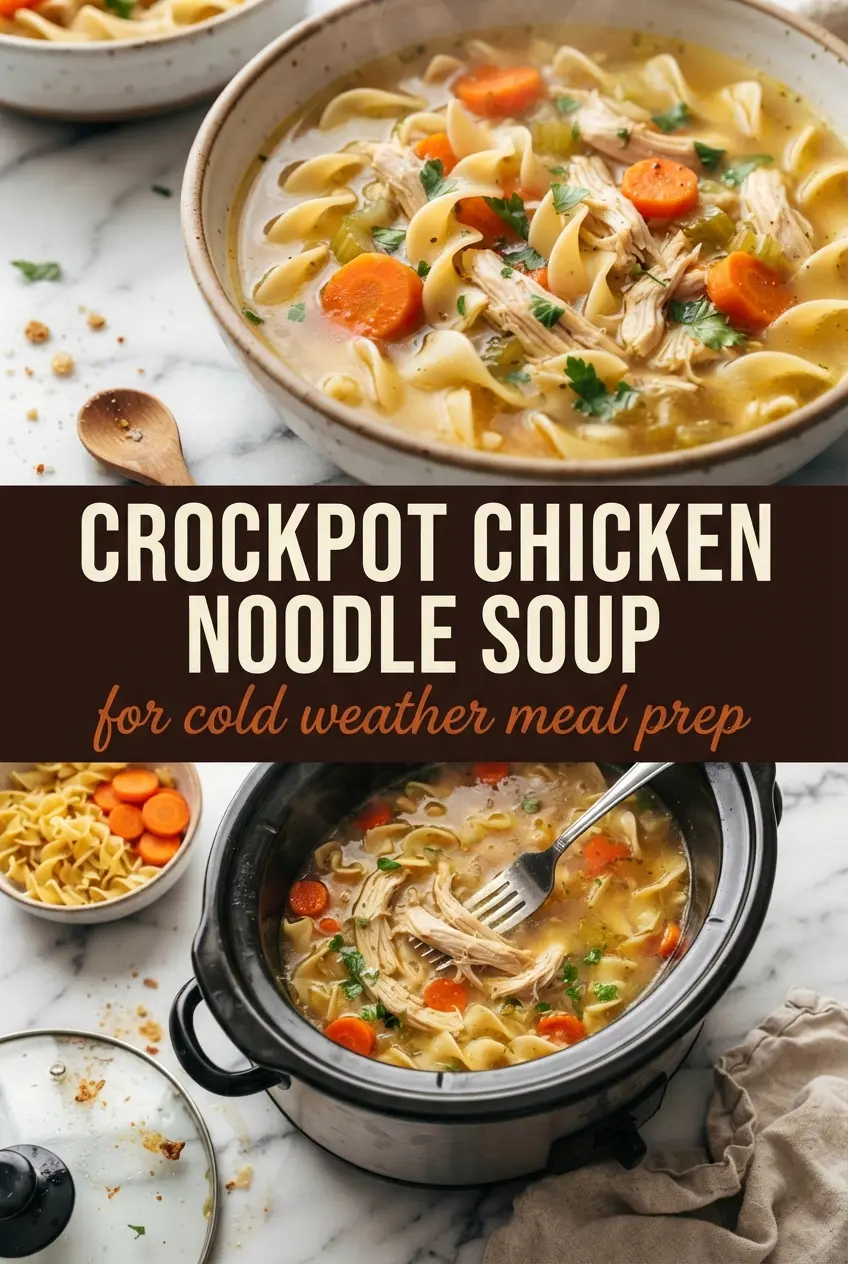
Slow-cooked chicken noodle soup earns its place in the rotation because it gives you a broth that tastes like it simmered all afternoon without asking you to stand over the stove. The chicken turns tender enough to shred with a fork, the carrots soften into the broth, and the celery and onion bring that familiar soup-base sweetness that makes the whole pot taste complete. The noodles go in at the end, so they stay plump instead of turning muddy and blown out.
What makes this version work is the order. The chicken, vegetables, herbs, and broth all go in together so the soup builds flavor while it cooks, but the noodles wait until the very end. If they sit in the slow cooker for hours, they soak up too much liquid and lose their bite. A little patience here keeps the texture right where it should be. A bay leaf and a modest amount of thyme do the heavy lifting; you don’t need a long ingredient list to get a broth that tastes layered and comforting.
Below you’ll find the timing that keeps the noodles intact, a few smart swaps if you’re working with what you have, and the storage notes that make this a strong meal-prep soup instead of just a one-night dinner.
The broth got so much flavor in the slow cooker, and the noodles stayed perfectly tender when I added them at the end. My kids actually ate the carrots without complaining, which never happens.
Save this crockpot chicken noodle soup for the night you want tender chicken, a golden broth, and noodles that stay perfectly spoonable.
The Reason the Noodles Wait Until the End
The most common mistake in slow cooker chicken noodle soup is treating the noodles like part of the long cook. They aren’t. Egg noodles keep absorbing liquid as they sit, which means they go from tender to swollen and soft before the soup ever reaches the table. Adding them after the chicken has shredded gives you control over the final texture, and that’s what keeps this soup bright instead of heavy.
The other trap is overcooking the chicken. Bone-in meat can handle more time, but boneless breasts go dry if they sit too long in high heat. Six hours on low is enough for them to turn tender and easy to shred. Past that point, you’re not improving flavor; you’re just making the meat stringy.
What Each Ingredient Is Actually Doing in This Soup

- Boneless chicken breasts — They shred into clean, tender pieces after the slow cook and keep the soup light. Thighs work too if you want a richer broth and a softer, slightly fattier finish.
- Chicken broth — This is the backbone of the soup, so use one you actually like tasting on its own. If yours is very salty, use low-sodium broth and season at the end so the broth doesn’t get flat or overly briny.
- Onion, carrots, celery, and garlic — These build the classic soup base and sweeten the broth as they cook. Dice the onion and slice the vegetables evenly so they soften at the same pace; big chunks stay too firm when the noodles are ready.
- Dried thyme and bay leaves — Thyme gives the broth that familiar herbiness, while bay leaves add depth that tastes like the soup has been simmering longer than it has. Don’t skip the bay leaves; they don’t announce themselves, but the broth tastes thinner without them.
- Egg noodles — Wide egg noodles are the right choice here because they hold up better than delicate pasta and catch the broth nicely. If you use a different noodle, watch it closely during the final cook because timing can shift by several minutes.
- Parsley — Fresh parsley wakes up the finished bowl and keeps the soup from tasting all one-note. It matters more than it looks like it should.
Building the Broth, Then Saving the Noodles for Last
Load the slow cooker with the base
Add the chicken, onion, carrots, celery, garlic, broth, bay leaves, and thyme to the slow cooker. Everything should be submerged or mostly submerged so the broth can pick up flavor from the vegetables as they soften. If the vegetables are piled too high above the liquid line, stir once at the beginning so the heat distributes evenly.
Cook until the chicken shreds cleanly
Set the slow cooker to low for 6 hours. You’re looking for chicken that pulls apart without resistance and vegetables that are tender but not disintegrated. If the chicken is still tight in the center, give it more time; if it’s been in much longer than 6 hours, expect drier texture even if the broth tastes good.
Shred, discard, and add the noodles
Remove the chicken, shred it, and put it back in the pot after discarding the bay leaves. Stir in the egg noodles only when the chicken is ready, then switch the slow cooker to high for about 20 minutes. The noodles should be tender with a little bite left in the center; if they go in too early, they’ll keep drinking broth until the soup turns thick and gluey.
Finish with seasoning and parsley
Taste the soup before serving and add salt and pepper until the broth tastes rounded, not flat. The final seasoning matters because broth brands vary wildly in salt level. Stir in the parsley right before serving so it stays fresh and the color stays bright.
How to Adapt This for Different Kitchens and Different Needs
Use chicken thighs for a richer soup
Boneless thighs give you a deeper, slightly richer broth and stay a little more forgiving if the soup runs long. The texture is less lean than chicken breast, but the flavor is excellent if you like a more traditional, hearty bowl.
Make it gluten-free with the right noodle swap
Use a gluten-free egg noodle or a sturdy rice pasta, but add it at the very end and watch the clock closely. Gluten-free pasta can go from perfect to soft faster than wheat noodles, so start checking early and serve as soon as it turns tender.
Add extra vegetables without changing the method
Mushrooms, peas, or chopped spinach all fit here. Mushrooms can go in with the base, while peas and spinach should be stirred in at the end so they stay bright and don’t disappear into the broth.
Storage and Reheating
- Refrigerator: Store for up to 4 days. The noodles will continue to absorb broth, so expect the soup to thicken as it sits.
- Freezer: Freeze the soup without the noodles for the best texture. Noodles turn mushy after freezing, so cook a fresh batch when you reheat.
- Reheating: Warm gently on the stove over medium-low heat or in the microwave in short bursts, adding a splash of broth if needed. The biggest mistake is boiling it hard, which pushes the chicken past tender and breaks the noodles down even more.
Answers to the Questions Worth Asking
Crockpot Chicken Noodle Soup
Ingredients
Equipment
Method
- Place the chicken, onion, carrots, celery, garlic, broth, bay leaves, and thyme in the slow cooker. Make sure the ingredients are submerged as much as possible for even flavor distribution.
- Cover and cook on low for 6 hours. Keep the lid on to maintain steady heat and build a deeply herby broth.
- Shred the chicken, discard the bay leaves, and stir the shredded chicken back into the soup. You should see tender strands throughout the broth.
- Stir in the egg noodles, then cook on high for 20 minutes until tender. Look for softened noodles with no chalky center.
- Season with salt and pepper to taste, then garnish with chopped parsley. Finish with a fresh green pop right before serving.