
Silky, brothy, and packed with tender chickpeas, this creamy Tuscan chickpea soup settles into the kind of comforting bowl that disappears fast at the table. The chickpeas give it body without turning it heavy, the sun-dried tomatoes bring a sharp little burst of sweetness, and the spinach softens into the broth just enough to keep every spoonful balanced. It tastes like it simmered much longer than it did.
The trick is building flavor in stages. The onion needs a few minutes in the olive oil so it turns sweet instead of sharp, and the garlic goes in after that so it doesn’t burn. Mashing a portion of the chickpeas right in the pot is what gives the soup that creamy, almost velvety texture without needing flour or a long reduction. The Parmesan and cream go in at the end, where the heat is low enough to keep the broth smooth.
Below you’ll find the exact point where the soup turns from thin to satisfying, plus a few smart swaps if you need to keep it dairy-free or stretch it for another meal. This is one of those soups that gets even better by the next day, which is worth knowing before you ladle out the first bowl.
The chickpeas got so creamy after I mashed a few in the pot, and the broth thickened up beautifully without any flour. My husband went back for seconds and said the sun-dried tomatoes made it taste like it came from a restaurant.
Save this creamy Tuscan chickpea soup for a thick, garlicky dinner that reheats beautifully all week.
The Reason This Soup Stays Creamy Without Turning Gluey
A lot of chickpea soups go wrong in one of two ways: they stay too brothy, or they get heavy and pasty because too many beans get mashed too early. This version lands in the middle. You simmer the chickpeas first so they soften and absorb the broth, then mash only about a third of them so the soup thickens naturally while the whole chickpeas keep their shape.
The other place people trip up is the dairy. Heavy cream and Parmesan both behave best when the soup is no longer at a hard boil. If the pot is raging, the cheese can seize and the cream can look grainy. Lower the heat before you stir them in and the broth stays smooth, glossy, and rich instead of broken.
What Each Ingredient Is Actually Doing in This Dish
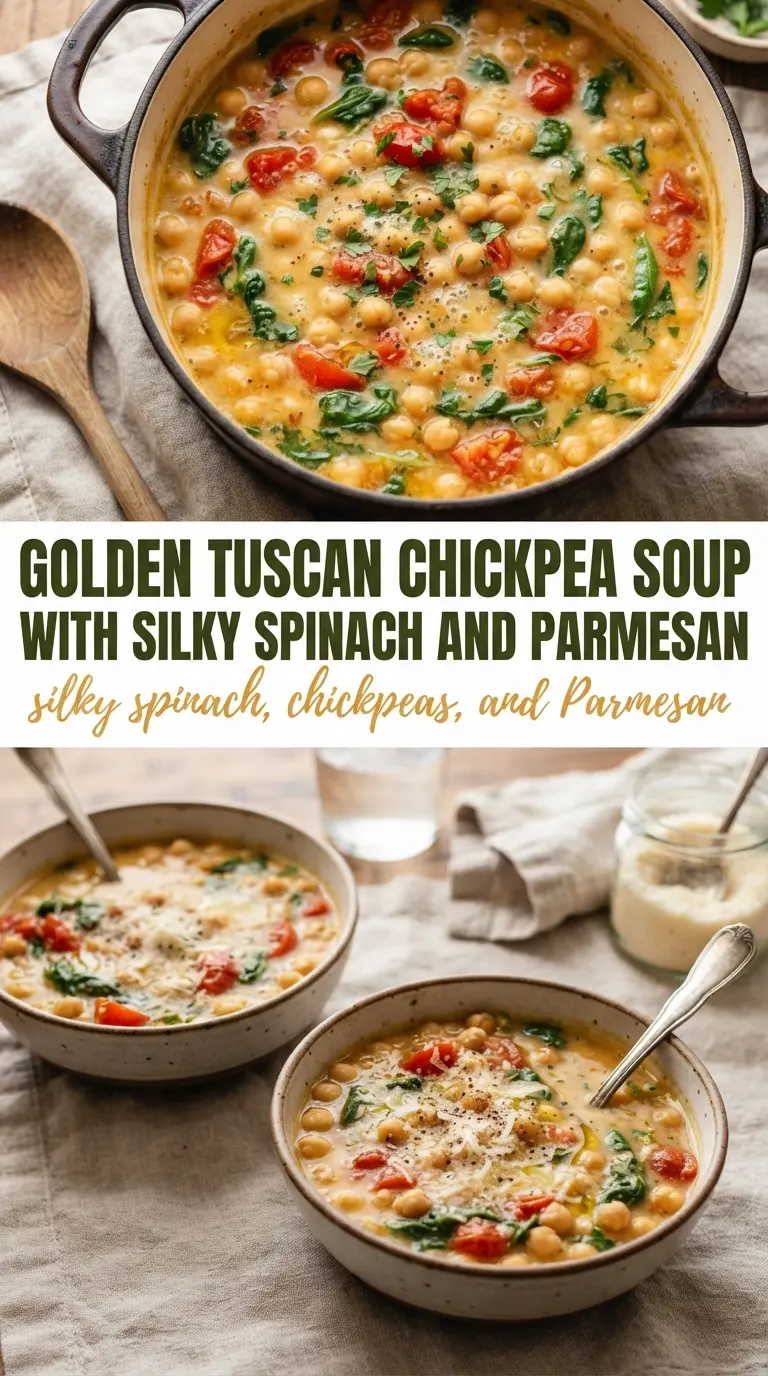
- Olive oil — This carries the onion and garlic from the start and gives the soup its base richness. Use a decent one, since there isn’t much fat in the rest of the pot.
- Sun-dried tomatoes — These are the sharp, concentrated note that keeps the soup from tasting flat. If yours are packed in oil, drain them lightly so the broth doesn’t get greasy.
- Chickpeas — Canned chickpeas are the right move here because they break down just enough without needing a long cook. If you use cooked-from-dry chickpeas, they should be fully tender before they ever hit the pot.
- Vegetable broth — This is the liquid foundation, so use one with enough salt and body to stand up to the cream and Parmesan. A thin broth will taste thin no matter what else you add.
- Heavy cream — This gives the soup its silky finish and holds up better than milk. Half-and-half can work in a pinch, but the soup will be lighter and a little less lush.
- Parmesan — Freshly grated Parmesan melts in cleaner than the pre-shredded kind and adds a salty, nutty backbone. Pre-grated will work, but it won’t disappear into the broth as smoothly.
- Baby spinach — Spinach wilts fast and adds color without stealing attention from the broth. Stir it in at the end so it stays bright instead of turning swampy.
Building the Soup in the Right Order
Start with the onion and let it soften fully
Warm the olive oil over medium heat and cook the onion until it turns translucent and loses its raw edge, about 5 minutes. You want it soft and glossy, not browned. If the pan is too hot, the onion will catch before it sweetens, and that harsh flavor will stay in the soup.
Wake up the garlic, tomatoes, and spice
Add the garlic, sun-dried tomatoes, and red pepper flakes and stir for about 30 seconds, just until the garlic smells fragrant. This short step pulls the flavor out of the tomatoes and softens the bite of the chili. If you leave the garlic in too long here, it goes bitter fast.
Simmer until the chickpeas start to give up their starch
Pour in the chickpeas, broth, and Italian seasoning and bring the pot to a gentle simmer. Let it go for about 15 minutes so the chickpeas absorb flavor and the broth picks up some body. A hard boil isn’t helpful here; it just makes the broth muddy without improving the texture.
Mash a portion, not the whole pot
Use a spoon or potato masher to crush about a third of the chickpeas right in the pot. This is the move that thickens the soup without flour or cream alone doing all the work. Leave plenty of whole chickpeas behind so the soup still has bite and doesn’t turn into puree.
Finish with spinach, cream, and Parmesan off the heat
Stir in the spinach, cream, and Parmesan and lower the heat so the soup is no longer boiling hard. The spinach should wilt in a minute or two, the cream should blend in smoothly, and the Parmesan should melt into the broth instead of clumping. Taste at the end and season with salt and pepper after the cheese goes in, since Parmesan already brings salt to the bowl.
How to Adapt This Soup for Different Kitchens
Dairy-Free Version That Still Feels Creamy
Swap the heavy cream for canned coconut milk and leave out the Parmesan, then add a little extra salt and a squeeze of lemon at the end. Coconut milk gives the soup body, though the flavor will be slightly sweeter and less savory than the original.
Make It Thicker and More Filling
Mash closer to half the chickpeas instead of a third, or simmer the soup uncovered for a few extra minutes before adding the cream. That gives you a spoon-coating texture that eats more like a stew.
Gluten-Free Without Any Extra Work
The recipe is naturally gluten-free as written, as long as your vegetable broth is certified gluten-free. Parmesan, chickpeas, and spinach all fit cleanly, so there’s nothing else to change.
Storage and Reheating
- Refrigerator: Store in an airtight container for up to 4 days. The soup thickens as it sits, so expect a denser texture the next day.
- Freezer: It freezes well, but the cream can loosen slightly after thawing. For the best result, freeze before adding the cream and Parmesan, then stir them in when reheating.
- Reheating: Warm it gently over low to medium-low heat, adding a splash of broth or water if needed. Don’t boil it hard, or the dairy can separate and the spinach can go dull.
The Questions That Usually Come Up With This Soup
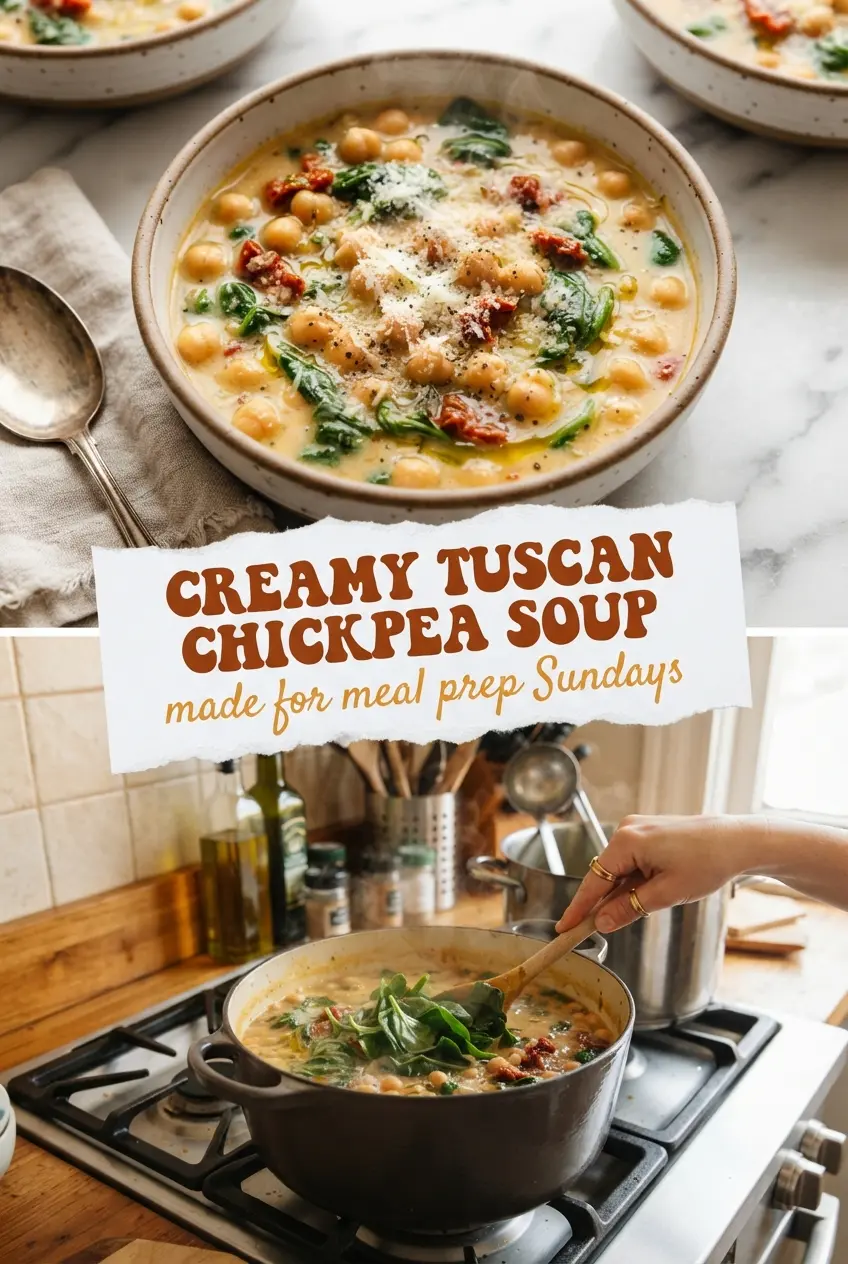
Creamy Tuscan Chickpea Soup
Ingredients
Equipment
Method
- Heat the olive oil in a Dutch oven over medium heat, then cook the diced onion for 5 minutes until softened and lightly translucent. Add the minced garlic, chopped sun-dried tomatoes, and red pepper flakes, and cook for 30 seconds until fragrant.
- Add the drained and rinsed chickpeas, vegetable broth, and Italian seasoning to the pot, then bring to a gentle simmer. Simmer for 15 minutes, stirring occasionally, until the flavors meld.
- Mash about a third of the chickpeas in the pot to thicken the soup, keeping some whole for texture. Stir well so the thickened chickpeas distribute evenly.
- Stir in the baby spinach and cook until it wilts, about 2 minutes, keeping the soup at a gentle simmer. Reduce heat to low, then stir in the heavy cream and grated Parmesan until smooth and warmed through.
- Season with salt and pepper to taste, then serve the soup warm. Taste and adjust seasoning before ladling into bowls.