
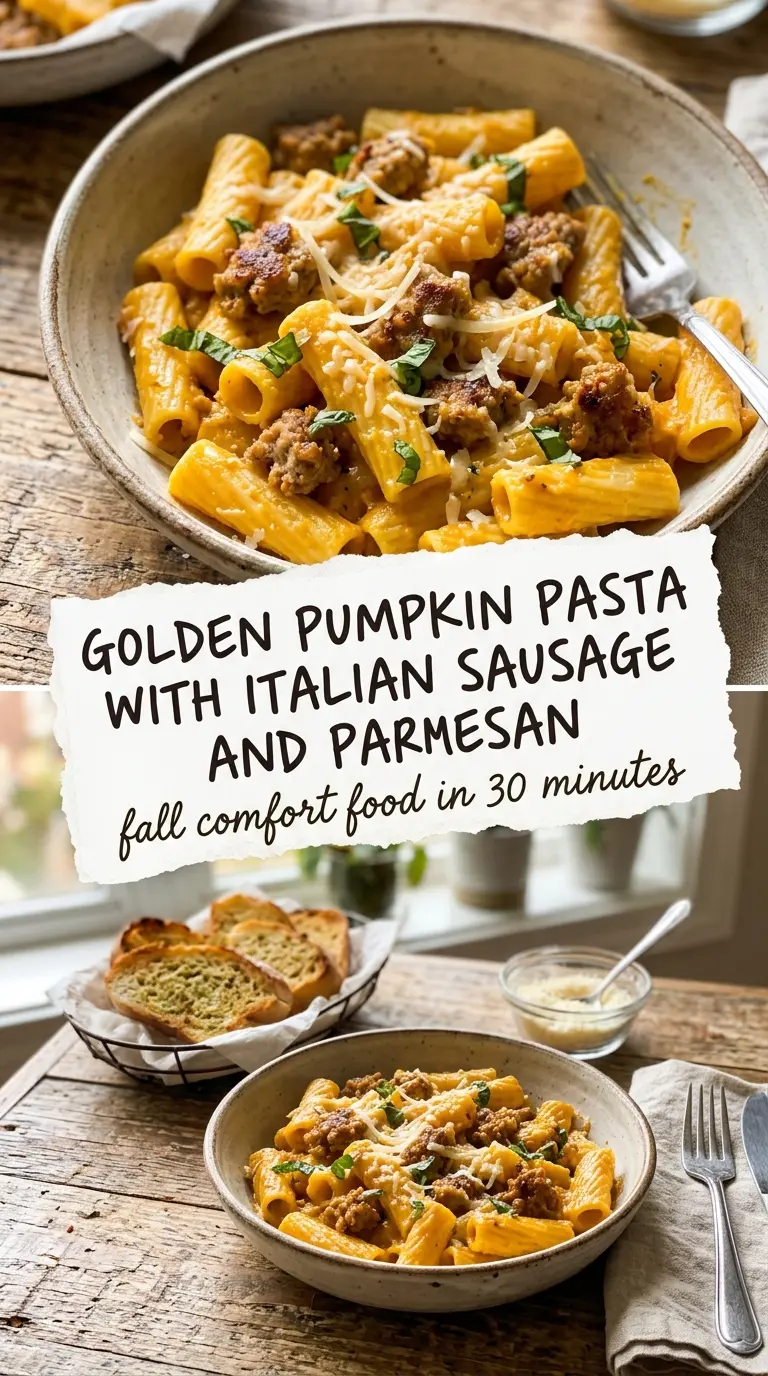
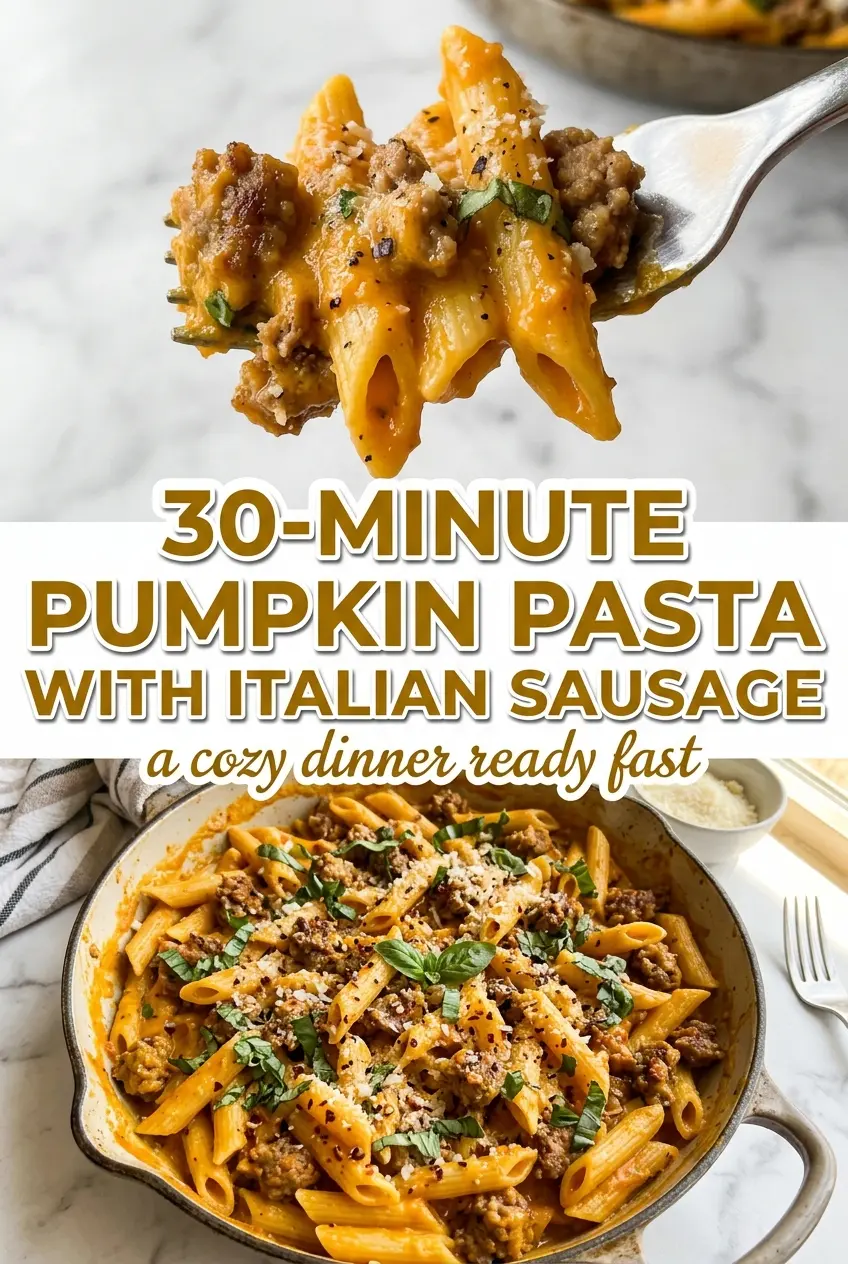
Creamy pumpkin pasta with Italian sausage lands in that sweet spot between comforting and practical: a velvety sauce, savory browned sausage, and just enough pumpkin to make the whole bowl taste rich without turning sweet or heavy. The sauce coats every piece of pasta instead of pooling at the bottom of the bowl, and the parmesan at the end sharpens everything up so the flavor stays balanced.
What makes this version work is the order. The sausage browns first, which gives you fat and drippings for flavor, and the garlic and Italian seasoning bloom in that same pan before the pumpkin and cream go in. That keeps the sauce tasting layered instead of flat. A little chicken broth loosens the puree before the cream joins in, which helps the sauce stay smooth instead of thick and pasty.
Below, you’ll find the small details that matter most: how to keep the sauce silky, when to add pasta water, and which swaps actually hold up if you need to make it dairy-free or use a different pasta shape.
The sauce turned out silky and coated the pasta perfectly, and the pumpkin stayed savory instead of sweet. I added a splash of pasta water at the end like suggested and it came together in minutes.
Save this creamy pumpkin pasta with Italian sausage for the kind of 30-minute dinner that tastes slow-simmered.
The Reason the Pumpkin Stays Savory Instead of Turning Sweet
Pumpkin puree can go one of two ways: silky and savory, or oddly bland and dessert-like. The difference is the fat and the seasoning around it. Browning the sausage first gives you a seasoned base, and the Italian seasoning wakes up once it hits the warm pan. That keeps the pumpkin in the background, where it should be, adding body and color without taking over.
The other thing that trips people up is heat. If you boil the cream hard after the pumpkin goes in, the sauce can tighten up too fast or take on a grainy edge. A gentle simmer is enough. You want the sauce to look glossy and thick enough to cling to the back of a spoon, not reduced to a paste.
What Each Ingredient Is Actually Doing in This Dish
- Italian sausage — This is the backbone of the dish. It brings salt, fat, fennel, and browned bits that season the whole sauce. Mild or hot both work; hot sausage gives the pasta a little more edge. If you only have ground pork, add extra Italian seasoning and a pinch of crushed fennel seed.
- Pumpkin puree — Use plain pumpkin puree, not pumpkin pie filling. The puree thickens the sauce and gives it that earthy, velvety texture. Canned pumpkin is fine here and usually more consistent than homemade, which can be watery.
- Heavy cream — This smooths out the pumpkin and keeps the sauce rich. Half-and-half can work in a pinch, but the sauce will be thinner and a little less stable. If you use it, simmer extra gently and expect to add more pasta water at the end.
- Chicken broth — This loosens the puree before the cream goes in and keeps the sauce from feeling too dense. Use a broth you’d actually drink; a bland broth makes the whole dish taste flat. Vegetable broth works too if that’s what you have.
- Parmesan — Parmesan sharpens the sauce and adds a salty finish that balances the pumpkin. Grate it finely so it melts smoothly. Pre-shredded cheese can stay a little grainy, especially in a cream sauce.
- Penne pasta — Penne holds the sauce in the ridges and tubes, which matters because this sauce is thick enough to coat rather than soak in. Any sturdy short pasta will work, but something with grooves beats a smooth shape every time.
The 20 Minutes That Build the Sauce
Brown the Sausage Until It Starts to Crisp
Cook the sausage in a large skillet over medium heat and break it into small pieces as it browns. You want some deep color on the meat, not just gray crumbles, because that browning is where the savory flavor comes from. If the pan looks dry before the sausage is fully cooked, let the fat render a little longer before adding anything else. Drain off excess grease if the pan looks flooded, but leave a thin layer behind for the next stage.
Wake Up the Garlic and Italian Seasoning
Add the minced garlic and Italian seasoning to the pan and stir for about 30 seconds, just until fragrant. Garlic burns fast once the pan is hot, and burnt garlic will make the whole sauce bitter. If your heat is aggressive, pull the pan off the burner for a moment before stirring it in. You’re looking for a short burst of aroma, not browned garlic pieces.
Build the Pumpkin Sauce Slowly
Stir in the pumpkin puree, chicken broth, and heavy cream until the sauce turns smooth and uniform. The broth should loosen the puree immediately; if it still looks thick and stubborn, keep stirring before you judge it. Bring it to a gentle simmer and let it bubble for 5 to 7 minutes, stirring now and then, until it thickens enough to coat a spoon. If it starts to look too tight, that’s when a splash of pasta water saves it.
Finish With Pasta and Parmesan
Add the drained pasta straight into the skillet and toss until every piece is coated. The starch on the pasta helps the sauce cling, so don’t rinse it first. Turn the heat down before you add the parmesan so the cheese melts into the sauce instead of clumping. Finish with fresh basil right before serving for a bright note that cuts through the richness.
How to Adapt This for Different Kitchens and Different Cravings
Make It Dairy-Free Without Losing the Creaminess
Use full-fat coconut milk or an unsweetened dairy-free cream instead of heavy cream, and swap the parmesan for nutritional yeast or a dairy-free parmesan alternative. The sauce will still be rich, but it’ll taste a little lighter and less sharp. Keep the heat gentle, because some non-dairy creams separate faster than dairy cream.
Turn It Into a Gluten-Free Dinner
Use a sturdy gluten-free pasta with good shape retention, like brown rice or chickpea penne. Cook it just until tender, because gluten-free pasta can go mushy fast once it hits the sauce. Save a little extra pasta water; the starch helps the sauce grip the noodles just like it does with wheat pasta.
Swap the Sausage for a Lighter Protein
Ground turkey or chicken works if you want something lighter, but it needs help. Add an extra pinch of salt, a little more Italian seasoning, and let it brown properly so the sauce doesn’t taste lean and flat. You’ll lose some richness, but the pumpkin and parmesan still carry the dish.
Storage and Reheating
- Refrigerator: Store leftovers in an airtight container for up to 4 days. The sauce thickens as it chills, so expect it to look more compact the next day.
- Freezer: It freezes, but the cream sauce may separate a little when thawed. For the best texture, freeze the sauce and pasta separately if you can.
- Reheating: Warm gently on the stove over low heat with a splash of broth, cream, or water. High heat is the mistake here; it can make the sauce grainy and dry out the pasta.
Answers to the Questions Worth Asking
Creamy Pumpkin Pasta With Italian Sausage
Ingredients
Equipment
Method
- Bring a large pot of water to a boil and cook the penne according to package instructions, then drain.
- After draining, keep the pasta warm and set aside so it’s ready to be tossed with the sauce.
- Heat a large skillet over medium-high heat and brown the Italian sausage, breaking it up as it cooks.
- Continue cooking until the sausage is browned through, with visible crumbles, then drain any excess fat if needed.
- Reduce heat to medium and add the minced garlic and Italian seasoning, cooking until fragrant, about 30-60 seconds.
- Stir in pumpkin puree, heavy cream, and chicken broth, mixing until smooth and uniform.
- Simmer the sauce for 5-7 minutes, stirring occasionally, until slightly thickened and glossy.
- If the sauce thickens too much, loosen it with a splash of reserved pasta water.
- Add the cooked penne to the skillet and toss to coat every strand in the creamy pumpkin sauce.
- Top with grated parmesan cheese and finish with fresh basil for garnish before serving.