
Rich, spoonable lasagna flavor shows up here without the layering, the waiting, or the baking dish cleanup. The broth turns tomatoey and savory, the noodles cook right in the pot, and the final stir of ricotta and cream gives every bowl that soft, lasagna-like richness people usually chase from the oven. Then the mozzarella goes under the broiler and sets into those bubbling browned spots that make the whole pot feel finished.
What makes this version work is the order. The beef and onion build a strong base, the tomatoes simmer long enough to lose their sharp edge, and the noodles cook in the broth so they pick up flavor instead of tasting separately boiled. Ricotta gets stirred in off the heat with the cream, which keeps the soup from turning grainy or greasy. That small detail matters more than most people think.
Below, I’ve included the trick for keeping the broth creamy instead of heavy, plus the best way to freeze it if you want a batch that still tastes good later.
The ricotta melted into the broth so smoothly, and the noodles stayed tender without getting mushy. I broiled the mozzarella for a couple of minutes and it tasted like lasagna in a bowl.
Creamy Lasagna Soup brings all the baked-pasta comfort without the layering—save it for the nights when you want that bubbling mozzarella top and a rich, tomatoey bowl fast.
The Step That Keeps Creamy Lasagna Soup From Turning Grainy
The biggest mistake with a soup like this is rushing the creamy finish. Ricotta can go chalky if it gets blasted with heat, and cream can look broken if it’s stirred into a violently bubbling pot. Pull the pot back to a gentle simmer before adding either one. That calmer heat keeps the broth silky and gives the ricotta time to melt into the soup instead of sitting in little curds.
The noodles matter too. If they go in too early, they soak up too much broth and turn soft before the soup is even finished. If you’re serving this right away, cook them until just tender. If you know you’ll have leftovers, keep in mind they’ll keep drinking broth as they sit, which is why this soup benefits from a little extra liquid when reheated.
What Each Ingredient Is Doing in This Bowl

- Ground beef — This gives the soup its lasagna-like backbone. A leaner beef works fine, but don’t skip browning it well; those dark bits in the pot add the savory base the broth needs.
- Yellow onion — Onion softens the beef and sweetens the tomato broth. Dice it fairly small so it melts into the soup instead of standing out in chunks.
- Garlic — Add it after the beef and onion are already cooking. Garlic burns fast, and once it does, the whole pot tastes bitter.
- Crushed tomatoes — These give the soup body and that classic lasagna sauce flavor. If all you have are diced tomatoes, pulse them briefly first or expect a thinner, chunkier broth.
- Beef broth — This stretches the tomatoes into soup and carries the seasoning. Use a broth you’d drink on its own, because bland broth stays bland no matter how much cheese you add.
- Broken lasagna noodles — They’re the reason this feels like lasagna instead of just tomato soup with pasta. Break them into irregular pieces so the texture feels rustic and every spoonful catches sauce differently.
- Heavy cream and ricotta — Cream smooths the broth and ricotta gives it that baked-lasagna richness. Whole milk ricotta works best; if yours is watery, drain it first so it doesn’t thin the soup.
- Mozzarella — The broiled top is what sells the whole dish. Freshly shredded mozzarella melts and browns better than the pre-shredded kind, which often stays a little dull and rubbery.
- Fresh basil — Add it at the end so it stays bright. Dried basil won’t give you the same finish here.
Building the Soup in the Right Order
Brown the Beef Until the Pot Has Real Fond
Cook the beef with the onion until the meat has lost its pink color and the bottom of the pot has browned spots. Those stuck-on bits are flavor, not a problem. If there’s a lot of grease in the pan, spoon off some of it before adding the garlic so the broth doesn’t taste heavy. Garlic goes in for just a minute or so, until it smells fragrant; any longer and it can turn sharp.
Let the Tomato Base Simmer Before the Pasta Goes In
Once the tomatoes, broth, and seasoning are in, let the soup simmer for about 10 minutes. You want the tomato edge to round out and the broth to taste integrated, not like separate canned ingredients floating together. This is also the point where the soup should look slightly thicker and more unified. If it still tastes flat, it usually needs another pinch of salt more than another spice.
Cook the Noodles in the Broth, Not in a Separate Pot
Add the broken lasagna noodles straight to the soup and cook them until just tender, usually around 10 minutes. Stir now and then so they don’t stick to the bottom or clump together. The noodles should be soft but still have a little bite, because they’ll continue to soften once the cream goes in and the pot sits for a minute or two.
Finish With Dairy Off the Hard Heat
Turn the heat down low before stirring in the cream and ricotta. The soup should look creamy and loose, not boiling hard. If you’re worried about ricotta lumps, whisk it with a little hot broth in a small bowl first, then stir that mixture back into the pot. That extra minute gives you a smoother finish and keeps the texture from going grainy.
Broil the Mozzarella Until It Bubbles
Ladle the soup into oven-safe bowls or leave it in a broiler-safe pot, then top with mozzarella and broil just until it melts, bubbles, and starts to spot with gold. Don’t walk away from the oven. Cheese goes from lightly browned to scorched fast, and the difference is about 30 seconds.
How to Adapt Creamy Lasagna Soup Without Losing What Makes It Work
Make It Lighter With Ground Turkey
Ground turkey works well if you want a lighter bowl, but it doesn’t bring the same depth as beef. Use a little more onion and don’t skimp on browning, since turkey needs that extra caramelization to taste full-bodied instead of thin.
Dairy-Free Version That Still Feels Creamy
Swap in an unsweetened dairy-free cream and use a plant-based ricotta-style cheese if you can find one that melts well. The soup will be a little less rich, but the tomato broth and broiled top still give it a satisfying finish. Avoid thin milk alternatives; they tend to separate in the hot broth.
Gluten-Free with the Right Pasta Shape
Use a sturdy gluten-free pasta that can handle simmering, and watch the cooking time closely because it can go from done to soft fast. A short pasta shape works better than trying to mimic lasagna sheets here, since some gluten-free lasagna noodles break down too much in soup.
Freeze It With the Noodles Separate
If you’re making this ahead for the freezer, leave the noodles out and cook them fresh when you reheat the soup. Frozen pasta turns soft and bloated after thawing, while the broth, beef, and tomato base freeze beautifully. Stir in the dairy after reheating so the texture stays smooth.
Storage and Reheating
- Refrigerator: Store for up to 4 days. The noodles will keep absorbing broth, so expect a thicker soup by day two.
- Freezer: Freeze the tomato-beef base for up to 3 months. For best texture, freeze it without the noodles and add those fresh when reheating.
- Reheating: Warm gently on the stove over low heat, adding a splash of broth if needed. High heat can split the cream and overcook the noodles, which is the fastest way to lose the silky texture.
Answers to the Questions Worth Asking
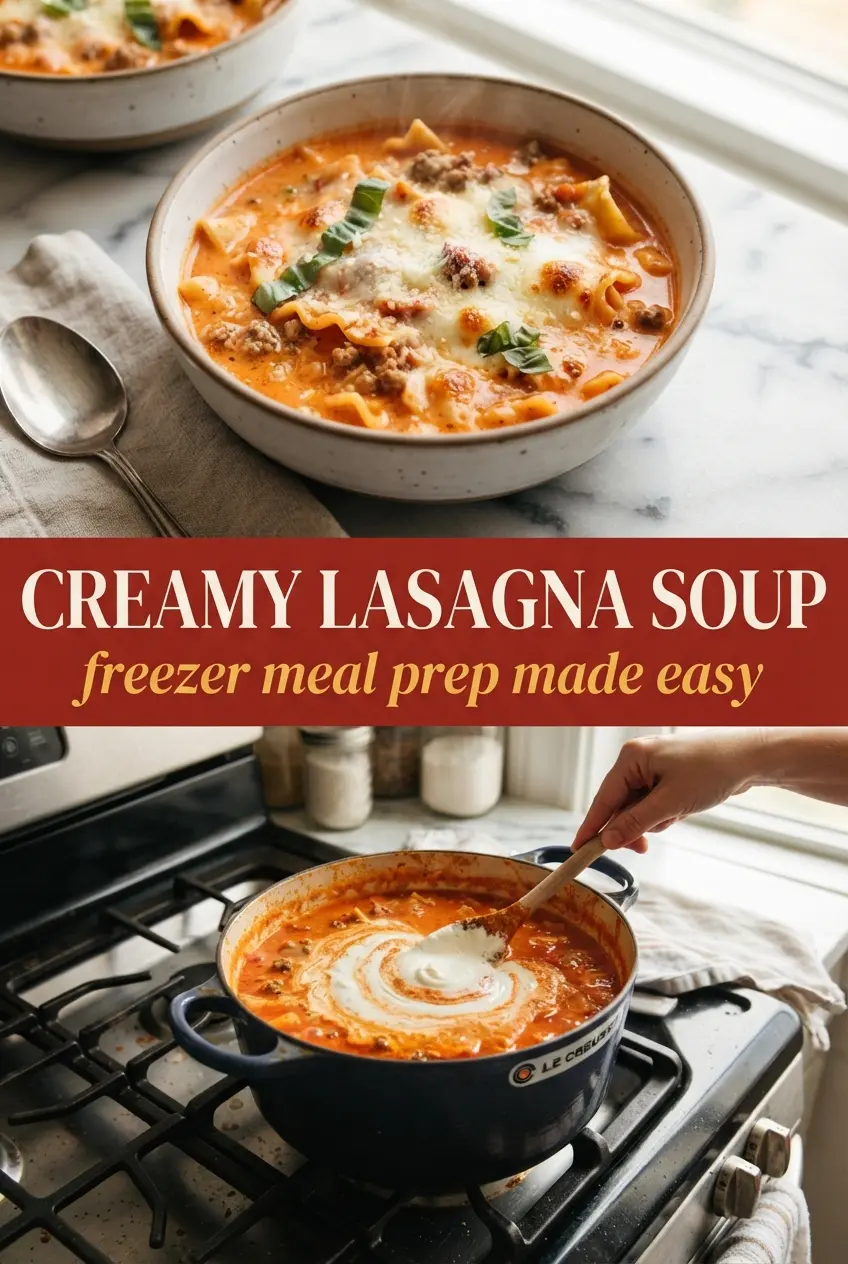
Creamy Lasagna Soup
Ingredients
Equipment
Method
- Heat a Dutch oven over medium-high heat and brown the ground beef and diced onion until the beef is no longer pink. Stir in the minced garlic and cook for 30 seconds, then let the mixture sizzle briefly for fragrance.
- Add the crushed tomatoes, beef broth, and Italian seasoning to the Dutch oven. Bring to a simmer and cook for 10 minutes, stirring once or twice so the flavors meld.
- Stir in the broken lasagna noodles and keep the soup at a gentle simmer. Cook until tender, about 10 minutes, until the noodles soften and the broth thickens slightly.
- Stir in the heavy cream and ricotta cheese until the soup looks creamy and cohesive. Keep heat at low to medium-low and stir until no ricotta streaks remain.
- Top the surface with shredded mozzarella and broil until bubbly and golden, watching closely to prevent scorching. Garnish with fresh basil right before serving for a bright finish.