
Tart cranberries and bright orange zest turn an ordinary quick bread into something people slice into while it’s still warm. The crumb stays tender and buttery, the berries burst into little pockets of jam, and the orange glaze gives each slice a clean, glossy finish that tastes just as good as it looks.
What makes this loaf work is the balance. Fresh orange juice adds flavor and moisture without making the batter heavy, and the buttermilk keeps the crumb soft while giving the baking soda something to react with. Tossing the cranberries into a properly mixed batter means they stay evenly distributed instead of sinking to the bottom, which is the mistake that ruins a lot of fruit breads.
Below you’ll find the small details that matter most: how to keep the loaf from turning dense, why the glaze should go on after the bread has cooled, and a few easy swaps if you need to work with dried cranberries or a dairy-free pantry.
The loaf came out so tender, and the cranberries stayed suspended all through the batter instead of sinking. The orange glaze set up beautifully and made each slice taste bright instead of overly sweet.
Save this Cranberry Orange Bread for the days when you want a bright, buttery loaf with a glossy orange glaze and jammy bursts of fresh cranberries.
The Trick to Keeping Cranberries From Sinking and the Crumb From Turning Dense
Cranberry bread fails in two predictable ways: the fruit drops to the bottom, or the loaf bakes up tight because the batter was worked too hard. Both problems start the same way, with a batter that gets mixed past the point of being tender. Once the flour goes in, you’re aiming for just combined. A few streaks are better than a heavy loaf.
The other detail that matters is the cranberries themselves. Fresh berries have enough structure to stay intact, but they still need help staying suspended in the batter. Folding them in at the very end, after the batter is already thickened, gives them the best chance of staying evenly scattered. If you use frozen cranberries, add them straight from the freezer so they don’t bleed too much juice into the batter.
What Each Ingredient Is Actually Doing in This Loaf

- All-purpose flour — This gives the loaf its structure without making it chewy. Cake flour is too soft here, and bread flour would make the crumb tougher than it should be.
- Baking powder and baking soda — The baking powder provides lift, while the baking soda reacts with the buttermilk and orange juice for a lighter crumb. If either one is old, the loaf won’t rise cleanly and the center can come out stodgy.
- Butter and sugar — Creaming these until fluffy traps air, which helps the bread rise and keeps the texture tender. Use softened butter, not melted butter, or you’ll lose that airy base.
- Orange zest and orange juice — The zest carries the strongest orange flavor, and the juice brings brightness plus moisture. Don’t skip the zest; juice alone tastes flat in a loaf like this.
- Buttermilk — This is what keeps the crumb soft and gives the batter a little tang. If you don’t have it, mix 1/2 cup milk with 1/2 tablespoon lemon juice or vinegar and let it sit for 5 minutes.
- Fresh cranberries — These are worth using if you can find them because they hold their shape and bake into tart, jammy pockets. Dried cranberries can work in a pinch, but they’ll give you a sweeter, less juicy loaf; use about 1 cup and soak them in warm orange juice first if you want them plumper.
- Powdered sugar and orange juice for the glaze — The glaze should be thick enough to ribbon off a spoon, not run like water. Add the juice a little at a time so you don’t overshoot and end up with a thin, transparent drizzle.
Building the Batter So the Loaf Stays Light
Creaming the Butter and Zest
Beat the butter, sugar, and orange zest until the mixture turns pale and fluffy. The zest rubbing into the sugar releases the oils, so the orange flavor spreads through the loaf instead of sitting only in the glaze. If the butter is too cold, the mixture stays grainy and won’t trap enough air.
Adding the Eggs Without Breaking the Mixture
Beat in the eggs one at a time until each one disappears into the batter before adding the next. If the batter looks slightly curdled at this point, it usually comes back together once the dry ingredients go in. Cold eggs can make the butter seize, so let them warm up first if you can.
Alternating the Dry and Wet Ingredients
Add the flour mixture in batches, alternating with the orange juice and buttermilk, and stop mixing as soon as the batter looks smooth. This keeps the gluten from tightening up and protects the tender crumb. Overmixing is what turns quick bread into a heavy slice of disappointment.
Folding in the Cranberries and Finishing the Bake
Fold the cranberries in gently so they stay whole and evenly distributed. Scrape the batter into the prepared pan and bake until the top is set and deeply golden, with a crack running down the center. A tester should come out with a few moist crumbs, not wet batter, and the loaf should smell buttery and citrusy before it’s fully done.
How to Adapt This Loaf for Different Needs
Dairy-Free Cranberry Orange Bread
Swap the butter for a neutral plant-based butter and use the same amount of milk mixed with lemon juice or vinegar in place of the buttermilk. The loaf will still be tender, though the flavor loses a little of the richness that butter brings.
Using Dried Cranberries Instead of Fresh
Use about 1 cup dried cranberries and soak them in warm orange juice for 10 minutes first. You’ll get less tart pop and more chew, but the bread still bakes up nicely and the berries won’t dry out in the oven.
Making It a Little Less Sweet
Cut the glaze in half or drizzle only a thin ribbon across the top. The loaf itself already has enough sweetness to stand on its own, and a lighter glaze lets the tart cranberries and orange come through more clearly.
Storage and Reheating
- Refrigerator: Store tightly wrapped for up to 4 days. The crumb firms up a bit in the fridge, but the flavor stays good.
- Freezer: Freeze the whole loaf or individual slices wrapped well for up to 2 months. I like to freeze slices without glaze, then add fresh glaze after thawing.
- Reheating: Warm slices in the microwave for 10 to 15 seconds or in a low oven until just heated through. Don’t overheat it or the crumb can turn dry and the glaze will melt away.
Answers to the Questions Worth Asking
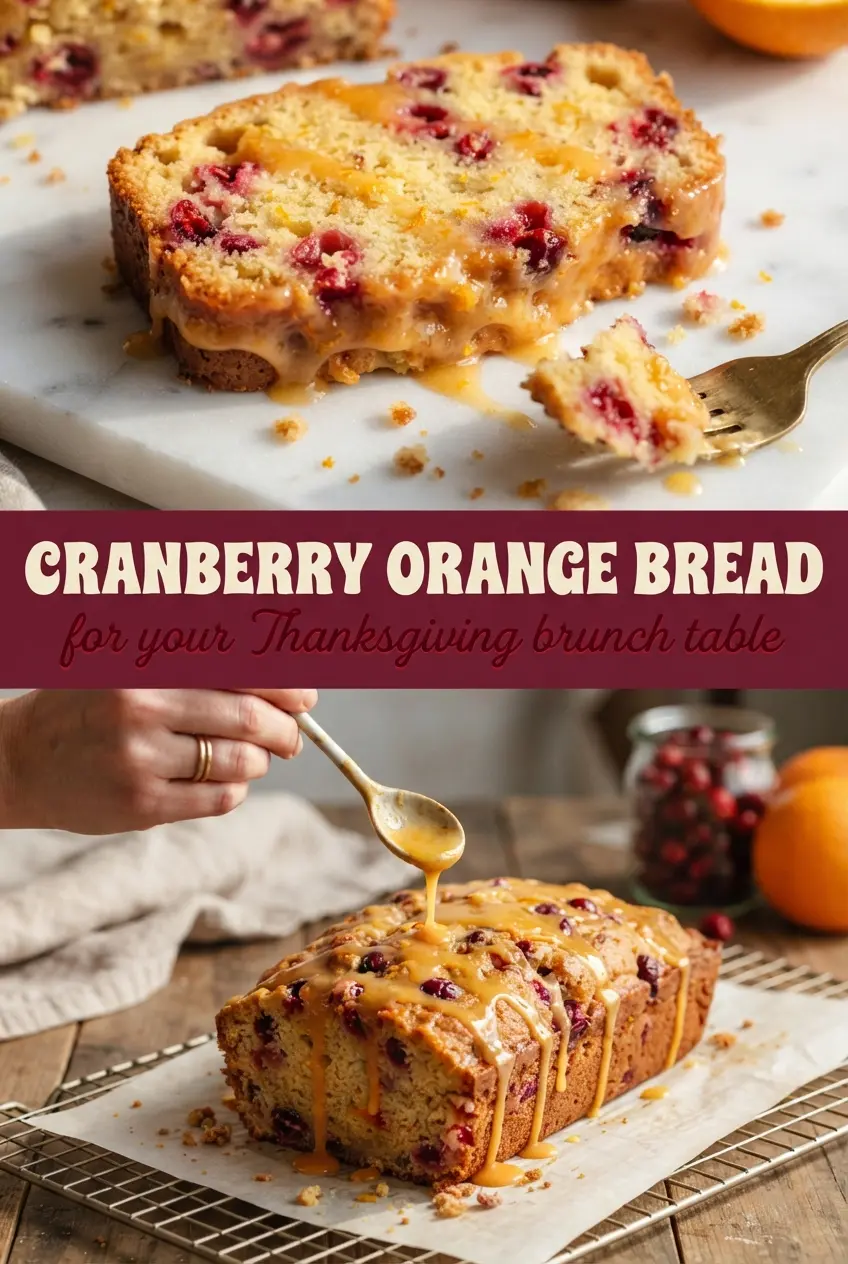
Cranberry Orange Bread
Ingredients
Equipment
Method
- Preheat the oven to 350°F and grease a 9x5-inch loaf pan.
- Whisk the all-purpose flour, baking powder, baking soda, and salt until evenly combined.
- Beat the softened unsalted butter, granulated sugar, and orange zest until fluffy.
- Beat in the large eggs, stopping when the mixture looks smooth and thick.
- Alternate adding the dry ingredients with the fresh orange juice and buttermilk until just combined.
- Fold in the fresh cranberries until they’re evenly distributed through the batter.
- Bake at 350°F for 55 to 60 minutes, until a toothpick in the center comes out clean and the top is lightly golden.
- Cool the loaf for 15 minutes in the pan so it sets before glazing.
- Whisk the powdered sugar with orange juice for the glaze until glossy.
- Drizzle the glaze over the loaf and let it set briefly before slicing.