
Juicy chicken breasts coated in a glossy cranberry balsamic glaze have a way of tasting like you spent far longer at the stove than you actually did. The sauce turns sticky and ruby-red as the cranberries burst, and that sweet-tart balance clings to every slice instead of running off the plate. It’s the kind of skillet dinner that feels polished enough for company but still lands on the table without a lot of fuss.
What makes this version work is the sequence. The chicken gets a proper sear first, which builds browned bits in the pan that the sauce can pick up later. Then the cranberries, balsamic, honey, broth, garlic, and rosemary simmer together until the fruit breaks down and the liquid reduces to a glaze that coats the back of a spoon. If the sauce looks thin, it just needs another minute or two; if it’s left too loose, it won’t cling the way it should.
Below, you’ll find the detail that matters most: how to know when the glaze is thick enough, how to keep the chicken juicy, and a few smart swaps if you need to adjust the recipe for what’s in your kitchen.
The sauce thickened up perfectly and the cranberries gave it this bright little pop instead of just tasting sweet. I served it over rice and my husband went back for seconds before I even sat down.
Cranberry Balsamic Chicken has that glossy sweet-tart glaze you’ll want on repeat when you need a quick skillet dinner that still feels special.
The Sear First, Sauce Later Rule That Keeps the Chicken Juicy
The biggest mistake with skillet chicken is rushing straight into the sauce before the meat has color. A good sear does two jobs at once: it gives the chicken a better texture and leaves browned bits in the pan that deepen the glaze. Skip that step or crowd the pan, and you end up with pale chicken and a sauce that tastes flat.
The other part that matters is finishing the chicken in the sauce instead of cooking it hard from the start. Once the glaze is simmering, the chicken only needs a few minutes to come back through and absorb the flavor. If you cook it too long at that stage, the breast meat tightens up and the texture goes dry even though the sauce is doing its job.
- Use medium-high heat for the sear, not high heat. You want a deep golden crust, not scorched spots.
- Remove the chicken before building the glaze so the pan stays hot enough to reduce the liquid without overcooking the meat.
- Return the chicken only after the cranberries have burst and the sauce has started to thicken. That’s the point where it will coat instead of pool.
What Each Ingredient Is Actually Doing in This Dish
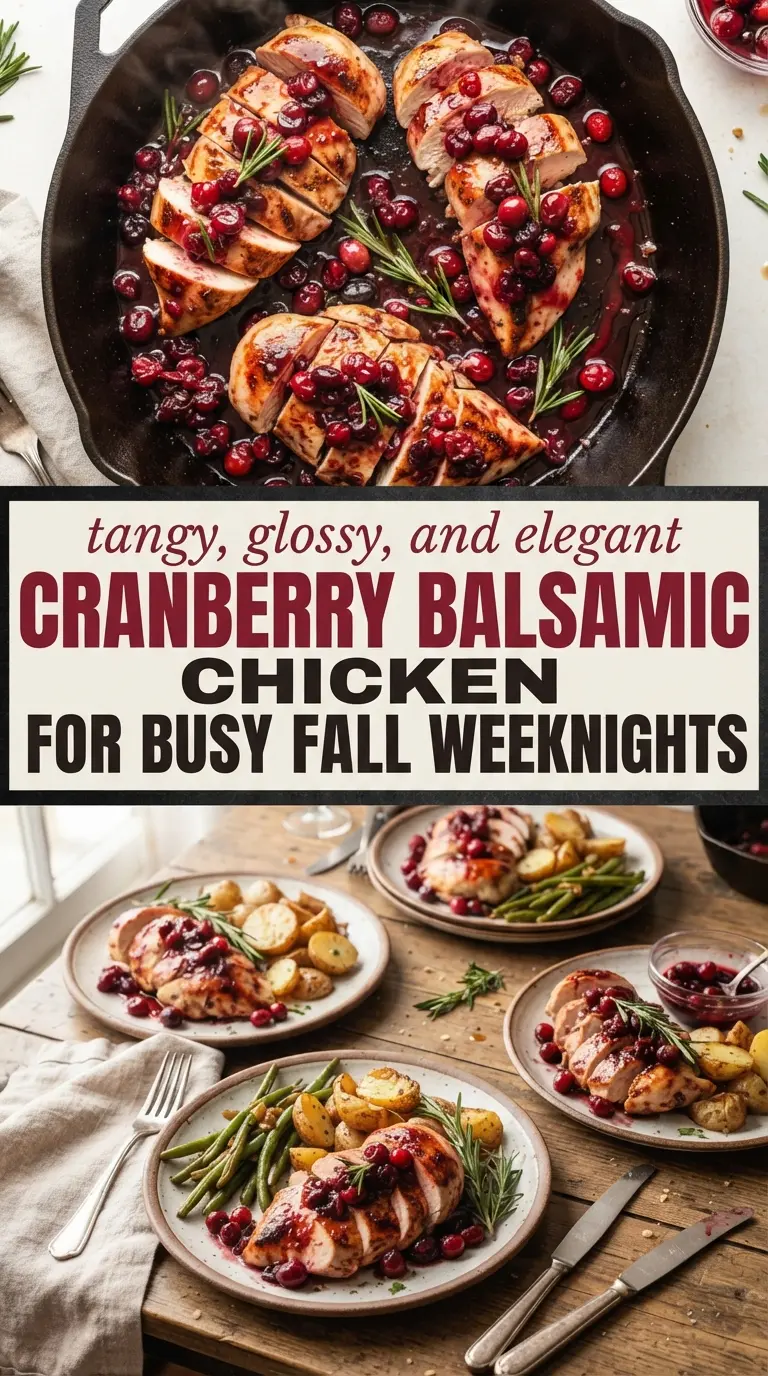
- Chicken breasts — Boneless breasts keep this fast and lean, but they need even thickness to cook properly. If one side is much thicker, pound it lightly so the whole piece finishes at the same time. That prevents dry edges while the center catches up.
- Fresh cranberries — These are what give the sauce its body and sharp, bright pop. Fresh berries burst more cleanly and leave some texture behind, while frozen cranberries can make the glaze a little looser and softer. If frozen is what you have, use them straight from the freezer and give the sauce an extra minute or two to reduce.
- Balsamic vinegar — This is the backbone of the glaze, bringing dark acidity and enough sweetness to round out the cranberries. A decent supermarket balsamic works fine here; you don’t need the expensive syrupy bottle for a cooked sauce. What matters is balance, not age statement.
- Honey — Honey smooths the sharpness of the vinegar and helps the glaze turn glossy instead of harsh. Maple syrup can work in a pinch, but the flavor shifts toward woodsy sweetness and loses a little of the clean finish. Use the honey to taste if your balsamic runs especially sweet.
- Chicken broth — The broth loosens the pan just enough to let the cranberries simmer without sticking. It also keeps the glaze from turning sugary before the berries have time to burst. Low-sodium broth is the better pick here so the reduction doesn’t end up salty.
- Garlic and rosemary — Garlic adds depth, and rosemary gives the sauce a savory edge that keeps it from reading like dessert. Fresh rosemary is worth using because dried rosemary can feel dusty in a short simmer. Chop it finely so it doesn’t overpower the glaze in little woody bits.
Building the Glaze So It Turns Sticky, Not Thin
Seasoning and Searing the Chicken
Season both sides of the chicken with salt and pepper before it hits the pan. The skillet should be hot enough that the chicken sizzles immediately, and the first side needs to stay put until it releases naturally with a deep golden crust. If you try to move it too soon, it’ll tear and lose that browning. Once both sides are seared, take the chicken out even if it isn’t fully cooked yet; that’s how you protect the texture.
Cooking the Cranberries Down
Add the cranberries, balsamic, honey, broth, garlic, and rosemary to the same skillet. The liquid should bubble briskly as the berries start to soften and split; that’s when the sauce begins to thicken. Stir occasionally so the honey doesn’t stick, but don’t churn it constantly or the cranberries won’t break down in distinct pieces. If the pan looks dry before the berries burst, the heat is too high.
Finishing to a Spoon-Coating Glaze
Return the chicken to the skillet and spoon the glaze over the top. Simmer just until the chicken is cooked through and the sauce clings in a shiny layer instead of running in a puddle. If the sauce still looks thin, let it go a minute longer, but don’t crank the heat to hurry it along or the honey can turn harsh. You’re looking for a glaze that leaves a slow trail when you drag a spoon through it.
Three Useful Ways to Adjust the Recipe Without Losing the Balance
Make It with Chicken Thighs
Boneless thighs work well if you want a richer, more forgiving cut. They take a few minutes longer than breasts, but they stay juicier if the pan runs hot. The sauce doesn’t change, though the finished dish will feel a little more savory and less lean.
Dairy-Free and Naturally Gluten-Free
This recipe is already both dairy-free and gluten-free as written, which makes it easy to serve without extra adjustments. Just check your chicken broth label if you’re sensitive to gluten, since some brands use additives you won’t want in the pan.
Swap in Dried Rosemary Carefully
If you don’t have fresh rosemary, use a small pinch of dried instead of a full teaspoon. Dried herbs are more concentrated and can turn woody if you use them too heavily in a quick sauce. Crushing them between your fingers before they go into the pan helps release a little more aroma.
Make the Glaze a Little Less Tart
If your cranberries are extra sharp, add another teaspoon or two of honey and let the sauce simmer for a minute longer. That softens the acidity without turning the glaze sweet, which is the line you want to keep here. Adding more honey too early can make the sauce taste sticky instead of balanced.
Storage and Reheating
- Refrigerator: Store leftovers in an airtight container for up to 3 days. The sauce thickens as it chills, so it may look more jam-like the next day.
- Freezer: It freezes well for up to 2 months, though the cranberry pieces soften a bit after thawing. Cool it completely before freezing in a sealed container.
- Reheating: Warm gently on the stove over low heat with a splash of broth or water to loosen the glaze. High heat can tighten the chicken and make the honey in the sauce taste sharp.
Answers to the Questions Worth Asking
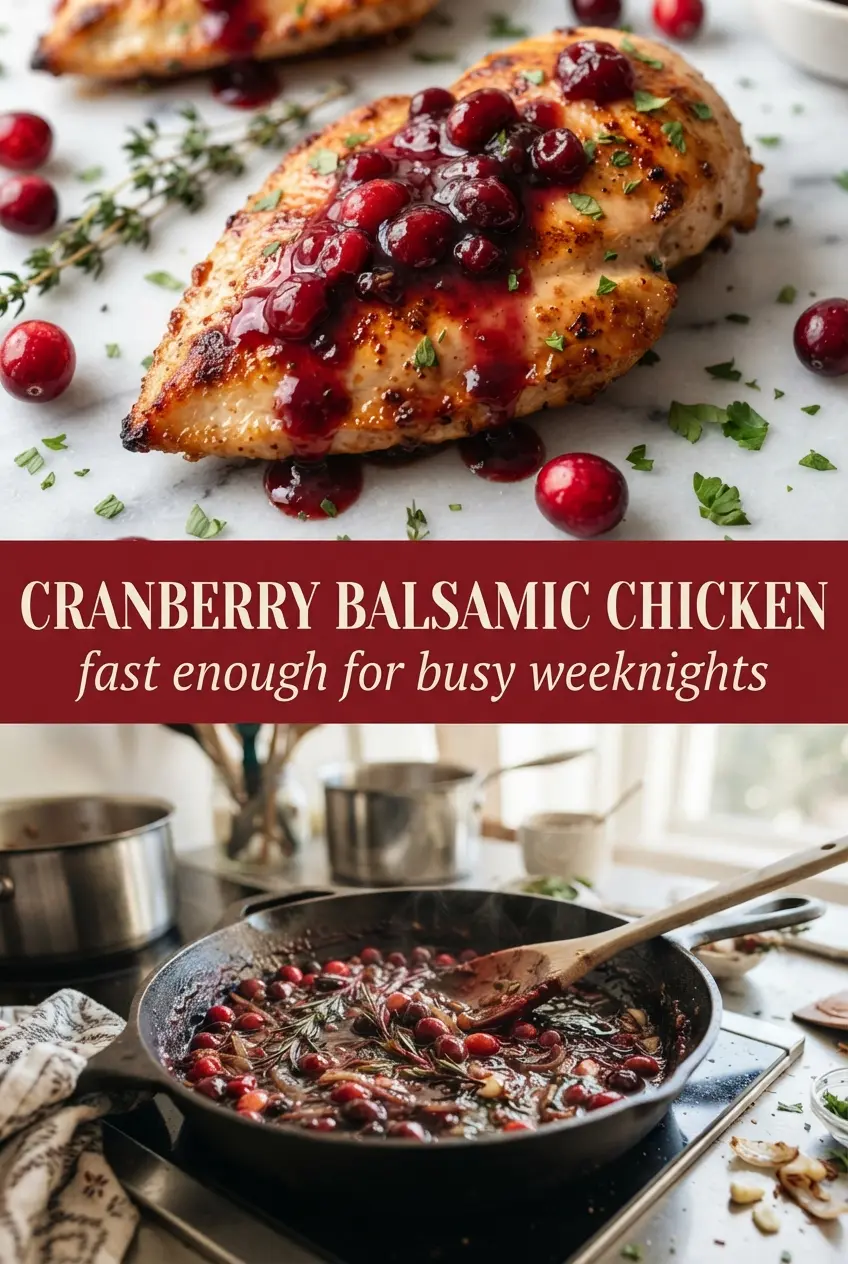
Cranberry Balsamic Chicken
Ingredients
Equipment
Method
- Season the chicken breasts with salt and pepper until evenly coated with visible seasoning on the surface.
- Heat olive oil in a large skillet over medium-high heat and sear the chicken for 5-6 minutes per side until golden, then remove and set aside.
- In the same skillet, add the cranberries, balsamic vinegar, honey, chicken broth, garlic, and rosemary, stirring to combine so the liquid is evenly distributed.
- Simmer for 8-10 minutes until the cranberries burst and the sauce thickens to a glossy consistency.
- Return the chicken to the skillet and spoon the glaze over top.
- Simmer for 3-4 minutes until the chicken is cooked through and the glaze coats the chicken.