
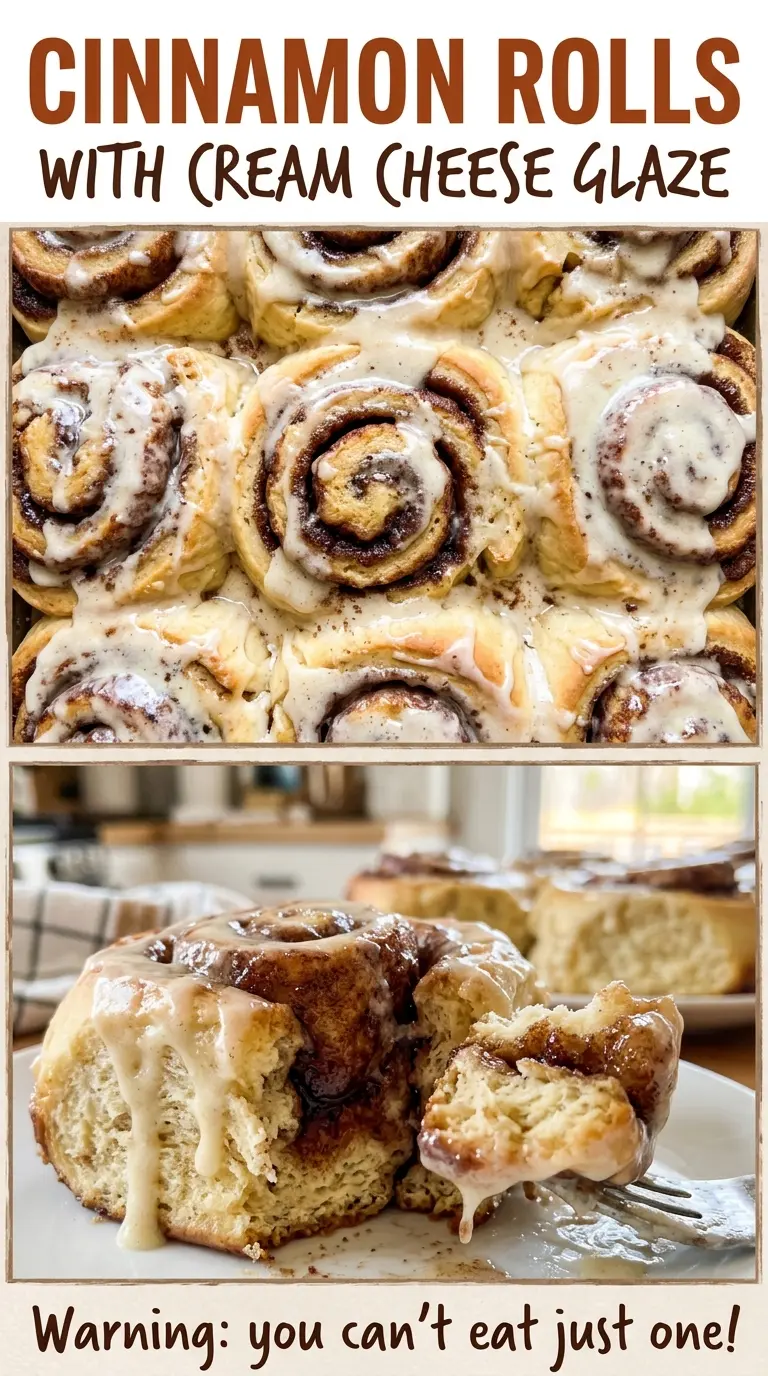
The first thing I watch is the milk: too hot, and the yeast won’t wake up; too cool, and the dough can take its time getting started. Once that foamy layer appears, these cinnamon rolls with cream cheese glaze come together into a soft, buttery dough with a cinnamon-sugar spiral in every slice.
I like this dough because it’s tender without being hard to handle. Kneading gives it enough structure to roll into a neat log, and the filling stays tucked inside when you leave a small border along one edge. The cream cheese glaze goes on while the rolls are still warm, so it softens into the swirls without disappearing completely. The finished rolls have plush centers, golden edges, and a sweet cinnamon ribbon through every bite.

Kitchen Note
Set the cream cheese and butter out early enough to soften before you make the glaze. Cold cream cheese leaves little lumps that are hard to beat out once the powdered sugar goes in.
Save these cinnamon rolls with cream cheese glaze for a bake with soft centers, buttery spirals, and a tangy finish.
Why the Center Roll Is the One Worth Checking
The rolls around the edge of the pan get more direct heat than the ones tucked in the middle. That means the outside rolls can look beautifully golden while the center is still catching up. It’s an easy reason to pull a pan too soon if color is your only cue.
I check the center roll rather than judging the whole pan by its edges. The middle is the last place to finish baking, and a thermometer gives you a much clearer answer than a browned top. The rolls should still be soft when they come out; they don’t need a dark crust to be baked through. That balance is what keeps the center tender instead of gummy and the outer rolls from drying out while you wait.
What Makes the Dough Tender and the Swirl Hold Together
- Whole milk gives the dough richness and helps make a soft crumb. Two-percent milk works as a direct swap, though the rolls will be a little less rich; whole milk is the better choice if you have it.
- Active dry yeast is what I use here, and its foam after sitting in the warm milk is a helpful sign that it’s ready to work. Check the date on the package if it stays flat instead of foaming.
- Eggs enrich the dough and help it hold its shape. Bring them to room temperature so they blend into the melted butter and milk more evenly.
- Unsalted butter lets the measured table salt stay in balance. Use butter that’s softened, not melted, for spreading over the dough; softened butter coats the surface without making the filling slide around.
- All-purpose flour gives these rolls enough structure while keeping them tender. Add it gradually until the dough is shaggy, rather than tipping it all in at once and making it harder to judge the texture.
- Packed light brown sugar brings moisture and a gentle molasses note to the spiral. Dark brown sugar can replace it in the same amount for a deeper, more pronounced molasses flavor.
- Ground cinnamon carries the filling, so use a jar that smells fragrant when you open it. If the aroma is faint, the cinnamon will taste muted against the buttery dough.
- Block cream cheese makes a thick, tangy glaze that spreads over warm rolls. A soft cream cheese spread from a tub is looser and can make the glaze runny, so use the block called for here.
From Foamy Yeast to Warm, Glazed Spirals
Wake Up the Yeast
Stir the warm milk, active dry yeast, and granulated sugar together in a large bowl. Let the mixture stand for 5 to 10 minutes, until a foamy layer forms on top. If it looks flat after that wait, check the milk temperature and yeast freshness before adding the other ingredients. The milk should be 105 to 110°F, not hot enough to damage the yeast.
Knead Until the Dough Turns Smooth
Whisk the eggs, melted and cooled butter, and table salt into the yeast mixture. Stir in the flour gradually until a shaggy dough forms, then knead it on a clean counter for 8 to 10 minutes. It should change from rough and uneven to smooth and elastic under your hands. Put it in a large bowl coated with neutral oil, cover it, and let it rise for 1 to 1 1/2 hours, until doubled in size.
Roll, Fill, and Seal the Log
Stir the packed brown sugar and cinnamon together, then grease a 9×13-inch baking dish with softened butter. Roll the dough on a large sheet of parchment into a 12×18-inch rectangle. Spread softened butter over the dough, leaving a 1/2-inch border along one long edge, and scatter the cinnamon-sugar mixture evenly over the butter. Start rolling from the long edge opposite the border, then pinch the seam closed and cut the log into 12 equal rolls.
Let the Rolls Puff Before Baking
Arrange the rolls cut-side up in the prepared dish and cover them loosely. Let them rise for 30 to 45 minutes, until puffy; they should look fuller rather than tight and compact. Preheat the oven to 350°F during the final 15 minutes of this rise. Bake for 23 to 28 minutes, until golden brown and the center roll registers about 190°F on an instant-read thermometer.
Finish with Cream Cheese Glaze
Let the rolls cool in the dish for 10 minutes while you make the glaze. Beat the softened cream cheese and butter until smooth, then beat in the powdered sugar, vanilla, and milk. Spread the glaze over the warm rolls so it settles into the spirals while still holding its creamy texture.
Two Easy Ways to Change the Cinnamon Rolls
Use dark brown sugar for a deeper swirl
Swap dark brown sugar for the light brown sugar in the filling, using the same amount. The extra molasses flavor makes the cinnamon layer taste darker and richer, with no change to the rolling or baking method.
Leave the rolls unglazed
Skip the cream cheese glaze for a less-sweet roll that lets the cinnamon filling stand out. The rolls will be less tangy and won’t have the creamy finish, but the baked dough and filling stay exactly the same.
Storage and Reheating
- Refrigerator: Store glazed rolls covered in the refrigerator within 2 hours of baking and eat them within 4 days. The chilled dough will feel firmer, and the glaze will thicken.
- Freezer: Freeze cooled, unglazed rolls individually wrapped and sealed in an airtight container for up to 2 months. Thaw in the refrigerator, then make the glaze fresh.
- Reheating: Warm an individual roll in the microwave for about 10 seconds, then add a few seconds if needed. Longer heating can dry the edges and make the glaze run off.
Questions That Come Up While Making These Rolls
Cinnamon Rolls with Cream Cheese Glaze
Ingredients
Equipment
Method
- In a large bowl, stir together the warm milk, yeast, and granulated sugar; let stand for 5-10 minutes until foamy.
- Whisk in the eggs, 1/3 cup melted butter, and salt.
- Gradually stir in the flour until a shaggy dough forms.
- Knead the dough on a clean counter for 8-10 minutes, until smooth and elastic.
- Coat a large bowl with the oil and add the dough.
- Cover and let rise for 1-1 1/2 hours, until doubled in size.
- Stir the brown sugar and cinnamon together in a small bowl.
- Grease a 9x13-inch baking dish with 1 tablespoon softened butter.
- Turn the dough onto a large sheet of parchment and roll it into a 12x18-inch rectangle.
- Spread with 1/2 cup softened butter, leaving a 1/2-inch border along one long edge.
- Sprinkle evenly with the cinnamon-sugar mixture.
- Starting at the long edge opposite the border, roll the dough into a log and pinch the seam closed.
- Cut into 12 equal rolls and arrange them cut-side up in the prepared dish.
- Cover loosely and let rise for 30-45 minutes, until puffy.
- Preheat the oven to 350°F during the final 15 minutes of rising.
- Bake for 23-28 minutes, until golden brown and the center roll registers about 190°F on an instant-read thermometer.
- Let the rolls cool in the dish for 10 minutes.
- Beat the cream cheese and 2 tablespoons softened butter until smooth.
- Beat in the powdered sugar, vanilla, and milk.
- Spread the glaze over the warm rolls.