
The first sheet of puff pastry tells you whether you’re on track: it should unfold cleanly, feel cool, and stay pliable enough to roll without cracking. When it gets warm in your hands, the layers start to feel slack, and neat twists can turn into smudged strips. These Christmas appetizer puff pastry twists are easier to shape when the pastry stays chilled as you work. Each sheet gets a different pesto, so the platter has both a basil batch and a sun-dried tomato batch without extra dough work.
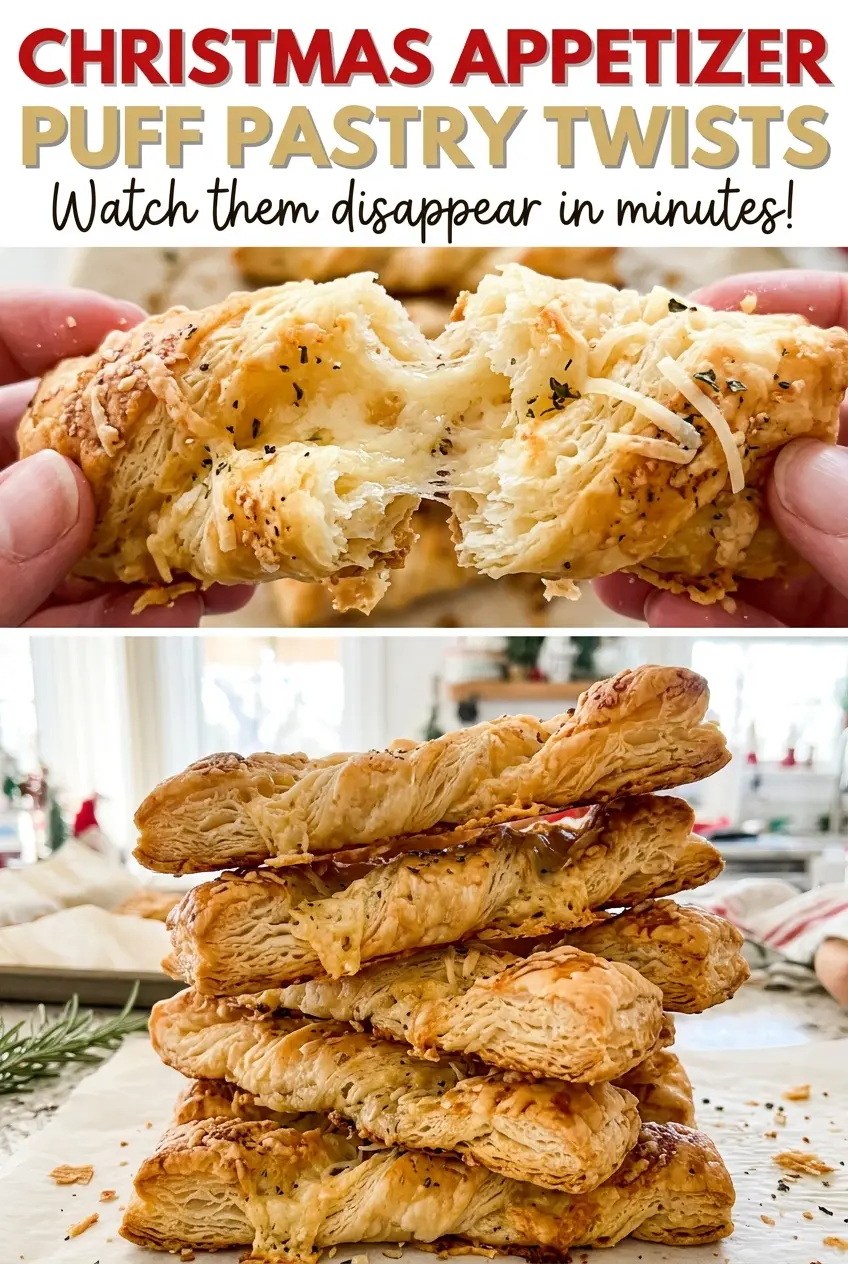
Folding the filling inside the pastry gives each strip a tidy seam, and a few turns reveal ribbons of pesto between flaky layers. Finely grated Parmesan nestles into the filling, while egg wash helps the tops bake to a deep golden brown. I bake the twists in two batches, keeping the second batch in the refrigerator while the first one cooks. After a short rest on the pan, they’re crisp at the edges and tender through the middle.
Kitchen Note
Keep the pastry chilled but workable: it should fold without cracking, not droop on the counter. Work with one sheet at a time so the dough stays firm enough to hold its clean ridges.
Save these Christmas appetizer puff pastry twists for a party platter with two pesto flavors and crisp, golden layers.
Why Folding the Pesto Inside Makes These Twists Easier to Handle
These aren’t pastry sticks with pesto brushed on top. Each sheet is spread on one half, then folded over the filling, so the pesto sits between two layers of dough. When you cut the folded pastry into strips and twist them, the filling stays tucked into the spiral instead of coating the outside of every strip. That helps the pastry bake into distinct layers, with pesto peeking through the twists.
The fold also gives you two clear batches to work with. One sheet carries basil pesto, and the other carries sun-dried tomato pesto, so it’s easy to tell the flavors apart before they’re baked. A strip about 3/4 inch wide is narrow enough to make a defined twist but still has enough pastry to puff. Turning each strip just 2 or 3 times keeps the shape open rather than winding the dough into a tight knot. The twists look a little rustic on the tray; that’s part of their charm, and the filling stays where it belongs.
Two Pestos, One Pastry: What Gives Each Batch Its Character

- Puff pastry — The frozen sheets are what create the light, layered structure; pie crust won’t puff in the same way. Thaw the sheets but keep them chilled, and handle them gently as you unfold. If you need a gluten-free version, use gluten-free puff pastry and gluten-free flour for rolling; the texture may be a little different, but the filled twists still work.
- Basil and sun-dried tomato pestos — Each brings a different color and flavor to the finished platter. Use pestos that are thick enough to spread without running off the pastry. You can use either pesto for both sheets, keeping the same amount for each; you’ll lose the two-flavor contrast but not the twist shape.
- Finely grated Parmesan — Fine shreds distribute through the filling instead of forming bulky patches between the pastry layers. Pecorino Romano works in its place in the same amount, though it brings a sharper, saltier taste. Grate it finely so it settles into the pesto.
- Egg wash — Whisking the egg with water makes a brushable wash that helps the pastry turn golden in the oven. Brush a thin, even layer over the exposed dough; pools of egg wash can bake into shiny patches rather than an even finish. You can omit it, but the tops will be paler.
How to Shape Both Pesto Batches Without Softening the Pastry
Roll Each Sheet While It’s Still Chilled
Heat the oven to 400°F and line an 18×13-inch rimmed baking sheet with parchment paper. On a lightly floured surface, unfold one chilled pastry sheet and gently roll it to about 10 inches square. The dough should open without tearing and feel cool as you handle it. If it begins to feel limp, pause before shaping; soft pastry is harder to cut into clean strips.
Spread, Sprinkle, and Fold
Spread the basil pesto over half of the first sheet, then sprinkle that side with Parmesan. Fold the uncovered half over the filling, lining up the edges as neatly as you can. Repeat with the second sheet, using the sun-dried tomato pesto and the remaining Parmesan. Keep the filling on its half of the pastry so it’s enclosed when you fold the dough over.
Cut Strips and Twist Gently
Cut each folded sheet into 12 strips, about 3/4 inch wide. Twist each strip 2 or 3 times, then pinch the ends closed so the shape holds together. A gentle twist is enough; pulling hard can stretch the pastry and make the strips uneven. Set the finished twists on the parchment-lined baking sheet.
Bake in Two Batches
Whisk the egg and water in a small bowl, then brush the first 12 twists with egg wash. Refrigerate the remaining twists while the first batch bakes on the middle rack for 14 to 18 minutes, until puffed and golden brown. Let the twists cool on the pan for 5 minutes, then bake the second batch the same way. Look for browned edges and visible lift in the layers, not just a glossy top.
Easy Swaps for the Pesto and Cheese in These Twists
Make an all-basil or all-tomato tray
Use basil pesto for both sheets or sun-dried tomato pesto for both. The method stays the same, but the finished platter has one consistent flavor instead of two contrasting batches.
Swap Parmesan for Pecorino Romano
Replace the Parmesan with the same amount of finely grated Pecorino Romano. It melts into the filling, with a sharper and saltier edge that pairs especially well with the tomato pesto.
Make the twists dairy-free
Use dairy-free puff pastry, dairy-free basil and sun-dried tomato pestos, and dairy-free Parmesan. Keep the egg wash if eggs work for your diet; the dairy-free cheese alternative may give the filling a milder, less savory taste.
Storage and Reheating
- Refrigerator: Store cooled twists in an airtight container for up to 3 days. The layers soften in storage.
- Freezer: Freeze cooled twists in a single layer, then transfer them to an airtight container for up to 2 months.
- Reheating: Warm them on a parchment-lined baking sheet in a 400°F oven until crisp again. Skip the microwave, which softens the pastry rather than restoring its flaky edges.
Questions That Come Up While Shaping Puff Pastry Twists
Christmas Appetizer Puff Pastry Twists
Ingredients
Equipment
Method
- Heat the oven to 400°F.
- Line an 18x13-inch rimmed baking sheet with parchment paper.
- On a lightly floured surface, unfold one chilled pastry sheet and gently roll it to about 10 inches square.
- Spread the basil pesto over half the sheet.
- Sprinkle with 1/4 cup Parmesan.
- Fold the uncovered half over the filling.
- Repeat with the second pastry sheet, using the sun-dried tomato pesto and remaining Parmesan.
- Cut each folded pastry into 12 strips about 3/4 inch wide.
- Twist each strip 2 or 3 times and pinch the ends closed.
- Whisk the egg and water in a small bowl.
- Arrange 12 twists on the prepared baking sheet and brush them with egg wash.
- Refrigerate the remaining twists while the first batch bakes.
- Bake on the middle rack for 14 to 18 minutes, until puffed and golden brown.
- Let the twists cool on the pan for 5 minutes.
- Bake the remaining twists the same way, on the middle rack for 14 to 18 minutes, until puffed and golden brown.