
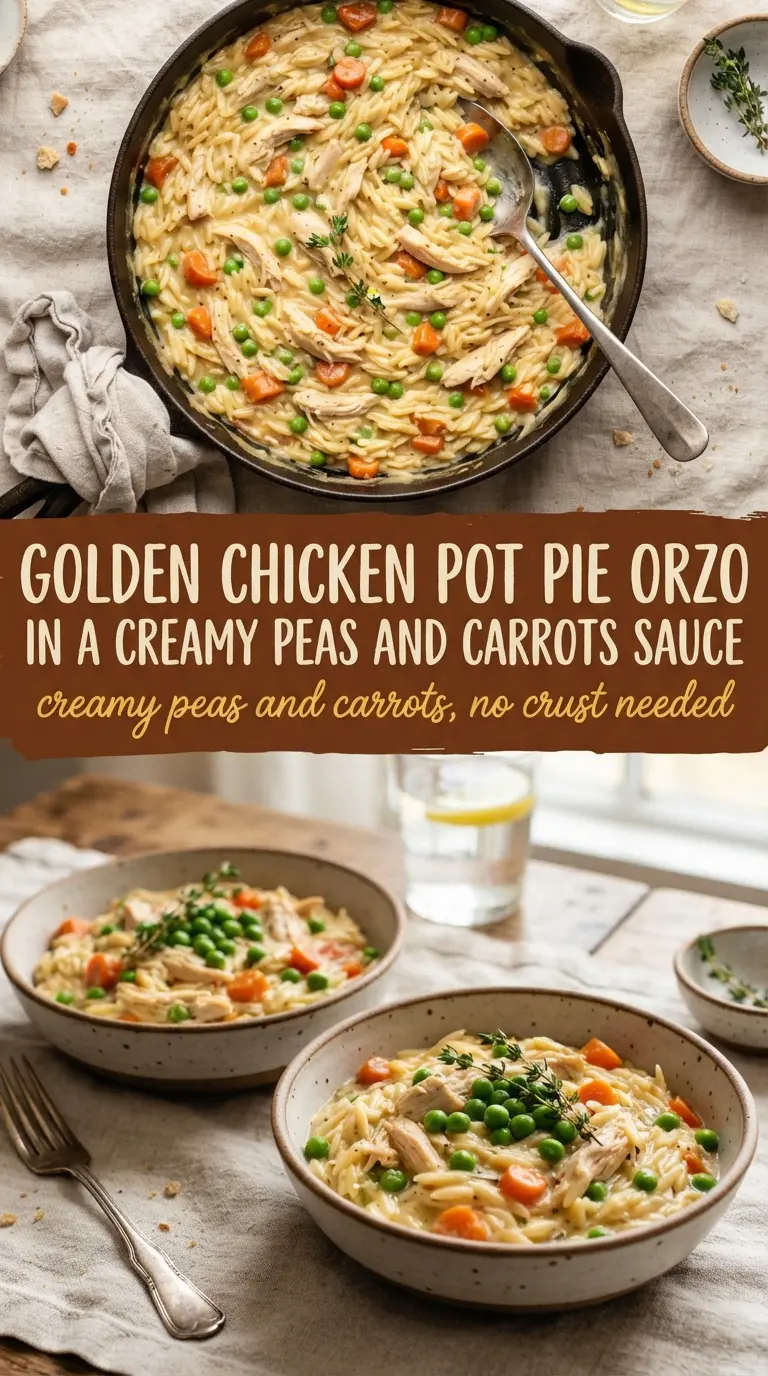
Chicken pot pie orzo gives you the cozy, creamy comfort of the classic pie without rolling dough or waiting on a baked crust. The orzo turns tender in the pan and leaves just enough starch behind to thicken the sauce, so every bite clings with that rich, savory finish you want from pot pie filling. It lands in the sweet spot between a skillet dinner and a proper comfort meal.
The key here is building the flavor in layers. Browning the chicken first gives the whole dish a deeper base, and cooking the onions and carrots until they lose their raw edge keeps the sauce from tasting flat. The broth cooks the orzo right in the pan, which means the pasta absorbs flavor instead of boiling in plain water and then getting sauced at the end. That one change is what makes this taste like a complete dish instead of chicken tossed with pasta.
Below, I’ll walk through the part that matters most: how to keep the orzo creamy without letting it go gluey, plus the small swaps that still keep the dish in the pot pie lane.
The orzo came out perfectly creamy and the sauce thickened up just like pot pie filling. I used the peas at the end like you said and they stayed bright, and my husband went back for a second bowl before I even sat down.
Save this creamy chicken pot pie orzo for the night you want comfort food fast, with one pan, tender chicken, and a sauce that tastes like the filling of a homemade pie.
The Trick to Keeping Orzo Creamy Instead of Mushy
Orzo cooks fast, and that’s exactly why it can go wrong. If the pan is too hot or you walk away during the simmer, the pasta can drink up the broth unevenly and turn pasty before the sauce has a chance to come together. The goal is tender pasta with a little body left in the pan, not a dry skillet and bloated noodles.
The other thing that matters is when the cream goes in. Add it after the orzo has already softened and the broth has mostly reduced. If you pour in cream too early, you slow the cooking and risk dulling the flavor of the broth. If you add it too late, the sauce won’t have time to loosen and coat the pasta before the chicken goes back in.
- The broth should be at a steady simmer, not a hard boil. A boil moves the orzo around too aggressively and can make the liquid cook off before the pasta is done.
- Stir often enough to keep the pasta from sticking, especially near the end. You want movement in the pan, not constant scraping.
- If the sauce looks loose at the end, give it one more minute. It thickens as the orzo sits.
- If it looks thick before the chicken goes back in, add a splash of broth to bring it back to a silky consistency.
What Each Ingredient Is Actually Doing in This Dish
- Chicken breasts — Cubing them before cooking gives more surface area for browning and keeps them from taking over the skillet. Thighs also work if you want a richer result, and they stay a little juicier if you accidentally cook them a minute too long.
- Orzo — This is what gives the dish its pot pie feel without a crust. It releases starch as it cooks, which helps the sauce turn creamy without needing a flour roux.
- Chicken broth — Use a broth you’d actually drink on its own, because it becomes the backbone of the sauce. Low-sodium is the safer choice since the Parmesan adds salt at the end.
- Heavy cream — This finishes the sauce and softens the edges of the broth. Half-and-half will work in a pinch, but the sauce will be thinner and a little less lush.
- Parmesan — It adds salt, body, and a savory note that makes the whole pan taste finished. Grate it fresh if you can; pre-grated cheese can clump instead of melting cleanly.
- Frozen peas — They go in at the end so they stay sweet and bright. If you add them too early, they lose both color and texture.
- Carrots and onion — These are the pot pie vegetables that make the dish taste familiar. Cook them until the onion turns translucent and the carrots just start to soften, or the final dish will taste undercooked in the middle.
Getting the Chicken, Vegetables, and Sauce to Work in One Pan
Brown the Chicken First
Season the chicken and let it take on color in the butter before anything else goes in. You’re not cooking it through here; you’re building the savory base that makes the whole skillet taste deeper. If the pan looks crowded, brown the chicken in two batches so it actually sears instead of steaming.
Cook the Vegetables Until They Lose Their Raw Bite
Add the onion and carrots to the same pan and let them cook for about five minutes. The onion should turn soft and fragrant, and the carrots should start to give a little when you stir them with a spoon. If the pan seems dry, that’s a sign you need the butter that’s already in the skillet working for you, not extra liquid too soon.
Let the Orzo Absorb the Broth
Stir in the orzo and broth, then keep the pan at a gentle simmer. Stir every minute or so so the pasta doesn’t glue itself to the bottom, and watch for the liquid to thicken as the starch comes out. The orzo should be tender but still have a small bite in the center when you check it.
Finish with Cream, Chicken, and Peas
Once the orzo is cooked, add the cream, peas, chicken, and Parmesan. Keep the heat moderate so the cream stays smooth and the cheese melts into the sauce instead of turning grainy. The finished dish should look glossy and spoonable, with enough sauce to coat every piece of chicken and pasta without pooling in the pan.
How to Adapt This for What You Have on Hand
Dairy-Free Version with a Different Kind of Creaminess
Use a full-fat unsweetened coconut cream or an unsweetened oat-based cooking cream in place of the heavy cream, and skip the Parmesan or use a dairy-free parmesan-style topping. The sauce won’t taste exactly the same, but it will still be silky and rich if you keep the heat low when you add the replacement cream.
Use Chicken Thighs for a Juicier Finish
Boneless thighs bring more flavor and stay tender even if the simmer runs a little long. They’re a better choice if you like a richer, softer bite, though you may want to trim any extra fat before browning so the sauce doesn’t get greasy.
Gluten-Free Swap with a Different Pasta Shape
Use a gluten-free orzo-style pasta if you can find one, but watch the simmer closely because some gluten-free pastas break down faster than wheat orzo. If the shape is a little larger, you may need a splash more broth and a minute or two longer for the right texture.
How to Store the Leftovers Without Losing the Sauce
Let the dish cool, then transfer it to an airtight container. The orzo will continue to absorb liquid as it sits, so leftovers thicken overnight and need a little loosening when reheated.
Storage and Reheating
- Refrigerator: Up to 4 days. The orzo will absorb more sauce, so the texture gets thicker.
- Freezer: It freezes, but the cream sauce can separate a little on thawing and the pasta softens. Freeze in portions if you plan to use it later, and expect a softer texture.
- Reheating: Warm it gently on the stove or in the microwave with a splash of broth or milk, stirring until it loosens. High heat is what makes the sauce look broken and the chicken go dry.
Answers to the Questions Worth Asking
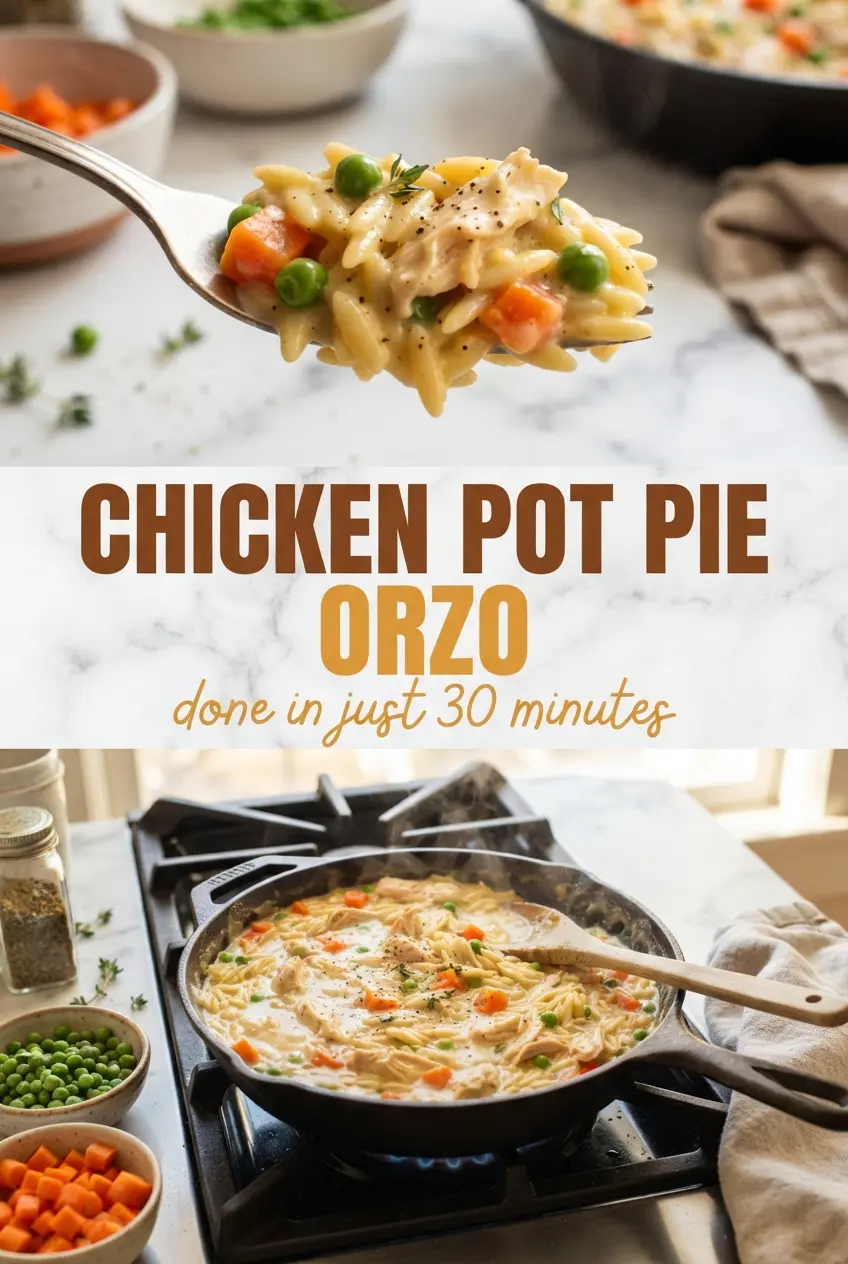
Chicken Pot Pie Orzo
Ingredients
Equipment
Method
- Melt the butter in a large skillet over medium-high heat, then add the cubed chicken and season with salt and pepper to taste. Cook until browned, then transfer to a plate or bowl (set aside).
- Reduce heat to medium and add the diced onion and carrots to the same skillet. Cook for 5 minutes, then stir in the minced garlic and dried thyme.
- Stir in the orzo and chicken broth, scraping up any browned bits. Bring to a simmer and cook for 10 minutes, stirring occasionally, until the orzo is tender.
- Add the heavy cream, frozen peas, the set-aside chicken, and grated Parmesan. Cook for 3 minutes, stirring, until warmed through and the sauce looks silky.
- Taste and adjust seasoning with additional salt and pepper as needed. Serve hot straight from the skillet.