
Golden, flaky chicken empanadas are the kind of handheld food that disappear faster than anything else on the table. The crust bakes up crisp and buttery, the filling stays savory and juicy, and the fork-crimped edges give you just enough texture to make each bite feel special. They work as a party appetizer, a casual dinner, or a make-ahead snack that reheats without turning soggy.
What makes this version dependable is the balance in the filling. Cooked onion and bell pepper add sweetness and moisture, while cumin and smoked paprika give the chicken enough depth that the pastry doesn’t have to carry the whole job. The egg wash matters too. It gives the empanadas that deep golden color and helps the sealed edges bake into something sturdy instead of pale and dry.
Below, I’ll show you the small things that keep the filling from leaking and the dough from tearing. If you’ve ever had empanadas burst open in the oven, the fix is in the way you fill, fold, and seal them.
The filling stayed tucked inside and the edges crisped up beautifully. I froze half before baking like you suggested, and they came out just as flaky after going straight from the freezer to the oven.
Love these chicken empanadas? Save them to Pinterest for a flaky, make-ahead appetizer with a savory chicken filling and crisp golden edges.
The Reason Empanadas Burst Open Before They Finish Baking
The filling usually isn’t the real problem. Too much moisture and sloppy sealing are what split the dough open. If the chicken mixture is wet from the pan, the steam builds fast inside the pastry and forces the seam apart before the crust has time to set.
That’s why the vegetables get cooked first. Bell pepper and onion need a few minutes in the pan so they soften and lose some of their water before the chicken goes in. The filling should look cohesive, not saucy. When you spoon it onto the dough, it should mound neatly and stay put.
- Cook the vegetables first — raw onion releases water in the oven, which can make the pastry soggy and weaken the seal.
- Keep the filling cool enough to handle — hot filling softens the dough before it even hits the oven.
- Crimp firmly with a fork — the pressure helps lock the edge shut and gives you a better chance against leakage.
What Each Ingredient Is Doing in This Filling

- Cooked shredded chicken — This is the backbone of the filling, and leftovers or rotisserie chicken work well. Just shred it finely enough that it packs into the pastry without poking holes through the dough.
- Diced bell pepper and onion — These add sweetness, color, and a little moisture, but they need to be softened first so they don’t release a flood of liquid in the oven.
- Cumin and smoked paprika — These are doing the heavy lifting for flavor. Cumin gives warmth and earthiness, while smoked paprika adds a deeper savory edge that keeps the filling from tasting flat.
- Empanada dough discs — Store-bought discs are the easiest path here, and they’re worth using if you want consistent sealing and browning. If yours are frozen, let them thaw until flexible but still cool; cracked dough tears during folding.
- Egg wash — The beaten egg is not just for color. It gives the tops that glossy, deeply golden finish and helps the seams bake more firmly.
From Filling to Flaky Pockets Without a Messy Leak
Softening the Vegetables
Start by cooking the bell pepper and onion until they’re softened and the pan looks mostly dry. You’re not building a browned base here, just cooking off the raw edge and extra moisture. If the vegetables still look glossy and wet, keep them on the heat a minute longer. The filling should feel spoonable, not soupy.
Mixing the Chicken Filling
Stir the shredded chicken into the vegetables with the cumin and smoked paprika until every piece is coated. The chicken should look seasoned all the way through, not like the spices are sitting in one corner of the bowl. Taste a small bit if needed; once it’s inside the dough, you won’t be adjusting it. Let the mixture cool a little before filling the discs so the pastry stays firm.
Filling, Folding, and Sealing
Spoon a modest amount onto one half of each disc. Overfilling is the fastest route to a blowout. Leave enough border to fold the dough over cleanly, then press the edge together and crimp with a fork. If the edge won’t stick, the dough is too dry or too warm; lightly moisten the rim with a fingertip and try again.
Baking to a Deep Golden Finish
Brush the tops with beaten egg and bake at 400°F until the empanadas are deeply golden and the crust looks set and flaky. They should feel firm when lifted, not soft or damp underneath. If the bottoms are pale, the baking sheet was too crowded or the oven wasn’t fully preheated. Give them space so the heat can crisp all sides evenly.
Three Ways to Adapt These Chicken Empanadas
Make-Ahead Freezer Empanadas
Assemble the empanadas, crimp them closed, and freeze them before baking on a parchment-lined tray. Once solid, move them to a freezer bag. Baking from frozen works well; just add a few extra minutes and wait for the crust to turn fully golden so the centers heat through.
Dairy-Free and Naturally Gluten-Free Filling
The filling itself is already dairy-free and gluten-free. The only thing to check is the dough, since many empanada discs contain wheat and sometimes dairy. If you need a gluten-free version, use a certified gluten-free pastry dough that’s meant for folding, because brittle dough cracks before it ever gets to the oven.
Spicier Filling with More Heat
Add minced jalapeño or a pinch of cayenne to the vegetables while they cook. That gives the heat time to bloom in the pan instead of tasting sharp and raw. Keep the rest of the seasoning the same so the smoke and warmth still balance the chicken.
Storage and Reheating
- Refrigerator: Store baked empanadas in an airtight container for up to 4 days. The crust softens a little in the fridge, but it crisps back up well in the oven.
- Freezer: Freeze unbaked empanadas on a tray, then bag them for up to 2 months. Baking them from frozen keeps the crust in better shape than freezing them after they’re already baked.
- Reheating: Warm baked empanadas in a 375°F oven until hot and crisp again, about 10 to 15 minutes. The mistake to avoid is the microwave, which makes the pastry limp and steamy.
Answers to the Questions Worth Asking
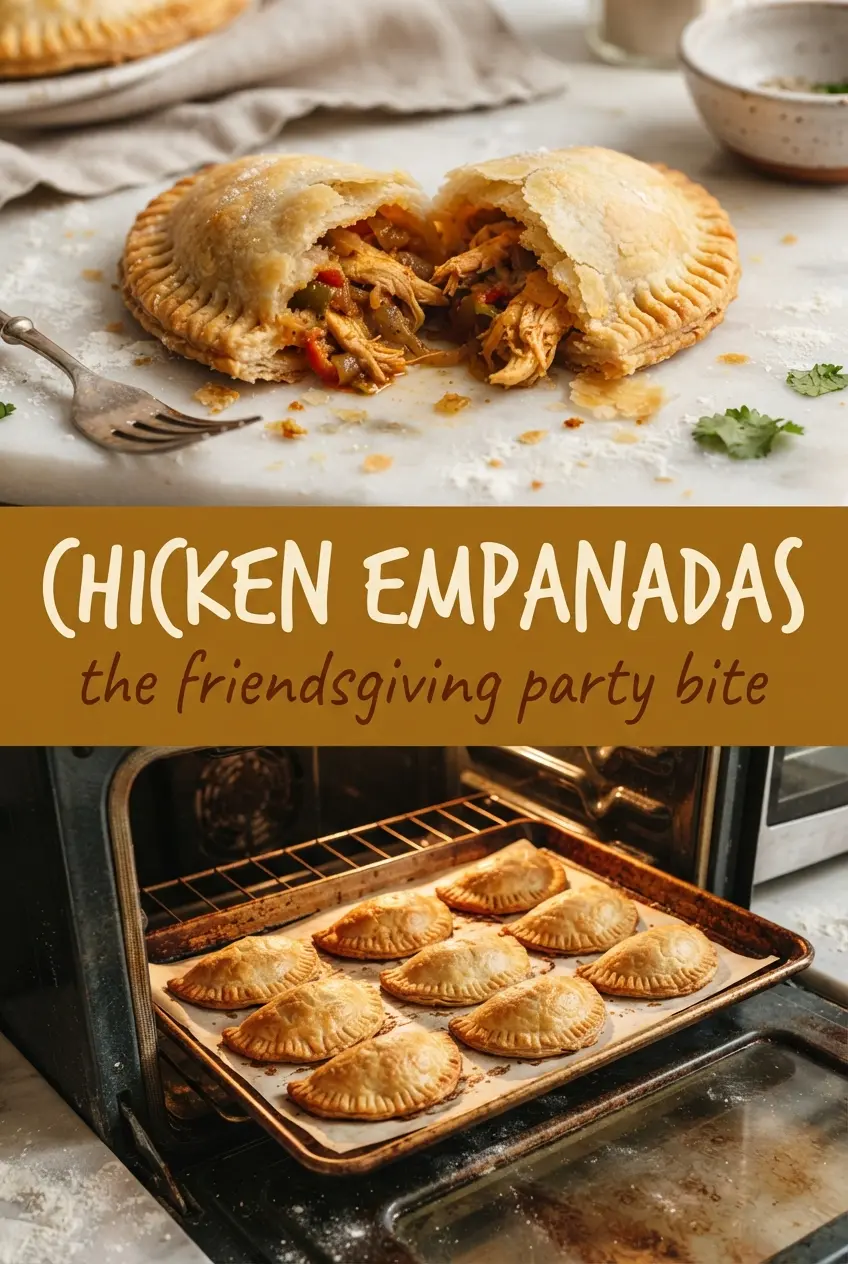
Chicken Empanadas
Ingredients
Equipment
Method
- Preheat the oven to 400°F and line a sheet pan with parchment paper for easy release.
- Sauté the bell pepper and onion until softened, about 5 minutes, so the filling bakes up tender.
- Mix in the shredded chicken, cumin, and smoked paprika until well combined, then cook for 1 minute to evenly distribute the spices.
- Spoon the filling onto each empanada disc and fold over, crimping the edges with a fork to fully seal.
- Brush the tops with beaten egg to encourage an even, glossy golden crust.
- Bake for 20-22 minutes until deeply golden and flaky, then let cool for 5 minutes before serving so the filling sets.