
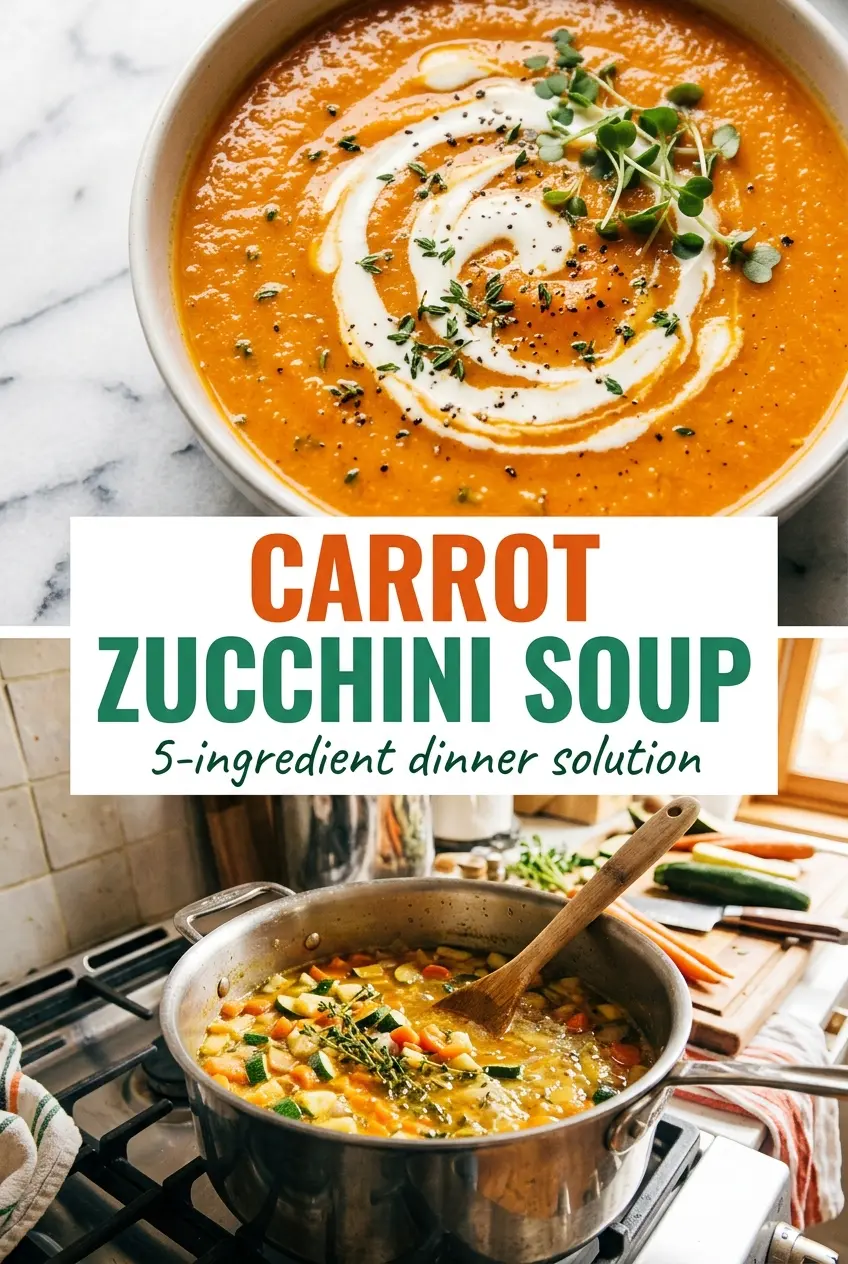
Silky carrot zucchini soup has a clean, gentle sweetness that feels comforting without being heavy. The carrots give it body and color, while the zucchini melts in and softens the edges so the finished bowl tastes smooth, balanced, and quietly rich. It’s the kind of soup that earns repeat status because it turns a short ingredient list into something that tastes much more complete than it looks on paper.
The key is giving the vegetables time to soften fully before blending. Carrots need that simmer to lose their chalky center, and zucchini needs just enough heat to disappear into the broth without turning thin and watery. A good onion base adds the savory depth this soup needs, and if you want it extra velvety, a long blend at the end makes all the difference.
The soup blended up so smooth and the carrots gave it this beautiful color. I added a little coconut milk at the end and my kids actually asked for seconds.
Save this carrot zucchini soup for a smooth, lightly sweet bowl that blends into the silkiest weeknight dinner.
The Mistake That Makes Carrot Soup Taste Flat
The biggest mistake with a soup like this is rushing the simmer. Carrots need enough time to turn sweet and tender all the way through, and zucchini needs to collapse into the broth instead of hanging onto its shape. If you blend before the vegetables are fully soft, you end up with a thin soup that tastes like broth with vegetable puree stirred in, not a finished bowl.
The other thing worth paying attention to is the onion. Let it soften in the oil until it loses its sharp bite and looks glossy at the edges. That small step gives the soup its savory backbone, which matters a lot when the ingredient list is this short.
What Each Ingredient Is Actually Doing in This Dish

- Carrots — These are the body of the soup and the main source of sweetness. Smaller carrots or thinner slices cook faster and blend smoother, so cut them evenly. If yours are older and a little woody in the center, peel a bit more deeply.
- Zucchini — Zucchini adds volume and a soft, fresh flavor without turning the soup heavy. It doesn’t need long cooking, but it does need enough time to break down completely. There isn’t a perfect substitute here; yellow squash works in the same way if that’s what you have.
- Vegetable broth — Use one with enough savory depth to stand on its own, since it’s the liquid that carries everything. A bland broth makes the whole soup taste thin. If your broth is salty, hold back on the final seasoning until after blending.
- Olive oil — This helps the onion soften and gives the finished soup a rounder taste. Butter works too, but olive oil keeps the flavor cleaner. Since the soup gets blended, you don’t need a lot.
The 20 Minutes That Turn Vegetables Into Soup
Softening the Onion First
Warm the olive oil over medium heat and cook the onion until it turns translucent and loses its raw smell. You want softness, not color. If the onion browns fast, the heat is too high and it can bring a bitter edge into a soup that should taste mellow and sweet.
Letting the Vegetables Simmer Fully
Add the carrots, zucchini, and broth, then bring everything to a steady simmer. Keep the pot uncovered or partly covered so the broth doesn’t vanish too fast, and cook until the carrots are completely tender when pierced with a fork. If the carrots still feel even slightly firm in the center, the soup won’t blend as smoothly as it should.
Blending Until It Turns Velvety
Blend the soup with an immersion blender until it looks completely smooth and glossy. Take your time here; a few extra seconds can move it from rustic to silky. If the texture still feels a little grainy, keep blending. This is where the soup gets its best finish, and stopping too early is the main reason it feels flat instead of polished.
How to Adapt This Soup for Richer, Lighter, or Creamier Bowls
Make it dairy-free and still creamy
This soup is already dairy-free as written. If you want a richer finish, stir in a splash of coconut milk after blending. It adds body and a soft sweetness, but it also nudges the flavor in a slightly tropical direction, so use a light hand if you want the carrot flavor to stay front and center.
Add cream without making it heavy
A small splash of cream at the end gives the soup a smoother, more velvety finish. Add it after blending and keep the heat low so it stays silky instead of looking broken. This works best when you want the soup to feel more like a first course than a light vegetable bowl.
Use yellow squash if zucchini is what you have
Yellow squash can stand in for zucchini without changing the process. It has a similar mild flavor and soft texture, though the soup may come out a little brighter and less green in the background. Keep the simmer the same and blend until the color looks uniform.
Storage and Reheating
- Refrigerator: Store in an airtight container for up to 4 days. The soup may thicken a little as it chills.
- Freezer: It freezes well for up to 3 months. Cool it completely first and leave a little room in the container for expansion.
- Reheating: Warm it gently on the stove over low to medium-low heat, stirring often. High heat can make the texture seem dull or split if you’ve added cream or coconut milk.
Questions I Get Asked About This Soup
Carrot Zucchini Soup
Ingredients
Equipment
Method
- Heat olive oil in a pot over medium heat and sauté the diced onion until softened, about 5 minutes, stirring as needed so it doesn’t brown.
- Add sliced carrots and diced zucchini, then pour in the vegetable broth and bring the mixture to a simmer, 2-3 minutes.
- Simmer uncovered at a steady gentle bubble until the vegetables are very tender, about 20 minutes, so they break down easily for blending.
- Blend the soup until completely smooth using an immersion blender, blending extra long to achieve a silkiest possible texture.
- Season with salt and pepper before serving, tasting at the end to adjust balance.