
Silky carrot ginger miso soup has a way of tasting far more layered than the short ingredient list suggests. The carrots turn sweet and mellow as they simmer, the ginger brings just enough heat to keep the bowl from feeling flat, and the miso gives the broth a deep savory finish that lingers after every spoonful. Blend it smooth and you get that cozy, velvety texture that feels restaurant-level without any fussy steps.
What makes this version work is timing. The miso goes in at the end, off the heat, so it stays bright and clean instead of tasting cooked down. The carrots also need a full simmer until they’re falling-apart tender; if they’re even a little firm, the soup turns grainy instead of lush. A small amount of sesame oil at the start adds a quiet toasted note that ties everything together.
Below, I’ve included the little details that matter most: how to keep the miso from getting lost, what to do if your soup tastes too sharp or too sweet, and a few smart ways to adjust the texture depending on how thick you like it.
The soup turned out so silky, and the miso kept the carrot sweetness from getting boring. I loved that the ginger stayed noticeable without overpowering anything, and it reheated beautifully for lunch the next day.
Save this carrot ginger miso soup for the kind of lunch that tastes even better after the flavors settle overnight.
The Reason This Soup Turns Silky Instead of Thin
The biggest mistake with carrot soup is stopping too soon. Carrots need to be soft enough to collapse under a spoon, not just fork-tender, or the blender leaves a slightly chalky texture behind. If the soup tastes watery after blending, it usually means the carrots were undercooked or the broth was too generous for the amount of vegetable in the pot.
Another common issue is adding miso like any other seasoning. Miso is delicate. Boiling it hard mutes the flavor and can flatten the whole pot, which is why it gets whisked in at the end. You want the broth hot, not rolling, so the paste dissolves cleanly and keeps its savory depth.
- Cook the carrots past the point you think they’re done — soft enough to blend into a smooth, almost creamy base.
- Keep the simmer gentle — a hard boil can splash liquid off and leave you with a soup that tastes less balanced.
- Blend longer than you think you need to — extra blending time gives you the silkiest finish and helps the ginger disappear into the background instead of feeling stringy.
What Each Ingredient Is Actually Doing in This Bowl

- Carrots — These carry the body of the soup. Fresh carrots are worth using here because their sweetness deepens as they cook, and that natural sugar balances the miso. If your carrots are older and a little woody, peel them well and cook until they’re completely soft.
- White miso paste — This is the flavor anchor. White miso is mild, slightly sweet, and the best choice for keeping the soup light rather than heavy. If you only have red miso, use less at first because it’s saltier and more intense.
- Fresh ginger — Ginger gives the soup its lift. Grating it finely lets it perfume the broth without leaving sharp fibers behind. Ground ginger won’t deliver the same clean warmth, so fresh is the swap that matters most here.
- Sesame oil — A small amount brings a toasty, nutty edge that makes the whole pot taste more finished. Use a regular toasted sesame oil, not a neutral oil, because this is one of the few places where a little goes a long way.
- Vegetable broth — The broth should taste good on its own, since it becomes the base of everything else. If yours is very salty, hold back a little and adjust at the end after the miso goes in.
- Scallions — They’re not just garnish. The fresh, oniony bite cuts through the sweetness of the carrots and keeps each bowl tasting bright.
Building the Flavor Before You Blend
Wake Up the Ginger First
Start by warming the sesame oil in a pot over medium heat, then add the diced onion and grated ginger. Cook them until the onion turns translucent and the ginger smells sharp and fragrant, about a minute or two. If the ginger starts browning fast, the heat is too high and it can turn bitter before the carrots even go in.
Let the Carrots Go Completely Tender
Add the carrots and vegetable broth, then bring everything to a simmer. Keep the lid on partway so the broth doesn’t evaporate too quickly, and cook until the carrots collapse easily when pressed with a spoon. The soup should look a little dull and softened at this stage; that’s what you want before blending.
Blend Until the Surface Looks Glossy
Use an immersion blender to puree the soup until no carrot threads remain and the texture looks smooth and almost velvety. If you’re using a countertop blender, work in batches and vent the lid so steam can escape. A rough blend leaves the soup tasting coarse, even if the flavor is right, so give it the extra minute.
Whisk in the Miso Off the Heat
Pull the pot off the burner before adding the miso paste. Whisk a few spoonfuls of hot soup into the miso first to loosen it, then stir that mixture back into the pot until fully dissolved. This keeps the miso from getting grainy or muted, and it preserves the clean savory note that makes the soup taste finished.
How to Adapt This for Different Diets and Different Moods
Make It Vegan and Naturally Gluten-Free
This soup already fits both of those lanes as written if you use a gluten-free vegetable broth and check that your miso paste is labeled gluten-free. Miso itself is often made with rice or soy, but not every brand is certified the same way, so the label matters if gluten is a concern.
Make It Creamier Without Adding Dairy
Blend in a small splash of unsweetened coconut milk or oat cream after the miso goes in if you want a rounder, softer finish. Coconut milk adds a little richness and changes the flavor more noticeably, while oat cream stays quieter and keeps the carrot and ginger front and center.
Turn It Into a Heartier Meal
Stir in cooked rice, rice noodles, or cubed tofu at the end if you want the soup to eat like a full lunch. Tofu is the easiest add-in because it picks up the broth without fighting the ginger, while rice gives you a thicker, more comforting bowl.
Storage and Reheating
- Refrigerator: Store for up to 4 days. The flavor deepens overnight, and the soup may thicken slightly as it sits.
- Freezer: Freezes well for up to 2 months. Leave a little headspace in the container, since blended soups can expand when frozen.
- Reheating: Warm it gently over low heat and don’t let it boil. A hard boil can dull the miso and make the texture less smooth, so heat just until steamy and loosen with a splash of broth if needed.
Answers to the Questions Worth Asking
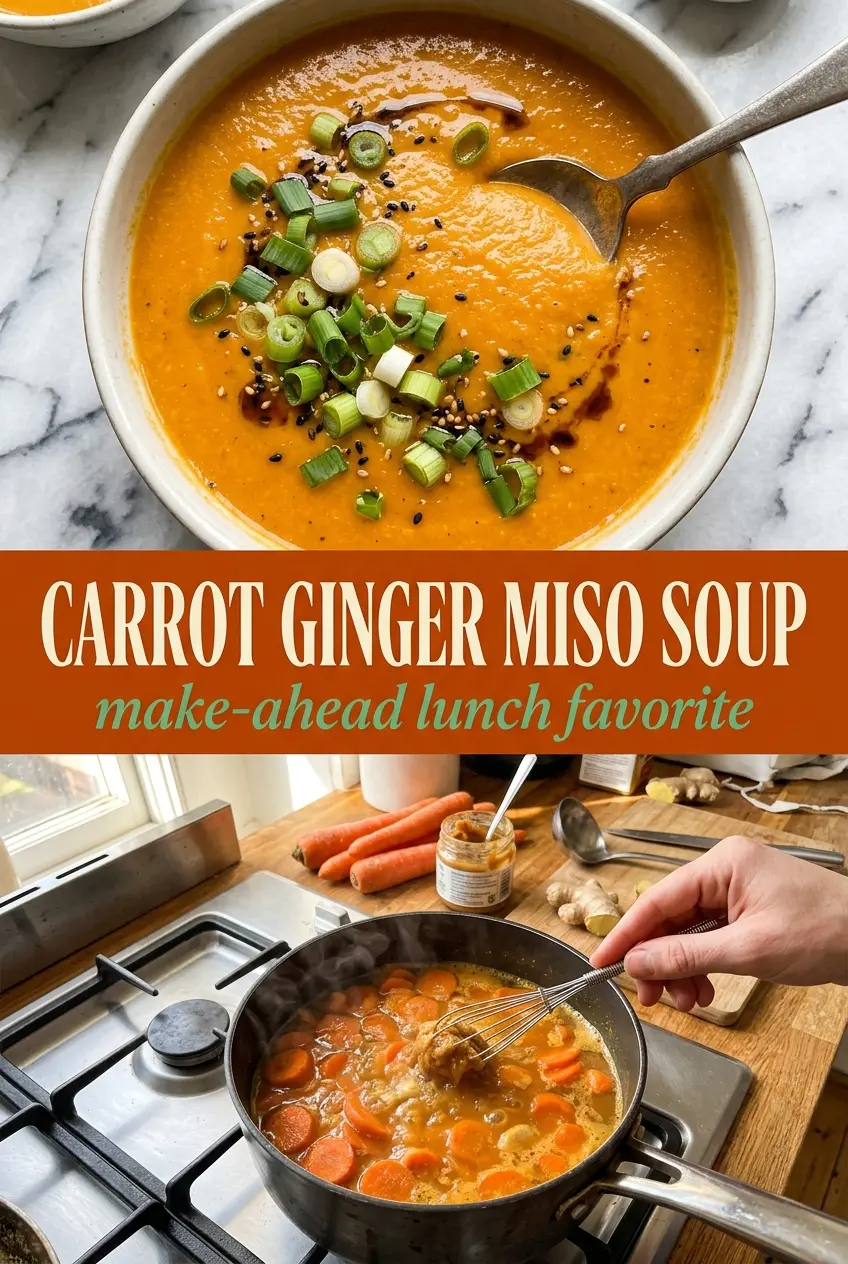
Carrot Ginger Miso Soup
Ingredients
Equipment
Method
- Heat the sesame oil in a pot over medium heat, then sauté the onion and ginger until fragrant, about 3 to 4 minutes, with the onions turning slightly translucent and smelling aromatic.
- Add the sliced carrots and vegetable broth, then bring to a simmer over medium-high heat until small bubbles break the surface consistently.
- Simmer for 20 minutes, or until the carrots are very tender when pierced with a fork and easily collapse.
- Blend the soup until smooth using an immersion blender, keeping the blender moving so the texture turns uniformly silky with no visible carrot bits.
- Let the blended soup cool slightly off heat, then whisk in the white miso paste until fully dissolved, with no miso lumps remaining.
- Ladle into bowls and garnish with sliced scallions before serving, letting the bright green slices add a fresh visual pop on top.