
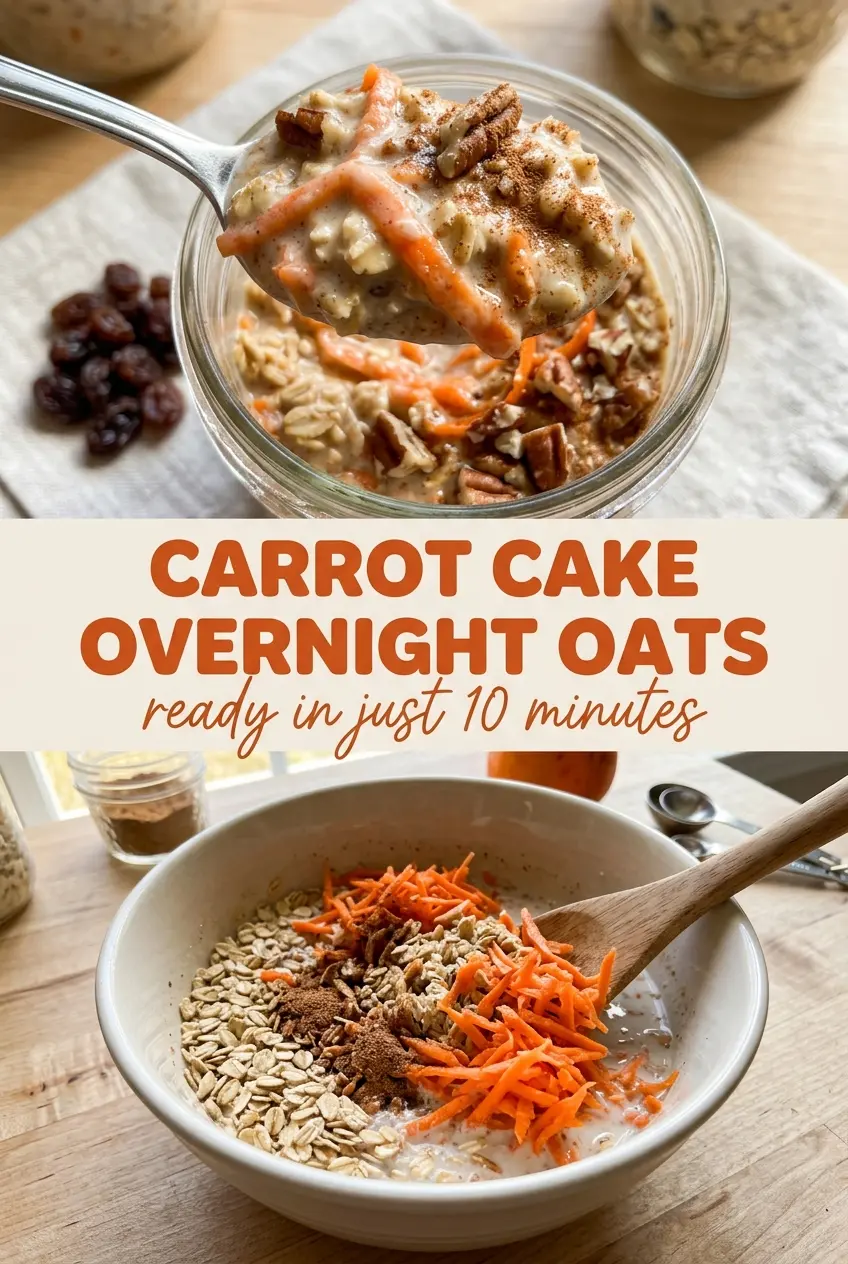
Carrot cake overnight oats come out thick, creamy, and lightly spiced, with enough texture to keep breakfast interesting. The oats soften in the fridge without turning gummy, the carrots stay fresh and sweet, and the pecans give each bite a little crunch that makes the whole jar feel more like a treat than a routine breakfast.
What makes this version work is the balance. Yogurt gives the oats body and a slight tang, which keeps the maple syrup from tasting flat. The shredded carrot matters more than people think: grate it fine enough that it blends into the oats, but not so fine that it disappears. That little bit of texture is what makes the carrot cake idea land instead of just tasting like cinnamon oats with extras.
Below, I walk through the small details that keep the oats creamy instead of stiff, plus the swaps that still hold the recipe together when you need to work with what’s in the fridge.
These tasted like carrot cake batter in the best way, and after an overnight chill the oats were thick but still creamy. I also liked that the raisins softened up and the pecans stayed crunchy.
Carrot cake overnight oats with creamy yogurt, warm spice, and a pecan crunch are perfect for a grab-and-go breakfast that still tastes homemade.
The Small Step That Keeps Overnight Oats Creamy Instead of Gluey
Overnight oats only fail in one of two ways: they get watery, or they turn into paste. The fix is in the ratio and the rest time. This version starts with enough milk and yogurt to hydrate the oats fully, but not so much that the carrots and raisins leak into a thin puddle by morning. The oats need a short pause after the first stir so they can absorb liquid before you portion them out. That second stir catches the dry bits hiding at the edges and keeps the texture even from top to bottom.
The other thing that matters here is the cut of the carrot. Large shreds stay crunchy in the wrong way and make the jar feel scattered. Fine shreds soften overnight and melt into the oats, which gives you the carrot cake effect without needing to cook anything. If your oats ever come out too thick, the problem is usually not the fridge time — it’s that the oats sat too long before they were packed into jars and grabbed up too much liquid.
What Each Ingredient Is Actually Doing in This Bowl

- Rolled oats — These hold their shape overnight and give the best spoonable texture. Quick oats will soften faster and turn softer, which works in a pinch but loses the chew that makes overnight oats satisfying.
- Milk — Any milk works here, dairy or non-dairy. Whole milk gives the richest result, but oat milk or almond milk still leave you with a creamy jar as long as you keep the ratio the same.
- Plain yogurt — This is what makes the oats taste full instead of flat. It adds body and a little tang, and that small bit of acidity keeps the maple syrup and spice from reading one-note. Use Greek yogurt if you want a thicker breakfast; use regular yogurt if you want something looser.
- Maple syrup — This is the clean sweetness that fits the carrot cake idea without turning the jar heavy. Honey works, but it tastes a little more assertive and can pull the flavor away from the warm spice.
- Shredded carrot — Freshly shredded carrot is worth the extra minute. Pre-shredded carrots are too dry and coarse for this; they don’t soften as evenly and they can feel woody in a cold breakfast.
- Pecans — These give the oats a toasted, buttery crunch. Chop them small enough that you get some in every bite. If you skip them, the oats still work, but the texture becomes much softer and less like carrot cake.
- Raisins — They bring the sweet chew that people expect in carrot cake. If you don’t like raisins, chopped dates or dried cranberries work, though both taste a little brighter and less classic.
How to Build the Jar So the Flavors Soften Overnight, Not Mush Together
Whisk the base first
Start with the milk, yogurt, maple syrup, vanilla, cinnamon, ginger, and nutmeg. Whisk until the yogurt disappears completely and the spice looks evenly speckled through the liquid. If you dump the oats in too early, the yogurt clumps and the seasoning never spreads evenly. That’s when you get one spoonful that tastes plain and another that tastes like spice dust.
Fold in the oats and add-ins
Stir in the oats, carrot, pecans, and raisins until everything is coated. The mixture should look loose, not thick like dry oatmeal. If it already looks stiff in the bowl, the oats will be too dense after chilling, so add a splash more milk before it goes into the jars.
Let the oats sit before chilling
After the first mix, let the bowl sit for five minutes and stir again. This gives the oats time to pull in liquid, which is the difference between even hydration and dry pockets at the bottom of the jar. Once the mixture looks settled and no liquid is pooling on top, divide it into containers and refrigerate. Overnight is best, but two hours gets you close if breakfast needs to happen sooner.
Finish with something fresh
Cold overnight oats benefit from a little contrast at the end. Extra yogurt, a few more pecans, or even a dusting of cinnamon on top wakes up the jar and keeps the texture from feeling one-dimensional. If you want it to taste more like dessert, add the topping right before eating so it stays distinct instead of dissolving into the oats.
Three Ways to Adjust These Oats Without Losing the Carrot Cake Feel
Dairy-Free Breakfast Jar
Use a creamy non-dairy milk and swap the yogurt for a thick plant-based yogurt. Coconut yogurt gives the richest result, while almond yogurt keeps the flavor lighter. The texture stays close to the original as long as the yogurt is thick enough to coat the oats instead of thinning them out.
Higher-Protein Version
Use Greek yogurt and stir in a scoop of vanilla protein powder if you want a breakfast that lasts longer. The powder will thicken the mixture, so add a little extra milk to keep it spoonable. This version tastes a little less like dessert and a little more like a solid breakfast.
Nut-Free Swap
Leave out the pecans and replace them with sunflower seeds or pumpkin seeds for crunch. The flavor shifts away from classic carrot cake a little, but the texture still has something to bite into. If you skip nuts entirely, the oats soften more, so a handful of seeds or a spoonful of granola on top helps.
Storage and Reheating
- Refrigerator: Keep for up to 4 days. The oats soften a little more each day, but the texture stays pleasant and creamy.
- Freezer: I don’t recommend freezing this one. The yogurt can separate and the carrots lose their fresh texture after thawing.
- Reheating: Overnight oats are best cold, but you can warm them gently in the microwave for 20 to 30 seconds if you want them less chilled. Stir after heating, because the center warms faster than the edges and can turn uneven.
The Questions That Come Up Before People Make This Again
Carrot Cake Overnight Oats
Ingredients
Method
- Whisk together the milk, plain yogurt, maple syrup, vanilla extract, cinnamon, ground ginger, and nutmeg until combined, with no dry yogurt streaks visible.
- Stir in the rolled oats, shredded carrot, chopped pecans, and raisins until evenly distributed through the mixture.
- Let the mixture sit for 5 minutes, then stir again to incorporate any extra liquid, so the oats start to hydrate.
- Divide the mixture into jars or airtight containers, keeping the texture thick and chunky from the oats and carrot.
- Cover and refrigerate for at least 2 hours, preferably overnight, until the oats are creamy and set.
- Top with extra plain yogurt and pecans before serving, so you get a fresh, carrot-cake-like finish in each jar.