
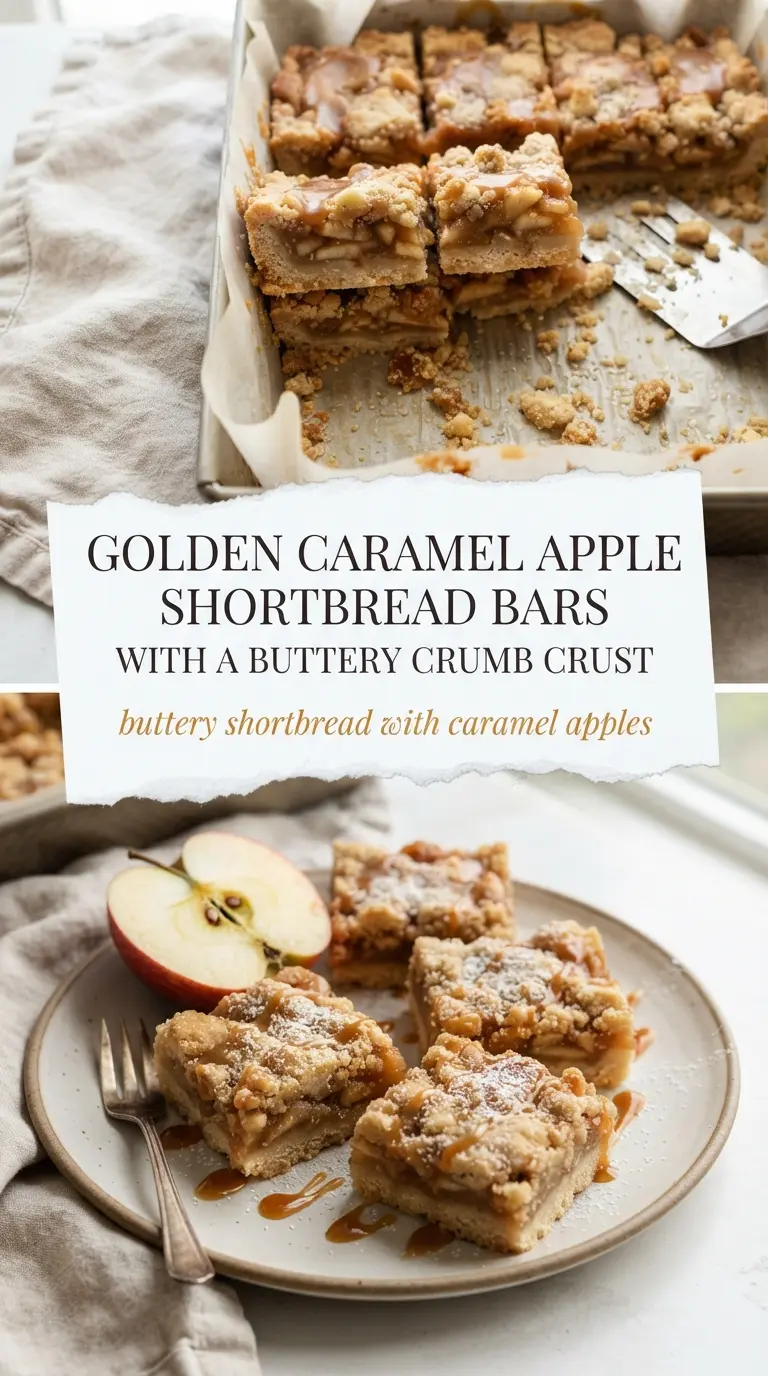
Buttery shortbread, soft cinnamon apples, and a layer of gooey caramel make these bars the kind of dessert people reach for before the pan has even cooled. The bottom bakes into a crisp, sandy crust that holds up under the filling, while the top turns lightly golden and stays tender enough to cut cleanly into neat squares.
The trick is keeping the shortbread crumbly before it goes into the oven. Cold butter gives you that rich, melt-in-your-mouth texture without turning the base dense. The cornstarch on the apples matters too; it thickens the juices just enough so the bars set instead of turning soggy. I also like a mix of diced apples instead of slices because they bake evenly and every bite gets a little bit of everything.
Below, I’ve broken down the small details that make the crust hold together, the filling thicken properly, and the bars cool into tidy, bakery-style squares. There’s also a note on the best apple choices and what to do if your caramel is thicker or looser than the one you usually buy.
The crust stayed crisp even under the apples, and the caramel set up just enough that the bars cut cleanly after chilling. I brought them to a bake sale and came home with an empty pan.
Save these caramel apple shortbread bars for the days when you want a crisp crumb topping, gooey apples, and an easy pan dessert with no pie dough to roll.
The Crumb Layer Needs to Stay Dry Until the Oven Sets It
If the shortbread mixture feels too warm or greasy before baking, it spreads instead of baking into those crisp, sandy layers you want. Cold butter is what gives the crust structure here. When you cut it into the flour and sugars, you should see uneven crumbs, not a paste.
The first bake on the bottom crust matters because it gives the base a head start before the apples go on top. Skip that step and the filling juices soak straight into the pan. By the time the bars are done, the crust should look set around the edges and lightly golden in the center.
What Each Ingredient Is Actually Doing in These Bars
- All-purpose flour — This gives the shortbread its structure and keeps the crust sturdy enough to hold the apples. A 1:1 gluten-free flour blend can work here if it includes xanthan gum, but the texture will be a touch more delicate.
- Granulated sugar and powdered sugar — The granulated sugar helps the crust bake with a little snap, while the powdered sugar keeps it tender and fine-crumbed. If you only have granulated sugar, the bars still work, but the crust will be a little less melt-in-your-mouth.
- Cold unsalted butter — Butter is the backbone of the shortbread flavor and texture. Cold cubes are important because they create little pockets that bake into tenderness instead of blending into a greasy dough.
- Apples — Use a firm baking apple that holds its shape, like Granny Smith, Honeycrisp, or a mix of both. Soft apples turn mushy and disappear into the caramel.
- Cornstarch — This thickens the apple juices so the filling sets instead of leaking all over the pan. If you swap in flour, you’ll need a little more, and the filling won’t thicken as cleanly.
- Caramel sauce — This gives the bars their sticky middle and makes the apple layer taste finished, not just sweetened. A thick jarred caramel works best, but even a thinner sauce is fine if you let the bars cool completely before cutting.
How to Build the Bars So the Bottom Stays Crisp
Mixing the Shortbread Crumbs
Stir the flour, sugars, and salt first, then cut in the cold butter until the mixture looks like uneven crumbs with a few pea-sized bits still visible. Those larger pieces matter because they melt in the oven and create a more tender crust. If the mixture starts clumping like cookie dough before it hits the pan, the butter is too warm.
Pressing and Prebaking the Base
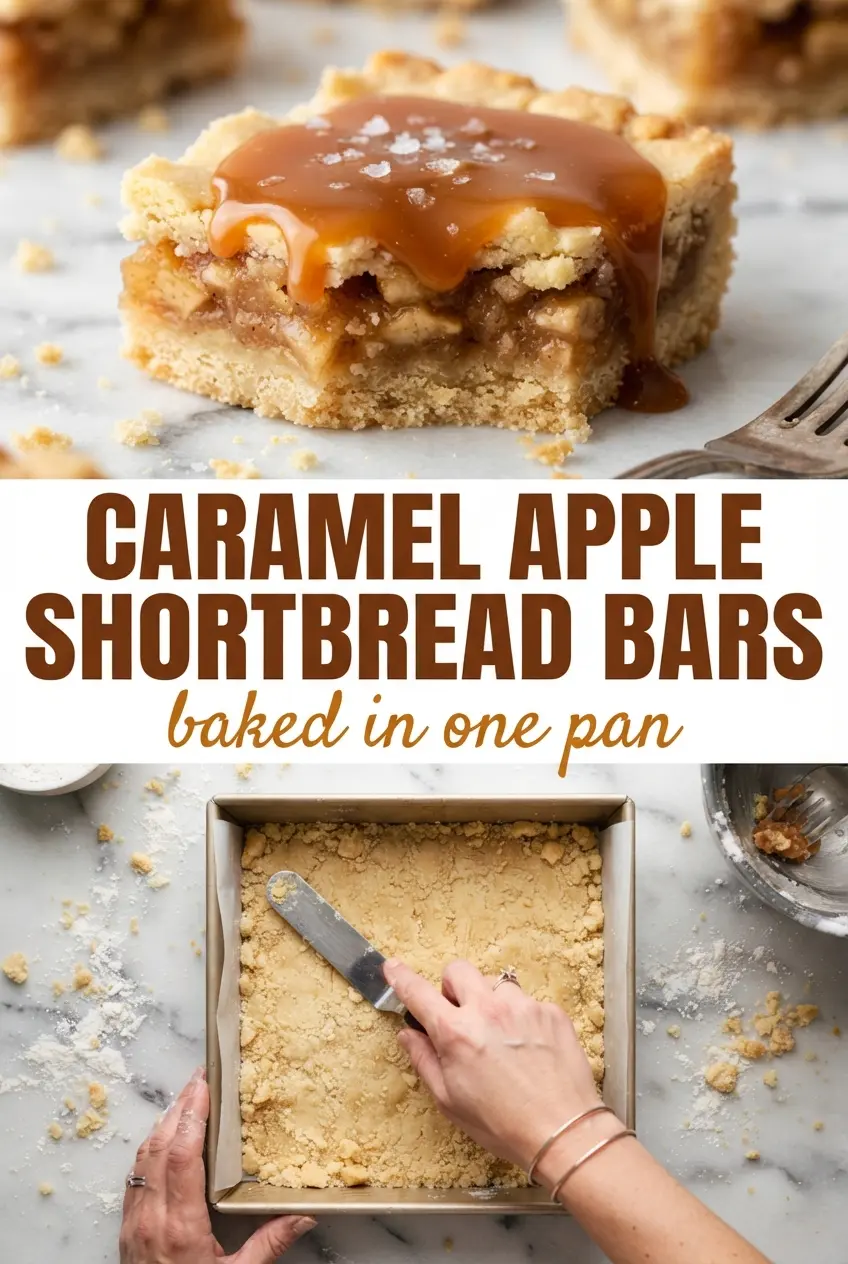
Press two-thirds of the crumbs into the parchment-lined pan in an even layer, using the bottom of a measuring cup to pack it down without smashing it into a paste. Bake until the surface looks set and the edges just begin to turn golden. That partial bake is what keeps the crust from going soft under the apples.
Cooking the Apples Just Enough
Toss the diced apples with brown sugar, cinnamon, and cornstarch until every piece looks lightly coated. Spread them in an even layer so they cook at the same rate. You’re not trying to soften them on the stovetop first; the oven will do that, and pre-cooking often leaves you with apples that go too soft by the time the bars cool.
Finishing with Caramel and the Crumb Topping
Drizzle the caramel over the apples in ribbons instead of dumping it in one spot, then scatter the remaining crumbs over the top. The topping should look loose and uneven, not pressed flat. When the bars finish baking, the top will be golden, the caramel will be bubbling at the edges, and the apple layer will look thick rather than wet.
How to Adapt These Bars When You Need a Different Result
Gluten-Free Version with a Tender Crumb
Swap the all-purpose flour for a good 1:1 gluten-free baking blend that includes xanthan gum. The bars will still hold together, but the texture will be a little more delicate, so let them cool fully before lifting them from the pan.
Dairy-Free Bars with the Same Crumb Structure
Use a solid plant-based butter block instead of softened tub-style spread. The bars still need a fat that behaves like butter in the oven, and the block-style version gives you the best chance at a crisp base and a tender topping.
Extra-Spiced Filling for a Warmer Apple Flavor
Add a pinch of nutmeg or a little apple pie spice to the apples if you want a deeper spice note. Keep the cinnamon as the main flavor so the filling still tastes like apples first and spice second.
Storage and Reheating
- Refrigerator: Store in an airtight container for up to 4 days. The crust softens a little over time, but the flavor stays excellent.
- Freezer: These freeze well. Wrap individual bars tightly and freeze for up to 2 months, then thaw in the refrigerator so the topping doesn’t turn sticky.
- Reheating: Serve them at room temperature for the cleanest texture, or warm briefly in a low oven. Microwaving too long makes the caramel run and the crust lose its bite.
Answers to the Questions Worth Asking
Caramel Apple Shortbread Bars
Ingredients
Equipment
Method
- Preheat the oven to 350°F and line a 9x13-inch pan with parchment.
- Mix the all-purpose flour, granulated sugar, powdered sugar, and salt, then cut in the unsalted butter until crumbly, with visible butter bits.
- Press two-thirds of the shortbread crumbs into the pan and spread into an even layer, then bake for 15 minutes until lightly golden at the edges.
- Toss the apples, brown sugar, ground cinnamon, and cornstarch until the apples look coated, then spread them evenly over the baked crust.
- Drizzle the caramel sauce over the apples, then sprinkle the remaining shortbread crumbs on top.
- Bake for 30 minutes at 350°F until the topping looks set and the center bubbles gently around the edges.
- Cool completely before cutting so the caramel and apple filling can set cleanly for bar slices.