
Calorie deficit breakfasts work best when they still feel like breakfast, not a compromise. A plate with protein, fiber, and a little fat keeps you full past mid-morning, and that matters more than shaving every last calorie. The best versions of this kind of breakfast are the ones you’ll actually want to repeat: eggs with crisp-edged vegetables, thick Greek yogurt with berries, or toast with avocado and a properly seasoned egg.
The trick is balance. Eggs and Greek yogurt carry the protein, spinach and berries add volume without pushing calories too high, and whole grain toast or avocado gives the meal enough staying power to keep hunger from boomeranging back an hour later. When a breakfast feels bland or leaves you raiding the pantry later, it usually means the protein was too low or the fat and fiber were stripped out too aggressively.
Below you’ll find three simple combinations that hit that sweet spot. They’re flexible, quick enough for weekdays, and easy to prep ahead when mornings get busy.
The veggie omelette stayed fluffy, and the Greek yogurt parfait kept me full until lunch without feeling heavy. I also loved that everything came together in under 10 minutes.
Keep these 300-calorie breakfast ideas handy for mornings when you want more protein and less guesswork.
The Breakable Point in Low-Calorie Breakfasts: Too Little Protein, Too Much Hunger
Most breakfast ideas fall apart for one of two reasons: they’re too light to last, or they’re built around calories that don’t do much for satiety. A bowl of fruit alone looks clean and healthy, but it usually burns off fast. A better calorie deficit breakfast gives you protein first, then adds produce and just enough fat or starch to keep the meal satisfying.
That’s why these combinations work. The veggie omelette uses eggs and vegetables to create volume without a lot of extra calories. The yogurt parfait leans on non-fat Greek yogurt, which brings a thick, creamy texture and enough protein to carry the bowl. The avocado toast option uses the egg to anchor the meal, so the toast and avocado read as part of a full breakfast instead of a snack on bread.
What Each Ingredient Is Actually Doing in This Dish
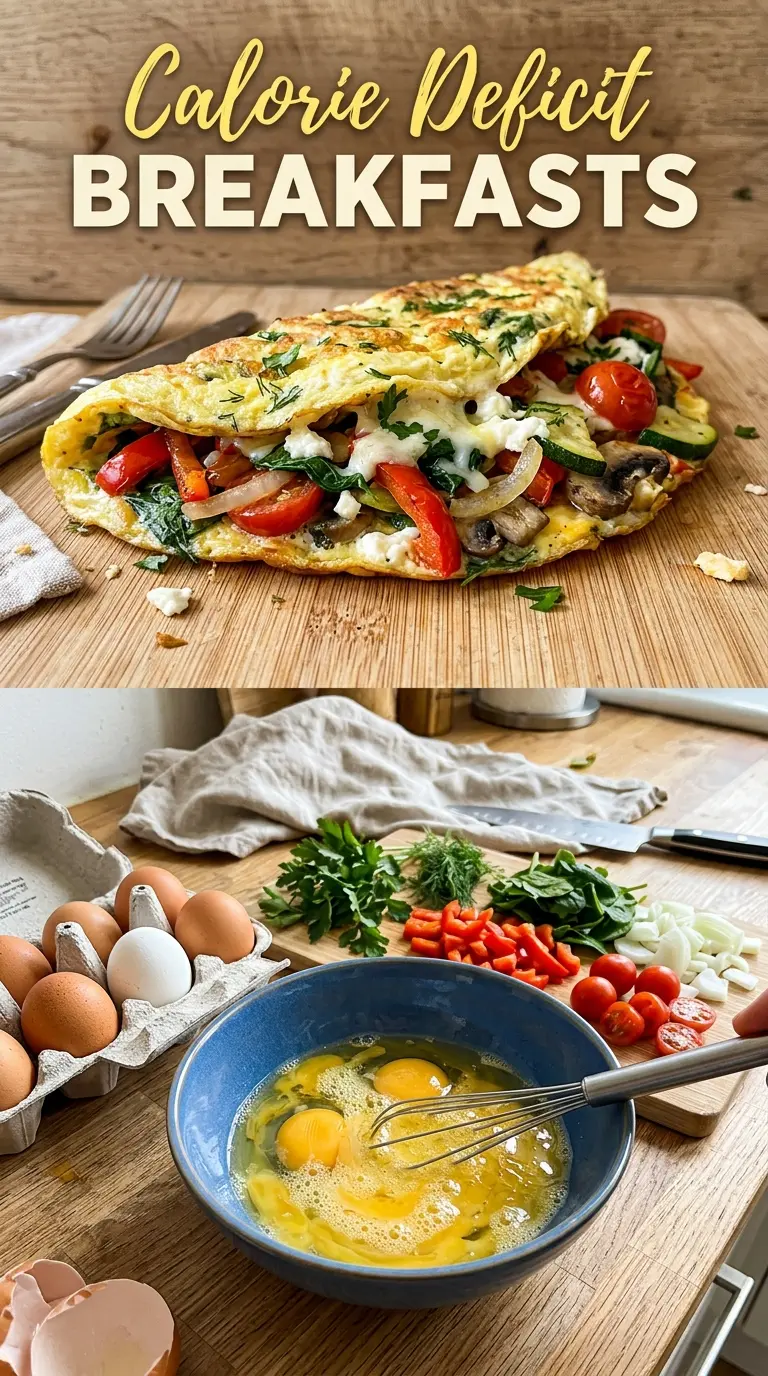
- Eggs or egg whites — Whole eggs give you richer flavor and a more satisfying finish, while egg whites lower calories if you need to keep the meal lighter. A mix of one whole egg plus extra whites is a good middle ground because you keep some yolk flavor without pushing calories up much.
- Non-fat Greek yogurt — This is one place where the thick, strained texture matters. Regular yogurt works in a pinch, but it won’t hold the berries the same way or give you the same protein density. If you swap it, choose the thickest plain yogurt you can find.
- Whole grain toast — The fiber here helps the meal last. White bread works, but it disappears faster and doesn’t give the same steady energy. If you’re watching calories closely, use one thin slice and build on top of it rather than stacking extra bread.
- Avocado — A little goes a long way. You want enough to bring creaminess and flavor, not so much that the toast turns into a calorie-heavy base. Mash it with salt and a squeeze of lemon if you want it brighter.
- Everything bagel seasoning — This is doing more than garnish. It adds salt, crunch, and a toasty onion-garlic note, which keeps a simple breakfast from tasting flat.
The 10 Minutes That Matter: Building a Breakfast That Actually Holds You
Cooking the Veggie Omelette Over Medium-Low Heat
Whisk the eggs until the whites and yolks are fully blended and the mixture looks a little foamy. Pour them into a lightly oiled pan over medium-low heat, then add the spinach and tomatoes while the eggs are still loose. If the heat is too high, the eggs set before the center cooks and the omelette turns rubbery instead of tender. Fold it when the top is still slightly glossy; carryover heat finishes the job.
Assembling the Yogurt Parfait for Maximum Staying Power
Spoon the Greek yogurt into the bowl first so the berries stay perched on top instead of sinking into a watery mix. If you want a little extra sweetness, use a small drizzle of honey rather than stirring in a lot of sugar, which changes the calorie count fast. The yogurt should taste tangy and thick, not loose; if it’s runny, strain it briefly in a fine mesh sieve before building the bowl.
Making Avocado Toast That Feels Like a Full Meal
Toast the bread until the edges are crisp and the center no longer feels soft when you press it. Mash the avocado just enough to spread it, leaving a few small chunks for texture, then top with an egg cooked the way you like it best. Everything bagel seasoning goes on last so it stays crunchy. If the toast is underdone, the avocado will make it soggy before you finish eating.
How to Adapt These Breakfasts When You Want More Protein, Less Dairy, or a Faster Morning
Make the yogurt bowl dairy-free
Use a high-protein dairy-free yogurt if you can find one, but expect a thinner texture and less tang than Greek yogurt. If your substitute is low in protein, add chia seeds or a side of eggs so the breakfast still keeps you full.
Use egg whites for a lower-calorie omelette
Egg whites cut calories while keeping the protein high, but they won’t taste as rich or brown the same way. Add extra seasoning and cook them gently so they stay tender instead of turning spongy.
Turn the toast into a gluten-free breakfast
Swap in a sturdy gluten-free bread that toasts well and can hold the avocado without crumbling. Softer gluten-free slices tend to go soggy quickly, so toast them a shade darker than usual before topping.
Prep ahead for grab-and-go mornings
Hard-boil several eggs at once and wash berries ahead of time. That gives you a fast protein option without having to cook from scratch, and it keeps the breakfast plan realistic on rushed mornings.
Storage and Reheating
- Refrigerator: Cooked eggs keep for up to 3 days, hard-boiled eggs for up to 1 week, and yogurt bowls are best assembled the day you eat them. Avocado toast doesn’t store well once assembled.
- Freezer: The omelette and yogurt parfait don’t freeze well. Hard-boiled eggs can be kept frozen only in theory, but the texture turns rubbery, so I don’t recommend it.
- Reheating: Reheat cooked eggs gently in a skillet over low heat or in short bursts in the microwave. High heat dries them out fast, which is the easiest way to ruin an otherwise good breakfast.
Answers to the Questions Worth Asking
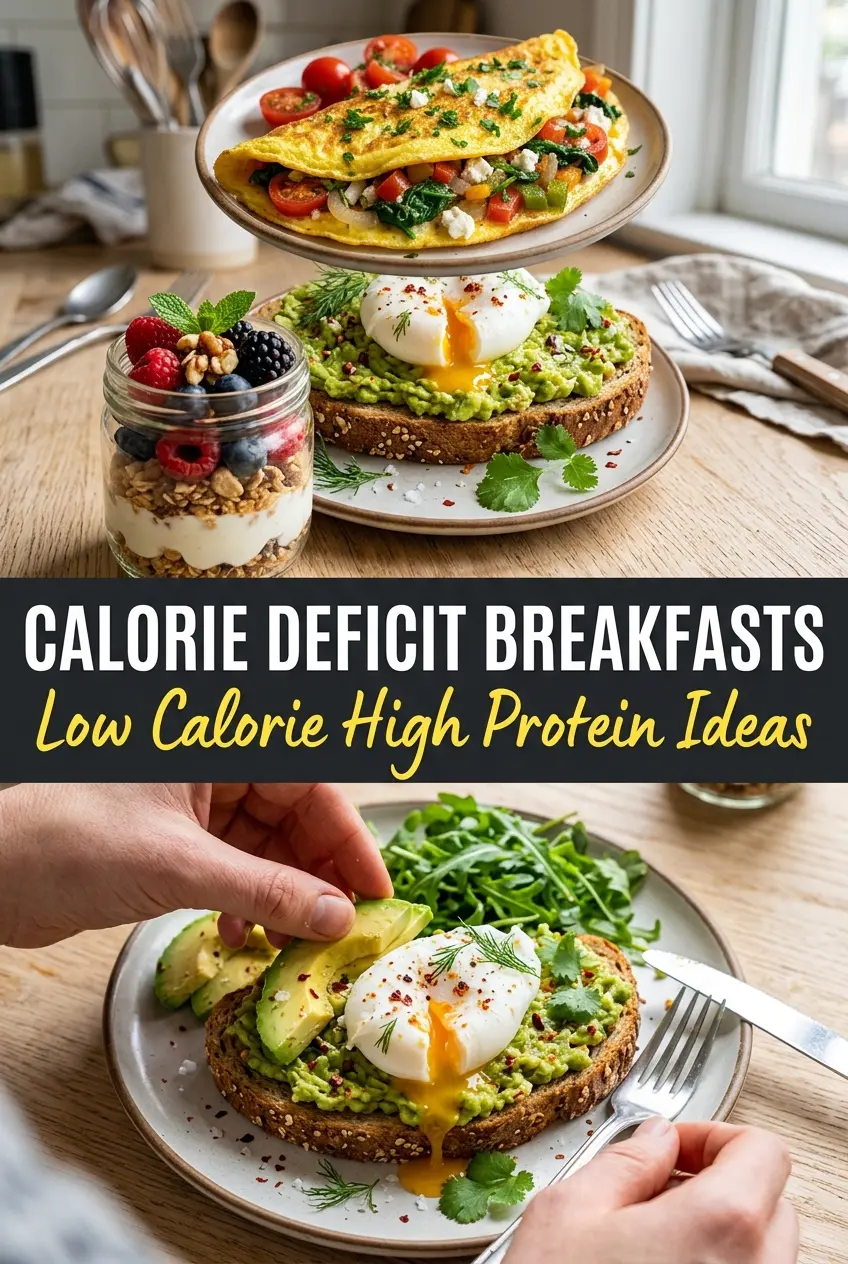
Calorie Deficit Breakfast Ideas
Ingredients
Equipment
Method
- Whisk the 2 eggs (or egg whites) until smooth, then pour into a preheated cast iron skillet over medium heat until the edges begin to set, about 2–3 minutes. Visual cue: the center should still look slightly wet.
- Add the 1 cup spinach and cherry tomatoes to the pan and cook until the spinach wilts and tomatoes soften, about 1–2 minutes. Visual cue: spinach should look glossy and reduced in volume.
- Fold the omelette and continue cooking until fully set, about 1–2 minutes more. Visual cue: no runny egg remains in the middle.
- Sprinkle everything bagel seasoning over the omelette right before serving. Visual cue: specks should look toasted and fragrant.
- Spoon 1/2 cup Greek yogurt (non-fat) into a serving glass and spread into an even layer. Visual cue: yogurt layer should be smooth and level.
- Top with 1/2 cup fresh berries in an even distribution. Visual cue: berries should create visible color contrast.
- Repeat layers if desired using the remaining berries and yogurt. Visual cue: layers should be distinct, not blended together.
- Finish with everything bagel seasoning if you want a savory-sweet twist, or keep it plain for a classic parfait. Visual cue: seasoning should be lightly dusted and not clumped.
- Toast 1 slice whole grain toast until crisp and golden. Visual cue: toast should feel firm and sound hollow when tapped.
- Mash 1/4 avocado and spread it evenly over the toast. Visual cue: avocado layer should cover the surface with a thick, creamy coating.
- Add a cooked egg on top using the 2 eggs (or egg whites) from either a quick pan-cook or reserved omelette method. Visual cue: egg should be set with a defined shape.
- Sprinkle everything bagel seasoning over the top and serve immediately. Visual cue: seasoning should adhere to the avocado and egg surface.