
Burst cherry tomato pasta lands somewhere between a weeknight shortcut and a sauce that tastes like it took its time. The tomatoes soften, blister, and collapse into their own juices, then the garlic, basil, and parmesan turn that liquid into something silky enough to cling to every strand of spaghetti. It’s bright, savory, and just rustic enough to feel like dinner with a little personality.
The trick is letting the tomatoes do the work before you reach for extra liquid. As they cook in olive oil, they release enough juice to build the sauce, and a splash of starchy pasta water helps everything emulsify instead of sitting separately in the pan. Garlic goes in early for flavor, but it only needs a minute; if it browns, it turns sharp and distracts from the sweet tomatoes.
Below, I’ve included the small details that keep the sauce glossy, plus the substitutions and storage notes that make this one easy to keep in rotation.
The tomatoes broke down into the silkiest sauce, and the pasta water made everything cling instead of pooling at the bottom. I added extra basil at the end and my husband went back for seconds before I even sat down.
Save this burst cherry tomato pasta for the nights when you want a glossy, garlicky dinner that comes together fast.
The Trick to Letting the Tomatoes Become the Sauce
Cherry tomatoes can taste thin if they’re rushed. The mistake is adding pasta too early, before the tomatoes have had time to blister and collapse into a pan sauce. Give them a full ten minutes over medium heat, and you’ll see the skins split, the juices thicken, and the mixture go from watery to glossy.
The other thing that matters is using the spoon. Press a few tomatoes against the side of the skillet once they’ve softened, and you’ll speed up the sauce without turning everything into puree. You want a mix of broken-down tomatoes and intact pieces, because that contrast keeps the dish lively instead of flat.
What Each Ingredient Is Actually Doing in This Dish
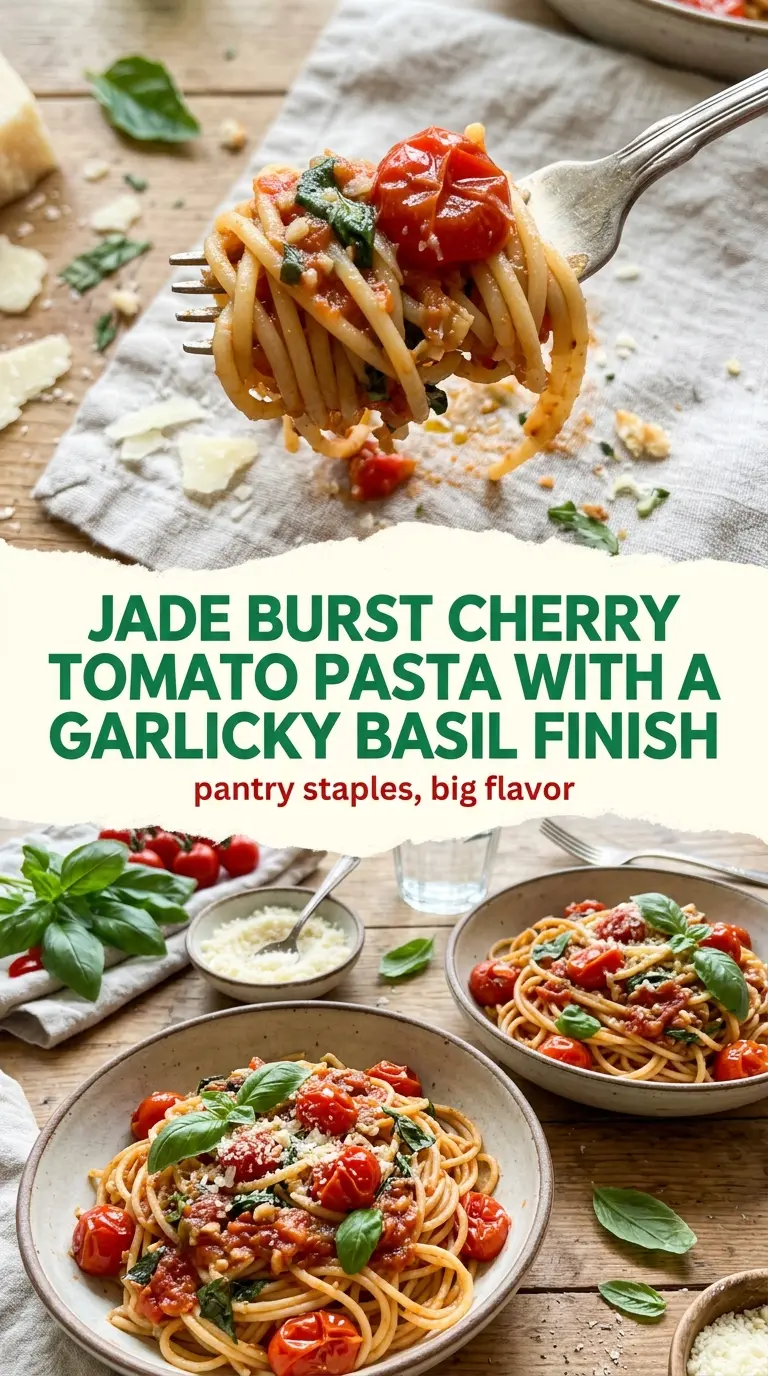
- Cherry tomatoes — These are the heart of the dish. Use ripe, firm tomatoes with good color; they burst more cleanly and taste sweeter. If your tomatoes are small grape tomatoes, they still work, but they usually need another minute or two before they collapse.
- Garlic — Sliced garlic gives the sauce a gentler, rounder flavor than minced garlic. Minced garlic can burn before the tomatoes are ready, which makes the whole pan taste harsh.
- Fresh basil — Tear it, don’t chop it too finely. Basil bruises fast, and big torn pieces keep the herb flavor bright at the end instead of muddying the sauce.
- Parmesan — This helps thicken and finish the sauce. Use the real stuff if you can, because pre-grated cheese doesn’t melt as smoothly and can leave the sauce a little sandy.
Building the Pan Sauce Without Losing the Gloss
Cooking the Pasta to the Right Point
Boil the spaghetti in well-salted water until it’s al dente and still has a little bite in the center. That texture matters because the pasta will finish in the skillet and absorb some of the sauce. Reserve a full cup of pasta water before draining; if you forget, the sauce will be harder to loosen and bind.
Waking Up the Garlic
Warm the olive oil over medium heat and add the sliced garlic. You want it fragrant and just starting to soften, not browned. If the pan runs hot, pull it off the burner for a few seconds before the garlic color shifts, because burned garlic will overpower the sweetness of the tomatoes.
Blistering and Breaking Down the Tomatoes
Add the cherry tomatoes and red pepper flakes, then let them cook until the skins split and the juices start pooling in the skillet. Stir now and then, but leave them alone long enough to get actual blistered spots. When some tomatoes collapse and others are still holding shape, mash a few with the back of a spoon to give the sauce body without making it smooth.
Finishing the Pasta in the Sauce
Add the drained spaghetti straight into the skillet with a splash of reserved pasta water. Toss constantly so the starch, tomato juices, and olive oil emulsify into a light coating instead of a thin puddle. Take the pan off the heat before adding the basil and parmesan; that last bit of heat from the pan is enough to wilt the basil and melt the cheese without clumping.
Three Ways to Change the Dish Without Breaking the Sauce
Make It Dairy-Free
Skip the parmesan and finish with an extra drizzle of olive oil plus a pinch of flaky salt. You’ll lose the savory depth that cheese brings, but the tomatoes and basil still carry the dish. For a little more body, add a spoonful of nutritional yeast at the end.
Make It Gluten-Free
Use a sturdy gluten-free spaghetti and cook it just to al dente, since it will soften a little more in the sauce. Stir gently when tossing, because gluten-free pasta can break faster than wheat pasta once it’s in the skillet. The sauce itself already fits this swap without any other changes.
Add Protein Without Diluting the Sauce
Toss in cooked shrimp, sliced grilled chicken, or white beans at the end. Add them after the tomatoes have formed the sauce so they warm through without stealing space in the skillet. Beans make the dish vegetarian and more filling, while shrimp keeps the same quick-cook feel.
Turn Up the Heat
Use extra red pepper flakes or a thin slice of fresh chili. Add the heat with the garlic so it blooms in the oil instead of sitting raw on top of the pasta. A heavier hand here gives the dish a sharper edge, but it can drown out the sweetness of the tomatoes if you overdo it.
Storage and Reheating
- Refrigerator: Store leftovers in an airtight container for up to 3 days. The pasta will absorb some of the sauce, so expect a thicker texture the next day.
- Freezer: This one doesn’t freeze well once the pasta is mixed in. The tomatoes and pasta both lose their best texture after thawing, so I’d make it fresh when possible.
- Reheating: Warm it gently in a skillet with a splash of water over low heat. The common mistake is microwaving it dry, which tightens the pasta and leaves the sauce pasty instead of glossy.
Questions I Get Asked About This Recipe
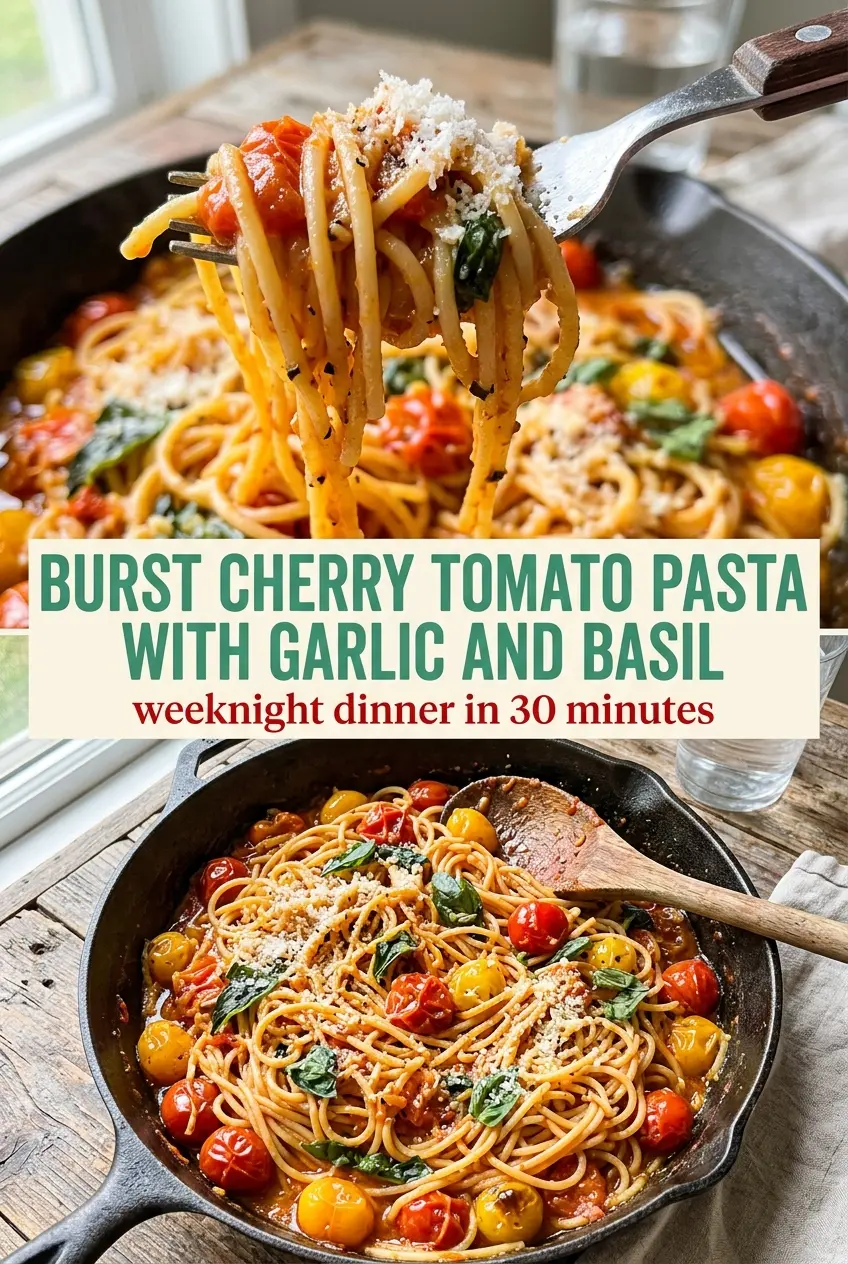
Burst Cherry Tomato Pasta With Garlic And Basil
Ingredients
Equipment
Method
- Bring a large pot of salted water to a boil, then cook the spaghetti until al dente, reserving 1 cup of pasta water for the sauce.
- Drain the spaghetti and keep it warm while you start the skillet sauce.
- Heat the olive oil in a large skillet over medium heat until shimmering, then sauté the garlic until fragrant, about 1-2 minutes.
- Add the cherry tomatoes and red pepper flakes, and cook until the tomatoes blister and burst, about 10 minutes.
- Mash some of the burst tomatoes with a spoon in the skillet to help form a sauce.
- Add the drained pasta to the skillet and toss with a splash of the reserved pasta water, stirring to coat.
- Remove from heat, then stir in the torn basil and parmesan and season with salt to taste.