
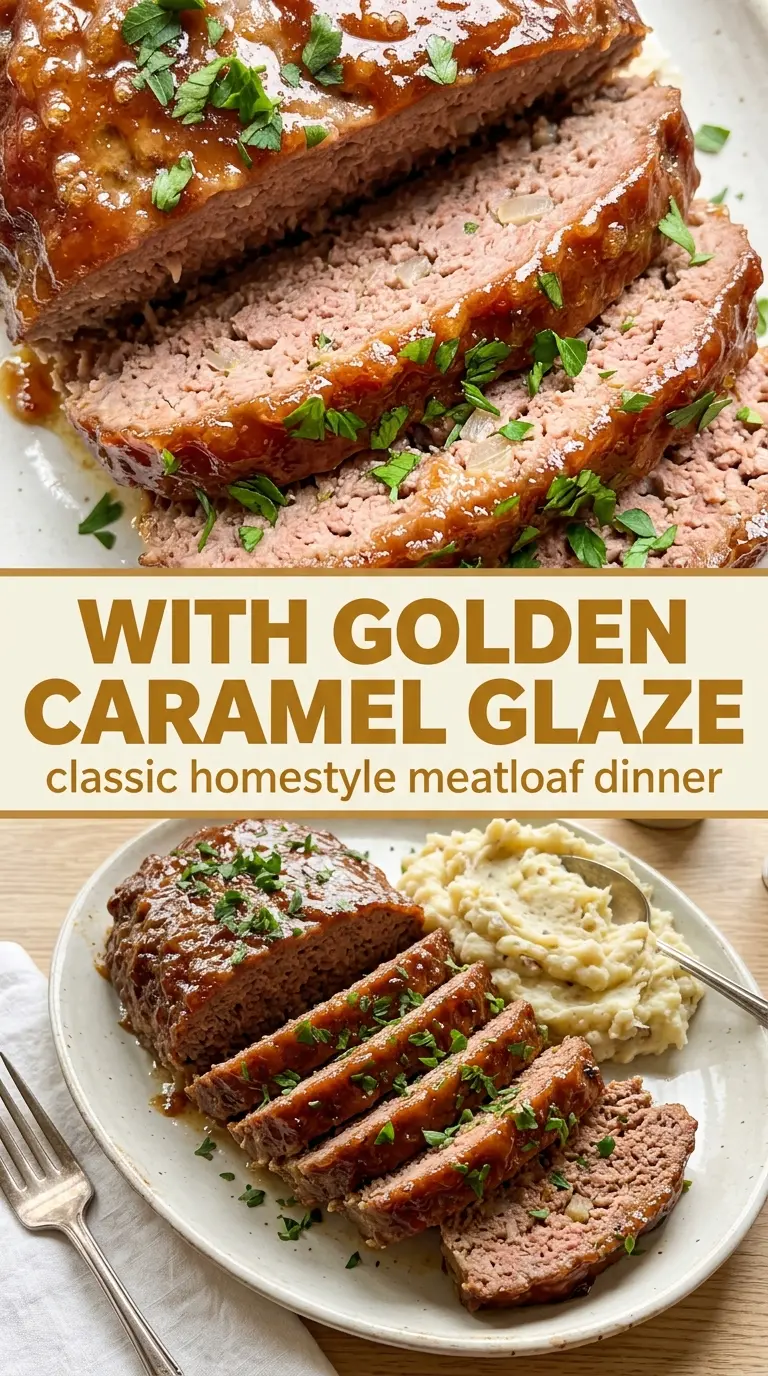
Brown sugar glazed classic meatloaf earns its place at the table because it stays tender in the middle, slices cleanly, and finishes with that sticky, tangy top everyone reaches for first. The glaze bakes into a deep, glossy layer that caramelizes at the edges without burning, and the loaf itself holds together instead of crumbling the second your knife touches it.
The trick is in the mix. Ground beef needs enough binder to stay juicy, but not so much stirring that it turns dense and rubbery. Crushed saltines do the quiet work here, soaking up milk and beef juices while keeping the texture light. The glaze is built from ketchup, brown sugar, vinegar, and Worcestershire, which gives you sweetness, acidity, and a little savory depth instead of plain sugary sauce.
Below, I’ve included the detail that keeps the loaf tender, the swap that still works if you don’t have saltines, and the one timing note that keeps the glaze from sliding off before it has a chance to set.
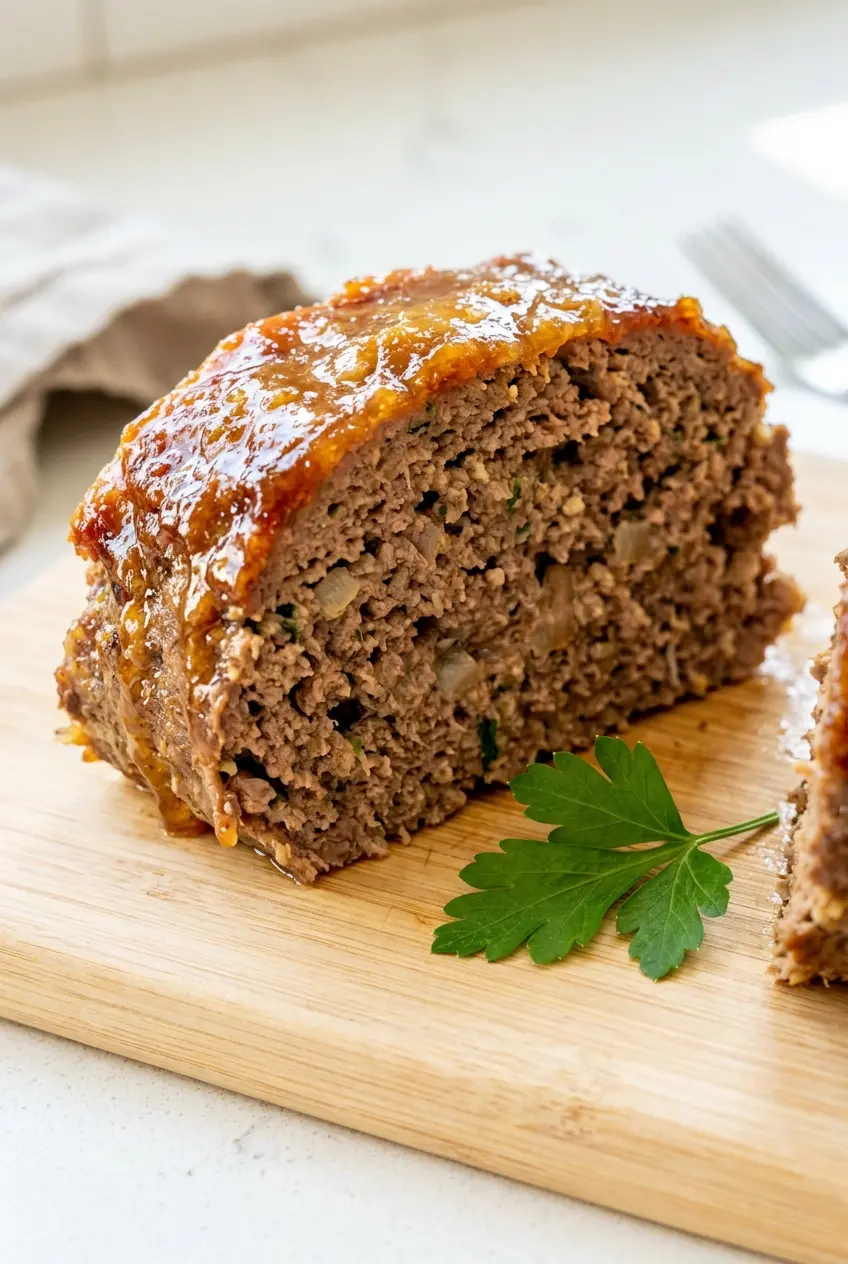
The glaze caramelized into the best sticky crust, and the loaf sliced neatly without falling apart. I used the saltines and milk like written, and the texture came out soft but not mushy.
Brown Sugar Glazed Classic Meatloaf is the kind of dinner that deserves a second slice, so pin it for the night you want a tender loaf with a sticky caramelized top.
The Secret to Meatloaf That Slices Cleanly Instead of Falling Apart
The biggest mistake with meatloaf is overworking it. Once the beef starts looking paste-like, you’ve gone too far and the finished loaf turns tight and bouncy instead of tender. Mix only until the ingredients are evenly distributed, then stop. The loaf should hold its shape when you mound it, but it shouldn’t look packed or compressed.
Another detail that matters more than people think is the glaze timing. If you dump a thick sweet topping on too early, the sugars can darken before the center reaches temperature. Brushing it on before baking gives you that classic lacquered top, but the loaf still needs enough time in the oven for the glaze to set into something sticky and sliceable.
What Each Ingredient Is Actually Doing in This Dish
- Crushed saltine crackers — These give the loaf structure without turning it heavy. They soak up the milk and juices, which keeps the center soft. If you need a substitute, use plain breadcrumbs in the same amount, but the texture will be a little less airy.
- Milk — This hydrates the crackers and softens the mixture before it goes into the oven. Whole milk gives the richest result, but any milk works here. If you’re out, unsweetened plain oat milk can stand in without changing the flavor much.
- Brown sugar — This is what gives the glaze its deep caramel note. Light brown sugar is fine. Dark brown sugar will taste a little richer and molasses-heavy, which works if you like a darker glaze.
- Worcestershire sauce — This adds the savory edge that keeps the topping from tasting like plain ketchup and sugar. Don’t skip it unless you have to. If you need a swap, use a small splash of soy sauce plus a pinch of extra vinegar.
Building the Loaf So It Stays Tender in the Middle
Mixing the Base
Combine the beef, milk, eggs, onion, crushed crackers, salt, and pepper in a large bowl, then fold everything together with your hands or a fork until it just comes together. The mixture will look soft and a little loose at first; that’s normal. Stop as soon as you no longer see dry pockets of crackers or streaks of egg. If you keep squeezing, the beef tightens and the loaf bakes up dense.
Shaping Without Packing
Form the mixture into a loaf shape and place it in your baking pan without pressing it down hard. A gentle shape gives the heat room to move around the meatloaf, which helps the outside cook evenly while the center stays juicy. If the loaf is packed into a tight block, the middle tends to steam unevenly and the slices can turn gummy.
Glazing for a Caramelized Finish
Whisk the ketchup, brown sugar, vinegar, and Worcestershire sauce together until smooth, then spoon it generously over the top of the loaf. Cover the surface well, letting some glaze run down the sides, because that’s where the sticky edges happen. Bake at 350°F for about an hour, until the internal temperature reaches 160°F. If the top is browning too fast, tent it loosely with foil for the last part of baking.
Resting Before You Slice
Let the meatloaf rest for 10 minutes after it comes out of the oven. That short wait keeps the juices in the loaf instead of sending them all onto the cutting board. Slice too soon and the loaf can look wet and loose; wait those few minutes and the slices settle into clean, neat pieces.
Three Practical Ways to Adapt This Meatloaf
Gluten-Free Version with the Same Tender Crumb
Use gluten-free crackers or gluten-free breadcrumbs in place of the saltines. The loaf will still bind well as long as the crumbs are fine and evenly moistened with the milk. The texture may be slightly softer, but the slices will still hold together.
Leaner Meatloaf That Doesn’t Dry Out
If you use a leaner ground beef, keep the milk and eggs exactly as written and don’t overbake it. Lean meat has less built-in fat, so the binder and rest time matter even more. Pull it at 160°F and let it sit before slicing so the juices can redistribute.
Double the Glaze for Extra Sticky Tops
Make one and a half times the glaze if you want a thicker coating and more sauce for spooning over slices. Brush or spoon half on before baking and reserve the rest to add during the last 10 to 15 minutes. That gives you a glossy top without losing the fresh ketchup tang.
Storage and Reheating
- Refrigerator: Store leftovers in an airtight container for up to 4 days. The texture stays moist, and the glaze gets even more flavorful after a night in the fridge.
- Freezer: It freezes well. Wrap slices tightly or freeze the whole cooled loaf, then thaw overnight in the refrigerator before reheating.
- Reheating: Warm slices covered in the oven at 325°F with a splash of water or extra glaze so they don’t dry out. The common mistake is blasting meatloaf in the microwave until the edges toughen and the glaze turns sticky in the wrong way.
Answers to the Questions Worth Asking
Brown Sugar Glazed Classic Meatloaf
Ingredients
Equipment
Method
- Preheat the oven to 350°F.
- Combine the ground beef, milk, large eggs, small onion, crushed saltine crackers, salt, and pepper in a large bowl and mix until just combined.
- Shape the mixture into a loaf and place in a baking pan.
- Whisk together the ketchup, brown sugar, white vinegar, and Worcestershire sauce for the glaze.
- Spoon the glaze generously over the top of the loaf.
- Bake for about 1 hour, until the internal temperature reaches 160°F, with the oven staying at 350°F.
- Rest for 10 minutes before slicing, leaving the loaf to set and the glaze to settle.