
Blueberry crumble cheesecake brings three textures into one dessert that never feels heavy in the wrong way: a crisp graham crust, a satiny lemon-scented filling, and a buttery oat crumble that stays audibly crisp on top. The blueberry compote on the finished cheesecake adds that glossy, jammy layer that keeps each slice from tasting one-note. It’s the kind of dessert that gets quiet at the table after the first bite.
The small details matter here. Lemon zest in the batter doesn’t just brighten the flavor; it gives the cream cheese filling a lift that keeps it from tasting flat under all that richness. Baking the cheesecake until the center still has a slight wobble, then chilling it fully before adding the topping, is what gives you clean slices instead of a soft middle that slumps when you cut into it. The crumble gets baked separately, which keeps it crisp instead of disappearing into the compote.
Below, I’ve broken down the part that trips people up most: how to keep the cheesecake smooth and the topping distinct. You’ll also find a few smart variations and the best way to make pieces of this dessert ahead without losing the texture that makes it worth baking.
The lemon zest in the filling made all the difference, and the blueberry topping stayed thick instead of running all over the plate. I also liked that the crumble stayed crunchy even after chilling overnight.
Save this blueberry crumble cheesecake for the dessert nights when you want silky cheesecake, jammy berries, and a crisp oat topping in one slice.
The Secret to a Cheesecake That Slices Cleanly Under a Crumble Top
The biggest mistake with a dessert like this is treating the topping as part of the bake. If the crumble goes on too early, it softens in the oven and disappears into the filling instead of staying crisp and separate. That’s why the cheesecake bakes first, chills fully, and only then gets the blueberry compote and oat crumble.
The other thing worth paying attention to is the bake itself. Cheesecake should not look fully set in the center when it comes out of the oven. A slight wobble in the middle means the eggs are done enough to hold the structure once chilled, but not so overbaked that the texture turns dry or grainy. If you wait until the center looks firm, the slices will be dense and the edges can get rubbery.
- The graham crust needs that short pre-bake so it sets before the filling goes in.
- The cheesecake batter should be smooth before the eggs are added; once the eggs go in, mix just until combined to avoid beating in extra air.
- The compote must cool before topping the cheesecake or it will melt the surface and slide off the sides.
- The crumble stays crisp when it’s baked on its own and added at the end, not buried under the fruit.
What Each Ingredient Is Actually Doing in This Blueberry Crumble Cheesecake
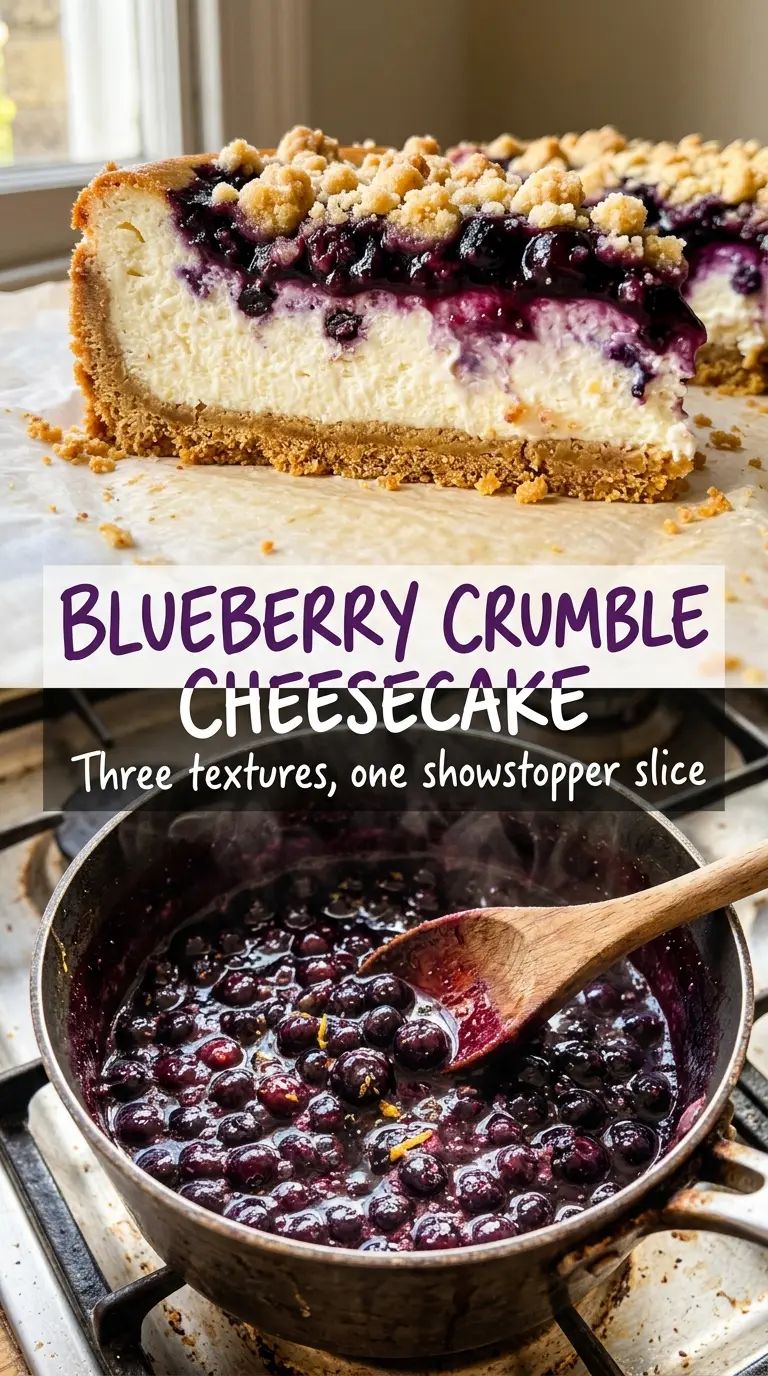
Graham cracker crumbs and melted butter build the crust, and this is one place where the butter matters more than the brand of cracker. You need enough fat to pack the crumbs so the base slices cleanly. If you only have digestive biscuits or vanilla wafers, those work too, though the flavor will shift a little.
- Cream cheese — Use full-fat blocks, not tub-style spreadable cream cheese. The block style gives you the dense, smooth structure cheesecake needs.
- Sugar — This sweetens the filling and also helps the batter stay tender. You can cut it slightly, but too much reduction changes the texture more than the taste.
- Eggs — They set the filling. Add them one at a time so the batter stays smooth instead of turning loose or lumpy.
- Lemon zest — This is the ingredient that wakes the whole dessert up. It brightens the cream cheese and gives the blueberry topping a sharper edge.
- Fresh blueberries — Fresh berries hold their shape a little better in the compote, but frozen berries work if that’s what you have. Don’t thaw them first; cook them straight from frozen so the compote doesn’t get watery.
- Rolled oats, brown sugar, flour, and cold butter — These make the crumble. Cold butter is important because it creates little pockets that bake into crisp, craggy bits instead of a sandy topping.
Building the Layers Without Losing the Texture
Pressing and Pre-Baking the Crust
Mix the graham crumbs with melted butter until every crumb looks evenly moistened, then press them firmly into the springform pan. The crust should feel compact under the back of a spoon, not loose or sandy, or it will crumble when you slice the cheesecake later. Bake it just long enough to smell toasty and set the surface. If the crust browns too deeply, it can taste bitter under the filling.
Making the Filling Smooth
Beat the cream cheese and sugar until there are no visible lumps before you add the eggs. Scrape the bowl well, especially around the bottom edge where softened cream cheese likes to hide. Add the eggs one at a time and stop mixing as soon as they’re incorporated. Overmixing at this stage whips in air, and that extra air can cause the cheesecake to puff and crack as it cools.
Baking to the Right Center Wobble
Bake the cheesecake until the edges are set and the center still has a small, soft wobble when you gently nudge the pan. That wobble is what you want; it firms up during the chill. If the top starts to show deep cracks, the oven ran too hot or the cheesecake went too long. Pull it early rather than trying to chase a fully firm center.
Cooking the Blueberries and Crisping the Crumble
Simmer the blueberries with sugar and lemon juice until the juices thicken and coat the back of a spoon. The compote should look glossy and jammy, not soupy. For the crumble, rub the cold butter into the oat mixture until you get pea-sized clumps, then bake until golden and fragrant. Let both toppings cool before they touch the cheesecake or the textures will blur together.
Three Ways to Make This Dessert Work for Different Kitchens
Gluten-Free Crust and Crumble
Swap the graham crumbs for certified gluten-free cookies or crumbs, and use a 1:1 gluten-free flour blend in the crumble. The cheesecake filling doesn’t need any changes. The texture stays close to the original, though the crust will be a little more delicate when you slice it.
Dairy-Free Version
Use a dairy-free cream cheese that’s designed for baking and replace the butter with a plant-based stick butter. The result will be a little softer and tangier, but it still gives you a good slice if you chill it fully. Skip any thin spread-style substitutes; they make the filling too loose.
Frozen Blueberries Work Fine
Frozen blueberries can stand in for fresh in the compote, and they’ll actually give you a darker, more jammy topping. Cook them straight from frozen so they release their juices gradually. If they seem thin at first, keep simmering until the liquid turns glossy and thick.
Storage and Reheating
- Refrigerator: Store covered for up to 5 days. The crumble will soften a little, but the flavor stays excellent.
- Freezer: Freeze the cheesecake without the blueberry topping and crumble for the best texture. Wrap it well and freeze for up to 2 months, then thaw overnight in the refrigerator before topping.
- Reheating: Don’t reheat the cheesecake itself. Let slices sit at room temperature for 15 to 20 minutes before serving so the filling relaxes and tastes creamy again. If you froze the crumble separately, refresh it in a low oven for a few minutes before adding it back on top.
Answers to the Questions Worth Asking
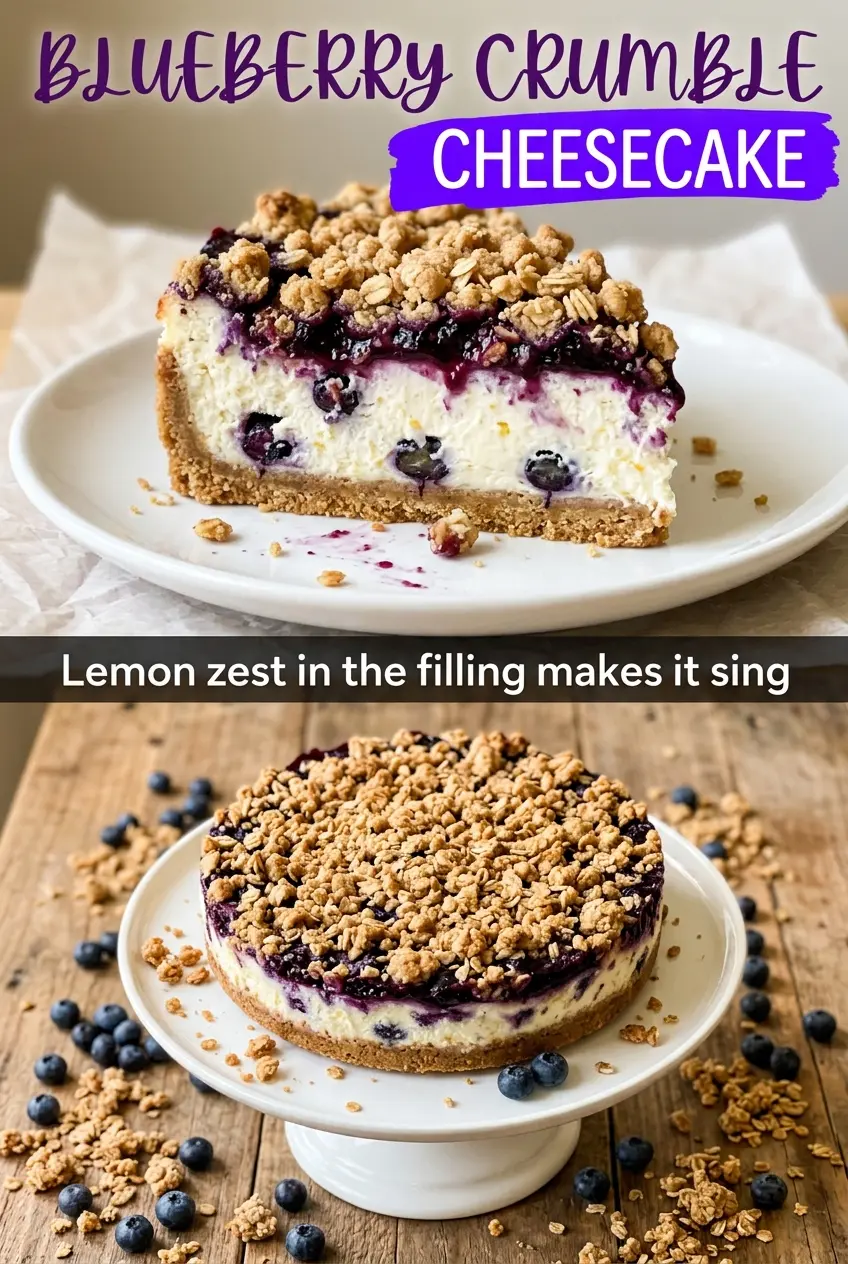
Blueberry Crumble Cheesecake
Ingredients
Equipment
Method
- Preheat oven to 325°F, then press the crumb-butter mix firmly into a 9-inch springform pan. Bake for 10 min to set the crust, with edges just beginning to look lightly toasted.
- Beat cream cheese and granulated sugar until smooth and lump-free. Mix in eggs one at a time, then add vanilla and lemon zest until fully combined.
- Pour the batter over the baked crust in the springform pan, spreading to an even layer. Tap the pan lightly to settle the surface.
- Bake at 325°F for 55-60 min until the center is set with a slight wobble. The outer edge should look set while the middle still jiggles gently.
- Cool the cheesecake completely, uncovered at room temperature, then refrigerate for 4 hours until firm. The top should look fully chilled and sliceable.
- Simmer fresh blueberries, 1/4 cup sugar (compote), and lemon juice for 10 min until jammy. Stir occasionally until the mixture thickens and turns glossy, then cool.
- Make the crumble by combining rolled oats, brown sugar, flour, and cold butter until it looks sandy with small clumps. Bake at 350°F for 15 min until golden.
- Top the chilled cheesecake with blueberry compote, spreading it to the edges. Add the warm-or-cooled crumble over the compote for maximum crunch contrast.