
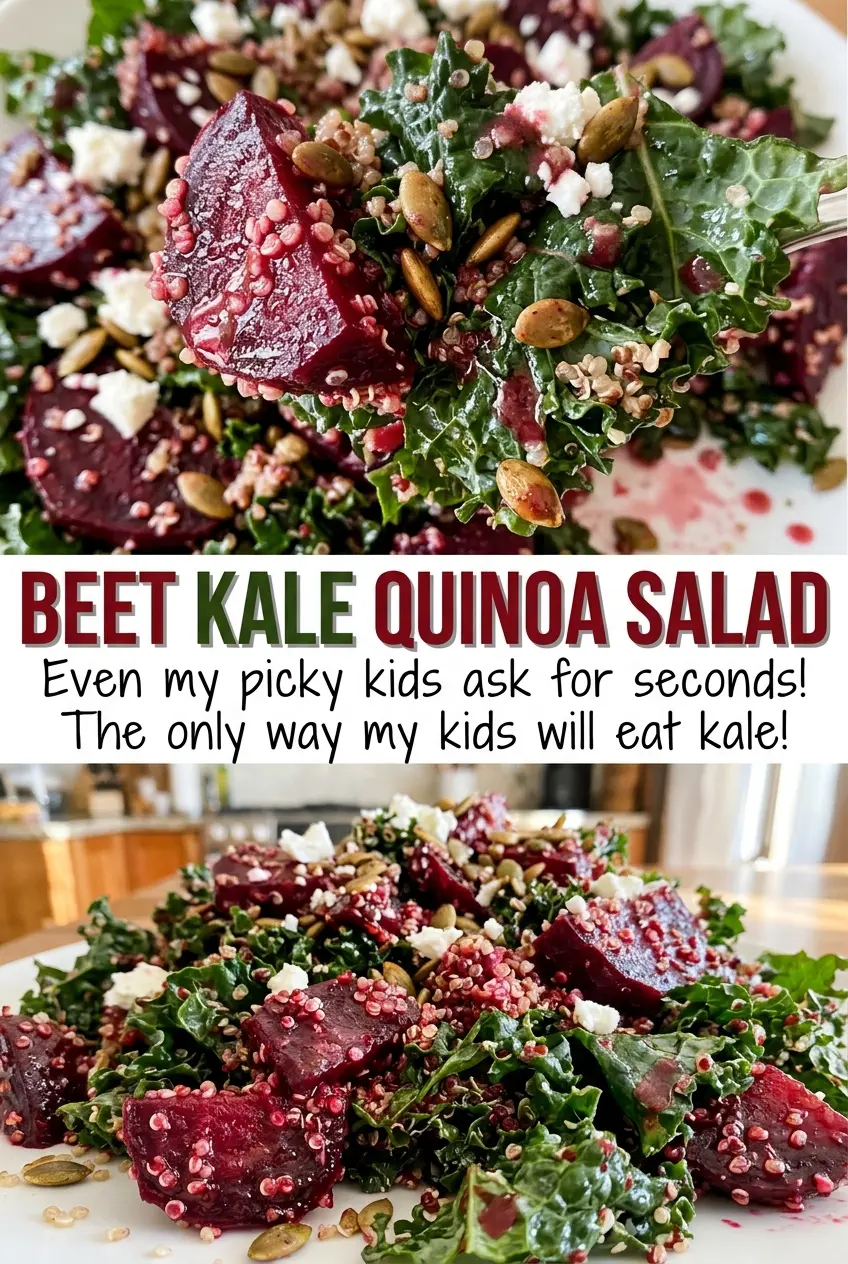
The beets come out of the oven wrapped in foil, their skins loose enough to rub away once they’ve cooled. At the cutting board, their deep color stands out against the pale quinoa and green kale. That contrast is part of what makes this Beet Kale Quinoa Salad feel like more than a bowl of greens.
I like how the ingredients bring different textures without making the salad complicated: quinoa turns it into a filling meal, walnuts add crunch, and crumbled goat cheese brings a tangy, creamy finish. Lemon and Dijon keep the dressing bright, while a little honey rounds it out.
The curly kale holds up well alongside the warm, earthy beets and tender quinoa. After everything is tossed, a short rest gives the dressing time to settle into the grains and leaves. The result is a colorful salad with plenty going on in every forkful.
Kitchen Note
Give the quinoa its covered rest off the heat before fluffing it. That last 5 minutes lets the grains finish absorbing moisture, so they separate with a fork instead of turning pasty in the salad.
Save this Beet Kale Quinoa Salad for a colorful, satisfying lunch with tender kale, earthy beets, and tangy goat cheese.
Why This Salad Gets Better After the Toss
The final 10-minute rest isn’t dead time. Quinoa has plenty of nooks for dressing to cling to, and the kale continues to soften as the lemony mixture settles over the leaves. Giving the salad a moment before serving lets those flavors come together rather than leaving the dressing pooled at the bottom of the bowl.
That pause also gives you a chance to check the balance once the ingredients are combined. The beets bring their own earthy sweetness, goat cheese adds tang, and the dressing ties the bowl together. If you taste it right after tossing, those elements can seem separate; after the rest, each bite feels more unified. Keep the bowl at room temperature during that brief wait, then serve it while the kale still has some shape and the walnuts have their crunch.
This is a useful distinction from a delicate lettuce salad, which can wilt quickly under dressing. Curly kale is sturdy enough for the short rest, and the quinoa gives the dressing another place to cling. The result is a salad that doesn’t need to be dressed at the last second to keep its texture.
What the Beets, Quinoa, and Goat Cheese Each Bring
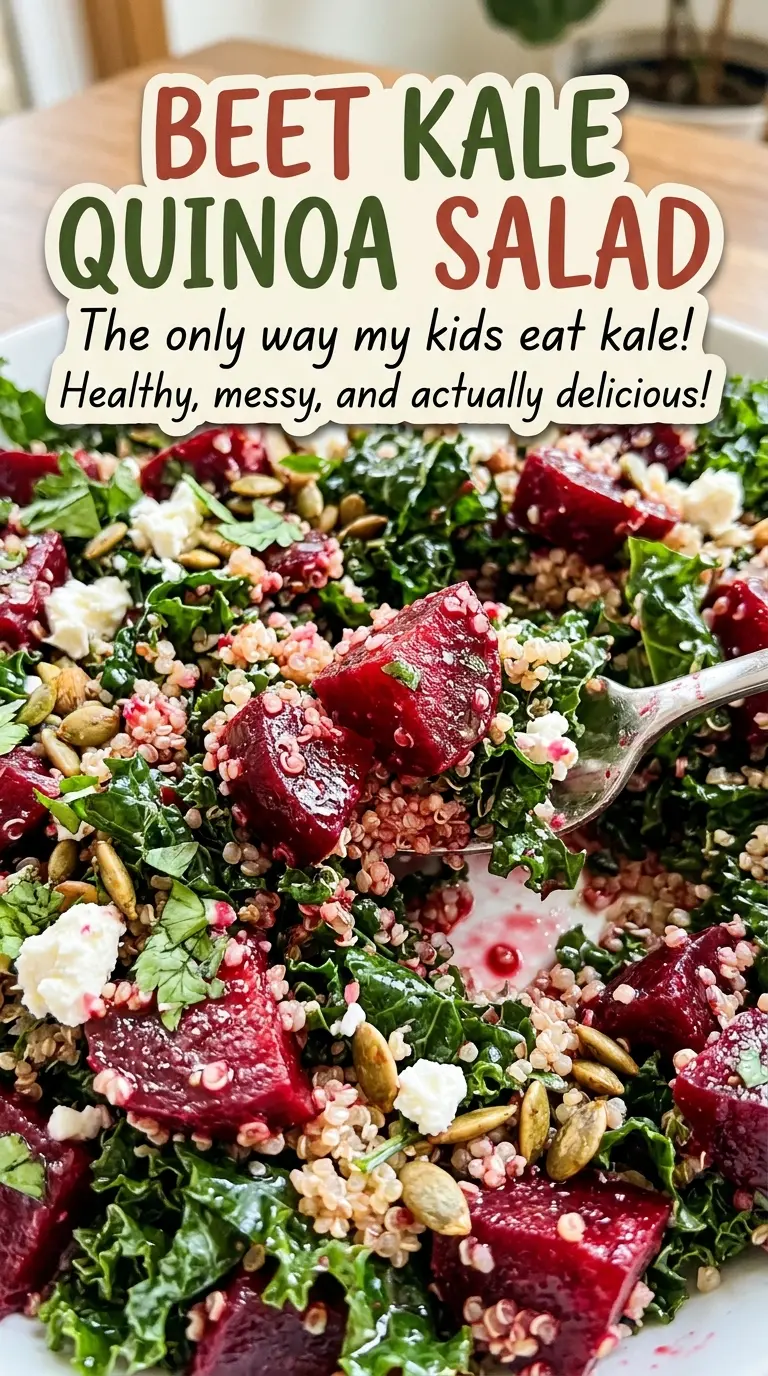
- Beets — Choose firm beets without soft spots; medium ones roast evenly while wrapped whole. Scrubbing and trimming before roasting keeps the prep simple, and their skins rub off after cooling. There isn’t another ingredient in this salad that can replace their earthy sweetness and color.
- Quinoa — Rinsing removes the coating that can leave quinoa tasting bitter. Any plain quinoa works here; the important prep detail is rinsing it before it goes into the saucepan. Its mild, slightly nutty taste lets the beets and dressing stay prominent.
- Curly kale — Look for leaves that feel crisp rather than limp. Removing the stems and slicing the leaves thinly makes the finished salad easier to eat. Curly leaves catch the dressing well, while a thick, unsliced piece can stay chewy.
- Walnuts and goat cheese — Chopped walnuts bring a distinct crisp bite, and goat cheese gives the salad a creamy tang. Freshly crumbled cheese tends to stay in soft pieces; pre-crumbled cheese is convenient if that’s what you have. Walnuts are worth tasting before adding, since stale nuts can bring a bitter note.
- Lemon, Dijon, honey, and olive oil — Fresh lemon juice gives the dressing its clean acidity, while Dijon helps the oil and juice combine when whisked. Honey softens the sharp edge without making the salad taste sweet. Use an olive oil whose flavor you enjoy, but there’s no need to reach for an expensive bottle.
Roast, Rest, and Toss Without Losing the Texture
Roast the Beets Until a Knife Slides In
Heat the oven to 400°F. Wrap each scrubbed, trimmed beet in foil, set them on a rimmed baking sheet, and roast for 45 to 60 minutes. The timing depends on the size of the beets, so use the center as your cue: a knife should slide in easily. Let them cool until they’re easy to handle, rub off the skins, and cut the beets into 1/2-inch pieces.
Let the Quinoa Finish Gently
Combine the rinsed quinoa and 1 3/4 cups water in a 2-quart saucepan, then bring it to a boil over medium-high heat. Cover the pan, turn the heat to low, and simmer for 15 minutes, until the water is absorbed. If the heat stays too high, the water can disappear before the grains are tender. Remove the pan from the heat, let it stand covered for 5 minutes, then fluff the quinoa with a fork.
Whisk a Dressing That Coats the Leaves
In a small bowl, whisk together the olive oil, fresh lemon juice, Dijon mustard, honey, kosher salt, and black pepper until combined. The mustard helps the oil and lemon juice come together, so keep whisking until the dressing looks evenly blended. If it separates while it sits, give it another quick whisk before adding it to the salad.
Massage the Kale Before Adding the Rest
Put the thinly sliced kale in a large bowl with 1 tablespoon of the dressing. Massage the leaves for 1 to 2 minutes, until they look slightly softened; a quick toss won’t tenderize them in the same way. Add the quinoa, beets, walnuts, goat cheese, and remaining dressing, then toss to combine. Let the salad stand for 10 minutes before serving.
Easy Ways to Change the Bowl Without Losing Its Character
A dairy-free bowl with walnuts in place of goat cheese
Leave out the goat cheese and keep the walnuts for a dairy-free version using the salad’s existing ingredients. The walnuts preserve a crunchy contrast, but the bowl won’t have the creamy, tangy finish that goat cheese provides.
A walnut-free salad with a softer bite
Leave out the walnuts for a version without nuts. The beets, quinoa, kale, and goat cheese still make a substantial salad, though you’ll lose the crisp crunch that contrasts with the tender grains and leaves.
Composed bowls instead of a tossed salad
For a different presentation, divide the kale and quinoa among individual bowls, then arrange the beets, walnuts, and goat cheese over each portion. Spoon the dressing over the bowls and let them stand before eating. You’ll get the same combination of ingredients with more distinct layers in each serving.
Storage and Reheating
- Refrigerator: Store leftovers in an airtight container for up to 3 days. The kale softens over time, and the walnuts lose some crunch.
- Freezer: The assembled salad doesn’t freeze well. Thawed kale turns limp, and goat cheese loses its pleasant crumbly texture.
- Reheating: Skip reheating the assembled salad; heat wilts the kale and softens the cheese. Serve it chilled or cool instead.
Questions That Come Up While Making This Beet Kale Quinoa Salad
Beet Kale Quinoa Salad
Ingredients
Equipment
Method
- Preheat the oven to 400°F.
- Wrap each beet in foil, place on a rimmed baking sheet, and roast for 45 to 60 minutes, until a knife slides easily into the center.
- Let the beets cool until easy to handle.
- Rub off the skins.
- Cut the beets into 1/2-inch pieces.
- Combine the rinsed quinoa and water in a 2-quart saucepan and bring to a boil over medium-high heat.
- Cover, reduce the heat to low, and simmer for 15 minutes, until the water is absorbed.
- Remove from the heat and let stand, covered, for 5 minutes.
- Fluff with a fork.
- Whisk the olive oil, lemon juice, Dijon mustard, honey, salt, and pepper in a small bowl until combined.
- Put the kale in a large bowl with 1 tablespoon of the dressing and massage the leaves for 1 to 2 minutes, until slightly softened.
- Add the quinoa, beets, walnuts, goat cheese, and remaining dressing, then toss to combine.
- Let stand for 10 minutes before serving.