
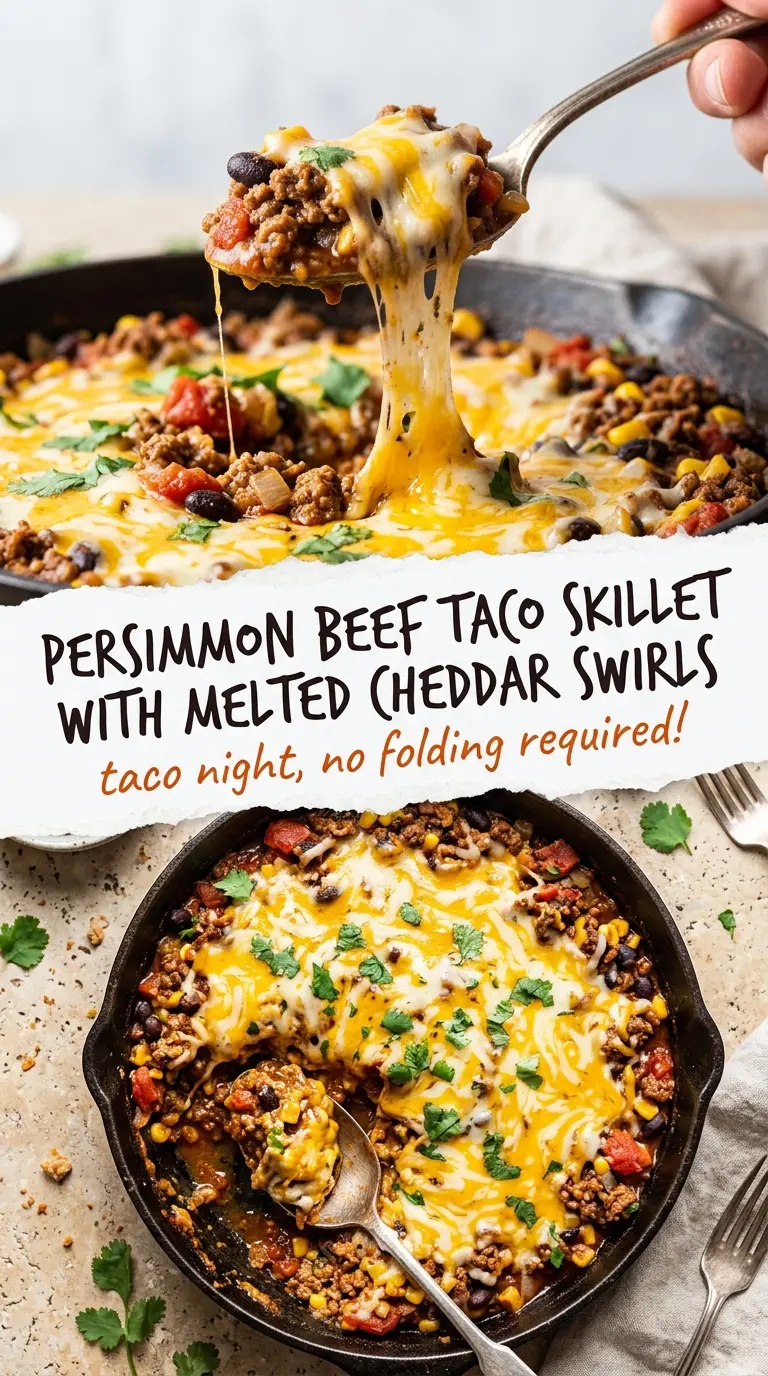
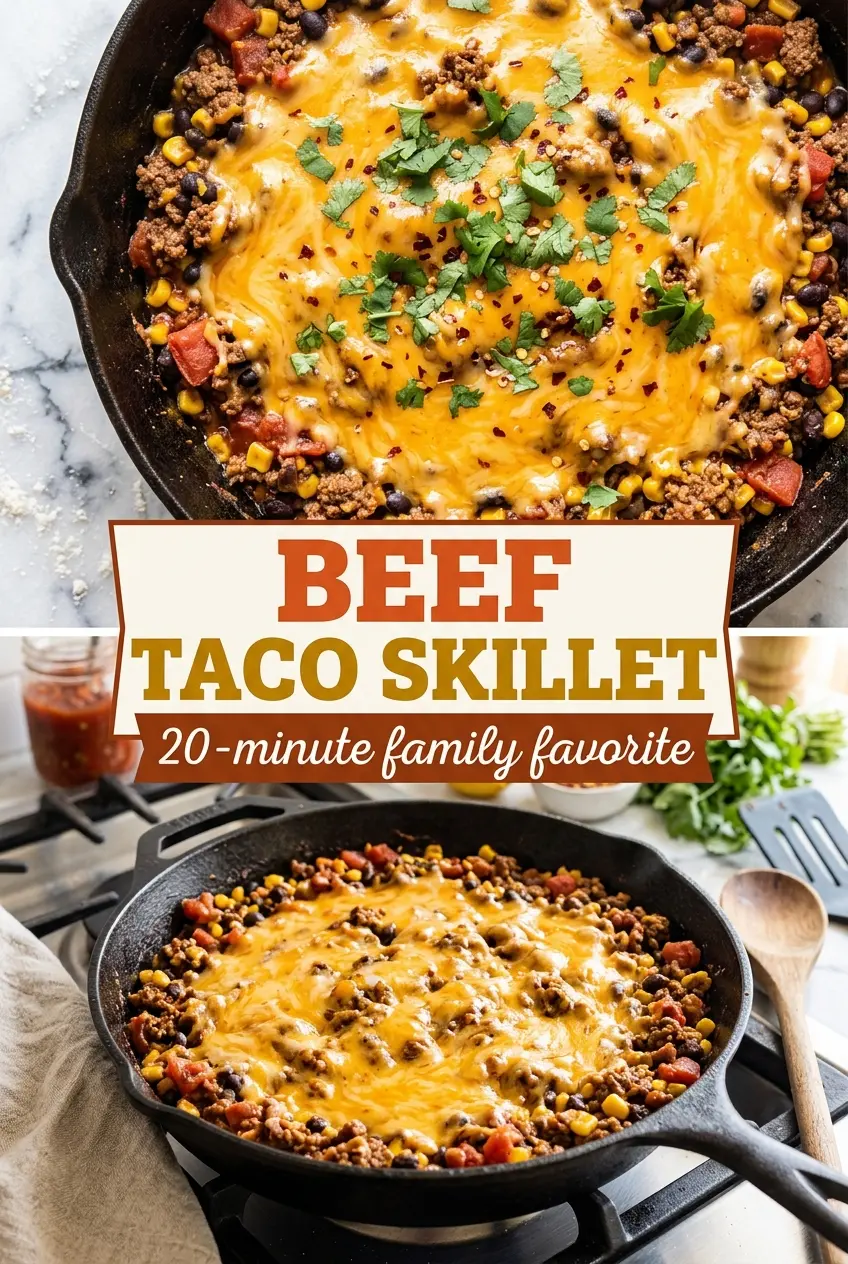
Seasoned ground beef, black beans, sweet corn, and melted cheddar all in one pan is the kind of dinner that clears the table fast. The beef stays hearty, the beans add body, and the cheese melts into the top instead of disappearing into the skillet. You get taco-night flavor without warming shells, chopping a pile of toppings, or standing at the stove much longer than it takes to brown the meat.
What makes this version work is the balance between the seasoning packet, a little water, and a short simmer. That liquid gives the spices time to bloom and coat every bite, while the beans and corn keep the mixture from turning into dry crumbles. Letting it cook just until slightly thickened matters here; if you drive off too much moisture before the cheese goes on, the skillet can end up dense instead of juicy.
Below, I’ll walk through the one technique detail that keeps the filling saucy, plus a few ways to stretch it into a bigger meal or adapt it with what you already have in the pantry.
The cheese melted right over the beef instead of sinking in, and the filling had just enough sauce to scoop up with chips. I served it over rice and my kids asked for it again the next night.
Love this cheesy Beef Taco Skillet? Save it to Pinterest for the nights when you need a fast one-pan taco dinner with zero rolling or folding.
The Reason the Skillet Stays Juicy Instead of Dry
Ground beef taco fillings go wrong when they’re cooked like a hash instead of a saucy skillet meal. Once the beef is browned and drained, the seasoning needs a little water to dissolve and spread through the pan. That short simmer is what turns the spices into a coating instead of leaving them dusty and clinging to a few pieces of meat.
The other trap is cooking until every trace of liquid is gone before the cheese goes on. You want the mixture slightly thickened, not dry. The beans help with that by giving the skillet some creaminess and structure, while the corn keeps the texture from feeling one-note. If the pan looks soupy at the end of the simmer, give it another minute or two; if it looks tight and pasty, the final dish will eat heavy.
What Each Ingredient Is Actually Doing in This Dish
- Ground beef — This is the backbone of the dish, so use something with enough fat to stay flavorful but not greasy. If yours is very lean, leave a spoonful of the rendered fat in the pan before adding the seasoning; that little bit helps carry the taco flavor.
- Taco seasoning — The packet does the heavy lifting on spice, salt, and thickening. Homemade seasoning works too, but if you swap it in, add a pinch of cornstarch or let the skillet simmer a touch longer so the sauce clings instead of staying watery.
- Black beans — These add creaminess and make the skillet feel like a full meal. Pinto beans work if that’s what you have, but black beans hold their shape a little better and give a firmer bite.
- Corn — Corn adds sweetness and pops against the seasoned beef. Frozen corn is fine straight from the bag; canned corn should be drained first so you don’t water down the skillet.
- Cheddar cheese — Shredding it yourself melts cleaner than pre-shredded cheese, which often contains anti-caking agents that slow melting. A sharp cheddar gives the best contrast against the savory beef.
- Cilantro — This is the fresh finish that keeps the skillet from tasting flat. If cilantro isn’t your thing, chopped green onions work well and keep the same bright pop.
The 20 Minutes That Actually Matter
Brown the Beef Until It Has Real Color
Cook the beef in a large skillet over medium-high heat until it loses its pink color and starts picking up brown bits on the bottom. Those bits matter because they add depth once the water goes in. Drain off excess fat if the pan looks slick, but don’t rinse the meat; you’d wash away the flavor you just built.
Let the Seasoning Simmer Into the Filling
Stir in the taco seasoning, beans, corn, and water, then let the mixture bubble gently for 8 to 10 minutes. You’re looking for a glossy, lightly thickened skillet where the liquid still coats the spoon but doesn’t pool around the edges. If it looks thin, keep simmering; if it starts sticking hard to the pan, the heat is too high.
Melt the Cheese Without Overcooking the Meat
Once the filling has thickened, sprinkle the cheddar across the top and cover the skillet just until the cheese melts. Pull it off the heat as soon as the top goes soft and glossy. If you leave it covered too long, the cheese can get oily and the beef underneath will keep cooking past the point where it stays juicy.
Finish With Freshness
Scatter the cilantro over the top right before serving so it stays bright and fragrant. This is the moment that wakes up the whole pan. Serve it as is, spoon it over rice, or set out tortilla chips for scooping.
What to Change When You Need to Use What’s in the Pantry
Make It with Pinto Beans Instead of Black Beans
Pinto beans slide right into this recipe and keep the same hearty texture, though they’re a little softer and creamier than black beans. If you want the skillet to hold its shape for serving over rice or stuffing into tortillas, drain the beans well and simmer them uncovered for the last couple of minutes.
Make It Dairy-Free
Skip the cheddar or use a melting-style dairy-free shreds blend, then cover the skillet just long enough for the top to soften. You lose the classic gooey top, but the beef filling still carries the dish, especially if you finish with avocado or salsa for richness.
Stretch It Into a Bigger Meal
Stir in cooked rice, or serve the skillet over it, if you need the pan to feed more people. Rice mutes the spice a little and makes the dish more filling, which is useful when you want dinner to go further without changing the flavor much.
Storage and Reheating
- Refrigerator: Store leftovers in an airtight container for up to 4 days. The beans will continue to absorb some of the sauce, so the filling gets thicker as it sits.
- Freezer: It freezes well for about 2 months. Cool it completely first, then pack it without the cilantro and add fresh herbs after reheating.
- Reheating: Warm it in a skillet over medium-low with a splash of water until it loosens and steams through. The common mistake is blasting it in the microwave until the beef turns dry and the cheese gets rubbery.
The Questions People Usually Ask Before They Make This
Beef Taco Skillet
Ingredients
Equipment
Method
- Heat a large cast iron skillet over medium-high heat. Add the ground beef and cook until browned, then drain excess fat.
- Reduce the heat to medium. Stir in the taco seasoning until the beef is evenly coated.
- Add the drained black beans, corn kernels, and water to the skillet. Stir to combine so everything is moistened and evenly distributed.
- Simmer for 8–10 minutes, stirring occasionally, until slightly thickened. Keep the mixture at a gentle simmer so it reduces without drying out.
- Sprinkle the shredded cheddar cheese over the top in an even layer. Cover the skillet until the cheese is melted, about 1–2 minutes, then remove from heat.
- Spoon into bowls and garnish with chopped cilantro before serving. Serve hot while the cheddar is still gooey.