
The beef should be fork-tender before it ever meets the pastry. I learned not to rush that part: a short simmer leaves chewy pieces that the quick bake under puff pastry can’t fix. Here, the stew gets its time on the stove first, then goes into the oven with a flaky top for the finish.
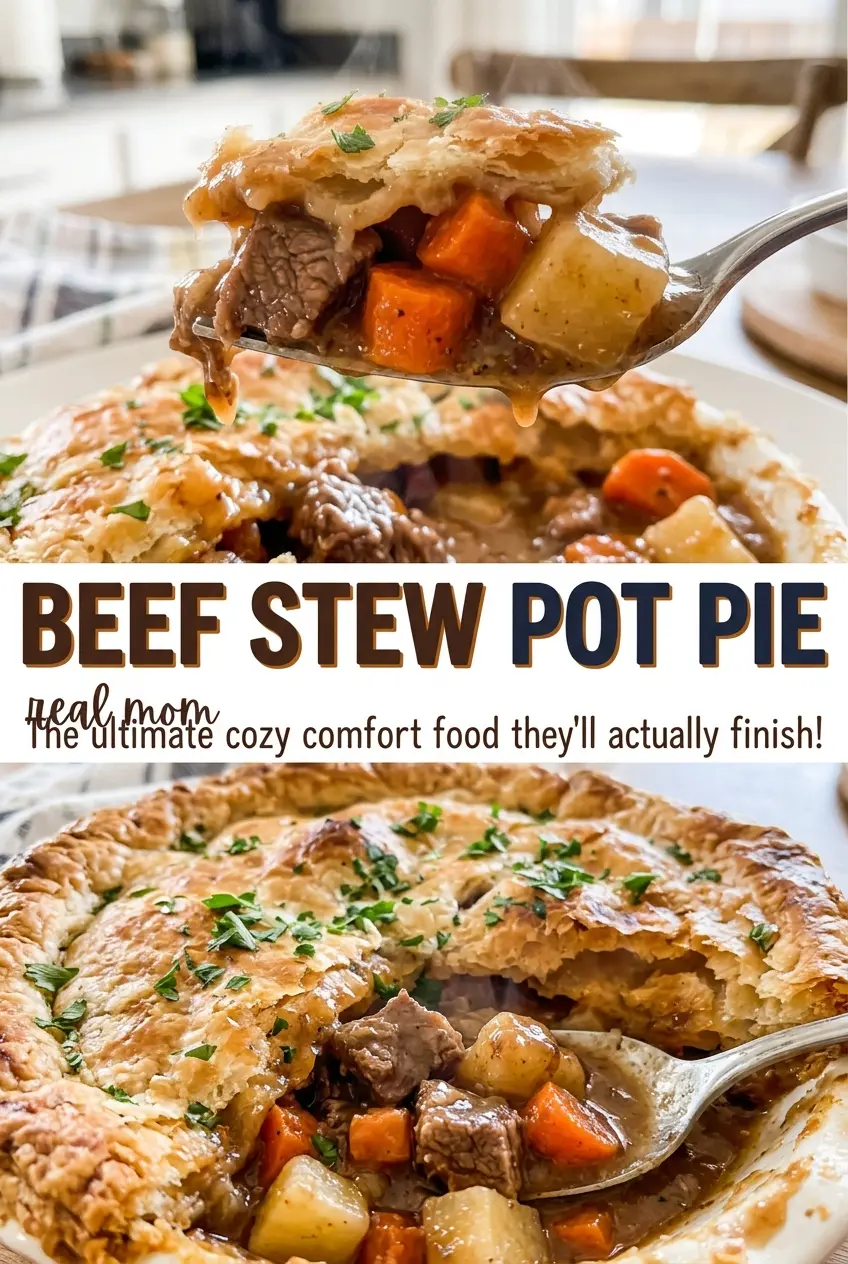
Flouring the beef before browning helps the broth turn into a savory gravy as it simmers, while potatoes and carrots go in later so they don’t collapse during the long cook. I let the filling cool for 15 minutes before topping it; that small pause keeps the pastry from landing on a steaming-hot stew. The result is tender beef and vegetables tucked under a crisp, deeply golden lid.
Kitchen Note
Give the filling its full 15-minute cool-down before adding the pastry. It should still be warm, not steaming hard; that way the bottom of the pastry stays firm enough to puff in the oven.
Save this beef stew pot pie for its fork-tender beef, rich gravy, and flaky puff pastry lid.
Why the Beef Has to Get Tender Before the Pastry Goes On
Puff pastry bakes quickly compared with a pot of stew. It can turn tall, crisp, and golden in the oven, but it can’t give tough beef the long, gentle cooking it needs. That’s why I treat the filling as a complete stew before I build the pie: the beef simmers covered until nearly tender, then the vegetables join for their shorter cook.
There’s another useful bit of timing in the pot. The beef gets browned in batches before the broth goes in, leaving browned bits on the bottom that loosen when you scrape the pot. Those bits deepen the gravy, and the flour clinging to the beef gives the broth body as everything simmers. Crowding the meat makes it steam instead of brown, so give each batch enough room to take on color. By the time the pastry goes on, you want tender beef and vegetables in a spoonable gravy—not raw ingredients waiting for a pastry lid to do the cooking.
The Beef, Gravy, and Pastry Choices That Make This Pot Pie Work
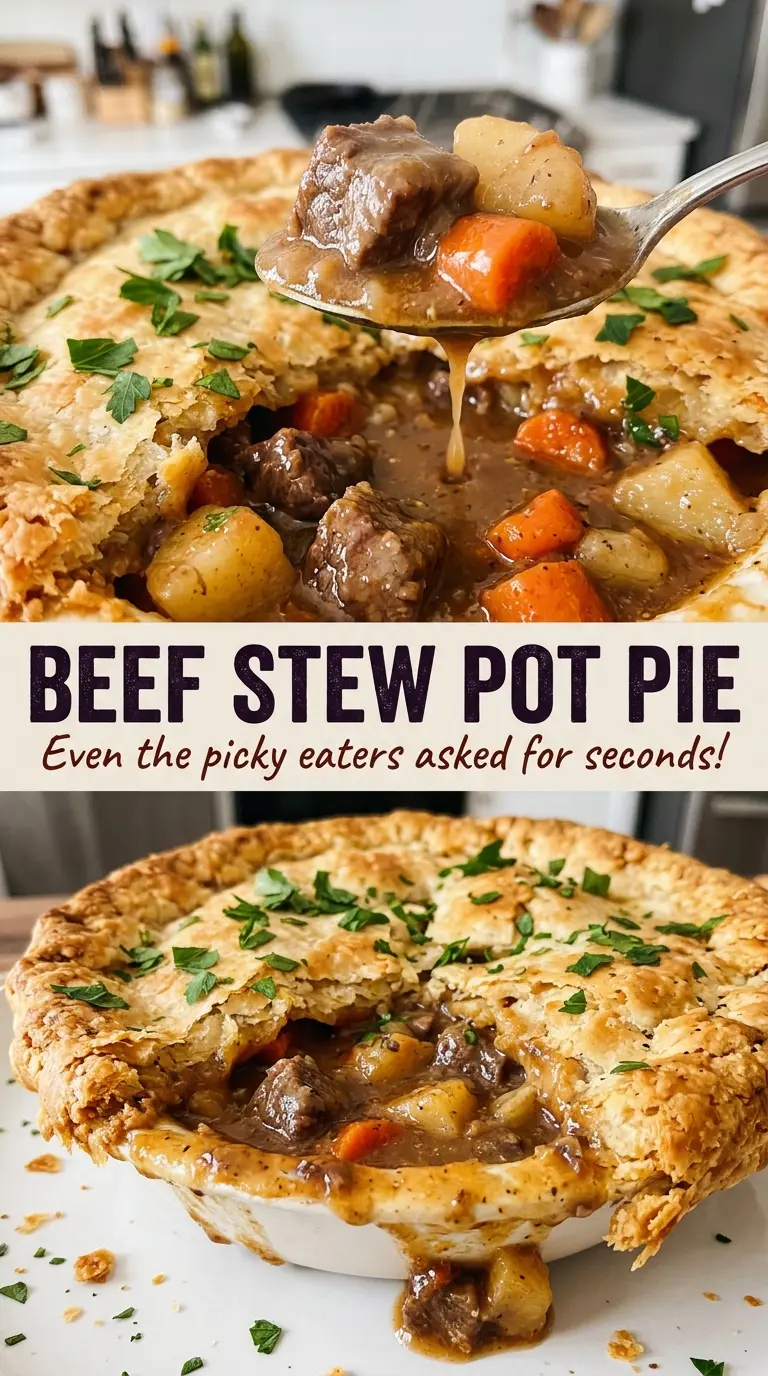
- Beef stew meat — Pieces cut to a consistent 1-inch size cook at a similar pace. Patting them dry before browning helps them color instead of shedding moisture into the pot. If you’re cutting a chuck roast yourself, make the pieces the same size.
- Flour and beef broth — The flour coats the beef and helps thicken the broth during the long simmer. Beef stock can stand in for broth in the same amount, though the final gravy may taste a little more robust depending on the brand.
- Onion, garlic, tomato paste, and Worcestershire — These build the savory base. Yellow onion softens into the stew without dominating it; tomato paste needs a minute in the pot to lose its raw edge before the liquid goes in.
- Thyme and bay leaf — Dried thyme distributes evenly through the simmering gravy, while the bay leaf adds a quiet herbal note. Remove the bay leaf before the peas go in, since it isn’t meant to be eaten.
- Yukon Gold potatoes and carrots — Yukon Golds hold their shape while turning tender, and thick carrot slices stay distinct in the finished filling. Red potatoes are a close swap for the Yukon Golds; russets soften more and can break down into the gravy.
- Frozen peas — Stir them in after the stew is cooked so they warm through without spending the whole simmer in the pot. Frozen peas are convenient here and keep their shape better than peas that have already been cooked soft.
- Puff pastry and egg — Use a sheet of thawed puff pastry that can roll out to cover the dish. The egg beaten with water gives the top a deeper golden color; keep the pastry cool enough to handle cleanly as you roll and tuck it.
Build the Stew First, Then Give the Pastry a Hot Oven
Brown the Beef Without Crowding the Pot
Heat the vegetable oil in a 6-quart Dutch oven over medium-high heat. Season the patted-dry beef with kosher salt and black pepper, toss it with flour, and brown it in batches, turning as needed, for 6–8 minutes total. Let the pieces sit long enough to develop brown patches before turning them. If the pot is crowded, the meat releases moisture and steams, so keep the batches manageable.
Start the Gravy and Let the Beef Simmer
Add the chopped onion and cook, stirring, until softened, about 5 minutes. Stir in the minced garlic and tomato paste and cook for 1 minute, then add the beef broth, Worcestershire sauce, dried thyme, and bay leaf. Scrape up the browned bits as the liquid goes in, bring the stew to a gentle simmer, cover, and cook over low heat for 1 hour 45 minutes to 2 hours. Keep the simmer gentle; a hard boil can make the meat cook unevenly before it turns tender.
Add the Vegetables at the Right Point
Stir in the potatoes and carrots once the beef is nearly tender, then cover and simmer for 25–30 minutes. The vegetables should be tender and the beef fork-tender, not falling apart into shreds. Remove and discard the bay leaf, then stir in the frozen peas. Adding the potatoes and carrots later protects their shape through the long beef cook.
Top the Filling and Bake Until the Vents Bubble
Heat the oven to 400°F and grease a 9×13-inch, 3-quart baking dish. Spoon in the filling and let it cool for 15 minutes while you roll the thawed puff pastry on a lightly floured surface into a 10×14-inch rectangle. Lay the pastry over the filling, tuck the edges inside the dish, cut several slits, and brush with the egg beaten with water. Bake for 30–35 minutes, until puffed and deep golden with filling bubbling through the slits; loosely tent with foil if the top browns too quickly, then rest the pie for 10 minutes before serving.
Two Simple Ways to Adapt This Beef Stew Pot Pie
Make a Gluten-Free Version
Use a gluten-free measure-for-measure flour blend in place of the all-purpose flour, and choose a gluten-free puff pastry sheet. The beef and vegetable filling will still be hearty, though the gravy’s thickness and the pastry’s rise can vary a little by brand.
Leave Out the Peas
Skip the peas if you’d rather keep the filling focused on beef, potatoes, and carrots. The stew still has plenty of substance, and leaving them out doesn’t change the simmer or pastry-baking method.
Storage and Reheating
- Refrigerator: Refrigerate leftovers within 2 hours and keep them for 3–4 days. The pastry softens as it sits against the filling.
- Freezer: Freeze cooled portions tightly wrapped for up to 2 months for best quality. The filling freezes well, but the pastry will be less crisp after thawing.
- Reheating: Reheat portions in a 350°F oven, loosely covered with foil, until the center reaches 165°F. Uncover near the end if you want to revive some crispness; the microwave heats quickly but makes the pastry soft.
Questions That Come Up When Making Beef Stew Pot Pie
Beef Stew Pot Pie
Ingredients
Equipment
Method
- Heat the vegetable oil in a 6-quart Dutch oven over medium-high heat.
- Season the beef stew meat with the kosher salt and black pepper, then toss it with the all-purpose flour.
- Brown the beef in batches, turning as needed, for 6–8 minutes total.
- Add the yellow onion and cook, stirring, until softened, about 5 minutes.
- Add the garlic and tomato paste and cook for 1 minute.
- Stir in the beef broth, Worcestershire sauce, dried thyme, and bay leaf, scraping up browned bits from the pot.
- Bring to a gentle simmer, cover, and cook over low heat for 1 hour 45 minutes to 2 hours, until the beef is nearly tender.
- Stir in the Yukon Gold potatoes and carrots, cover, and simmer for 25–30 minutes, until the vegetables are tender and the beef is fork-tender.
- Remove and discard the bay leaf, then stir in the frozen peas.
- Heat the oven to 400°F.
- Grease a 9x13-inch, 3-quart baking dish, spoon in the filling, and let it cool for 15 minutes.
- On a lightly floured surface, roll the puff pastry into a 10x14-inch rectangle.
- Lay the puff pastry over the filling, tuck the edges inside the dish, and cut several slits in the top.
- Beat the egg with the water in a small bowl and brush it over the pastry.
- Bake for 30–35 minutes, until the pastry is puffed and deep golden and the filling bubbles through the slits; loosely tent with foil if the pastry browns too quickly.
- Rest for 10 minutes before serving.