
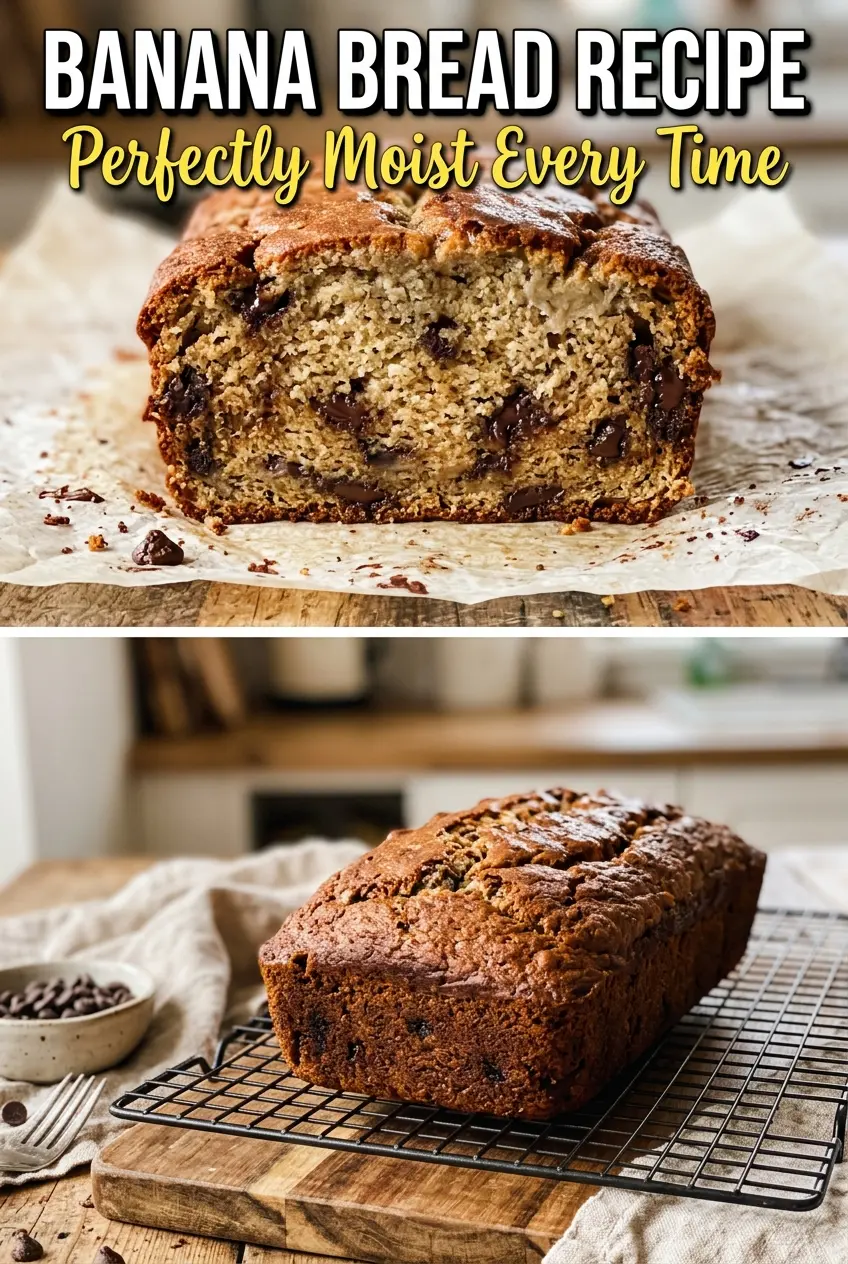
Golden-crusted banana bread with a soft, pillowy crumb earns its place in the kitchen fast. The slices hold together without getting dense, the banana flavor comes through in every bite, and the loaf stays tender for days instead of drying out by the next morning. When it’s done right, the top cracks open in that classic way and the center smells like caramelized bananas and vanilla.
The trick is keeping the batter just barely mixed. Overworking the flour is what turns banana bread bouncy and tight instead of plush. Very ripe bananas matter here, too, because the dark spots aren’t just about sweetness; they also bring a deeper banana flavor and more moisture, which helps the loaf bake up soft without feeling underdone.
Below, I’ve included the detail that matters most if your banana bread has ever come out gummy in the center or dry at the edges. There’s also a simple way to add chocolate chips or walnuts without throwing off the texture.
My loaf came out with that perfect crackly top and a really tender crumb, and the banana flavor was deeper than my usual recipe. I baked it for 58 minutes and it sliced cleanly after cooling, which never happens for me.
Save this banana bread for the days when you’ve got spotted bananas on the counter and want a loaf with a crackly top and a tender, fragrant crumb.
The Difference Between Moist Banana Bread and a Gummy Center
Banana bread fails for two opposite reasons: it either bakes up dry and sandy, or it stays heavy and gummy in the middle. The fix is in the balance between banana moisture, flour, and bake time. This version uses enough banana for flavor and tenderness, but not so much that the loaf collapses under its own weight. The batter should look thick and lumpy, not smooth like cake batter.
The other trap is the oven. A loaf pan holds heat differently than a cake pan, so the center needs time to set after the outside has already turned golden. Pull it only when a toothpick comes out clean or with a few moist crumbs, not wet batter. If the top is getting dark before the middle is done, lay a loose piece of foil over it for the last 15 minutes.
What Each Ingredient Is Doing in This Banana Bread
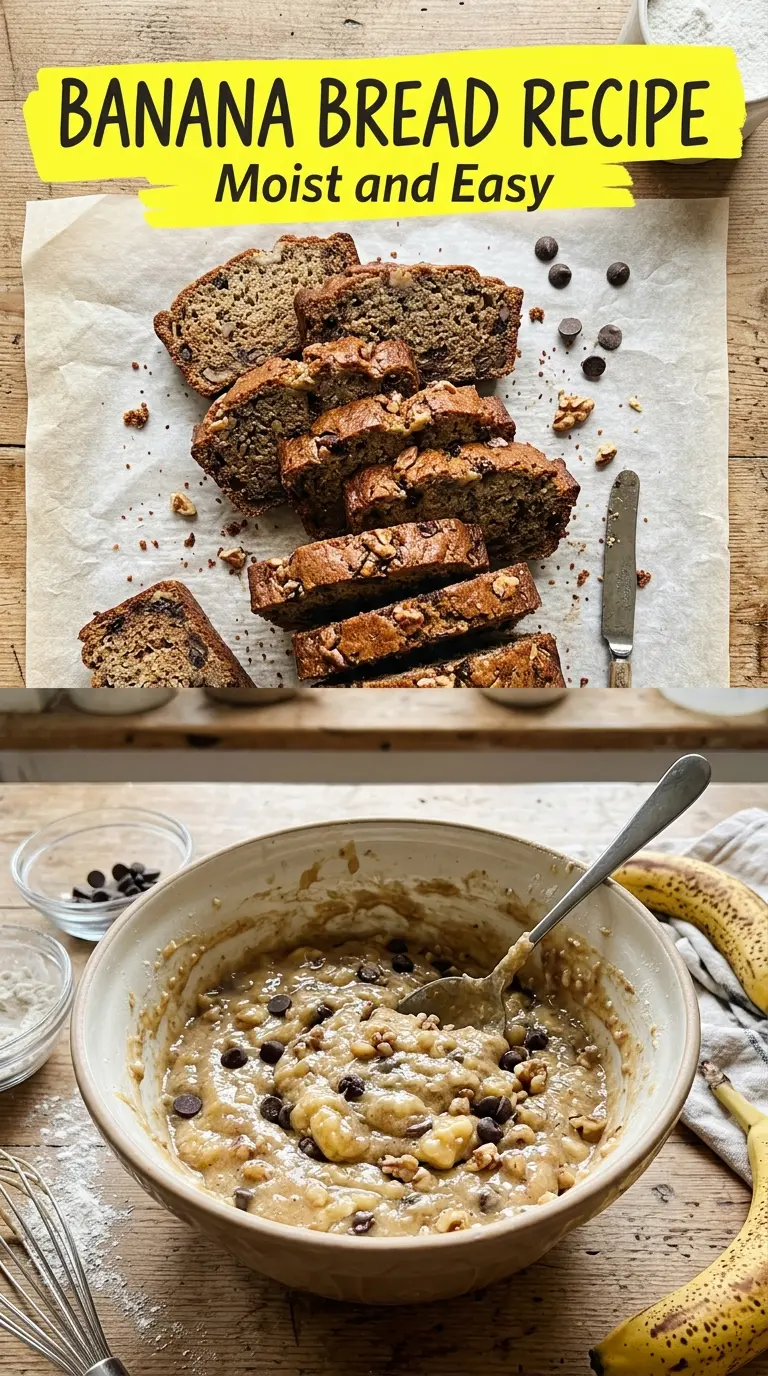
- Ripe bananas — These carry the flavor and the moisture. The more black spots, the better; green-tinged bananas won’t give you the same sweetness or aroma. If yours are only yellow, roast them in the peel at 300°F until they darken and soften.
- Melted butter — Butter gives the loaf richness and that soft, almost custardy crumb once it cools. Melted butter also mixes easily with the bananas, which keeps the method simple and helps avoid overmixing.
- Sugar — This does more than sweeten. It helps the crust brown and keeps the loaf tender. You can reduce it slightly if your bananas are extremely ripe, but cutting too much will leave the bread flatter and less moist.
- Baking soda — Banana bread needs this for lift. It reacts with the natural acidity in the bananas and helps the loaf rise into a soft dome instead of baking up dense. Don’t swap it for baking powder here.
- All-purpose flour — This gives the loaf its structure. Spoon and level it instead of scooping straight from the bag, because too much flour is the fastest path to a dry loaf.
How to Mix It So the Crumb Stays Tender
Mashing and Mixing the Wet Ingredients
Start by mashing the bananas until they’re mostly smooth with a few small lumps left behind. Stir in the melted butter first, then the sugar, egg, and vanilla. The mixture should look loose and glossy before the dry ingredients go in. If the egg goes into hot butter, let the butter cool for a few minutes first so you don’t accidentally scramble it.
Adding the Dry Ingredients Without Beating Them In
Sprinkle the baking soda, salt, and flour over the wet mixture, then fold just until the flour disappears. Stop as soon as there are no dry streaks left. A few small lumps are fine; they bake out. If you keep stirring until the batter looks perfectly smooth, the loaf turns tight and chewy instead of soft.
Baking Until the Center Actually Sets
Pour the batter into a greased 4×8 loaf pan and bake at 350°F until the top is deeply golden and a toothpick comes out clean, usually 55 to 65 minutes. The center should feel set when you press it lightly. If the loaf jiggles in the middle, it needs more time even if the top looks finished. Let it cool in the pan for a bit before turning it out, then wait until it’s warm, not hot, before slicing.
Three Smart Ways to Change This Banana Bread
Chocolate Chip Banana Bread
Fold in 3/4 cup chocolate chips at the very end, after the flour is mostly mixed in. They add pockets of meltiness without changing the structure, but too many chips can weigh the loaf down. Toss them with a teaspoon of flour first if you want them distributed more evenly.
Walnut Banana Bread
Add 1/2 cup chopped walnuts for a toasty crunch that plays well against the soft crumb. Toast them first if you want deeper flavor; raw nuts still work, but they taste flatter. This is the best swap if you want more texture without making the bread sweeter.
Gluten-Free Banana Bread
Use a 1:1 gluten-free flour blend that includes xanthan gum. The texture will be a little more delicate, but the loaf still slices well once fully cooled. Don’t use almond flour alone here; it won’t give the same lift or structure.
How to Store the Loaf
- Refrigerator: Keep it covered at room temperature for up to 3 days, or refrigerate for up to 5 days. The crumb firms up in the fridge, so it’s best warmed before eating.
- Freezer: It freezes well. Wrap individual slices or the whole cooled loaf tightly and freeze for up to 3 months.
- Reheating: Warm slices in the microwave for 10 to 15 seconds, or toast them lightly. If you reheat too long, the bread dries out fast, especially once it’s been chilled.
Answers to the Questions Worth Asking
Banana Bread Recipe
Ingredients
Equipment
Method
- Preheat oven to 350F, then grease a 4x8 loaf pan and set aside.
- Mash the ripe bananas until smooth and transfer to a mixing bowl.
- Stir the melted butter into the mashed bananas until evenly combined and glossy.
- Add the sugar, beaten egg, and vanilla, then mix until the batter looks thick and cohesive.
- Sprinkle in the baking soda and salt, then stir just until no dry streaks remain.
- Fold in the all-purpose flour until just combined, stopping as soon as you don’t see visible flour.
- Pour the batter into the greased loaf pan and level the top.
- Bake at 350F for 55-65 minutes, until a toothpick comes out clean (or with a few moist crumbs).
- Cool in the pan before slicing so the crumb sets and the loaf lifts cleanly.