
Soft amber peaches with bubbling brown sugar centers and cinnamon at the edges are the kind of dessert that disappears fast. The fruit turns tender without losing its shape, the juices mingle with butter into a spoonable glaze, and every bite tastes like it came from more effort than it actually took. Served warm, they hit that sweet spot between rustic and polished.
What makes this version work is restraint. The peaches need just enough sugar to coax out their juices, not bury them, and a small piece of butter on top helps the topping melt into the fruit instead of sitting in a dry layer. A pinch of salt keeps the sweetness from flattening out, and vanilla rounds everything out without making the peaches taste like candy.
Below, I’ll walk through the small details that matter most: how to pick peaches that soften beautifully without turning mushy, what to do if yours aren’t quite ripe yet, and the easiest way to turn these into a dessert worth serving with ice cream.
The peaches came out tender with those caramelized syrupy edges, and the brown sugar melted right into the centers instead of sliding off. I added a scoop of vanilla ice cream and my husband kept going back for “just one more spoonful.”
Save these cinnamon-butter baked peaches for the nights when you want a warm dessert with almost no prep and a caramelized fruit topping.
The Secret to Baked Peaches That Hold Their Shape Instead of Turning to Jam
Peaches can go wrong in two directions: either they stay stubbornly firm in the middle, or they collapse into a watery puddle before the sugars have a chance to caramelize. The fix is using ripe but still structured fruit. You want peaches that give slightly at the stem end and smell fragrant, not peaches that are already soft enough to dent with a fingertip.
The other thing that matters is the baking dish. Crowding the peaches too tightly traps steam, which softens them without giving you those glossy, syrupy edges. Give the halves a little breathing room so the heat can do two jobs at once: soften the fruit and reduce the juices.
What Each Ingredient Is Doing in These Baked Peaches
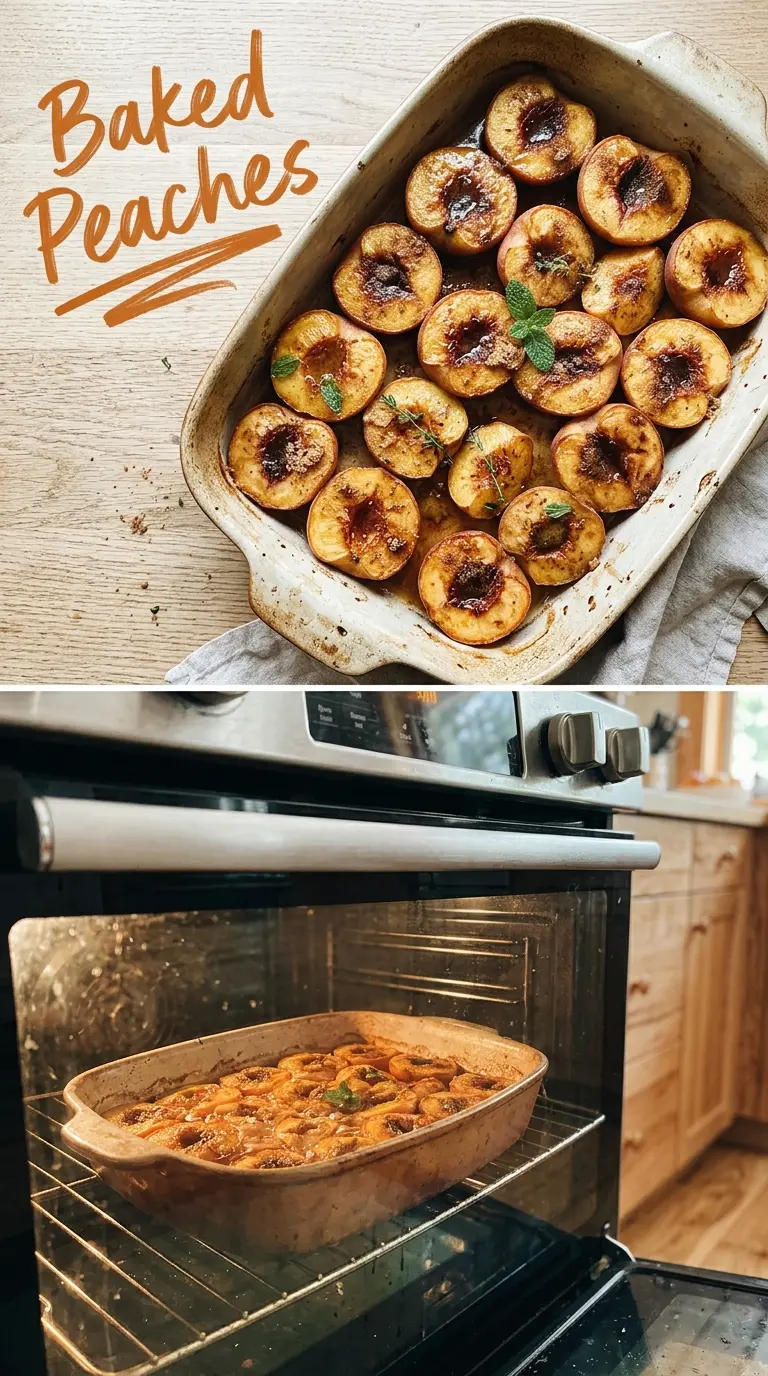
- Peaches — These need to be ripe enough to taste sweet on their own, because the oven deepens flavor more than it adds it. If your peaches are a little firm, the bake time will simply run closer to the top of the range. Avoid overripe fruit here; it will slump before the sugars caramelize.
- Brown sugar — This is what builds the syrup in the cavity and gives you those dark, molasses-kissed edges. White sugar works in a pinch, but it won’t taste as deep or melt into the fruit with the same richness.
- Cinnamon — A small amount is enough to make the peaches taste warmer and more dessert-like without taking over. If you want a softer spice note, use a tiny pinch of cardamom instead of piling on more cinnamon.
- Butter — Butter helps the sugar melt into a glossy sauce rather than drying into a crust. Use real butter here; margarine won’t give you the same flavor or the same silky finish.
- Vanilla extract — Vanilla rounds out the sharp edges of the brown sugar and makes the fruit taste fuller. Add it sparingly so it supports the peaches instead of making the dessert taste perfumed.
- Salt — Just a pinch keeps the topping from reading flat and one-note. It doesn’t make the dessert salty; it just sharpens the sweetness so the peach flavor stands out.
How to Bake the Peaches So the Centers Turn Syrupy
Cutting and Nesting the Fruit
Slice the peaches cleanly in half and remove the pits without tearing the flesh too much. Set them cut-side up in a baking dish where they can sit flat and steady. If a peach half wobbles, shave a thin slice from the rounded underside so it doesn’t roll around while baking.
Building the Filling in the Cavity
Stir the brown sugar, cinnamon, and salt together before spooning it in. That keeps the spice evenly distributed instead of leaving one peach with all the cinnamon and another with plain sugar. Pack the mixture into the center of each half so it melts inward as the peaches heat.
Baking Until the Edges Go Glossy
Top each peach with butter and a little vanilla, then bake until the fruit is tender and the sugar is bubbling in the dish. The peaches should yield easily when pierced with a fork, but they shouldn’t cave in or lose their shape. If the sugar is browning too fast before the fruit softens, tent the pan loosely with foil for the last few minutes.
Serving While the Syrup Is Warm
Let the peaches cool just long enough for the syrup to thicken slightly, then serve them warm. That pause matters because the sauce will look thin the moment the pan comes out of the oven and then settle into a better texture as it rests. A scoop of vanilla ice cream on top melts into the caramelized juices and turns the whole pan into dessert in the best possible way.
How to Adapt These Baked Peaches Without Losing the Caramelized Finish
Add bourbon for a deeper, grown-up syrup
A teaspoon or two of bourbon adds warmth and a little oakiness that plays well with the brown sugar. Stir it into the butter or drizzle it over the peaches before baking. Too much will thin the syrup, so keep it light.
Make it dairy-free
Swap the butter for a firm dairy-free butter substitute or refined coconut oil. You’ll still get a glossy melted topping, though coconut oil adds a faint coconut note and dairy-free butter gives the closest match to the original flavor.
Use nectarines when peaches aren’t in season
Nectarines work the same way and don’t need peeling. They usually soften a little faster, so start checking them a few minutes early. The finished dessert tastes a touch brighter and less floral, but the caramelized topping still works beautifully.
Storage and Reheating
- Refrigerator: Store leftovers in an airtight container for up to 3 days. The peaches will soften more and the syrup will thicken as they chill.
- Freezer: They don’t freeze well after baking. The fruit turns mushy when thawed, so this is best made fresh.
- Reheating: Warm them in a 300F oven for about 10 minutes, just until the syrup loosens again. Microwaving works in a hurry, but it softens the peaches unevenly and can make the sauce watery.
Answers to the Questions Worth Asking
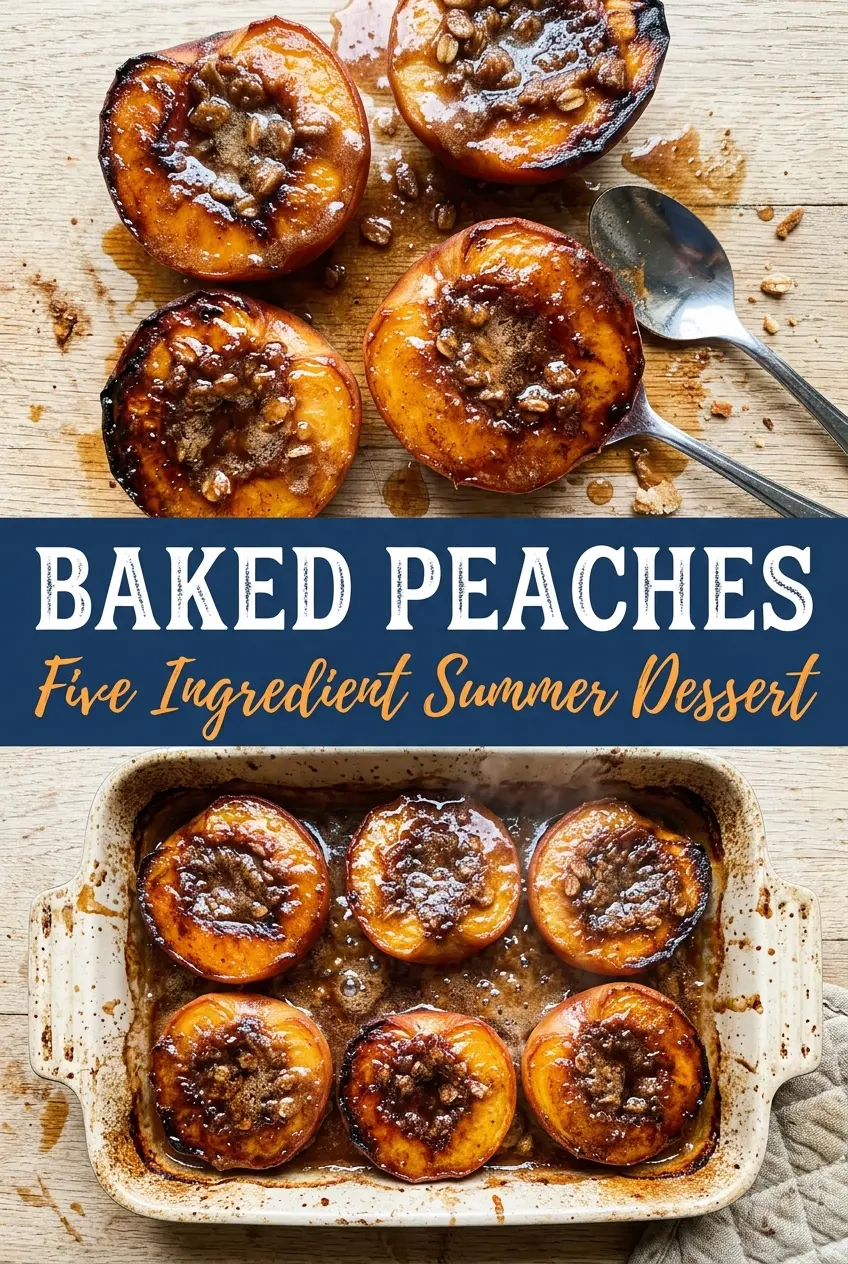
Baked Peaches
Ingredients
Equipment
Method
- Preheat the oven to 375F, and let it fully come up to temperature before baking. This helps the peach juices caramelize instead of steaming.
- Place the peach halves cut-side up in a baking dish. Arrange them so the cut faces stay exposed.
- Mix the brown sugar, cinnamon, and salt. Stir until the spice is evenly distributed.
- Spoon the brown sugar mixture into each peach cavity. Press lightly so it sits inside the fruit.
- Top each peach with a piece of butter and drizzle with vanilla extract. The butter will melt into the sugar for a glossy caramel glaze.
- Bake for 20-25 minutes at 375F until the peaches are tender and the centers look caramelized and bubbling. Look for amber edges and a syrupy surface.
- Serve the baked peaches warm. Spoon the caramelized juices from the dish over the fruit.