
The skin is the first thing I check when these thighs come out of the oven. It should be browned and crisp, not coated in a layer of wet harissa. Baked chicken thighs with harissa and lemon get their heat and citrus tucked underneath the skin, where the seasoning can reach the meat without getting in the way of that crackly top.
I roast them on a wire rack set inside a rimmed baking sheet, which lets the hot air circulate around the chicken as it cooks. A fresh lemon brings fragrant zest as well as juice, and cumin rounds out the chile paste without making the seasoning complicated. The result is a pan of juicy, boldly seasoned thighs with crisp skin and a bright lemon finish.

Kitchen Note
Keep the top of each thigh mostly free of the harissa mixture. A bare, dry skin surface has a much better chance of turning crisp than one covered in paste.
Save these baked chicken thighs with harissa and lemon for crisp skin, juicy meat, and a bright chile-citrus rub.
Why the Harissa Belongs Under the Skin, Not On It
Harissa paste brings moisture as well as chile, so coating the outside of the chicken with it works against the crisp skin you want. Putting the mixture beneath the skin and over the underside gives the meat plenty of seasoning while leaving the top exposed to the oven’s heat. The contrast matters: bold, savory chicken underneath a dry, browned skin.
The wire rack helps with the other side of that balance. Chicken thighs release juices and fat as they roast; when they sit flat in a pan, the underside has less exposure to circulating heat. Elevated on a rack, the thighs roast rather than sit in their drippings. Set the thighs skin side up and leave a little room between them so the hot air can move around each piece.
Bone-in thighs also reward a little patience. I take them to at least 175°F in the thickest part, checking without touching the bone. That higher target gives the dark meat time to turn tender, while the browned skin signals that the outside has had enough heat to crisp.
What Harissa and Fresh Lemon Contribute That Shortcuts Can’t
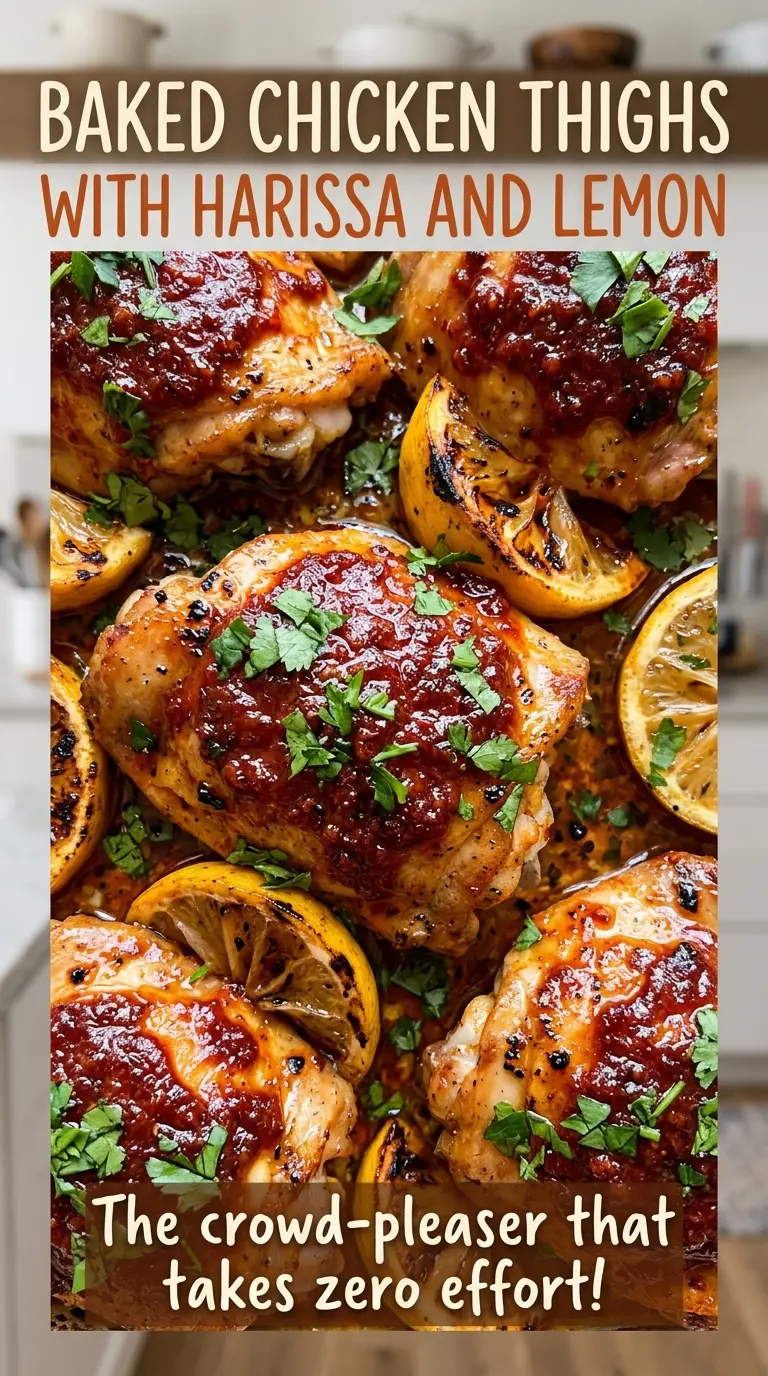
- Bone-in, skin-on chicken thighs — The bone helps protect the meat as it roasts, and the skin is what gives you that crisp top. Choose thighs that are similar in size so they cook at a similar pace. Patting them dry before seasoning helps the skin brown.
- Harissa paste — This brings concentrated chile, savory depth, and a little tang in one ingredient. Brands vary in heat and salt, so taste the paste before mixing and keep that variation in mind. There isn’t a single listed ingredient that can replace harissa and deliver the same chile-paste character.
- Fresh lemon — The finely grated zest provides fragrant citrus oils, while the juice adds sharpness to the paste. Bottled juice won’t replace the zest, so use a fresh lemon for both parts. Grate the zest finely, taking only the yellow outer layer.
- Garlic and ground cumin — Minced garlic adds a savory bite, and cumin gives the chile and lemon a warm, earthy note. Freshly minced garlic disperses more evenly than large pieces, which can fall off as you spread the mixture.
- Olive oil, kosher salt, and black pepper — The oil helps the paste combine and spread; salt and pepper round out the seasoning. A basic olive oil is fine here because the harissa and lemon carry the stronger flavors. Use kosher salt as listed, since a fine-grained salt measures differently by volume.
Roasting the Thighs Until the Skin Crackles
Set Up the Rack and Heat the Oven
Heat the oven to 425°F and place a wire rack inside a rimmed baking sheet. The rack should sit securely and leave space for the chicken juices to collect underneath. Starting with a hot oven helps the skin begin browning as soon as the thighs go in. Have the pan ready before you season the chicken so the paste doesn’t have to sit on the counter.
Dry the Chicken and Loosen the Skin
Blot the thighs thoroughly with paper towels, including around the edges where moisture often lingers. Slide your fingers gently between skin and meat to loosen the skin without tearing it. Work patiently rather than tugging; an intact skin layer makes it easier to spread the seasoning beneath it. If the skin is damp, pat it dry again before adding the paste.
Mix and Spread the Harissa Seasoning
Stir together the harissa, lemon zest and juice, olive oil, minced garlic, cumin, salt, and black pepper in a small bowl. The mixture should look like a cohesive, spoonable paste rather than separate wet and oily streaks. Spread it under the skin and over the underside of each thigh, keeping the skin mostly bare. Arrange the pieces skin side up on the rack.
Roast, Check, and Rest
Bake for 35 to 45 minutes, watching for deeply browned skin and juices collecting on the pan below. Check the thickest part of a thigh with an instant-read thermometer, taking care not to touch bone; it should reach at least 175°F. Thighs can vary in size, so check more than one if they look uneven. Let the chicken rest on the rack for 5 minutes before serving.
Two Flavor Adjustments That Keep the Chicken in Balance
A Milder, Lemon-Forward Batch
Use less harissa in the paste and keep the lemon, garlic, oil, and cumin in proportion to your taste. The chicken will have gentler chile heat and a less intense coating, while the fresh lemon still gives it a clear citrus note. Since harissa brands vary, this is a useful adjustment when your paste tastes hotter than expected.
A Warmer Cumin Emphasis
For a more earthy, less chile-led seasoning, reduce the harissa and let the cumin stand out more in the mixture. The flavor shifts toward warm and savory, though the chicken will lose some of the paste’s signature heat and tang. Keep the lemon in the mix so the seasoning still has a bright edge.
Storage and Reheating
- Refrigerator: Refrigerate leftovers within 2 hours and keep them in an airtight container for 3 to 4 days. The skin will soften as the chicken sits.
- Freezer: Freeze the cooked chicken in an airtight container for up to 4 months. Thaw it in the refrigerator before reheating; the meat freezes well, though the skin won’t stay as crisp as it was fresh.
- Reheating: Warm the thighs uncovered in a 350°F oven until the center reaches 165°F. The oven helps bring back some crispness; covered reheating or the microwave will leave the skin softer.
Questions That Come Up While the Chicken Roasts
Baked Chicken Thighs with Harissa and Lemon
Ingredients
Equipment
Method
- Heat the oven to 425°F.
- Set a wire rack inside a rimmed baking sheet.
- Pat the chicken thighs dry with paper towels.
- Gently loosen the skin from the meat without tearing it.
- In a small bowl, mix the harissa, lemon zest and juice, olive oil, garlic, cumin, salt, and pepper.
- Spread the harissa mixture under the skin and over the underside of each thigh, keeping the skin mostly bare.
- Arrange the thighs skin side up on the rack.
- Bake for 35 to 45 minutes, until the skin is browned and crisp and the thickest part of each thigh reaches at least 175°F on an instant-read thermometer without touching bone.
- Rest the chicken on the rack for 5 minutes before serving.