
Plump tortellini, tender chicken, and sweet butternut squash make this skillet dinner feel like it took far more work than it did. The sauce clings to every bite instead of pooling at the bottom of the pan, and the spinach folds in at the end just long enough to wilt without turning muddy. It’s the kind of meal that lands on the table hot, creamy, and full of actual texture, which is why it disappears fast.
What keeps this version from feeling heavy is the way the squash gets cooked in the same pan before the cream goes in. That step softens the cubes and pulls up the browned bits from the chicken, so the sauce starts with more flavor than a straight cream-and-cheese situation ever could. A little sage goes a long way here; it echoes the squash without making the dish taste like holiday stuffing.
Below, I’ll walk through the one timing detail that matters most: when to add the tortellini so it stays tender instead of bloated and soft. I’ve also included a few swaps that actually work if you need to stretch the dish or adjust it for what’s in your fridge.
The tortellini stayed tender, the squash got perfectly soft without falling apart, and the sauce coated everything instead of getting watery. My husband kept going back for “just one more spoonful.”
Save this creamy chicken tortellini with butternut squash for a one-pan dinner that turns pantry staples into something rich and satisfying.
The Reason This Sauce Stays Creamy Instead of Turning Grainy
The biggest mistake in a dish like this is rushing the sauce once the cream goes in. High heat can break it, especially after Parmesan is added, and that’s when you end up with a grainy skillet instead of a silky one. Keep the pan at a steady simmer, not a hard boil, and let the tortellini cook in that gentle heat so the sauce thickens naturally.
The squash matters here for another reason: it gives the sauce body without needing extra flour. As the cubes soften, they shed a little starch into the pan and help the cream coat the pasta instead of sliding off it. If your squash is still firm when the tortellini goes in, the whole dish feels undercooked and the sauce tastes thinner than it should.
What Each Ingredient Is Actually Doing in This Skillet
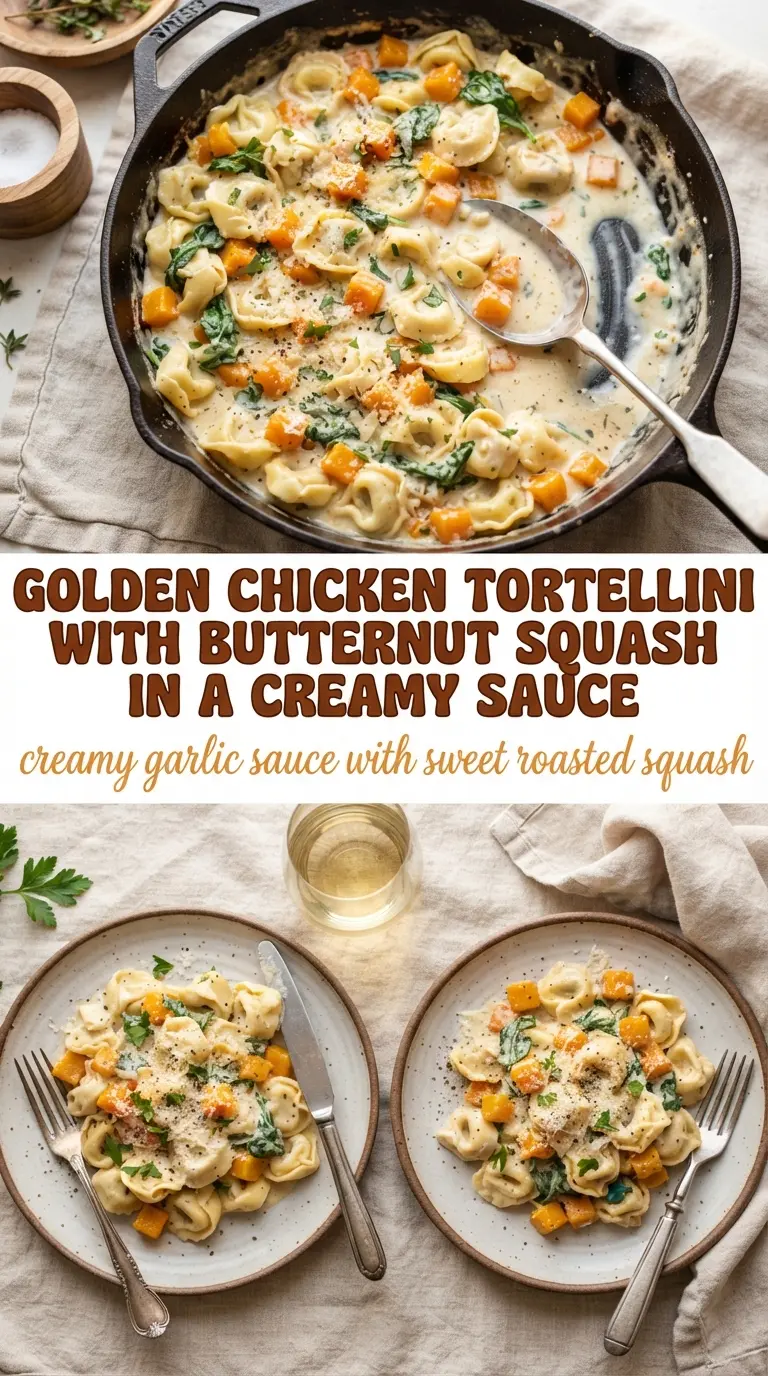
- Boneless chicken breasts — Cubing them before cooking gives you more browned surface area and keeps the meat from drying out before the tortellini is done. Chicken thighs work too if you want a little more richness, and they stay juicy even if the pan runs hot for a minute.
- Butternut squash — This is what gives the dish its sweet, autumn edge and helps the sauce feel fuller. Fresh squash is worth it here; frozen cubes can work in a pinch, but they release more water and won’t brown as nicely.
- Refrigerated cheese tortellini — Fresh tortellini cooks fast and holds its shape in the sauce. Dried tortellini needs a different timing and usually more liquid, so if that’s what you have, cook it separately and stir it in at the end.
- Heavy cream and Parmesan — This is the base of the sauce, and both matter. The cream gives you body, while the Parmesan adds salt and depth; pre-grated cheese is fine, but shred it yourself if you can, because it melts smoother.
- Fresh spinach — It’s here for color and contrast. Add it at the very end so it wilts from the residual heat instead of turning slick and dark.
- Dried sage — A small amount bridges the squash and the cream without taking over. If you use fresh sage, start with less and add it early with the garlic so it has time to soften.
The 20 Minutes That Actually Matter
Brown the Chicken First
Season the chicken before it hits the pan, then cook it in the olive oil until the edges take on real color. You’re not cooking it all the way through here; you’re building flavor and leaving the center slightly underdone so it can finish later without going dry. If the pieces start to steam instead of sear, the pan is crowded, and you’ll lose that browned base that makes the sauce taste deeper.
Soften the Squash in the Pan Drippings
Add the squash with a splash of broth and cover the skillet so the steam can do part of the work. After about 8 minutes, the cubes should be tender enough to pierce with a fork but still hold their shape. If they’re falling apart before the tortellini goes in, the heat was too high or the pieces were cut too small.
Build the Cream Sauce Gently
Stir in the garlic, the remaining broth, cream, and sage, then bring everything to a simmer. Keep it calm. Garlic burns fast once the pan is dry, and cream can separate if it boils hard. You want small bubbles around the edges and a sauce that looks slightly thicker before the pasta goes in.
Finish with the Tortellini, Chicken, and Spinach
Add the tortellini and cook just until it’s tender according to the package timing, then return the chicken to the pan. Fold in the spinach and Parmesan last so the cheese melts into the sauce instead of clumping and the spinach stays bright. If the sauce looks too loose at this point, give it another minute or two uncovered; it will tighten as the tortellini finishes and the cheese melts.
How to Adapt This for a Bigger Pan, a Lighter Meal, or a Dairy-Free Version
Use chicken thighs for a richer skillet
Boneless thighs bring more flavor and stay juicier if you get distracted for a minute. They also make the sauce taste a little rounder, which works well with the sweetness of the squash.
Make it gluten-free with gluten-free tortellini
Use a gluten-free cheese tortellini and watch it closely, since some brands soften faster than wheat-based pasta. The sauce and filling carry the dish, so the swap doesn’t cost you much beyond a slightly different bite.
Swap in half-and-half for a lighter sauce
Half-and-half works, but the sauce will be a little thinner and needs a gentler simmer to thicken. If you go this route, don’t let it boil after the cheese goes in or it can break more easily.
Turn it into a vegetarian dinner
Skip the chicken and use vegetable broth, then add extra squash or sautéed mushrooms for more body. The sauce stays satisfying because the tortellini and Parmesan carry enough richness on their own.
Storage and Reheating
- Refrigerator: Store leftovers in an airtight container for up to 3 days. The tortellini will keep absorbing sauce, so the skillet gets thicker by day two.
- Freezer: I don’t recommend freezing this one. Cream sauces and filled pasta both change texture after thawing, and the tortellini can turn soft in a way that’s hard to fix.
- Reheating: Warm it slowly on the stove over low heat with a splash of broth or cream. The common mistake is blasting it in the microwave until the sauce separates and the pasta turns gummy.
Answers to the Questions Worth Asking
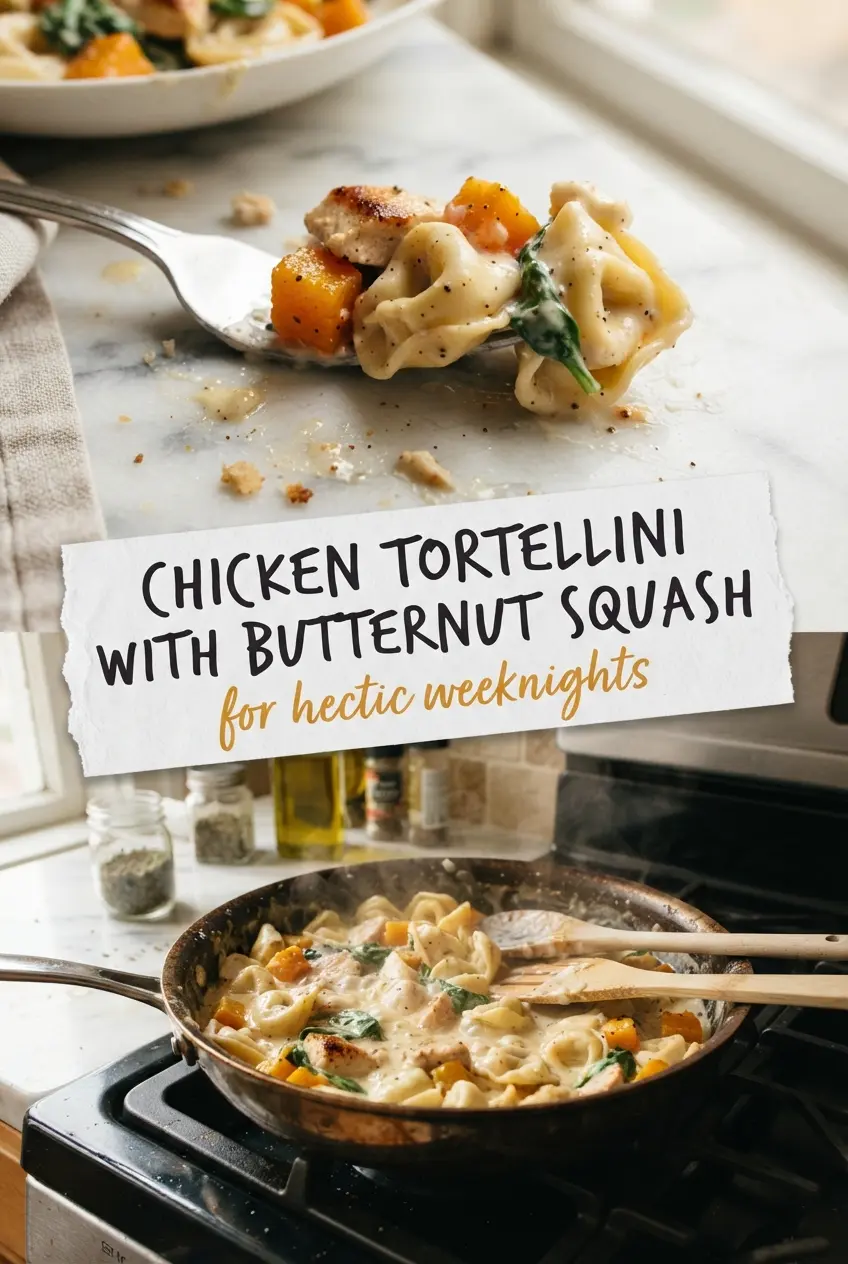
Autumn Chicken Tortellini with Butternut Squash
Ingredients
Equipment
Method
- Heat the olive oil in a large cast iron skillet over medium-high heat, then add the cubed chicken and season with salt and pepper. Cook for 6 minutes, stirring occasionally, until browned and cooked through, then set aside.
- Add the cubed butternut squash to the skillet with a splash of chicken broth, then cover. Cook for 8 minutes until tender, stirring once if needed, and keep the lid on to trap steam.
- Stir in the minced garlic, remaining chicken broth, heavy cream, and dried sage, then bring to a simmer. Keep it at a steady simmer so the sauce thickens slightly, about 2 minutes, until glossy and lightly bubbling.
- Add the refrigerated cheese tortellini and cook according to the package directions. Stir gently during cooking so the pasta is evenly coated and tender, watching for the sauce to bubble around the edges.
- Return the browned chicken to the skillet, then fold in the baby spinach and grated Parmesan. Cook for 1-2 minutes until the spinach wilts and the Parmesan melts, creating a creamy, cohesive sauce; serve immediately.