
Roasted butternut squash turns silky and sweet in the oven, and when you fill those tender halves with browned sausage, softened apples, and sage, you get the kind of dinner that eats like a full meal instead of a side dish. The squash holds its shape, the filling stays savory, and each bite gives you that good contrast between soft, crisp-edged, and just a little sticky from the cranberries.
What makes this version work is the balance. The sausage brings salt and fat, the apples add freshness without turning mushy if you cook them just until barely tender, and the sage cuts through all of it with a sharp, woodsy note. Roasting the squash cut-side down first helps it steam-roast before it caramelizes, which means you get flesh that’s scoopable but not watery.
The squash came out perfectly tender and the filling was balanced instead of too sweet. I loved that the apples held their shape, and the sausage got those browned bits that made the whole dish taste richer.
Save these apple sausage stuffed butternut squash halves for a hearty dinner with sweet apples, savory sausage, and sage in every bite.
The Trick to Keeping the Squash Tender Without Turning the Filling Watery
Butternut squash can go wrong in two opposite ways: it stays hard in the center, or it turns soft enough to collapse before you even fill it. The fix is to roast it cut-side down first, which lets the hot pan do part of the work while the squash traps steam inside. That gives you tender flesh with enough structure to hold the sausage mixture later.
The filling has its own trap. Apples release moisture fast, and if you throw them in too early or cook them until they slump apart, the whole mixture turns loose and dull. Brown the sausage and onion first, then add the apples near the end so they soften but keep a little bite. The cranberries go in at the finish for small bursts of sweetness instead of turning the filling jammy.
What Each Ingredient Is Actually Doing in This Dish
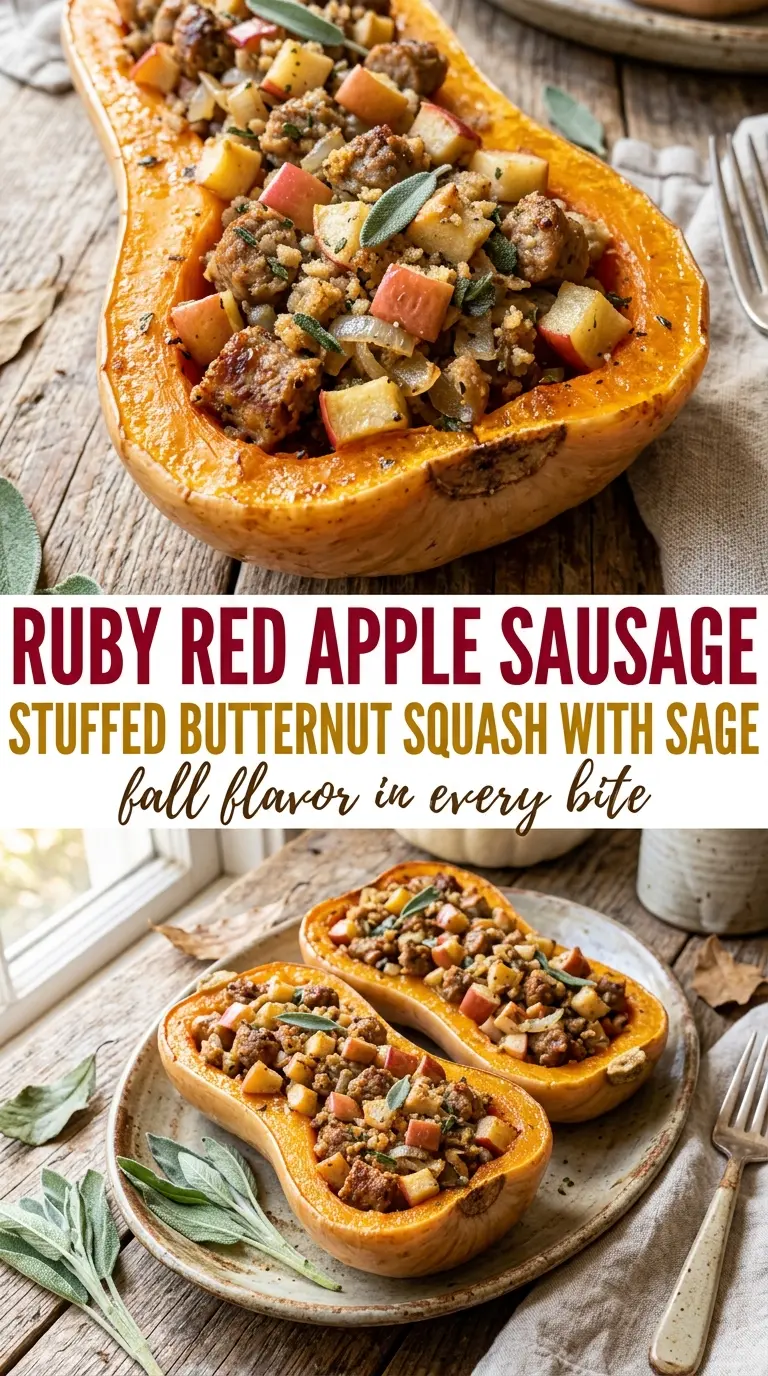
- Butternut squash — This is the edible bowl and the soft, sweet base of the dish. Pick squash that feel heavy for their size and have matte skin. If yours are large or oddly shaped, cut a thin slice off the bottom so the halves sit flat on the pan.
- Breakfast sausage — This gives the filling its salt, fat, and seasoning all at once, which is why it’s better than plain ground pork here. Mild or hot both work; hot sausage gives the dish more backbone. If you use turkey sausage, add a little extra salt and a drizzle of oil because it leans leaner and less rich.
- Apples — Use a firm apple that holds shape, not a mealy one. Granny Smith gives the sharpest contrast, while Honeycrisp or Pink Lady stay a little sweeter. Dice them small enough to fit neatly into the squash, but not so small that they disappear into the filling.
- Sage — Fresh sage matters here because dried sage can read dusty and flat in a dish with sweet squash and apples. Chop it finely so it spreads through the filling instead of clumping. If you only have dried sage, use less than you think you need and bloom it in the sausage fat for a few seconds.
- Dried cranberries — These add little pops of tart sweetness that keep the filling from tasting heavy. If you’re using sweet apples, don’t skip them. Raisins can work in a pinch, but they taste softer and less bright.
- Olive oil — This helps the squash roast instead of drying out. A basic olive oil is fine here because it’s doing a job, not setting the flavor. You just need enough to coat the cut sides so they pick up color and the seasoning sticks.
Building the Filling So Every Bite Stays Balanced
Roasting the Squash Cut-Side Down
Brush the squash halves with oil, season them, and place them cut-side down on the pan. That position matters because it protects the flesh from drying out while the hot pan starts the browning underneath. Pull them when a knife slides in with only a little resistance; if they’re fully collapsing in the oven, they’ll be too soft to stuff cleanly.
Cooking the Sausage and Onion Together
Let the sausage brown before you stir much. You want those dark bits on the bottom of the pan, because they give the filling depth once the apples and sage go in. If the sausage releases a lot of grease, spoon off the excess before adding the apples or the filling can taste greasy instead of rich.
Adding the Apples at the Right Moment
Stir in the diced apples once the sausage is cooked through and the onion is soft. Cook them just until the edges lose their raw crunch and the centers still hold their shape. If they cook too long, they’ll dissolve into the fat and the filling loses its texture contrast.
Stuffing and Finishing in the Oven
Scoop out a little squash flesh if you need more room, but don’t hollow the halves too deeply or they’ll collapse. Pack in the filling so it sits snugly, then return the squash to the oven long enough to heat everything through and let the flavors settle together. You’re looking for hot filling and a squash edge that still slices cleanly, not a pile of soft mash.
How to Adapt These Squash Halves for Different Tables
Make It Dairy-Free Without Losing Richness
This recipe is already dairy-free as written, which is part of why it works so well for a crowd. The sausage fat and roasted squash create enough richness on their own. If you want it even deeper, add a tiny splash of maple syrup or extra cranberries rather than reaching for butter.
Swap in Ground Turkey for a Lighter Filling
Ground turkey works, but it needs help because it doesn’t bring the same built-in seasoning or fat. Add a little extra salt, a drizzle of oil, and maybe a pinch of fennel or poultry seasoning if you want more sausage-like flavor. The texture will be a little leaner and less juicy, but still good.
Turn It Vegetarian With Mushrooms and Walnuts
Swap the sausage for chopped mushrooms and toasted walnuts if you want a meatless version with some chew. Cook the mushrooms long enough to drive off their moisture, or the filling will go soggy. The walnuts add the missing richness and make the stuffing feel substantial instead of like a side dish.
Storage and Reheating
- Refrigerator: Store leftovers in an airtight container for up to 4 days. The squash softens a little more as it sits, but the filling stays flavorful.
- Freezer: It freezes well, though the squash texture gets softer after thawing. Wrap individual halves tightly or freeze the filling separately for the best result.
- Reheating: Warm in a 350°F oven, covered loosely with foil, until hot in the center. The mistake to avoid is microwaving it straight from cold for too long, which can make the squash collapse before the filling heats evenly.
Questions I Get Asked About This Recipe
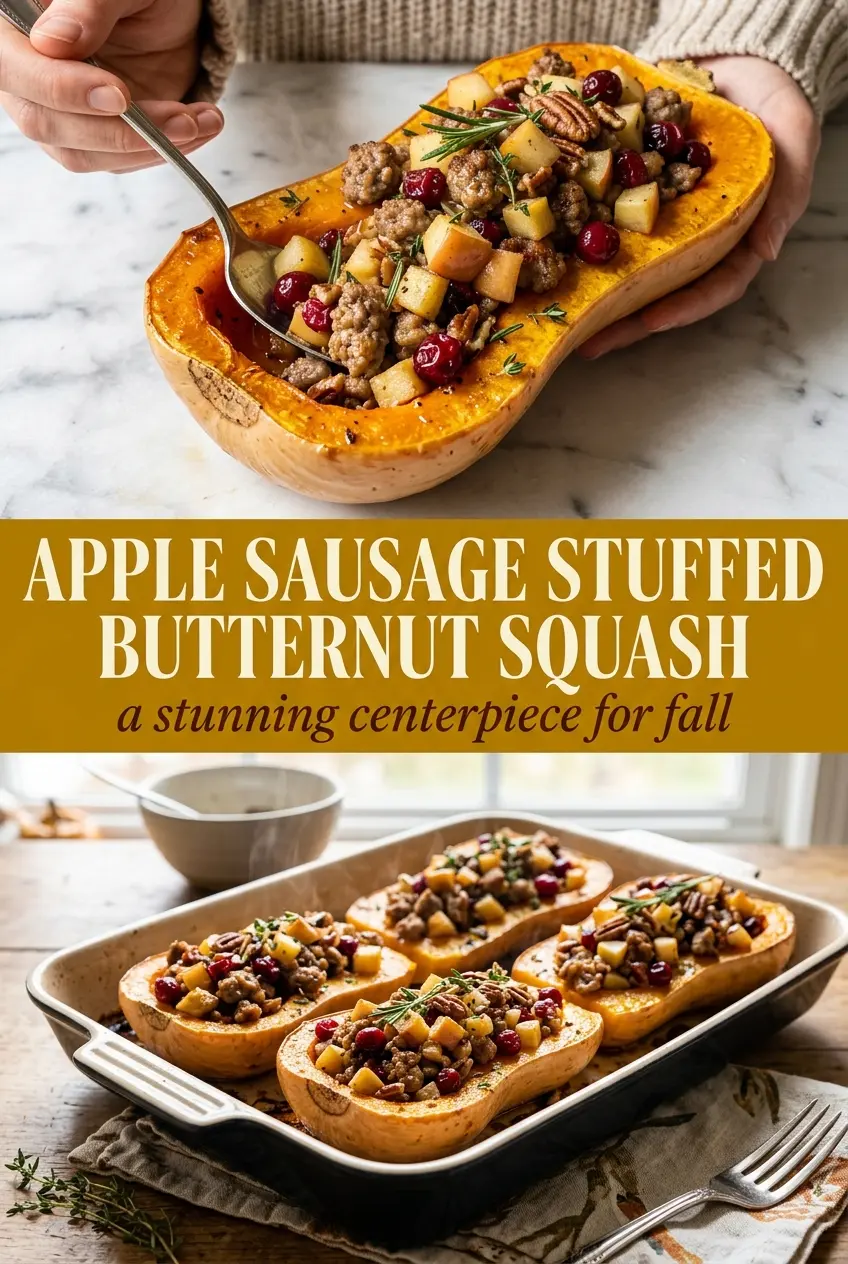
Apple Sausage Stuffed Butternut Squash
Ingredients
Equipment
Method
- Brush the butternut squash halves with 2 tbsp olive oil, then season generously with salt and pepper. Roast at 400°F for 35-40 minutes until tender, aiming for a fork-tender texture.
- Roast the squash cut-side down first on a sheet pan so it cooks faster and more evenly, then leave it on the pan while you prepare the filling. Use the same 400°F oven time window until the squash is soft enough to scoop.
- Brown the breakfast sausage with the diced onion in a skillet over medium heat until cooked through. Continue stirring as the sausage crumbles so there are no large raw pockets.
- Add the diced apples and cook until slightly softened, stirring to coat them in the sausage drippings. Cook for a few minutes until the apples hold their shape but soften at the edges.
- Stir in the chopped fresh sage and dried cranberries and cook until fragrant. Keep stirring for about 1 minute so the sage blooms and the cranberries warm through.
- Scoop out a little squash flesh from each half to make room, keeping a sturdy shell. Leave enough squash so the bowls don’t collapse while baking.
- Fill each squash half with the sausage-apple mixture, mounding it so the tops are level to slightly domed. Pack gently so the filling stays in place.
- Return the stuffed squash to the oven and bake at 400°F for 10 more minutes to heat through. The filling should be hot and the squash should stay tender without drying out.