
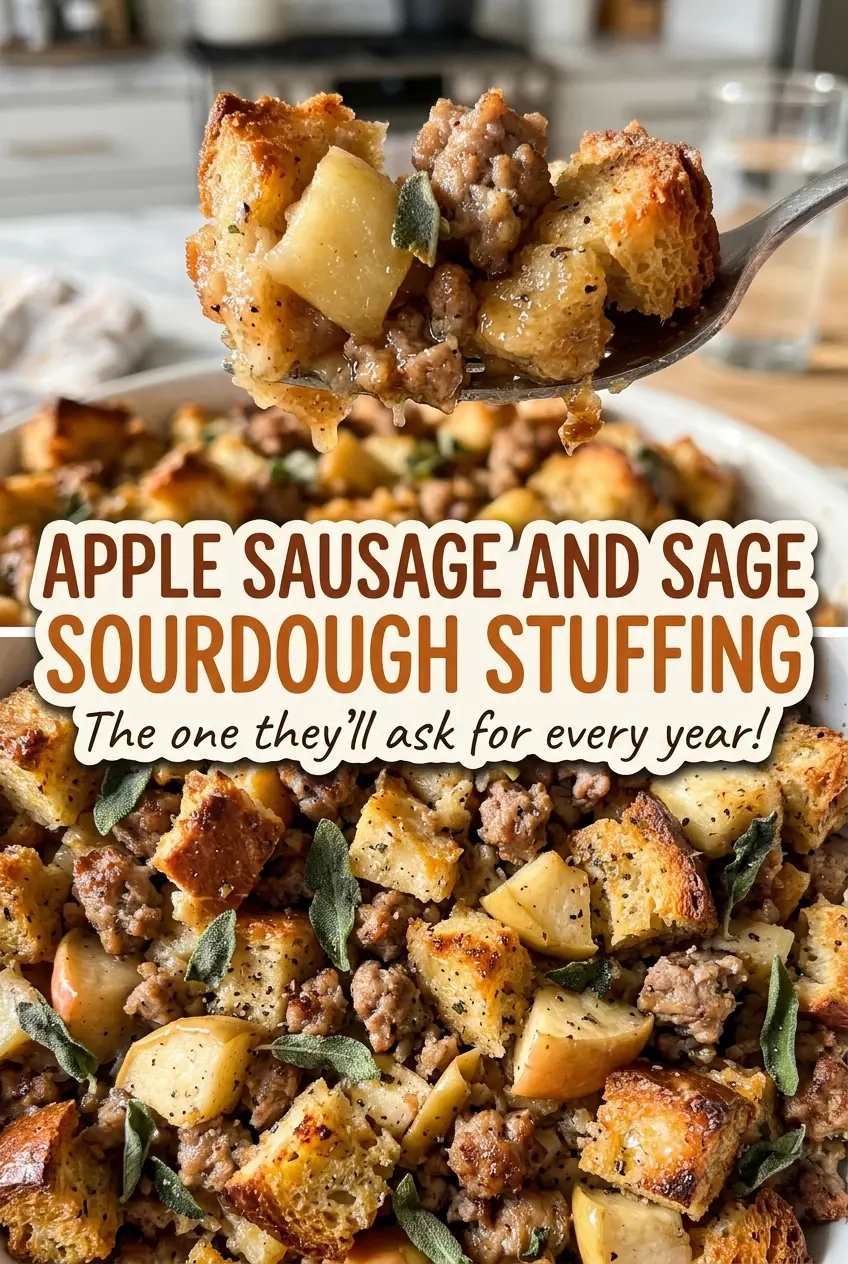
When butter hits the sausage drippings, the onion and celery start to smell savory before the apple even softens. That skillet is where the flavors come together for this Apple Sausage and Sage Sourdough Stuffing, while the sourdough brings a pleasant tang that keeps the rich pork and sweet apple in balance.
I dry the bread cubes in a low oven before mixing them with the sausage and vegetables. It’s a small bit of planning that gives the bread room to take in the broth and eggs without collapsing. Then the covered bake keeps the middle tender, and uncovering the dish gives the top time to turn golden. Each spoonful brings soft bread, browned sausage, and little bites of tart apple.
Kitchen Note
Give the bread mixture its full 10-minute stand after you add the broth and eggs. The cubes absorb the liquid during that pause, so the casserole bakes up evenly instead of leaving a wet pocket at the bottom.
Save this Apple Sausage and Sage Sourdough Stuffing for a golden-topped casserole with tart apple, savory sausage, and plenty of sage.
Why Dry Sourdough Makes Better Stuffing Than Soft Bread
Stuffing needs to hold two textures at once: a tender, broth-soaked center and a top that can brown in the oven. Drying the sourdough first gives the cubes structure. Bread that still feels soft and bendable has less room to absorb the broth, so it can turn heavy before the center has a chance to bake through.
The sourdough’s firm crumb and mild tang do useful work here. It takes on the savory liquid without disappearing, and its slight acidity balances the pork sausage and butter. The eggs help the mixture set as it bakes, but they can’t fix bread that has already turned to mush. Aim for cubes that feel dry all the way through, not just toasted on the outside; that gives the broth somewhere to go while leaving enough structure for distinct pieces in the finished dish.
What the Sourdough, Sausage, and Apple Each Bring
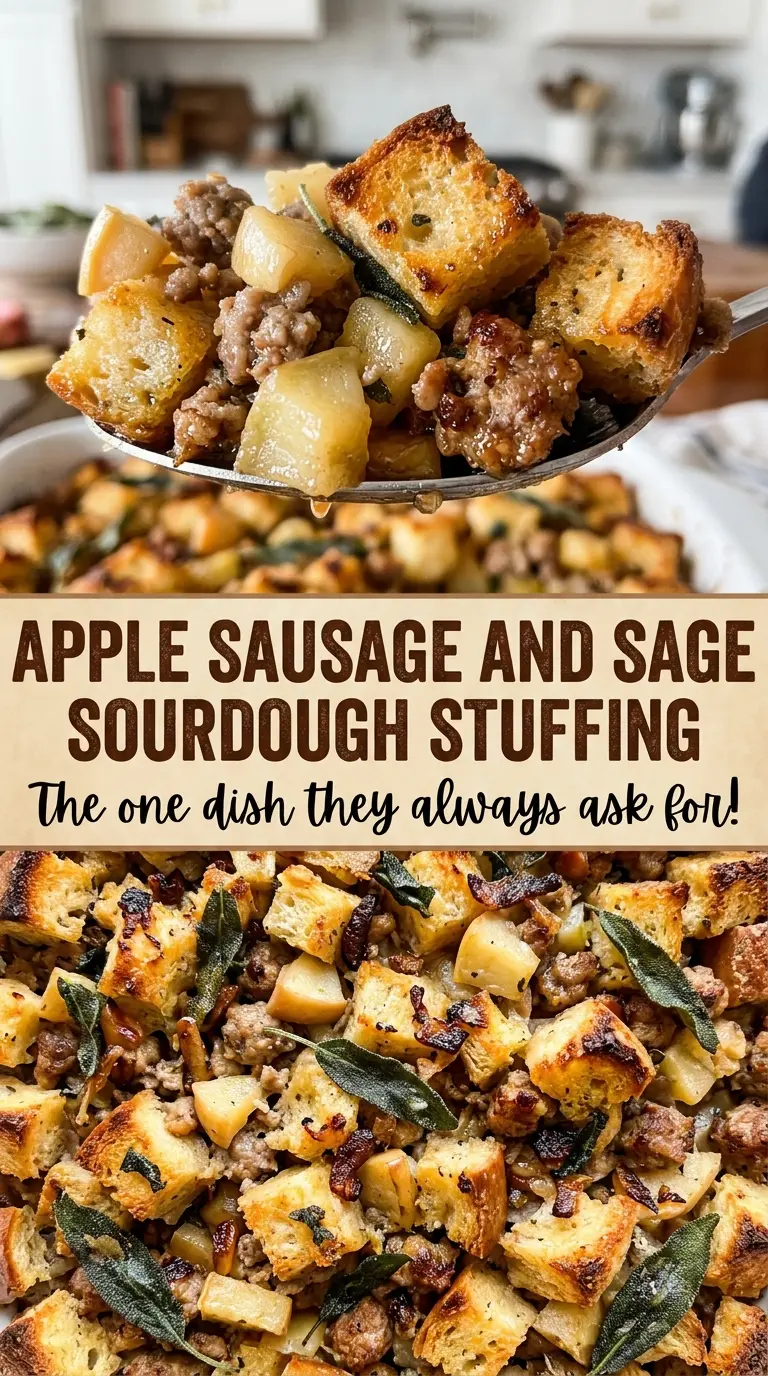
- Sourdough bread — A sturdy loaf with a chewy crumb gives the casserole its shape and a little tang. It doesn’t need to be stale; drying it in the oven handles that part. Cut the cubes evenly so they dry at about the same pace.
- Bulk pork sausage — This brings savory seasoning and rendered fat to the skillet. Bulk sausage is the right form for this method because it browns in small pieces and leaves drippings behind for the vegetables. A basic package works well; the sausage’s own seasoning already adds plenty of character.
- Granny Smith apple — Its tartness keeps the stuffing from tasting too rich, and the pieces add a soft, fruity contrast to the bread. Core it before dicing so the firm center cooks along with the rest of the fruit.
- Onion, celery, butter, and fresh sage — The onion and celery make a savory base, while butter carries the sage through the pan. Fresh sage has a more fragrant, rounded aroma than a pinch of dried herbs, so chop it just before cooking for the clearest flavor.
- Low-sodium chicken broth and eggs — The broth moistens the cubes, and the eggs help the stuffing set into a cohesive bake. Low-sodium broth gives you more control over salt because the sausage is seasoned too. Whisk the eggs thoroughly into the broth so they’re distributed throughout the dish.
Building the Stuffing Without Soggy Bread or a Pale Top
Dry the Cubes Before They Meet the Broth
Heat the oven to 250°F and spread the bread cubes on a large rimmed baking sheet. Bake them for 45 to 60 minutes, stirring once halfway through, until they’re completely dry. The timing depends on how quickly the loaf dries, so check the texture rather than relying only on the clock. Transfer the cubes to a large bowl, then increase the oven to 350°F and grease a 9×13-inch baking dish.
Brown the Sausage in Its Own Drippings
Cook the bulk pork sausage in a 12-inch skillet over medium heat for 8 to 10 minutes, breaking it into small pieces as it cooks. Look for browned crumbles with no pink remaining. Transfer the sausage to the bowl of bread, but leave the drippings in the skillet. Those browned bits and rendered fat are the flavorful base for the vegetables.
Soften the Apple and Vegetables in the Same Skillet
Melt the butter in the skillet, then add the onion, celery, apple, and chopped sage. Cook for 6 to 8 minutes, stirring occasionally, until the vegetables are tender. If the onion still feels firm, give it a little more time rather than moving on early. Add everything from the skillet to the bread and sausage, then toss to distribute it.
Moisten, Rest, and Bake Until Set
Whisk the chicken broth with the eggs, kosher salt, and black pepper, then pour it over the bread mixture and toss until evenly moistened. Let the mixture stand for 10 minutes before transferring it to the prepared baking dish. Cover with foil and bake for 25 minutes, then uncover and bake for 20 to 25 minutes more, until the top is golden and the center reaches 165°F. Let the dish rest for 10 minutes before serving so the center settles and portions hold together.
Small Changes for a Different Texture or Easier Timing
Make the apple bites more noticeable
Cut the Granny Smith into pieces a little larger than a small dice, keeping the same apple and the rest of the ingredients unchanged. The fruit will stay more distinct in the finished stuffing and bring a brighter, tart bite against the soft bread.
Get some of the prep done ahead
Dry the bread cubes and cook the sausage and vegetable mixture a day ahead. Keep the bread airtight at room temperature and refrigerate the cooked sausage mixture; combine everything with the broth and eggs just before baking. This splits up the hands-on work without leaving the bread sitting in liquid.
Storage and Reheating
- Refrigerator: Refrigerate leftovers within 2 hours and eat within 3 to 4 days. The bread softens as it sits, though the flavors stay savory and well blended.
- Freezer: Freeze cooled portions in airtight containers for up to 2 months for best quality. Thaw overnight in the refrigerator before reheating.
- Reheating: Cover the stuffing and warm it in a 350°F oven until hot throughout; uncover near the end if you’d like to bring back some crispness on top. Avoid reheating it uncovered for the entire time, which can dry out the bread.
Questions That Come Up When Making This Stuffing
Apple Sausage and Sage Sourdough Stuffing
Ingredients
Equipment
Method
- Preheat the oven to 250°F.
- Spread the bread cubes on a large rimmed baking sheet.
- Bake for 45–60 minutes, stirring once halfway through, until completely dry.
- Transfer the dried bread cubes to a large bowl.
- Increase the oven temperature to 350°F.
- Grease a 9x13-inch baking dish.
- Cook the sausage in a 12-inch skillet over medium heat for 8–10 minutes, breaking it into small pieces, until browned and cooked through.
- Transfer the sausage to the bowl with the bread, leaving the drippings in the skillet.
- Melt the butter in the skillet.
- Add the onion, celery, apple, and sage, and cook for 6–8 minutes, stirring occasionally, until the vegetables are tender.
- Add the vegetables to the bread and sausage, and toss.
- Whisk together the broth, eggs, salt, and pepper.
- Pour the broth mixture over the bread mixture, and toss until evenly moistened.
- Let the mixture stand for 10 minutes.
- Transfer the mixture to the prepared baking dish and cover with foil.
- Bake for 25 minutes.
- Uncover and bake for 20–25 minutes more, until golden on top and the center reaches 165°F.
- Let the stuffing rest for 10 minutes before serving.