
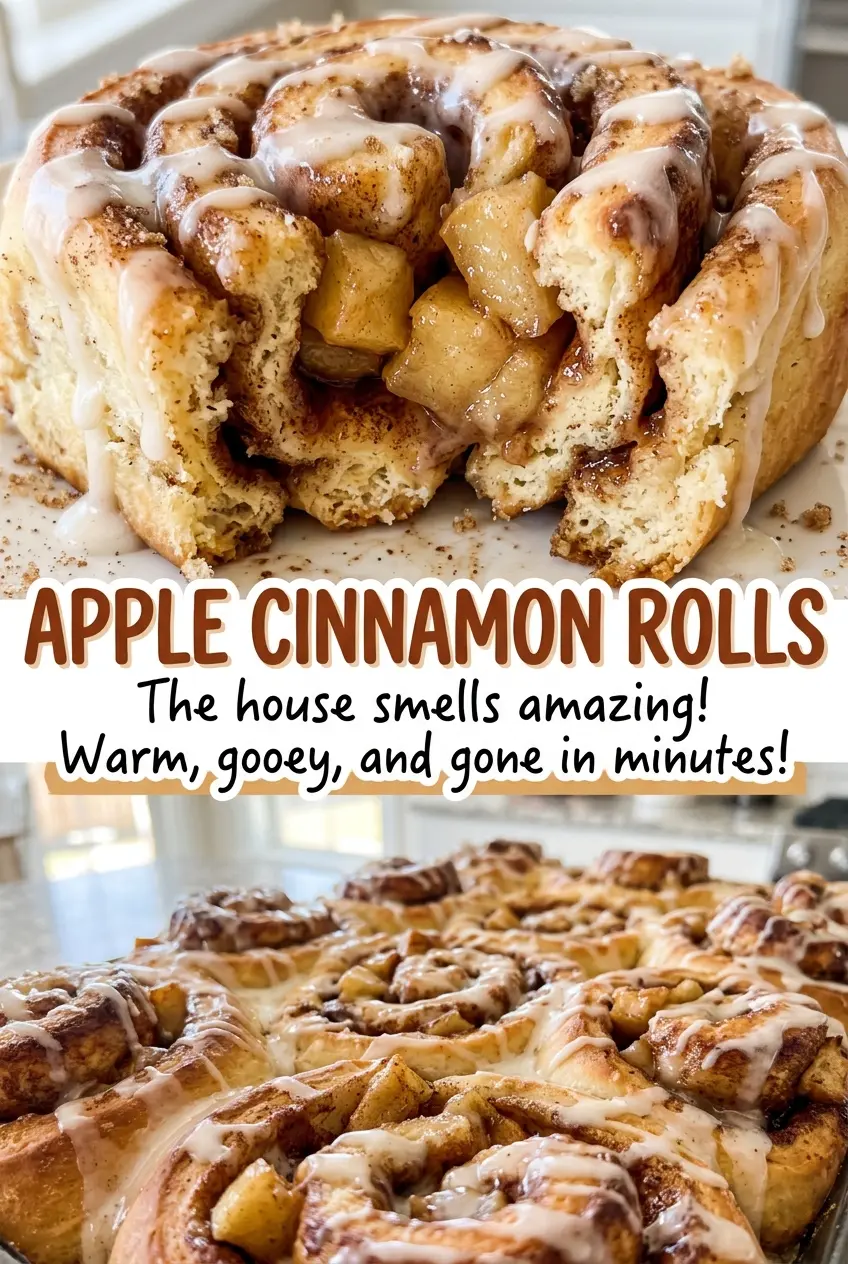
The apple filling starts glossy and loose in the saucepan, then turns thick enough to cling to the diced fruit. That change matters once it’s spread over soft dough: a watery filling can seep out as the rolls bake, while a syrupy one stays tucked into the spirals. I cook the apples until tender and let the filling cool completely before shaping these apple cinnamon rolls.
The dough is enriched with milk, egg, and butter, so it bakes up soft rather than bready or tough. Give it time to rise until doubled, then roll it snugly around the apples so every slice has a clear swirl.
A simple vanilla glaze goes over the rolls while they’re warm, slipping into the cinnamon-scented layers without covering them up. The centers stay tender, the edges turn golden, and each bite has a little tart apple tucked into the soft dough.
Kitchen Note
Let the melted butter cool before it goes into the dough. Butter that’s still hot can interfere with the yeast, and there’s no reason to rush that small pause.
Save these Apple Cinnamon Rolls for a morning when you want tender dough, soft cinnamon apples, and a simple vanilla glaze.
Why Raw Apples Can Leave a Wet Pocket in the Middle
Fresh apples release moisture as they heat. When the fruit is rolled into dough while still raw, that liquid has nowhere to go; it can soak into the layers and leave a damp band where the cinnamon swirl should be. Cooking the filling first gives that moisture time to evaporate, while the brown sugar and cinnamon turn it into a thick syrup that coats the fruit.
Watch the pan rather than relying only on the clock. After 8 to 10 minutes over medium heat, the apple pieces should be tender and the syrup should cling to them, with no watery liquid pooling around the edges. If you stop while the mixture still looks runny, the filling will spread more easily when you roll the dough. Cooling it completely also keeps the dough from becoming soft and difficult to shape. A shallow bowl helps the filling cool evenly, so the center isn’t still warm when you’re ready to spread it.
What the Apples, Yeast, and Enriched Dough Each Bring
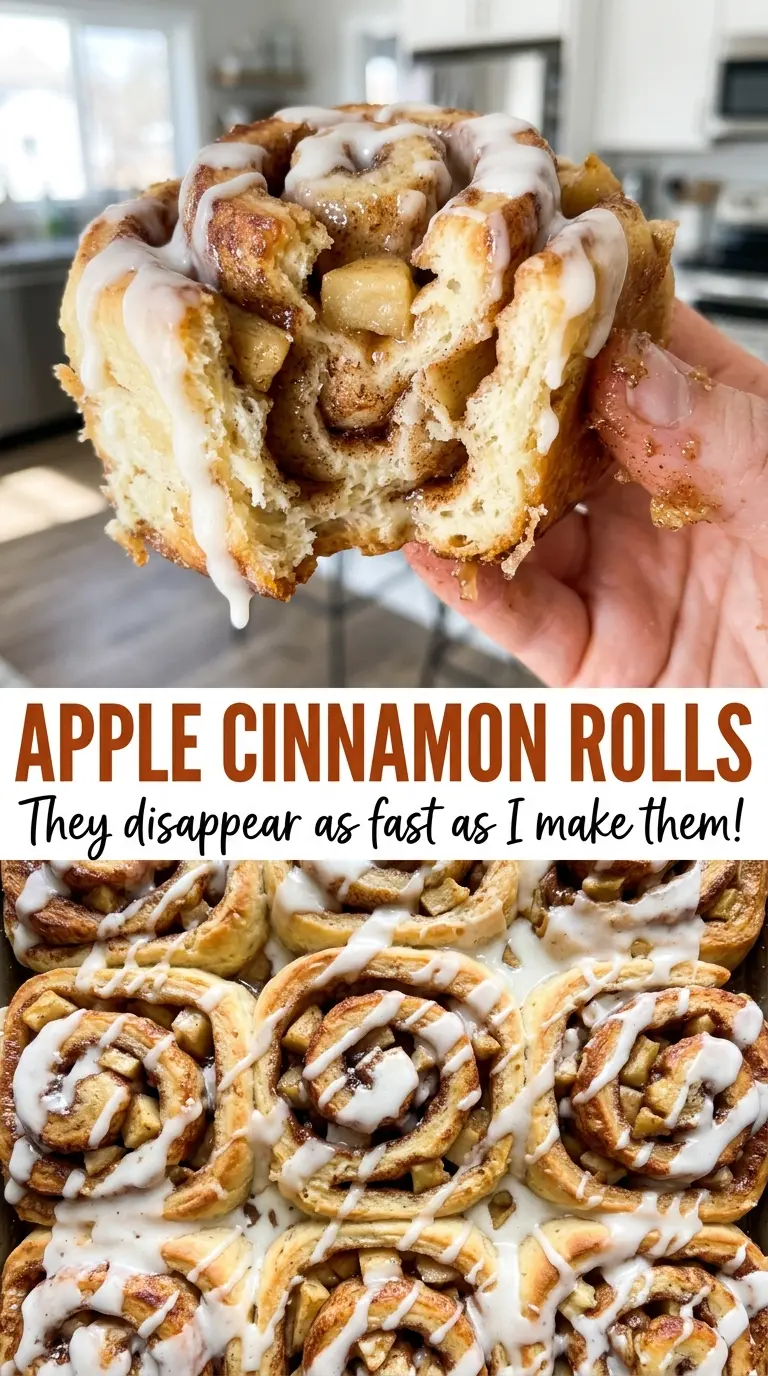
- Granny Smith apples — Their tartness balances the brown sugar, and they hold their shape as they cook. Another firm apple works in the same quantity, though a sweeter variety makes the filling less tart. Peeling and finely dicing the fruit helps it turn tender in the short stovetop cook.
- Active dry yeast — This yeast needs a warm, sweet liquid to wake up before it goes into the dough. Instant yeast is the closest swap; use the same quantity and stir it into the flour rather than waiting for it to foam separately. The timing and mixing order change, so active dry yeast is the simplest choice if you want to follow the steps below closely.
- Whole milk, egg, and butter — Together, these make the dough tender and rich. Whole milk gives it more body than a thin, low-fat milk, while the egg helps the dough hold its shape. For a dairy-free version, use unsweetened plant milk in both places milk appears and dairy-free butter in the dough, keeping the same measured amounts; the rolls may be a little less rich.
- All-purpose flour — It gives these rolls enough structure to hold the apple filling while keeping the crumb soft. Bread flour has more protein and tends to make a chewier roll, so all-purpose flour is the better fit here. Measure it without packing it tightly into the cup, which can leave the dough dry before kneading.
- Light brown sugar and cinnamon — Brown sugar melts into the apple juices and forms the filling’s syrup; cinnamon gives that syrup its familiar warmth. Packed brown sugar keeps the intended sweetness and moisture. Ground cinnamon from an ordinary pantry jar works well, so there’s no need to seek out a specialty variety.
From Thick Apple Filling to Soft, Spiraled Rolls
Cook the apples until the syrup clings
Combine the water, finely diced apples, brown sugar, and cinnamon in a medium saucepan over medium heat. Stir often as the apples soften and release juice. The filling is ready when the apples are tender and the syrup is thick, with no watery liquid left in the pan; this takes 8 to 10 minutes. Transfer it to a shallow bowl and let it cool completely before it touches the dough.
Wake the yeast and bring the dough together
Heat the milk for the dough to 105–110°F, then stir in the active dry yeast and granulated sugar. Leave the mixture for 5 to 10 minutes, until a layer of foam forms on top. Whisk in the egg, cooled melted butter, and salt, then stir in the flour until you have a shaggy dough with no loose patches of flour. If the mixture hasn’t foamed, pause before adding the other ingredients and check the FAQ below.
Knead until smooth, then let the dough double
Knead the dough on a clean counter for 8 to 10 minutes. It should become smooth and elastic, with a slight tackiness rather than a wet, sticky feel. Set it in a large bowl lightly coated with cooking spray, cover it, and let it rise at room temperature for 1 to 1½ hours. Look for dough that has doubled in size, not just a certain number of minutes on the clock.
Roll, fill, and give the slices a second rise
Lightly coat a 9×13-inch baking dish with cooking spray, then roll the risen dough into a 16×12-inch rectangle on a clean counter. Spread the cooled filling evenly over it, leaving a ½-inch border, and roll tightly from a long side; pinch the seam closed so the log stays together as you cut it. Cut the log into 12 equal slices and set them cut-side up in the dish. Cover and let them rise for 30 to 45 minutes, until puffy, while the oven heats to 350°F.
Bake until golden and glaze while warm
Bake the rolls for 25 to 30 minutes, until they’re golden brown and the centers are baked through. If the tops are already golden but the centers still look underbaked, give them the remaining bake time rather than taking the pan out early. Rest the rolls in the pan for 10 minutes. Whisk the powdered sugar, reserved milk, and vanilla until smooth, then drizzle the glaze over the warm rolls.
Simple Ways to Adapt These Apple Cinnamon Rolls
Choose a sweeter apple
Swap the Granny Smith apples for another firm variety, keeping the same quantity and prep. The fruit should still hold its shape in the saucepan, but a sweeter apple will make the finished filling taste milder and less tart.
Make the rolls dairy-free
Use unsweetened plant milk wherever the recipe uses milk, including in the glaze, and replace the butter with dairy-free butter. Keep the same amounts and leave the egg in place. The rolls will still be soft, though they’ll have a slightly less rich taste.
Leave off the glaze
Skip the powdered sugar glaze for a less-sweet finish that puts the apple and cinnamon filling forward. The rolls will be a little less glossy, but the dough and filling don’t need the glaze to hold together.
Storage and Reheating
- Refrigerator: Keep covered for up to 4 days. The dough will firm up in the fridge, so warm a roll before eating for a softer texture.
- Freezer: Freeze fully cooled rolls in an airtight container for up to 2 months. They freeze best without glaze; add freshly made glaze after reheating.
- Reheating: Warm an individual roll in the microwave for about 15 seconds, then add glaze if needed. Longer heating can dry out the dough, so use short bursts rather than leaving it in until piping hot.
Questions That Come Up When Making Apple Cinnamon Rolls
Apple Cinnamon Rolls
Ingredients
Equipment
Method
- Combine the water, apples, brown sugar, and cinnamon in a medium saucepan over medium heat; cook, stirring often, for 8-10 minutes, until the apples are tender and the syrup is thick with no watery liquid remaining.
- Transfer the filling to a shallow bowl and cool completely.
- Heat 1 cup of the milk to 105-110°F in a microwave-safe measuring cup or small saucepan, then stir in the yeast and granulated sugar and let stand for 5-10 minutes, until foamy.
- Whisk in the egg, melted butter, and salt, then stir in the flour until a shaggy dough forms.
- Knead the dough on a clean counter for 8-10 minutes, until smooth and elastic; it should feel slightly tacky.
- Lightly coat a large bowl with cooking spray and place the dough in the bowl.
- Cover the dough and let rise at room temperature for 1-1 1/2 hours, until doubled in size.
- Lightly coat a 9x13-inch baking dish with cooking spray.
- Roll the dough into a 16x12-inch rectangle on a clean counter.
- Spread the cooled apple filling evenly over the dough, leaving a 1/2-inch border.
- Roll the dough up tightly from a long side and pinch the seam closed.
- Cut the roll into 12 equal slices and arrange them cut-side up in the baking dish.
- Cover the rolls and let rise for 30-45 minutes, until puffy, while the oven heats to 350°F.
- Bake for 25-30 minutes, until the rolls are golden brown and the centers are baked through.
- Let the rolls rest in the pan for 10 minutes.
- Whisk the powdered sugar, reserved 1/4 cup milk, and vanilla in a medium bowl until smooth.
- Drizzle the glaze over the warm rolls.