
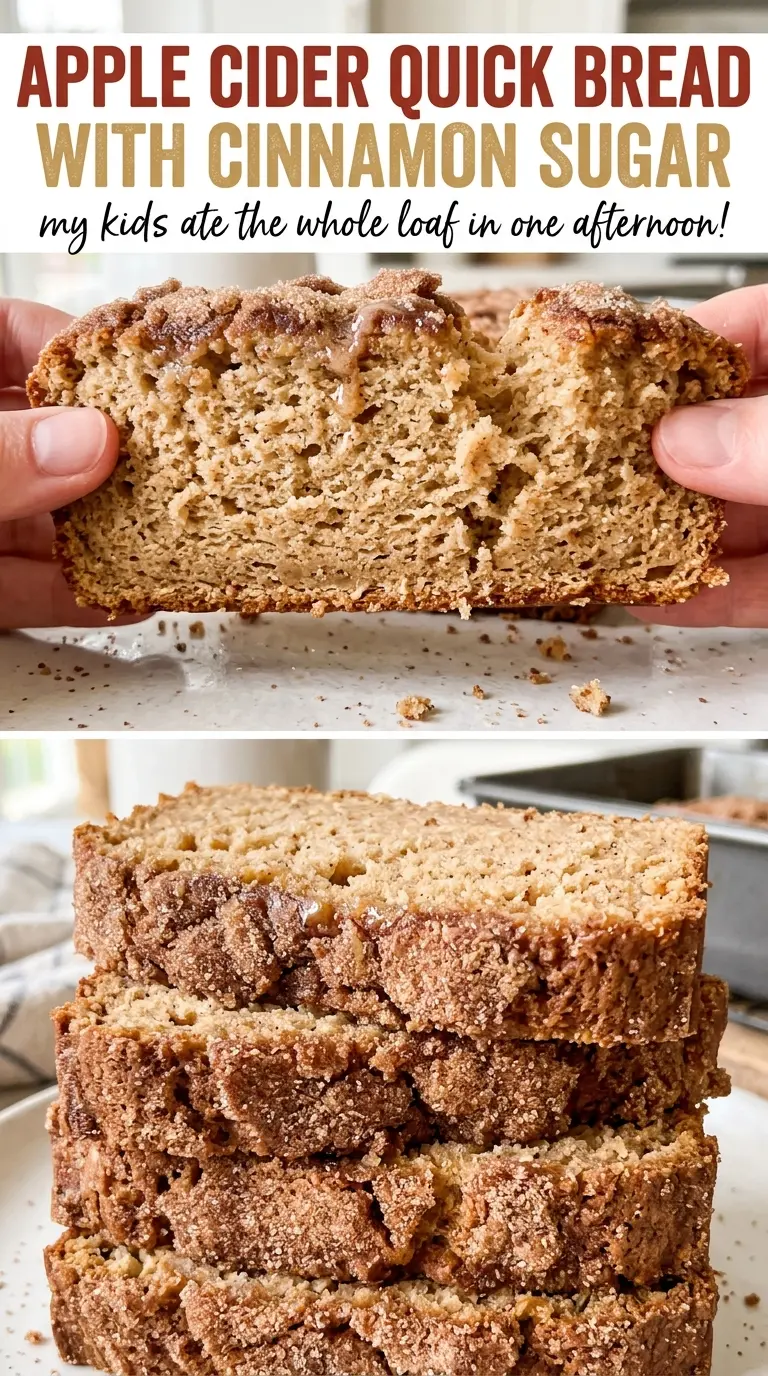
The top of a quick bread can look ready before the middle has finished baking. I check the center rather than trusting the color of the crust; for this apple cider quick bread, a few moist crumbs on the toothpick are just right, while streaks of wet batter mean it needs more time. That small distinction keeps the loaf tender without leaving a raw stripe down the middle.
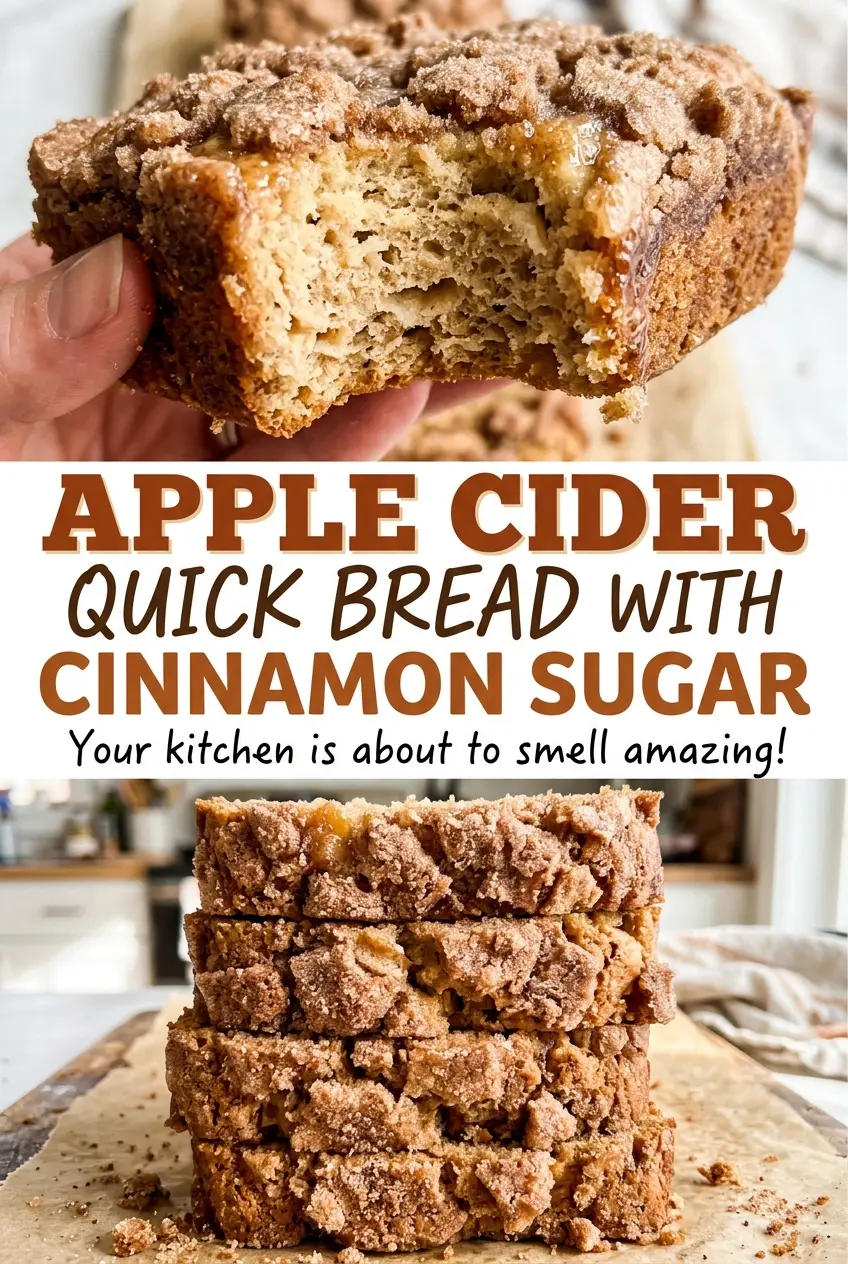
The cinnamon sugar goes over the batter, not into it, so each slice gets a lightly crisp top and a gentle cinnamon finish around the apple cider flavor. I also fold the wet mixture into the dry ingredients only until the flour disappears. The result is a simple loaf with a soft crumb, a fragrant top, and enough cider character to make it taste like more than plain sweet bread.
Kitchen Note
Let the melted butter cool before whisking it with the eggs. If it’s still hot, it can partially set the eggs and leave the wet mixture streaky instead of smooth.
Save this apple cider quick bread for a cozy bake: tender slices, a cinnamon-sugar top, and a loaf-pan method that keeps the crumb soft.
Why This Loaf Has a Cinnamon-Sugar Crust, Not Cinnamon in Every Bite
Keeping the cinnamon in the topping gives this loaf a different balance from a spice cake. The batter stays focused on the apple cider, brown sugar, and vanilla, while the cinnamon sugar forms a thin, fragrant layer on the surface. That contrast is easy to miss if you’re used to stirring cinnamon through the whole bowl, but it’s what lets the cider come through clearly in each slice.
The topping also changes the first bite. Granulated sugar stays distinct from the softer crumb as it bakes, creating a lightly crisp finish instead of making the whole loaf taste uniformly spiced. Spread it evenly over the batter so you don’t end up with one bare edge and one overly sweet patch. There’s no need to press it down; the batter holds the sugar in place as the loaf rises.
What Gives This Loaf Its Cider-First Flavor
- Apple cider — It brings the apple flavor and liquid the batter needs. Plain, nonalcoholic cider keeps the taste on track; a familiar grocery-store cider works well, so there’s no need to seek out a specialty bottle.
- All-purpose flour — It gives the loaf enough structure to rise and slice cleanly. Regular all-purpose flour is the right choice here; swapping in a much heavier flour can make the crumb dense.
- Light brown sugar — Its molasses notes sit naturally beside the cider and help keep the loaf tender. Break up any firm lumps before mixing so they don’t leave sweet pockets in the finished bread.
- Eggs — They bind the batter and help it set as it bakes. Whisk them until the yolks and whites are blended, rather than dropping them into the flour separately.
- Unsalted butter — Melted butter adds richness without making the loaf oily. Unsalted butter gives you control over the salt level, and a standard grocery-store butter is all you need.
- Baking powder — This is the lift that keeps the loaf from baking up heavy. If yours has been open for a long time, check that it’s still fresh before starting.
- Vanilla extract — It rounds out the brown sugar and apple notes without taking over. Standard vanilla extract works; an expensive bottle won’t make or break this loaf.
- Granulated sugar and cinnamon — Together they make the crisp, cinnamon-scented cap. Stir them thoroughly in a small bowl so the cinnamon is spread through the sugar rather than landing in concentrated spots.
Mixing and Baking the Loaf Without a Tough or Doughy Center
Prepare the Pan and Dry Mixture
Heat the oven to 350°F and grease a 9×5-inch loaf pan, including the corners. Whisk the flour, brown sugar, baking powder, and salt together in a large bowl. Break apart any brown sugar lumps as you whisk so the dry mixture looks even before the liquid goes in.
Whisk the Wet Ingredients, Then Fold
In a medium bowl, whisk the eggs, apple cider, cooled melted butter, and vanilla until combined. Pour that mixture into the flour bowl and fold gently, scraping along the bottom and sides. Stop as soon as no dry flour remains; a few small lumps are better than a smooth batter that’s been worked too much.
Scatter on the Cinnamon Sugar
Stir the granulated sugar and cinnamon together in a small bowl until the color looks consistent. Scrape the batter into the greased pan and level it enough to fill the corners. Sprinkle the topping across the surface in an even layer, keeping extra piles from collecting along the sides.
Bake to Moist Crumbs, Then Cool
Bake for 55 to 65 minutes. A toothpick inserted in the center should come out with a few moist crumbs, not wet batter; a completely clean toothpick can mean the loaf has gone a little too far. Let the bread cool in the pan for 15 minutes, then move it to a wire rack and let it cool before slicing so the tender center has time to set.
Easy Changes That Keep the Loaf’s Texture in Balance
Use apple juice for a milder loaf
Replace the apple cider with the same amount of apple juice. The loaf will taste a little sweeter and less cider-forward, but the liquid still works in the batter without changing the method.
Make it dairy-free with a baking stick
Use an equal amount of unsalted plant-based butter sticks in place of the unsalted butter. Choose a baking stick rather than a soft tub spread, which has a different water content; the loaf will lose some buttery flavor but keep a tender crumb.
Swap in dark brown sugar
Use dark brown sugar in the same amount as the light brown sugar. Its stronger molasses taste will make the loaf a little deeper and less delicate, while keeping the same basic texture.
Storage and Reheating
- Refrigerator: Wrap the cooled loaf tightly and refrigerate for up to 5 days; the crumb will firm up and may feel a little drier when cold.
- Freezer: Freeze the whole cooled loaf or individual slices, wrapped well, for up to 2 months. Thaw wrapped at room temperature so condensation stays on the wrapping rather than the bread.
- Reheating: Warm an individual slice in the microwave for about 10 seconds, then add a few seconds if needed. Long reheating can dry the crumb, so heat briefly rather than trying to warm the entire loaf at once.
Questions That Come Up When Baking Apple Cider Bread
Apple Cider Quick Bread with Cinnamon Sugar
Ingredients
Equipment
Method
- Heat the oven to 350°F and grease a 9x5-inch loaf pan.
- Whisk the flour, brown sugar, baking powder, and salt in a large bowl.
- In a medium bowl, whisk the eggs, apple cider, melted butter, and vanilla until combined, then fold into the flour mixture just until no dry flour remains.
- Stir the granulated sugar and cinnamon together in a small bowl.
- Scrape the batter into the prepared pan and sprinkle the cinnamon sugar evenly over the top.
- Bake for 55 to 65 minutes, until a toothpick inserted in the center comes out with a few moist crumbs.
- Cool in the pan for 15 minutes.
- Transfer the loaf to a wire rack and cool before slicing.