
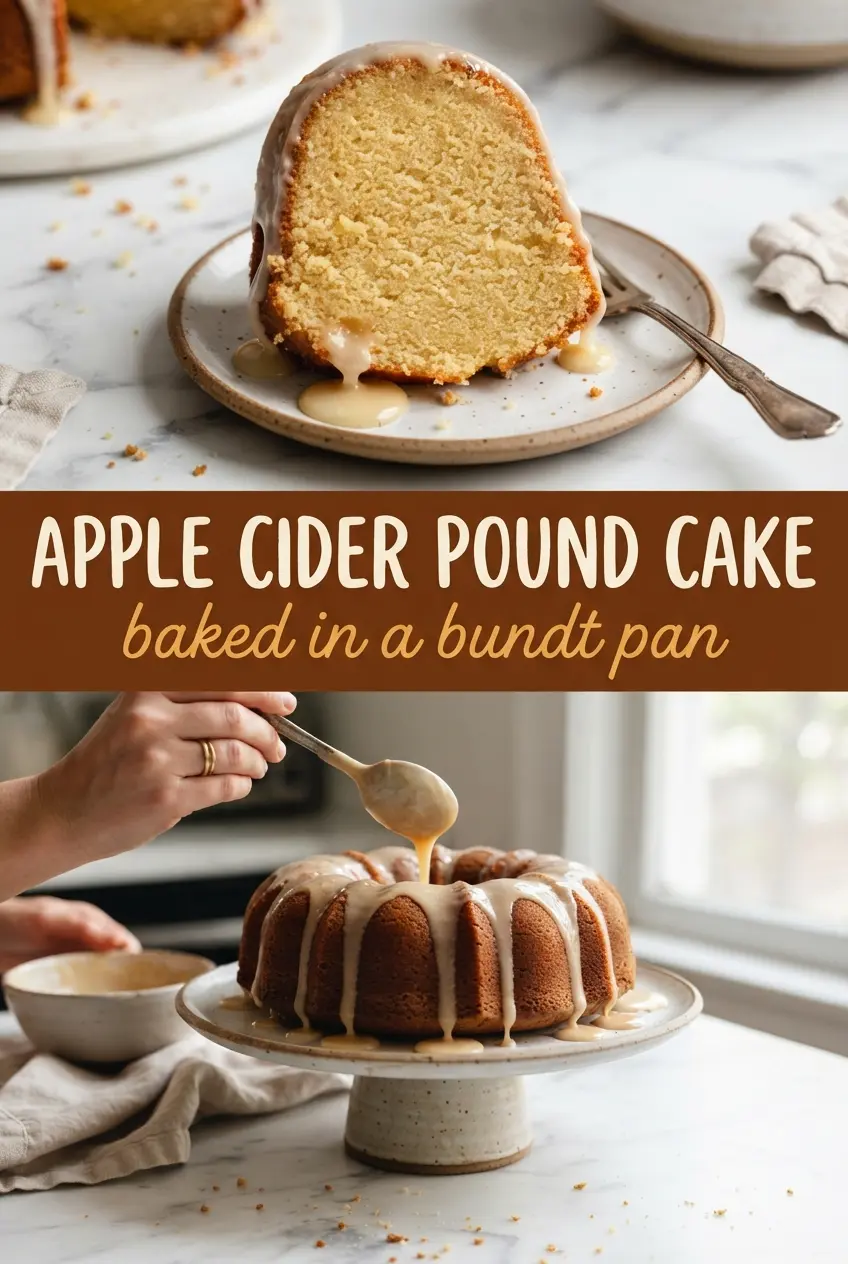
Apple cider pound cake lands in that sweet spot between sturdy and tender: dense enough to slice cleanly, but soft enough that each bite melts a little on the tongue. The cider gives it a warm apple flavor that never turns muddy or too sweet, and the glaze catches in every ridge of the bundt pan so the whole cake looks finished with almost no effort.
What makes this version work is the way the cider is reduced first. That extra step concentrates the flavor without watering down the batter, which matters because pound cake depends on a tight, rich crumb. Sour cream keeps the texture plush, while the butter and sugar are beaten until pale and airy enough to give the loaf a little lift before it settles into that classic dense slice.
Below, I’ve included the one bundt-pan trick that keeps the cake from sticking, plus a couple of swaps if you want to adjust the spice or make the glaze a little thicker. Once you’ve made it this way, it’s hard to go back to a plain vanilla pound cake.
The cider flavor came through beautifully, and the crumb stayed so fine and tender even after it cooled. I greased every ridge of the bundt pan like you said, and the cake released in one piece with no sticking at all.
Love this buttery apple cider pound cake? Save it to Pinterest for the kind of dessert that slices cleanly, glazes beautifully, and tastes like warm cider in every bite.
The Secret to Keeping Apple Cider Flavor Without a Wet Crumb
The biggest mistake with cider cakes is pouring in too much liquid and hoping the flour will sort it out. It won’t. You end up with a cake that tastes faintly spiced but bakes up heavy and gummy in the center. Reducing the cider first solves that problem because you concentrate the flavor before it ever reaches the batter.
The other thing that matters here is structure. Pound cake needs enough fat for tenderness, but it also needs enough aeration from the butter and sugar to keep it from baking up brick-like. That’s why the butter gets beaten until pale and fluffy before the eggs go in. If you rush that stage, the cake still bakes, but it loses the fine, velvety crumb that makes this one worth repeating.
- Reduced apple cider gives you a clean apple taste without adding extra moisture.
- Sour cream softens the crumb and keeps the cake from feeling dry the next day.
- The cinnamon is subtle on purpose; it should support the cider, not cover it.
- A well-greased bundt pan matters more here than in a plain loaf cake because the glaze clings best when the cake comes out in one intact piece.
What Each Ingredient Is Actually Doing in This Cake
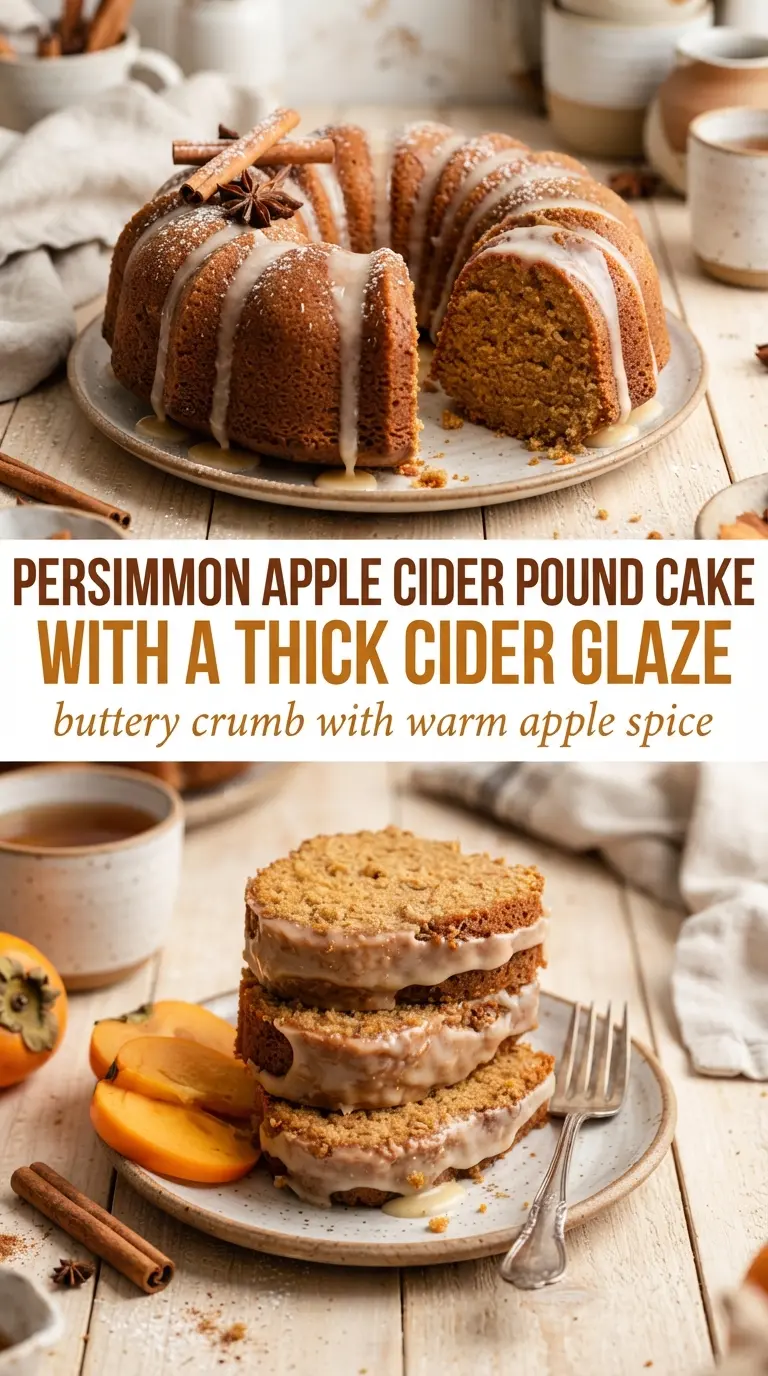
- Apple cider — This is the flavor anchor. Reducing it down to 1/2 cup concentrates the apple note so the cake tastes like cider instead of sweet spice. Don’t skip the reduction unless you want a thinner batter and a flatter finish.
- Butter — Use unsalted butter so you control the salt level. Softened butter creams properly and traps air, which gives the cake its lift before the dense pound cake texture sets in.
- Sour cream — This is what keeps the crumb tender and plush. Full-fat sour cream gives the best result, but plain full-fat Greek yogurt works in a pinch. The cake will be a touch tangier, but the texture still holds.
- All-purpose flour — Standard all-purpose flour is the right choice here because it gives the cake enough structure without turning it chewy. Don’t swap in cake flour unless you want a softer, less sturdy crumb that won’t slice as cleanly.
- Cinnamon — Just enough to warm the cider without making the cake taste like spice bread. Fresh cinnamon makes a difference here because the flavor is simple and there’s nowhere for stale spice to hide.
- Powdered sugar for the glaze — This gives you that smooth, drizzly finish. If your glaze looks too thin, add a little more powdered sugar. If it gets too thick, loosen it with a teaspoon of cider at a time.
Building the Batter So the Cake Stays Dense, Not Heavy
Reducing the Cider First
Simmer the cider until you have 1/2 cup left, then let it cool before it goes into the batter. Hot cider can soften the butter too much and throw off the texture you just built in the creaming stage. You’re looking for a syrupy reduction that still pours, not a sticky paste.
Creaming the Butter and Sugar
Beat the butter and sugar until the mixture turns pale and looks fluffy around the edges of the bowl. That air is part of the cake’s lift, so don’t stop when it just looks mixed. If the butter still looks dense and yellow, keep beating for another minute or two.
Alternating the Dry Ingredients and Sour Cream
Add the flour mixture in stages, alternating with the sour cream, and stop mixing as soon as the batter looks smooth. Overmixing at this point tightens the crumb and makes the cake tough. The batter should look thick and satiny, not whipped.
The Bundt Pan and the Bake
Grease every ridge of the pan, then dust it with flour so the cake releases cleanly after the first 15 minutes of cooling. Bake until the top is deep golden and a tester comes out with only a few moist crumbs. If the center still looks wet, give it more time; pound cake needs that full bake to set its structure.
Three Ways to Work This Cake Into Your Own Kitchen
Dairy-Free Version
Use a good dairy-free butter substitute and a thick unsweetened plant-based yogurt in place of the sour cream. The cake will still slice well, though it won’t have quite the same rich, buttery finish. Choose a substitute that’s meant for baking, not a spread with a lot of water content.
Extra-Spiced Cake
Add a pinch of nutmeg or allspice if you want a more autumn-forward cake. Keep it restrained. The cider should still be the first flavor you notice, and too much spice turns this into something closer to spice cake than pound cake.
Glaze It Thicker or Thinner
For a thicker glaze, add more powdered sugar a spoonful at a time until it ribbons slowly off the spoon. For a thinner glaze that runs farther down the sides, loosen it with a teaspoon of reduced cider. The glaze should cling but still drip in slow streaks over the ridges.
Storage and Reheating
- Refrigerator: Store tightly covered for 4 to 5 days. The crumb stays tender, though the glaze softens a little.
- Freezer: This cake freezes well. Wrap the unglazed cake tightly in plastic wrap and foil, then freeze for up to 2 months. Glaze after thawing for the best texture.
- Reheating: Warm individual slices briefly at room temperature or in a low oven for a few minutes. Don’t microwave long enough to make the glaze melt off and the crumb turn rubbery.
The Things That Trip People Up With This Cake
Apple Cider Pound Cake
Ingredients
Equipment
Method
- Simmer apple cider in a Dutch oven until reduced to 1/2 cup, then cool completely.
- Set the cooled reduced cider aside so it’s ready for the batter.
- Preheat the oven to 325°F and generously grease and flour a 10-cup bundt pan.
- Whisk together all-purpose flour, baking powder, baking soda, ground cinnamon, and salt until evenly combined.
- Beat unsalted butter and granulated sugar until pale and fluffy, then beat in large eggs one at a time and vanilla extract.
- Alternate adding the dry ingredients and sour cream, mixing just until incorporated.
- Stir in the reduced apple cider until the batter is smooth.
- Bake for 60 to 70 minutes, until a toothpick comes out clean.
- Cool the cake 15 minutes in the pan, then turn it out onto a sheet pan.
- Whisk powdered sugar, reduced apple cider, and ground cinnamon until thick and smooth.
- Drizzle the glaze over the warm cake so it drips into the ridges.