
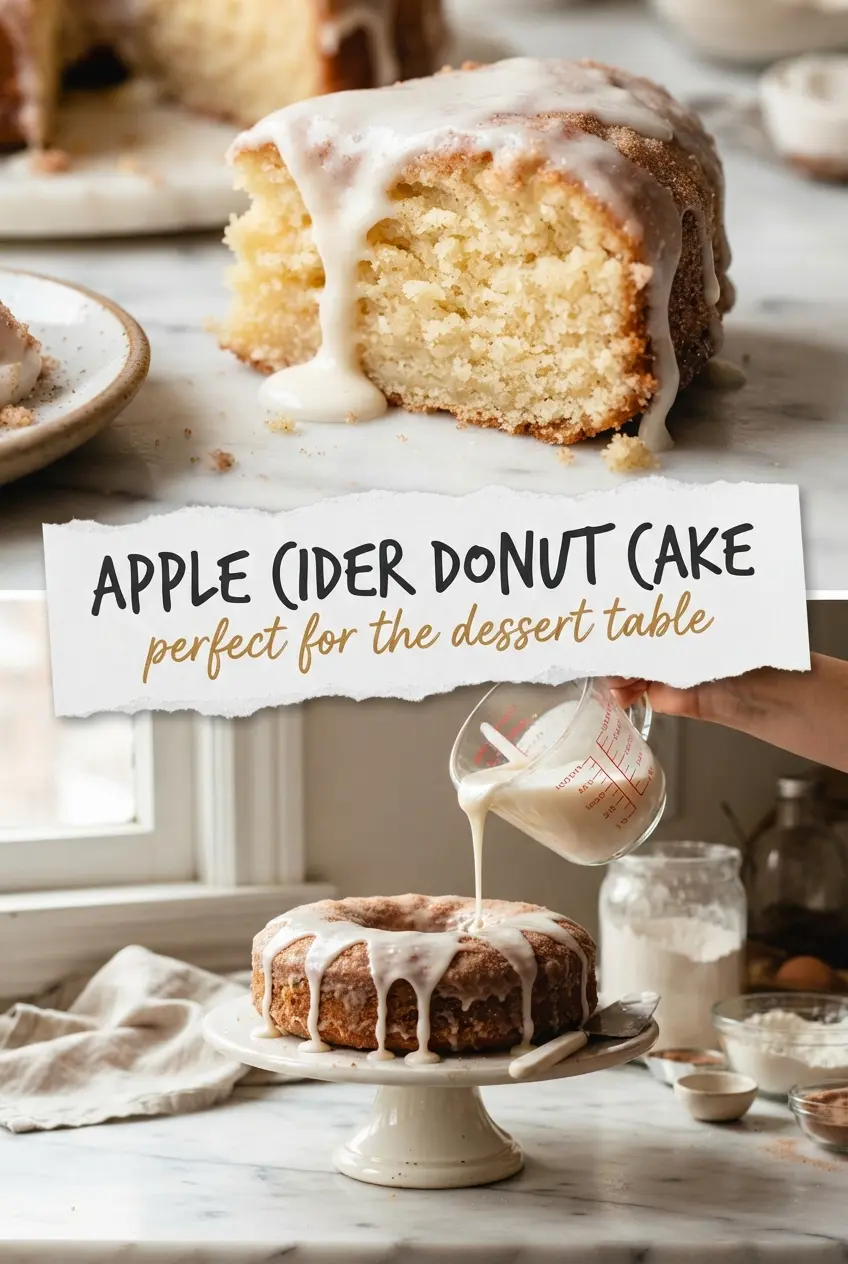
Apple cider donut cake lands with the same cozy spice and tender crumb people love from the bakery version, but it bakes up in a pan with none of the frying. The edges turn a little golden, the center stays soft and plush, and the vanilla glaze sinks into the top just enough to keep every bite moist. It tastes like something you’d bring out with coffee and watch disappear slice by slice.
The trick is reducing the cider first. That step concentrates the apple flavor without making the batter watery, and it also gives the cake a deeper, more autumn-spice aroma than you get from cider poured in straight from the jug. Sour cream does the heavy lifting on texture, keeping the crumb fine and tender even after the cake cools.
Below, I’ll walk you through the one step that matters most, plus the small adjustments that keep the glaze smooth and the cake sliceable. If you’ve ever wanted a dessert that feels nostalgic but still simple enough to bake on a regular afternoon, this is the one to keep close.
The cider reduction made all the difference — the cake tasted like apple cider donuts from the orchard, and the glaze set up glossy instead of runny.
Save this Apple Cider Donut Cake for the days when you want bakery-style spice, a soft crumb, and that glossy vanilla glaze on top.
The Reason the Cider Gets Reduced Before It Ever Touches the Batter
Unreduced apple cider looks like a shortcut, but it waters down the batter and leaves the cake tasting flat. Simmering it down to half a cup pulls the apple flavor forward and gives the finished cake a more concentrated, almost caramelized cider note without adding extra sugar. That reduction also helps the glaze later, because you’re building flavor in both places instead of relying on the spice alone.
The other failure point is overmixing after the flour goes in. This batter should look just combined, with a few streaks disappearing as you fold in the reduced cider. If you beat it smooth at that stage, the crumb tightens up and you lose the soft, donut-like texture that makes this cake worth making.
What Each Ingredient Is Actually Doing in This Cake

- Apple cider — Reducing it first is nonnegotiable. The concentration is what gives the cake its apple character, and the same reduced cider in the glaze ties everything together.
- Sour cream — This keeps the crumb tender and gives the cake enough richness to taste like a real bakery cake, not a loaf dressed up with spice. Plain Greek yogurt works in a pinch, but the texture will be a little tighter.
- Butter and sugar — Creaming them until fluffy traps air and gives the cake lift before the baking powder and soda even start working. If the butter is too cold, the mixture stays grainy and the cake bakes up heavier.
- Cinnamon and nutmeg — These spices do more than flavor the cake; they make the cider reduction taste like the warm coating on a fresh donut. Freshly grated nutmeg will give you a little more depth, but preground works fine.
- Powdered sugar for the glaze — This creates the smooth finish that sets on top instead of soaking straight through. If you want a thinner drizzle, add the cider a teaspoon at a time until it ribbons off the whisk.
Building the Batter Without Beating the Tenderness Out of It
Reducing the cider
Pour the cider into a saucepan and simmer until it measures ½ cup. You want steady bubbles, not a hard boil, because aggressive heat can make the reduction taste sharp instead of rounded. Cool it completely before it goes into the batter or it can loosen the butter mixture and throw off the texture. Save 3 tablespoons for the glaze; that’s where the apple flavor gets its last, bright hit.
Creaming the base
Beat the butter and sugar until the mixture looks pale and fluffy, with no gritty sugar left clinging to the bowl. That step builds the cake’s lift, so don’t rush it. Add the eggs one at a time, then the sour cream and vanilla, and stop as soon as the mixture looks smooth. If the bowl looks slightly curdled, the dry ingredients will pull it back together.
Finishing the batter
Whisk the dry ingredients separately so the baking soda and baking powder are evenly distributed. Fold them in gently with the reduced cider until the flour just disappears. The batter will be thick and fragrant, and that’s what you want. Overmixing here is the fastest way to lose the soft, cakey crumb.
Baking and glazing
Bake until the cake springs back when touched and a tester comes out with a few moist crumbs, not wet batter. If the top is browning too fast, your oven is running hot and a loose piece of foil can save it. Let the cake cool before glazing or the glaze will melt straight off the sides instead of setting in that glossy layer on top.
How to Adapt This for Different Kitchens and Different Cravings
Dairy-Free Version
Use a good dairy-free butter substitute in place of the butter and swap the sour cream for an unsweetened dairy-free yogurt. The cake will still be tender, though the crumb may be a touch less rich. The glaze works with dairy-free milk too, but it won’t carry quite the same apple flavor as the reduced cider version.
Gluten-Free Swap
A cup-for-cup gluten-free flour blend usually works here without any other changes. The cake will be a little more delicate, so let it cool fully before turning it out of the pan. If your blend doesn’t contain xanthan gum, add a small amount according to the package directions so the cake holds together cleanly.
Muffin-Style Snack Cake
Bake the batter in a lined muffin tin and start checking around 18 to 20 minutes. You’ll get a more portable version with crisp edges and a softer center, but you’ll lose some of the dramatic glaze drip that makes the round cake look special. Brush or spoon the glaze over the warm tops so it catches in the cracks.
Storage and Reheating
- Refrigerator: Store covered for up to 4 days. The crumb stays moist, though the glaze will soften a bit on the surface.
- Freezer: Freeze the cake without glaze, tightly wrapped, for up to 2 months. Thaw at room temperature and glaze after thawing for the cleanest finish.
- Reheating: Warm individual slices for 10 to 15 seconds in the microwave. Longer heating can make the cake feel bouncy instead of tender, especially once it’s glazed.
Answers to the Questions Worth Asking
Apple Cider Donut Cake
Ingredients
Equipment
Method
- Simmer the apple cider in a saucepan until reduced to 1/2 cup, then cool completely.
- Preheat the oven to 350°F and grease and flour a 9-inch round cake pan.
- Whisk together the all-purpose flour, baking powder, baking soda, ground cinnamon, ground nutmeg, and salt.
- Beat the unsalted butter (softened) and granulated sugar until fluffy, then beat in the eggs, sour cream, and vanilla extract.
- Fold in the dry ingredients with the reduced apple cider until just combined, keeping the batter thick and slightly lumpy.
- Bake at 350°F for 35 to 40 minutes, until a toothpick in the center comes out clean.
- Cool the cake fully, then whisk the glaze ingredients until smooth and glossy.
- Pour the glaze over the top of the cake so it drips down the sides.