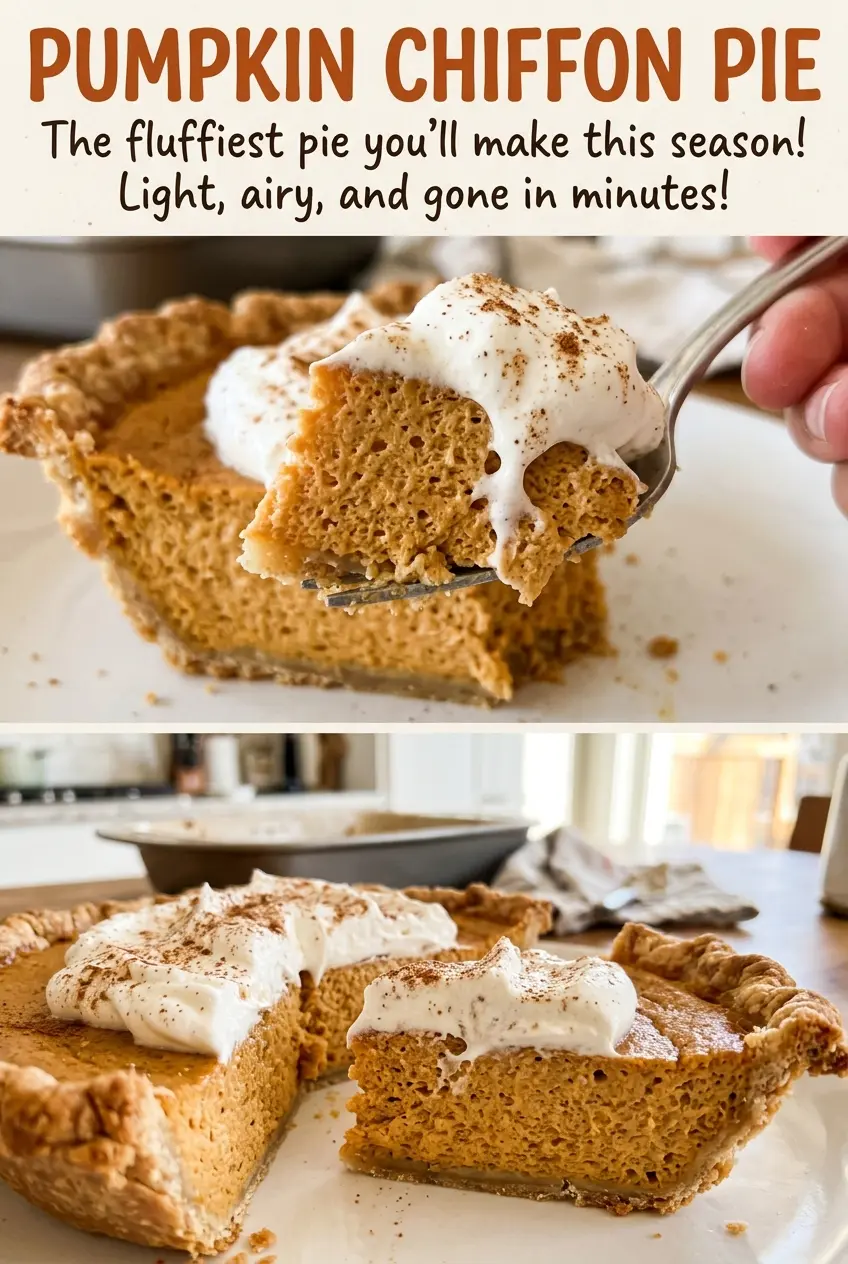
Ingredients
Equipment
Method
Make the crust
- Whisk the flour with 1/4 teaspoon of the salt in a medium bowl.
- Cut in the butter until the largest pieces are pea-size.
- Sprinkle in 3 tablespoons ice water and toss until the dough comes together when pressed, adding up to 1 tablespoon more if needed.
- Shape the dough into a disk, wrap, and refrigerate for 30 minutes.
- Preheat the oven to 425°F with a rack in the lower third.
- Roll the dough into a 12-inch circle and fit it into a 9-inch pie plate.
- Crimp the edge, then line the crust with parchment and pie weights.
- Bake for 15 minutes.
- Remove the weights and parchment, then bake 5 to 8 minutes more until lightly golden and dry.
- Cool the crust completely on a wire rack.
Make the filling
- Sprinkle the gelatin over 1/4 cup cold water in a small bowl and let it stand for 5 minutes.
- Whisk the pumpkin, milk, 1/2 cup sugar, egg yolks, cinnamon, ginger, nutmeg, cloves, and remaining 1/4 teaspoon salt in a 2-quart saucepan.
- Cook over medium-low heat, whisking constantly, for 6 to 10 minutes until the mixture reaches 160°F.
- Remove the pan from the heat.
- Stir in the bloomed gelatin until dissolved.
- Cool, stirring every 5 minutes, for about 30 minutes until room temperature and beginning to thicken but still pourable.
- Whisk the egg whites with the remaining 1/4 cup sugar in a heatproof bowl set over a saucepan of gently simmering water, without letting the bowl touch the water, for 4 to 6 minutes until the mixture reaches 160°F.
- Remove the bowl from the heat and add the cream of tartar.
- Beat with an electric mixer for 5 to 8 minutes until glossy stiff peaks form and the bowl is only slightly warm.
- Fold the meringue into the pumpkin mixture in three additions until no streaks remain.
- Spoon the filling into the cooled crust and smooth the top.
- Refrigerate for at least 4 hours until set.
Notes
For a light texture, fold the meringue into the pumpkin mixture gently until no streaks remain. Cover and refrigerate leftovers for up to 3 days; freezing is not recommended because it can affect the filling's texture. For a gluten-free variation, use a 1:1 gluten-free baking flour blend in the crust.