Ingredients
Equipment
Method
Cook the jelly
- Combine elderberry juice, lemon juice, and powdered pectin in a large pot over medium-high heat until fully mixed. Stir until the pectin dissolves and the mixture looks uniform.
- Bring the mixture to a rolling boil over high heat, stirring constantly, for 1 minute of continuous boil once it reaches the boil. Keep the boil aggressive so it stays at a true rolling stage.
- Add the sugar all at once and return to a full rolling boil over high heat. Stir until the sugar is dissolved and the boil resumes.
- Boil the sugar-pectin mixture at a full rolling boil for exactly 1 minute over high heat, stirring constantly. Watch for the boil to remain full and bubbling rather than simmering.
- Remove from heat and skim off any foam from the surface using a spoon. Keep skimming until the top looks smooth.
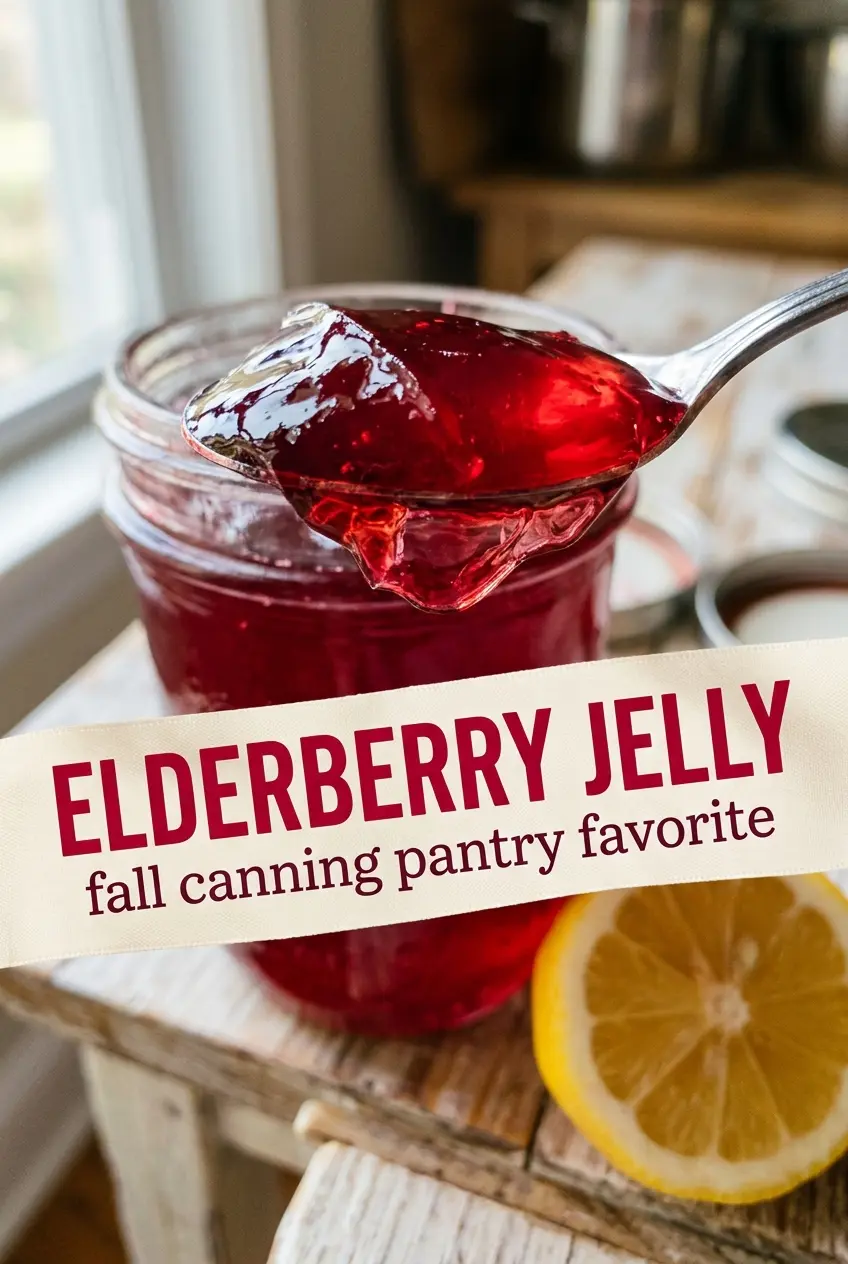
- Test for set by chilling a small spoonful on a plate for 1 minute; it should wrinkle when pushed. If it doesn’t wrinkle, keep cooking and re-test in small batches.
Jar and process
- Ladle the hot jelly into sterilized jars, leaving 0.25 inch headspace. Wipe jar rims clean so seals form evenly.
- Process the jars in a water bath canner for 10 minutes. After processing, cool completely on a towel-lined counter without moving the jars.
Notes
Pro tip: don’t reduce the boil time—set depends on reaching a true rolling boil. Store jars in the fridge after opening for up to 3 weeks; unopened, processed jars keep about 12 months in a cool pantry. Freezing isn’t recommended for classic canned jelly texture. For a simple swap, use less sugar only if your pectin box is labeled for low- or no-sugar recipes, since standard powdered pectin needs the full sugar amount for proper gel.