
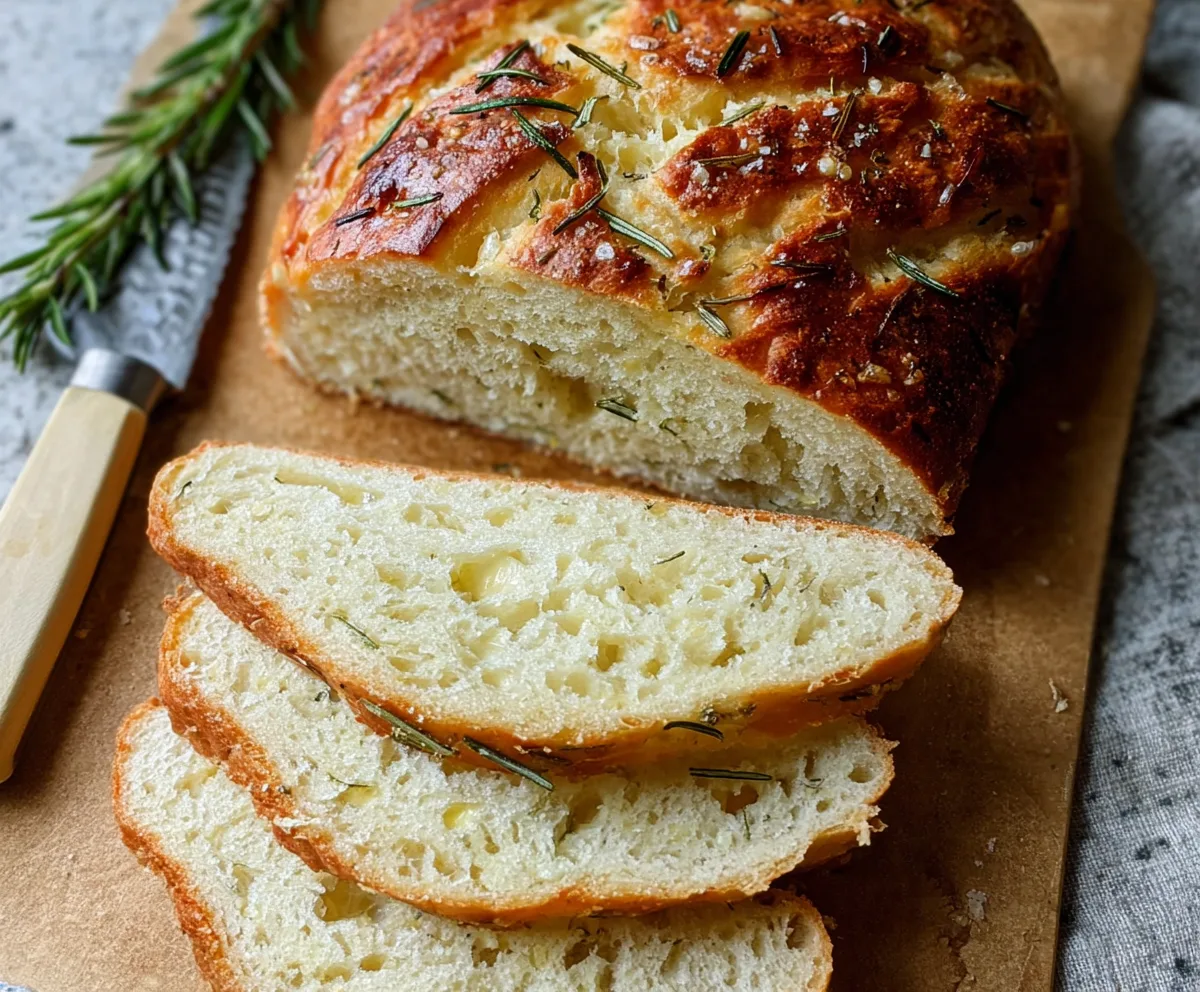
No-knead rosemary garlic bread is a simple and delicious way to fill your kitchen with the smell of fresh herbs and warm garlic. This bread is crusty on the outside with a soft, airy inside that’s packed with fragrant rosemary and roasted garlic, making every bite flavorful and satisfying.
I love this recipe because it’s so easy to make—no kneading means less mess and less work, but you still get that perfect homemade bread taste. I usually mix the dough in the evening, let it rest overnight, and then bake it the next day. It’s like waking up to a warm, tasty surprise waiting for you.
This bread is perfect on its own, but I also like to slice it up and enjoy it with a bit of butter or olive oil. It’s great alongside soups, salads, or just as a snack when I need something comforting. Sharing it with friends always brings smiles, and it’s a great way to make any meal feel special.
Key Ingredients & Substitutions
Flour: All-purpose flour works well here and gives a nice texture. You can swap in bread flour for a chewier crumb or whole wheat flour for a nuttier flavor, but use less whole wheat to keep the bread light.
Rosemary: Fresh rosemary adds a lovely, piney flavor. If you don’t have fresh, dried rosemary works too—use about half the amount since dried herbs are stronger.
Garlic: Roasted garlic is mild and sweet, but this recipe uses fresh minced garlic for a bright punch. You can reduce the amount if you prefer a gentler garlic taste.
Yeast: Instant yeast is best for this no-knead recipe since it doesn’t need proofing beforehand. If you only have active dry yeast, dissolve it in the warm water first before mixing.
Olive Oil: Olive oil keeps the dough tender and gives flavor. You can substitute with another neutral oil like vegetable or avocado oil if needed.
How Do You Get That Perfect No-Knead Dough Texture?
The key to no-knead bread is the long, slow rise that develops gluten without any heavy kneading. Here’s how to nail it:
- Mix ingredients just until combined; the dough will feel sticky and loose but that’s normal.
- Cover and let it rest at room temperature for 12 to 18 hours. This slow ferment boosts flavor and texture.
- When shaping, use floured hands to handle the dough gently—don’t press out the air bubbles.
- Final rise after shaping gives the bread lightness, so let it nearly double again before baking.
Patience is key! This slow process makes your bread airy on the inside and hearty on the outside without much effort.
Equipment You’ll Need
- Large mixing bowl – I use this to combine ingredients easily and let the dough rise without sticking.
- Wooden spoon or spatula – helps stir everything together without messy scraps.
- Kitchen towel or plastic wrap – covers the bowl to keep the dough humid during long rises.
- Dutch oven or heavy oven-safe pot with lid – creates a hot, steamy environment for a crusty top and even baking.
- Parchment paper – makes transferring the dough into the hot pot easier and prevents sticking.
- Measuring spoons and cups – for accurate ingredient amounts.
Flavor Variations & Add-Ins
- Spinach and feta – fold in chopped spinach and crumbled feta after mixing for a Mediterranean twist.
- Sun-dried tomatoes and basil – add chopped sun-dried tomatoes and fresh basil for a savory, Italian flavor.
- Cheddar and chive – mix in grated cheddar cheese and chopped chives to make it cheesy and herby.
- Oregano and lemon zest – swap rosemary for oregano and add a bit of lemon zest for a fresh, citrusy punch.
No-Knead Rosemary Garlic Bread
Ingredients You’ll Need:
- 3 1/4 cups (400g) all-purpose flour
- 1 1/2 tsp salt
- 1/4 tsp instant yeast
- 1 1/2 cups (360ml) warm water
- 2 tbsp fresh rosemary, finely chopped (plus extra for topping)
- 3 cloves garlic, minced (plus extra for topping)
- 2 tbsp olive oil (for dough and topping)
- Coarse sea salt, for sprinkling on top
How Much Time Will You Need?
This bread takes about 15 minutes to prepare, then you’ll let it rise for 12 to 18 hours. After shaping, it needs another 1 to 2 hours to rest before baking. Baking itself takes around 45 to 50 minutes. So overall, it’s a slow-rise bread with minimal active time, perfect for an easy, hands-off baking day.
Step-by-Step Instructions:
1. Mix the Dough:
In a large bowl, mix together the flour, salt, instant yeast, and chopped rosemary. Add the warm water, olive oil, and minced garlic. Stir everything with a wooden spoon or spatula until the dough comes together and feels sticky. No kneading needed—just make sure all the flour is mixed in.
2. First Rise:
Cover the bowl tightly with plastic wrap or a clean kitchen towel. Let the dough rise at room temperature for 12 to 18 hours, until it has doubled in size and looks bubbly.
3. Shape the Dough:
Flour your work surface well, then gently turn the dough out onto it. With floured hands, fold the dough over on itself once or twice to form a loose ball. Place the dough seam-side down on a piece of parchment paper. Cover it again and let it rest for 1 to 2 hours, until almost doubled.
4. Prepare to Bake:
About 30 minutes before baking, preheat your oven to 450°F (230°C) and place a Dutch oven or heavy oven-safe pot with lid inside to heat up.
5. Bake the Bread:
Carefully remove the hot pot from the oven. Using the parchment paper, lift the dough and place it inside the pot. Brush the top with olive oil, then sprinkle with extra minced garlic, rosemary, and coarse sea salt. Cover with the lid and bake for 30 minutes. Then remove the lid and bake for another 15 to 20 minutes, until the bread is a deep golden brown and crusty.
6. Cool and Enjoy:
Remove the bread carefully from the pot and transfer it to a wire rack. Let it cool before slicing to enjoy that perfect crumb and crust.
Can I Use Dried Rosemary Instead of Fresh?
Yes! Use about half the amount of dried rosemary since it’s more concentrated in flavor. Mix it into the dough just like fresh herb.
How Should I Store Leftover Bread?
Keep leftover bread in a paper bag or wrapped loosely in a kitchen towel at room temperature for up to 2 days. For longer storage, slice and freeze in an airtight bag, then toast or warm slices as needed.
Can I Make This Bread Without a Dutch Oven?
You can bake it on a baking stone or sheet, but placing a pan of water in the oven to create steam will help keep the crust crisp and crusty like a Dutch oven does.
Is It Okay to Refrigerate the Dough Instead of Letting It Rise at Room Temperature?
Absolutely! Refrigerate the covered dough for up to 24 hours for a slower fermentation. Bring it to room temperature before shaping and continue with the recipe as usual.