
Garlic Pho is a comforting bowl of warm, fragrant broth packed with the bold flavors of garlic and fresh herbs, combined with tender noodles and thinly sliced meat or veggies. It’s a twist on traditional Vietnamese pho that really brings out the garlicky goodness and gives every spoonful a flavorful kick.
I love making Garlic Pho on chilly evenings because the garlic adds such a cozy, homey touch to the broth. It’s also super easy to customize—sometimes I add extra lime or chili if I want it to feel a little brighter or spicier. The garlic flavor isn’t overpowering but just enough to make the soup feel warm and inviting.
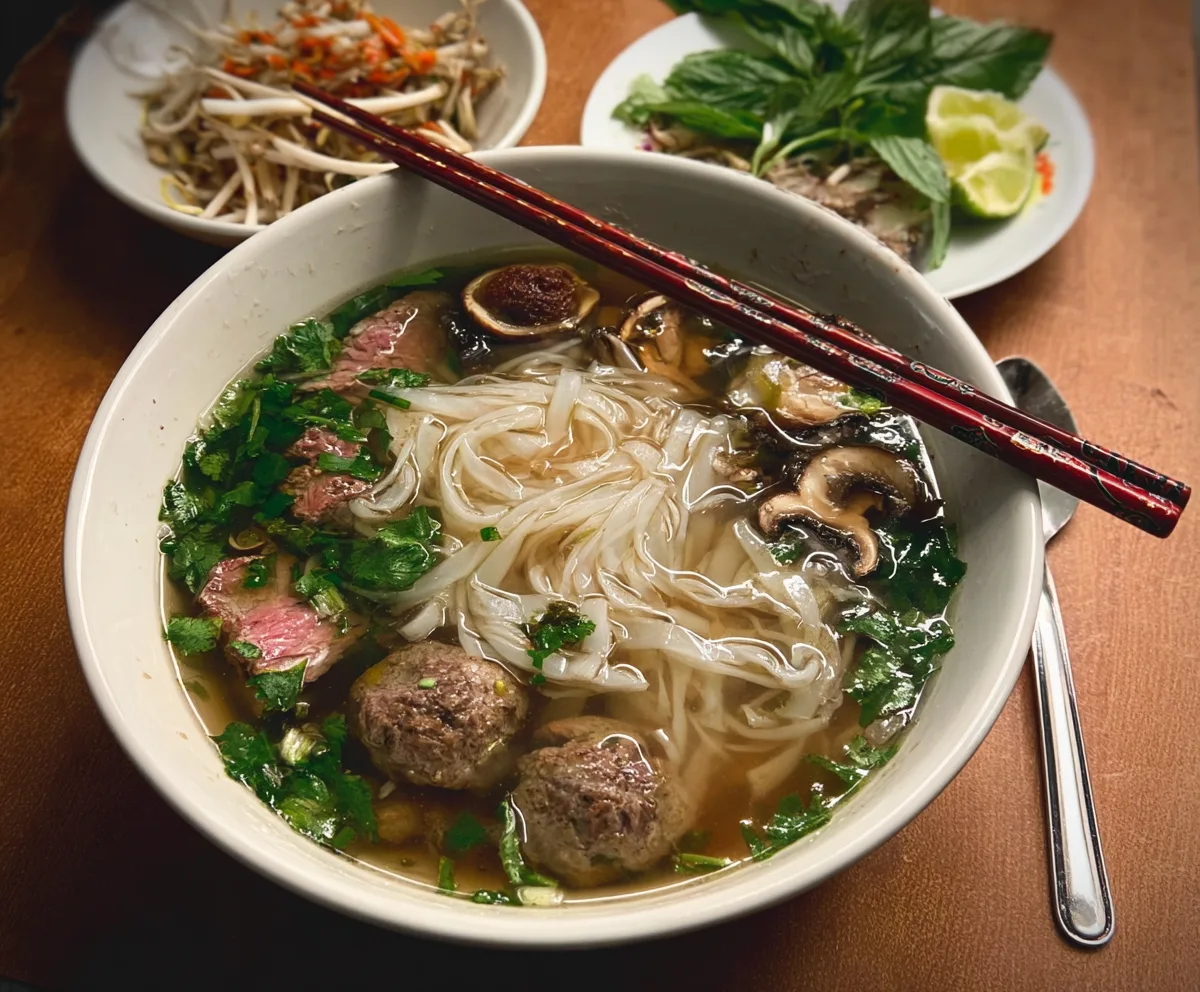
When I serve this pho, I like to set out fresh bean sprouts, basil, and lime wedges so everyone can add a little something extra if they want. It’s the kind of meal that brings people together around the table, slurping noodles and sharing stories. Plus, it’s a nice way to enjoy a healthy, satisfying soup that feels special yet simple.
Key Ingredients & Substitutions
Beef Bones: They give the broth a deep, rich flavor and body. If you can’t find marrow bones, knuckle bones work well too. You can also use oxtails for an even richer broth.
Garlic: Fresh garlic is essential here, as charring it adds a smoky depth. If you don’t want it too strong, reduce the amount or skip frying the garlic garnish.
Rice Noodles: Flat rice noodles (banh pho) are traditional. If unavailable, you can use wide rice stick noodles or even linguine in a pinch, but the texture will be different.
Fresh Herbs & Garnishes: Bean sprouts, Thai basil, cilantro, green onions, and lime add brightness and texture. If Thai basil isn’t available, regular basil or mint can substitute.
Fish Sauce: It adds umami and saltiness. For a vegetarian version, use soy sauce or tamari, but it won’t have the same depth.
How Do You Make a Clear and Flavorful Pho Broth?
Getting a clear, tasty broth is the trickiest part but totally worth it. Here’s how to do it:
- Parboil and rinse bones: Boil them first to remove impurities, then rinse well. This step keeps the broth clear and clean-tasting.
- Char aromatics: Blacken the onion, ginger, and garlic to bring out smoky sweetness without bitterness.
- Low and slow simmer: Keep the broth at a gentle simmer for several hours. High heat clouds the broth and can toughen meat.
- Skim regularly: Remove foam and scum from the surface especially in the first 30 minutes to maintain clarity.
- Use whole spices: Toast the spices lightly to release aroma, then add them to the broth for a balanced flavor.
- Strain before serving: Pour the broth through a fine sieve or cheesecloth to catch any small bits.
Patience is key here; a little extra time simmering makes for a broth that’s rich, clear, and full of gentle garlic flavor that complements the beef and noodles beautifully.
Equipment You’ll Need
- Large stockpot – I recommend a big one so you can cook the broth with all the bones and aromatics comfortably.
- Skillet or grill pan – for charing the onion, ginger, and garlic to boost their flavor.
- Fine sieve or cheesecloth – to strain the broth and keep it clear and free of debris.
- Cooking spoon and tongs – handy for stirring and handling hot ingredients safely.
- Bowls and tongs – for serving the noodles, beef slices, and garnishes so everything stays organized.
Flavor Variations & Add-Ins
- Protein options: Use chicken or tofu instead of beef for a lighter version or to suit different diets.
- Herb swaps: If Thai basil isn’t available, fresh mint or regular basil work well for added freshness.
- Spice it up: Add sliced jalapeños or chili oil for extra heat at the table.
- Extra flavor: A dash of soy sauce or a splash of lime juice stirred into the broth can change the flavor profile for variety.
How to Make Garlic Pho
Ingredients You’ll Need:
For the Broth:
- 2 lbs beef bones (marrow and knuckle bones)
- 1 large onion, peeled and halved
- 1 large piece ginger (about 4 inches), halved lengthwise
- 10 cloves garlic, peeled and lightly crushed
- 5 star anise pods
- 3 cinnamon sticks
- 5 whole cloves
- 1 tablespoon coriander seeds
- 1 tablespoon fennel seeds
- 1 tablespoon black peppercorns
- 1 tablespoon sugar (preferably rock sugar)
- 2 tablespoons fish sauce (adjust to taste)
- Salt to taste
For the Noodles and Meat:
- 1 package (14 oz) flat rice noodles (banh pho)
- 1 lb beef brisket or sirloin, thinly sliced
For Garnishing:
- Fresh bean sprouts
- Fresh lime wedges
- Fresh Thai basil leaves
- Fresh cilantro, chopped
- Green onions, sliced
- Fresh chili slices or chili sauce (optional)
- Fried garlic (optional, for extra garlic flavor and crunch)
Time You’ll Need
This recipe takes about 15 minutes to prep the ingredients and 3 to 6 hours to simmer the broth. The long simmering helps develop a clear and flavorful broth. Plan for about 20 minutes to prepare the noodles and assemble the pho just before serving.
Step-by-Step Instructions:
1. Prepare and Char the Aromatics
Preheat a large stockpot over medium-high heat. Char the onion halves, ginger halves, and garlic cloves by placing them directly on a hot dry pan, grill, or open flame. Turn occasionally until all sides are blackened – this usually takes 5 to 8 minutes. This step brings smoky, rich flavors to your broth.
2. Parboil the Bones
Place the beef bones into a large pot and cover with cold water. Bring the water to a boil and let it boil for about 5 minutes. During this time, skim off any foam or scum that rises to the surface to ensure a clean broth. Drain and rinse the bones under cold water to remove impurities.
3. Make the Broth
Refill your pot with about 5 quarts of fresh water. Add the cleaned beef bones, along with the charred onion, ginger, and garlic. In a dry pan, lightly toast the star anise, cinnamon sticks, cloves, coriander seeds, fennel seeds, and black peppercorns for 2 to 3 minutes until fragrant, then add these spices to the pot. Bring to a gentle simmer and continue to skim off any foam that appears in the first 30 minutes.
4. Simmer Long and Slow
Add the sugar and fish sauce to the broth. Let the broth simmer gently (avoid a rolling boil) uncovered for at least 3 hours, ideally 4 to 6 hours to develop clear, deep flavors. Taste occasionally and add salt if needed.
5. Prepare Noodles and Beef
Cook or soak the rice noodles according to package instructions until they are soft but not mushy. Rinse with cool water and drain. Thinly slice the raw beef brisket or sirloin against the grain and keep it aside for serving.
6. Assemble Your Garlic Pho Bowl
Before serving, bring the broth to a rolling boil. Briefly dip the noodles in boiling water to warm them, then place them into bowls. Lay thin slices of raw beef over the noodles. Pour the boiling broth directly over the beef and noodles—this will gently cook the beef slices.
7. Garnish and Enjoy
Top your pho with fresh bean sprouts, chopped cilantro, green onions, and fried garlic if you like a little extra crunchy garlic flavor. Serve with lime wedges, Thai basil, and fresh chili slices on the side so everyone can customize their bowl. Squeeze lime juice over and add desired toppings to suit your taste.
Can I Use Frozen Beef Bones or Meat for This Pho?
Yes, you can use frozen beef bones or meat, but make sure to thaw them fully in the fridge overnight before cooking. This helps ensure even cooking and better flavor extraction in the broth.
Can I Make Garlic Pho Ahead of Time?
Absolutely! The broth can be made up to 3 days in advance and stored in the fridge. Keep the noodles and fresh garnishes separate until ready to serve to prevent sogginess.
How Should I Store Leftover Pho Broth?
Store leftover broth in an airtight container in the refrigerator for up to 4 days, or freeze it for up to 3 months. Reheat gently on the stove before serving.
What Can I Substitute for Fish Sauce?
If you prefer a vegetarian option or don’t have fish sauce, soy sauce or tamari can be used as substitutes. Keep in mind the flavor will differ slightly but still be delicious!